

You can absolutely transform a storage unit into a functional office—I’m talking 250 square feet for a few hundred bucks monthly instead of $5,000–$12,000. Here’s what matters: verify your lease allows commercial use, check local zoning laws, and invest in climate control to protect your equipment. You’ll need reliable internet, proper electrical outlets, and business insurance since facility coverage won’t cut it. Position your desk strategically, create a professional video backdrop, and implement security cameras. The real magic happens when you understand which setup actually supports your workflow instead of just saving money.
Can You Actually Use a Storage Unit as an Office?
Why not? You absolutely can transform a storage unit into a functional workspace if your facility permits it. Many storage facilities now support small business operations, especially climate-controlled units that maintain steady temperatures year-round. Here’s what makes this possible: enhanced security features like surveillance cameras and coded entry systems keep your work safe 24/7, while providing after-hours access when you need it most.
Before diving in, verify lease terms with management—some facilities restrict commercial use or limit occupancy hours. Check local zoning regulations too; your address can’t serve as an official business location in many areas.
A storage unit office works best as a support hub rather than traditional headquarters. You’ll gain dedicated workspace without premium rent, but expect practical trade-offs with ventilation and full-time occupancy limitations.
Calculate Your Real Savings vs. Traditional Office Space

The math here is pretty compelling: a 250 square foot traditional office runs you roughly $5,000–$12,000 monthly, while that same footprint in a storage unit might cost just a few hundred dollars. I’m talking real office space savings that’ll genuinely transform your budget.
A 250 sq ft traditional office costs $5,000–$12,000 monthly; a storage unit might run just a few hundred dollars.
Here’s what makes storage unit pricing so attractive:
- Storage costs roughly $1–$3 per square foot monthly versus $20–$50 yearly for traditional offices
- Month-to-month leases mean you’re not locked into lengthy commitments
- Minimal deposits get you started faster without draining savings
- Utilities and security often come included in your rent
- No surprise fees eating away at your bottom line
When you’re building your dream workspace, these savings compound fast. You’re reclaiming thousands annually—money you can reinvest into equipment, marketing, or growth.
Pick the Right Unit Size and Features for Your Workflow
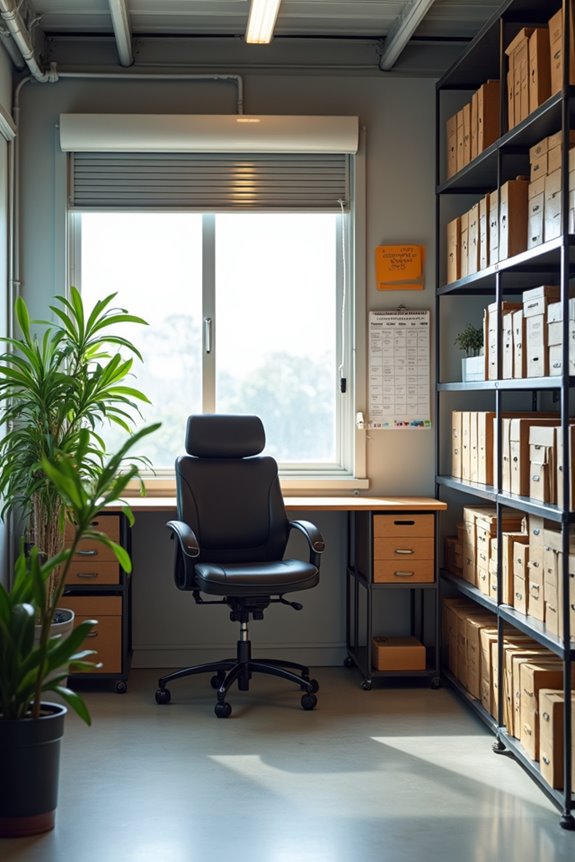
Now that you’ve figured out your budget, it’s time to match your space to how you actually work—and I’ve got to say, this part’s where things get real and exciting. You’ll need to assess your space requirements first, which means honestly evaluating whether a cozy 1010 unit works for solo focus or if you need that roomy 1020+ with multiple workstations and a meeting zone. Then comes the fun stuff: ensuring your chosen unit has the essential amenities like climate control (keeping humidity between 30–60%), electrical outlets, reliable internet, and ground-floor or drive-up accessibility that’ll make your daily workflow smooth and your equipment happy.
Assess Your Space Requirements
Before you sign that lease, grab a tape measure and honestly inventory what you’re bringing into your storage unit office—your desk, chair, filing cabinets, shelves, and anything else you’ll need daily.
Here’s what I’d measure:
- Desk dimensions and clearance space around it
- Chair mobility needs and rotation room
- Filing cabinet or shelving unit sizes
- Walkway width for comfortable movement
- Video call backdrop area with lighting
A climate-controlled 1010 unit works great for solo work, while 1015 fits occasional client meetings. Need multiple workstations? Go 1020+. Your space requirements determine everything. I always leave at least three feet for walkways—it’s the difference between feeling cramped and actually functioning. Vertical shelving maximizes your storage unit’s potential, keeping frequently accessed items front-accessible. You’re building your own professional sanctuary here.
Essential Amenities and Features
Once you’ve got your space mapped out, it’s time to hunt for a storage unit that actually supports how you work—and that means looking beyond just four walls and a door.
You’ll want climate-controlled units that keep your equipment safe from temperature swings. Electrical outlets are non-negotiable for powering computers, printers, and scanners. Look for facilities with security cameras and coded entry systems so you can work late without worry.
Choose a 1010 unit for solo setups, 1015 for small meetings, or 1020-plus for multiple workstations. Consider units offering wired internet connectivity—it’s game-changing. Verify the layout gives you clear walkways and room for a desk, filing cabinets, and shelving.
These amenities transform a basic storage space into a legitimate workspace where you’ll actually thrive.
Layout Planning and Accessibility
Getting the right unit size matters more than you’d think—it’s the difference between a cramped, frustrating workspace and somewhere you’ll actually want to spend your time. I’ve learned that starting small with a 1010 unit works for solo freelancers, but jumping to 1015 or 1020+ gives you breathing room for meetings and multiple workstations.
Here’s what transforms a storage unit into your ideal office:
- Climate control keeps electronics and documents safe from humidity damage
- Desk, chair, and filing cabinets fit comfortably with circulation space remaining
- Electrical outlets and internet access power your productivity
- Vertical shelving maximizes storage without eating floor space
- Clear pathways ensure accessibility and prevent that claustrophobic feeling
Layout planning means measuring twice, arranging strategically, and leaving yourself room to actually move around and think clearly.
Verify Zoning and Lease Rules for Your Storage Unit Office
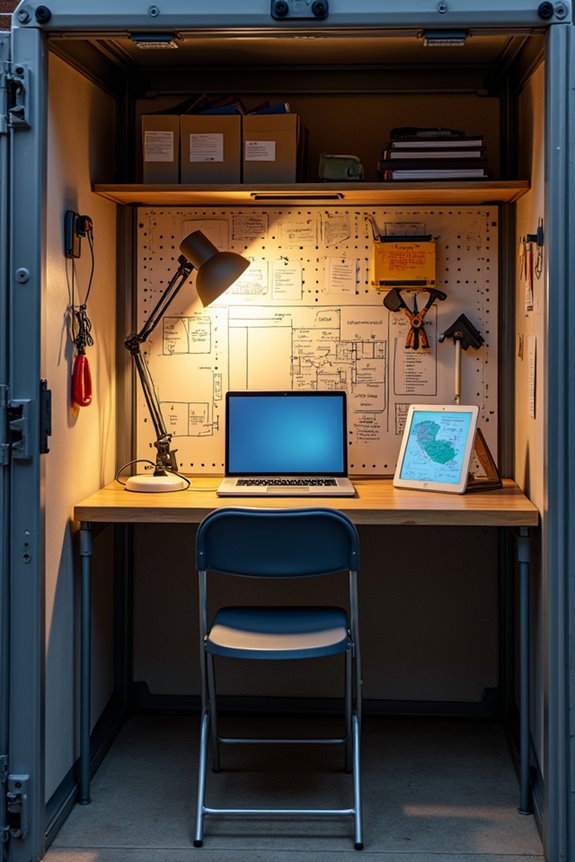
While it’s tempting to sign that lease and start moving in your desk and filing cabinets, you’ll want to pause and do some detective work first. Before committing to your storage unit office, you’ve got to verify zoning regulations and understand your lease rules completely.
| What to Check | Why It Matters | Who to Ask |
|---|---|---|
| Zoning classification | Ensures commercial use is allowed | City planning department |
| Lease restrictions | Confirms office setup is permitted | Facility management |
| Address usage rights | Clarifies business registration eligibility | Storage provider |
| Modification policies | Validates shelving and wiring installation | Written lease agreement |
Contact your facility management directly. Ask whether your lease rules explicitly permit office operations and modifications. Then reach out to your city’s planning department to verify zoning allows commercial activity. Don’t assume anything. Getting these answers now prevents costly problems later and keeps your business legitimate and protected.
Power Your Storage Unit Office: Internet, Electricity, Climate
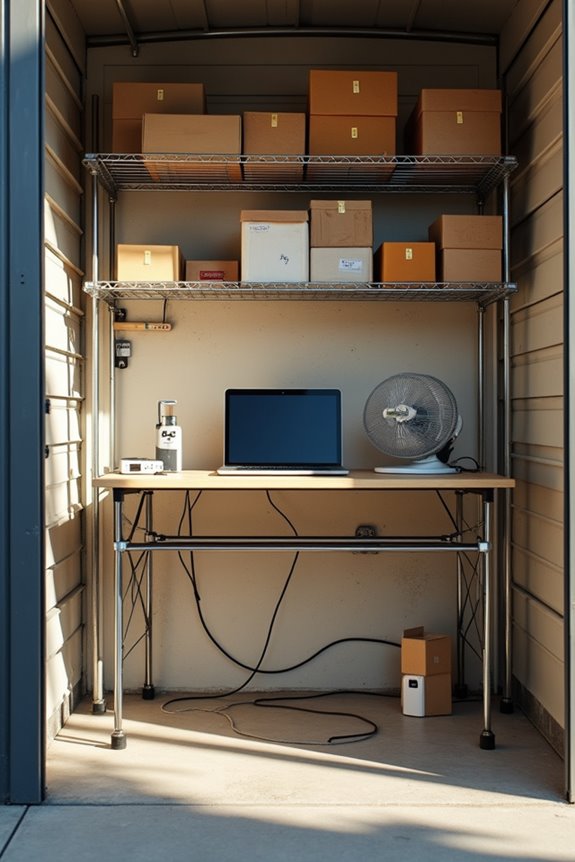
You’ll quickly realize that turning a storage unit into a functional office hinges on three critical systems: reliable electricity to power your devices, stable internet for seamless work, and climate control to protect both your equipment and your comfort. Without these essentials, you’re basically working in the dark—literally—which makes it tough to stay productive for more than a few hours. Let me walk you through exactly what you need to know about powering, connecting, and conditioning your storage space so you can actually get work done there.
Electricity and Outlet Access
Why does electricity matter so much when you’re transforming a storage unit into an office? Without it, you’re basically working in the dark—literally and professionally. I’ve learned that reliable electricity access separates a functional workspace from a frustrating one.
Here’s what I prioritize:
- Choose facilities advertising business storage solutions with guaranteed electricity access
- Verify outlets are accessible and positioned conveniently near your desk area
- Install surge protectors to shield computers and sensitive equipment
- Keep portable power stations handy for unexpected outages
- Plan power backup using generators or battery systems for uninterrupted work
I always guarantee multiple outlets exist before committing to a unit. One outlet isn’t enough when you’re running computers, lighting, and charging devices simultaneously. This setup gives me genuine peace of mind, knowing my business won’t grind to a halt mid-project.
Internet Connectivity and Climate Control
Beyond just having power in your storage unit, you’ve got to nail down two more critical things—internet and climate control—and I’m genuinely excited to share how these transform your workspace from barely functional to genuinely professional. Your internet connectivity determines whether you can actually work. I verify what each facility offers upfront, then I plan accordingly with mobile hotspots or paid Wi-Fi if needed. Climate control matters just as much. Keeping humidity and temperature between 30%–60% protects your computers, paperwork, and electronics year-round from damage. I pair ground-floor units with wired internet options and backup power stations for optimal reliability. When a unit lacks built-in amenities, I create a dedicated corner with battery-powered lighting and a small router. These elements work together, creating your professional sanctuary.
Layout Your Storage Unit Office for Work and Client Meetings
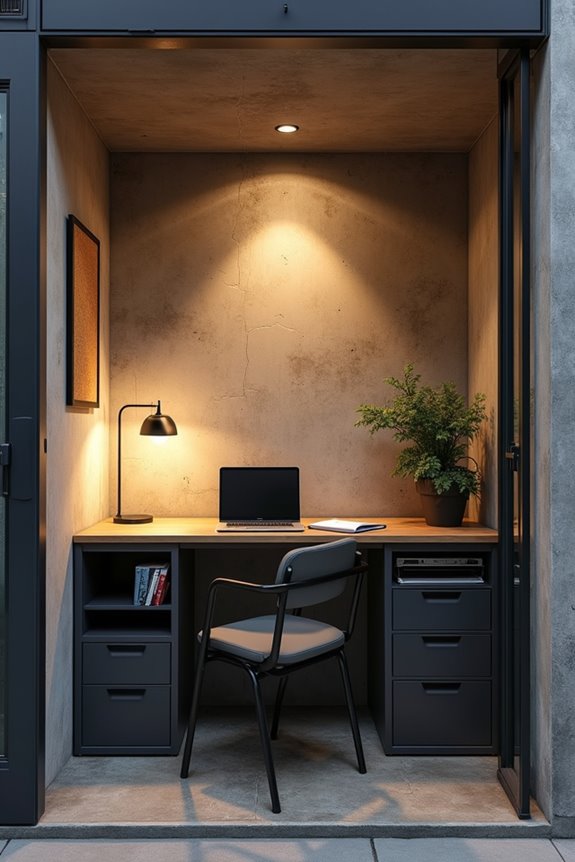
How do I transform a basic storage unit into a space where I can actually work and impress clients?
I’ve discovered that strategic layout transforms your climate-controlled storage into a legitimate office. Start by dividing your unit into distinct zones that flow naturally:
- Main desk area positioned near your electrical outlets for computers and lighting
- Separate client-facing corner with professional seating arrangement
- Lockable storage cabinets protecting confidential documents and supplies
- Meeting space distinct from your work zone, creating psychological separation
- Professional video backdrop wall for virtual meetings
Your office setup needs intentional spacing. I position my desk to maximize natural light while keeping client meetings in a polished corner away from filing systems. Heavy-duty locks on storage units signal security measures to visitors. This zoning creates credibility—clients genuinely feel respected in your organized, dedicated space.
Secure Business Insurance and Liability Coverage
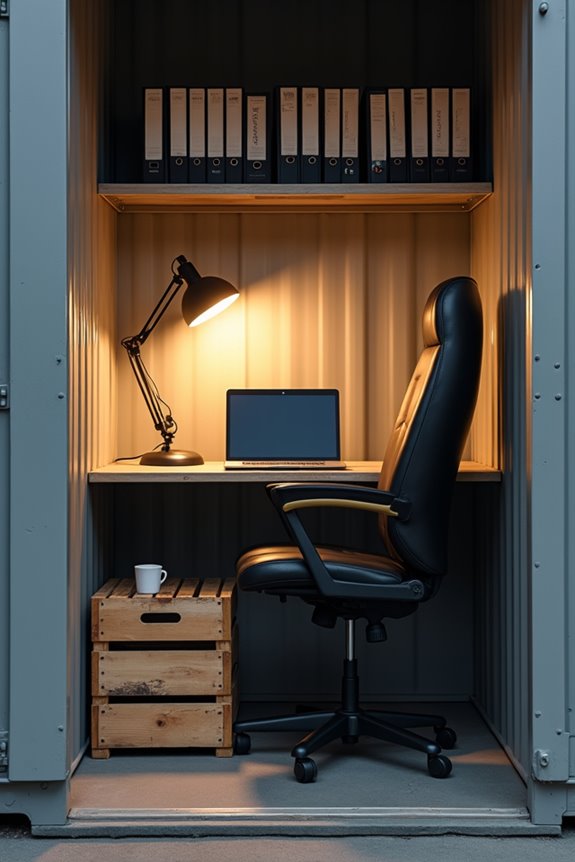
When I first set up my storage unit office, I learned the hard way that the facility’s basic insurance simply doesn’t cut it—standard coverage maxes out at maybe $2,500 and completely ignores business liability. That’s when I realized I needed a real commercial policy tailored specifically for my setup.
I invested in office insurance that covers my computers, inventory, and documents—the stuff that actually matters to my business. But here’s what sealed the deal: adding liability coverage protected me if a client got injured during our meetings or if something went wrong in my workspace.
Many providers now offer specialized commercial self-storage endorsements designed exactly for entrepreneurs like us. Yeah, it costs more monthly, but honestly? That peace of mind beats sleepless nights wondering “what if.”
Secure Your Storage Unit Office: Access, Cameras, and Safety
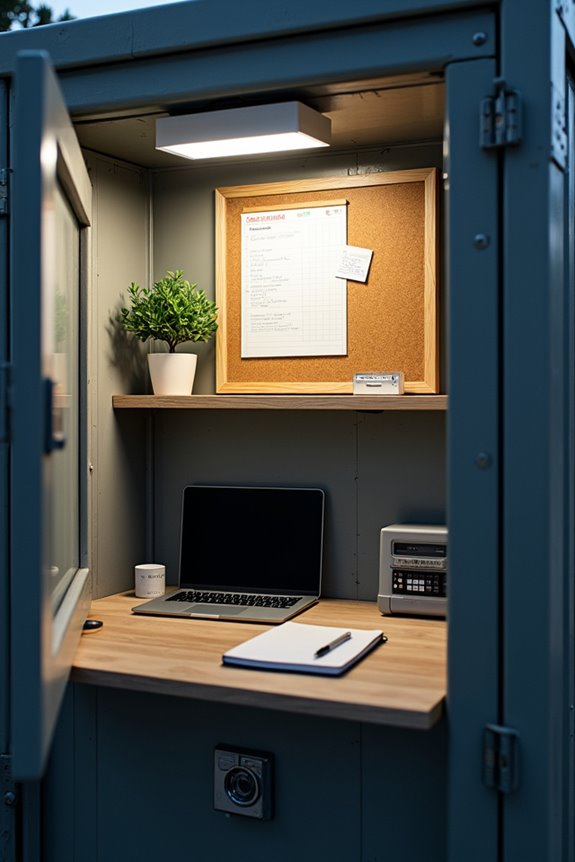
Now that you’ve got solid insurance protecting your business investment, it’s time to lock down the physical security of your space—because no policy covers the stress of wondering if someone’s messing with your equipment while you’re gone.
Insurance protects your investment, but physical security gives you peace of mind—no policy covers the stress of wondering who’s accessing your space.
I’ve learned that self-storage security makes all the difference. Here’s what I prioritize:
- 24/7 coded gate access keeps your office accessible whenever you need it
- Round-the-clock cameras monitor everything, giving you peace of mind
- Motion sensors and alarms deter unauthorized visitors instantly
- Onsite security personnel patrol regularly and respond fast to incidents
- Backup generators maintain power during outages, protecting your work
Check your facility’s access hours and visitor policies first. Understanding these details means you’re building a workspace you can actually trust. That’s the community advantage—knowing your storage unit truly works for your business.
Present a Professional Appearance to Clients and Partners
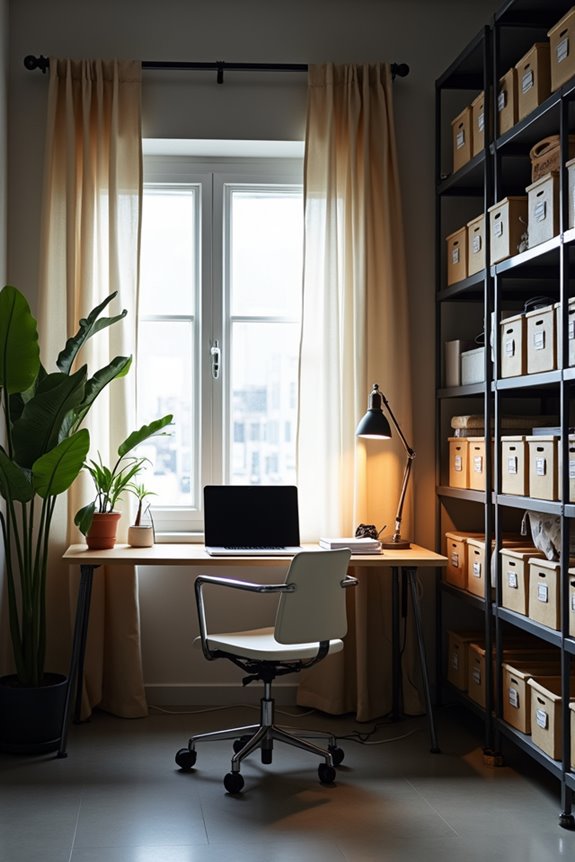
Your storage unit office won’t impress anyone if it looks like you’re running a business out of a closet—and that’s exactly why I’m passionate about this part. A professional appearance transforms how clients perceive your storage unit office. I’ve invested in a clean desk, ergonomic chair, and quality lighting that makes video calls look sharp and credible. A neutral backdrop—or even a simple branded panel—instantly elevates your space during client meetings. I keep filing cabinets organized and shelves clutter-free because that efficiency speaks volumes about my work ethic. Reliable internet and a quiet environment mean interruptions won’t derail important conversations. Climate-controlled units prevent equipment noise issues. When you present yourself professionally, clients see a legitimate business, not someone cutting corners. That credibility matters.
When a Storage Unit Office Actually Makes Sense

A storage unit transforms into a legitimate workspace only when you’re honest about what your business actually needs. I’ve learned that this setup shines for specific situations, not every entrepreneur.
Consider a storage unit office when:
- You work solo or with one partner and need flexible, 24/7 access
- Your business doesn’t require client visits or formal meetings regularly
- You want lower overhead costs—typically $1–3 monthly per square foot
- You’re testing a business idea before committing to traditional office rent
- You need month-to-month flexibility without long-term contracts
However, check zoning laws and insurance requirements first. Many facilities prohibit business activity, and your homeowner’s or renter’s policy won’t cover commercial work. Some storage companies restrict signage and address usage too. Understanding these boundaries beforehand saves frustration and keeps you compliant. When conditions align, though? You’ve found genuine freedom.