
I’ll walk you through hanging wall cabinets like a pro. First, locate studs and mark reference lines at 54 inches for cabinet bottoms. Use a 2×4 as temporary support underneath, then secure cabinets into studs with long screws through pilot holes. For base cabinets, find your highest floor point and shim underneath for perfect level. Clamp adjacent cabinets flush together, drill through face frames into studs, then patch holes. Finally, attach doors and hardware last to prevent damage. Master these fundamentals, and you’ll discover tricks that transform your installation into something truly professional.
Hang Upper Cabinets Using the 2×4 Support Hack
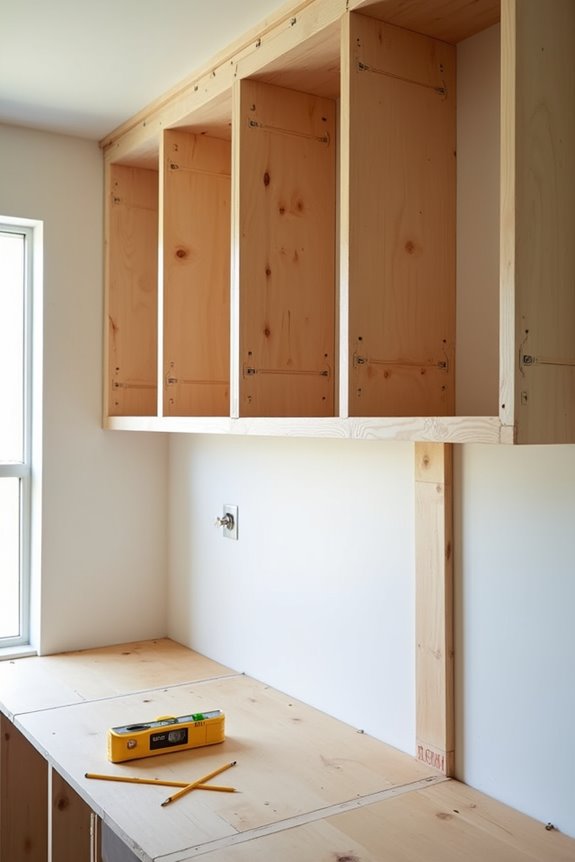
Once you’ve located your studs and marked where your cabinets’ll go, here’s where the real enchantment occurs—and trust me, this 2×4 trick’ll save you from the frustrating dance of holding a heavy cabinet while hunting for screws.
I grab a scrap 2×4 and position it horizontally on the wall, using a laser level to ensure it’s perfectly straight. Then I align my cabinet’s bottom edge with the 2×4’s top edge and rest the cabinet’s back against it securely. This temporary support lets me mark exactly where the studs are without my arms screaming.
After marking those critical points, I remove the 2×4 and patch the two small holes. Finally, I drive screws through the cabinet’s back into the studs, securing everything permanently.
Install Base Cabinets With Shims for Level Fit
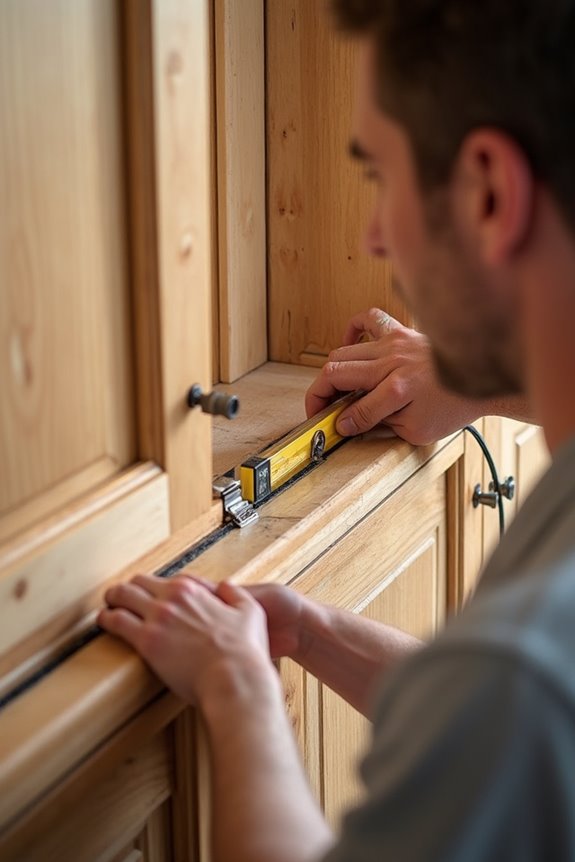
Here’s where patience pays off big time—base cabinets demand precision because even a quarter-inch of tilt’ll throw off your entire kitchen’s look and function. I start by drawing a level line at the highest floor point, creating my guide for levelling the whole run. Then I wedge shims under and behind each cabinet, working methodically from back to front. Once everything’s sitting flush and level, I clamp the cabinet faces together and screw adjacent units to each other, creating one solid foundation. Before final fastening to studs, I triple-check plumb and level across multiple points. Even gaps everywhere? That’s your green light. You’ve earned the satisfaction of knowing your base cabinets’ll stay perfectly aligned for years ahead.
Measure Heights and Mark Your Reference Lines
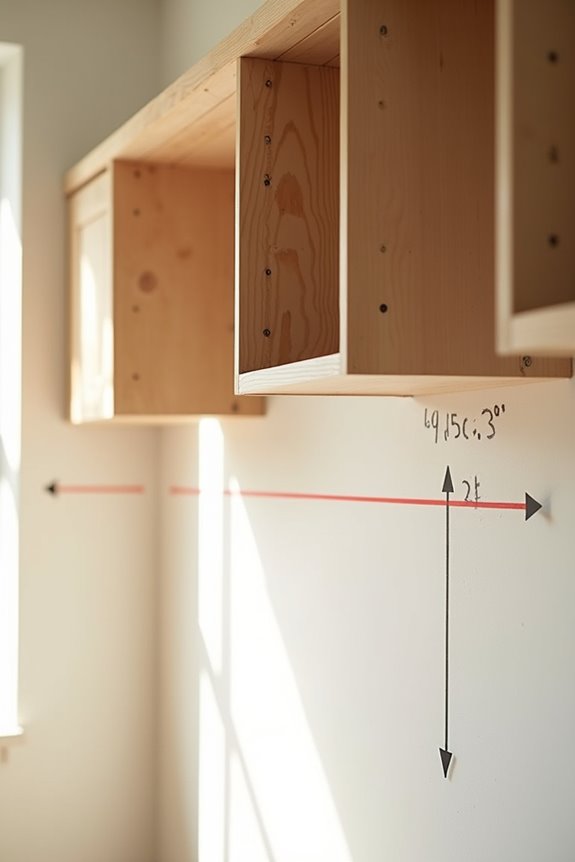
I’ll find the highest point on my floor first—this becomes my reference line at roughly 48 inches up, which guides where my upper cabinets’ll sit. Next, I’m drawing a horizontal guide line using my level, starting from the top of my base cabinets and marking where that 54-inch bottom height lands so all my units align perfectly. These lines are my roadmap, keeping everything square and making sure I’ve got that sweet 19-inch gap between my countertop and cabinet bottoms.
Finding The Highest Point
What’s the secret to perfectly aligned cabinets that look professionally installed? Finding the highest point on your floor. I can’t stress this enough—it’s your foundation for everything that follows.
Here’s what I do: I grab my level and systematically check different spots across the floor. Floors aren’t always perfectly flat, and that’s the reality we’re working with. I identify that highest point, then build my entire cabinet layout from there.
Why? Because if I start from a low spot, I’ll create sloped countertops that look sloppy. That highest point becomes my reference—my starting line for marking that crucial 48-inch measurement on the wall.
Taking five extra minutes here saves hours of frustration later. Trust me, your kitchen will thank you.
Drawing Guide Lines
Now comes the moment where your careful floor measurements transform into actual marks on your wall—and honestly, this is where the magic starts happening. I grab my pencil and mark a horizontal line at 54 inches from the ground. This becomes my reference point for the bottom edge of the upper cabinets. I also mark 48 inches as my starting reference, which accounts for countertop clearance and cabinet layout spacing.
Here’s what makes this step crucial: I’m drawing separate top and bottom horizontal guides for each cabinet unit. This ensures consistent leveling across multiple sections—no drooping or tilted cabinets ruining my finished look. I label stud locations and appliance positions too. These marks become my roadmap, transforming abstract measurements into concrete visual guides I can actually follow during installation.
Locate Studs and Plan Your Screw Locations
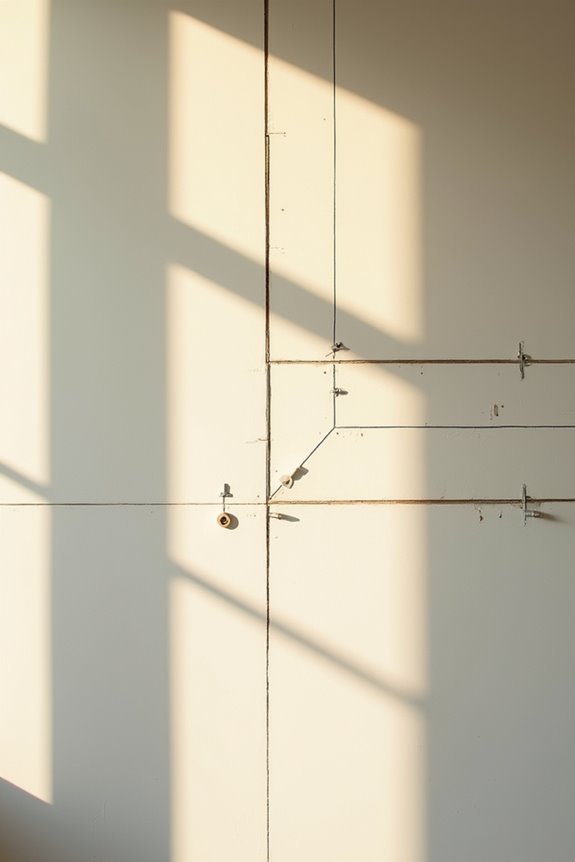
Before you even think about picking up a drill, you’ve got to find those studs—the vertical wooden supports behind your drywall that’ll keep your cabinets rock-solid. I use a laser level to mark every stud location on my wall, then label them clearly so I won’t miss a single one. This takes maybe five minutes but saves serious headaches later. Next, I identify exactly where my cabinet screws will go, making sure they hit studs dead-on. You’ll also want to plan your outlet positions now, marking where you’ll need back holes to avoid drilling into wiring later. Double-check everything’s plumb and level before you commit. When you’ve got studs and screw locations locked in, you’re setting yourself up for success.
Clamp and Screw Cabinets Together
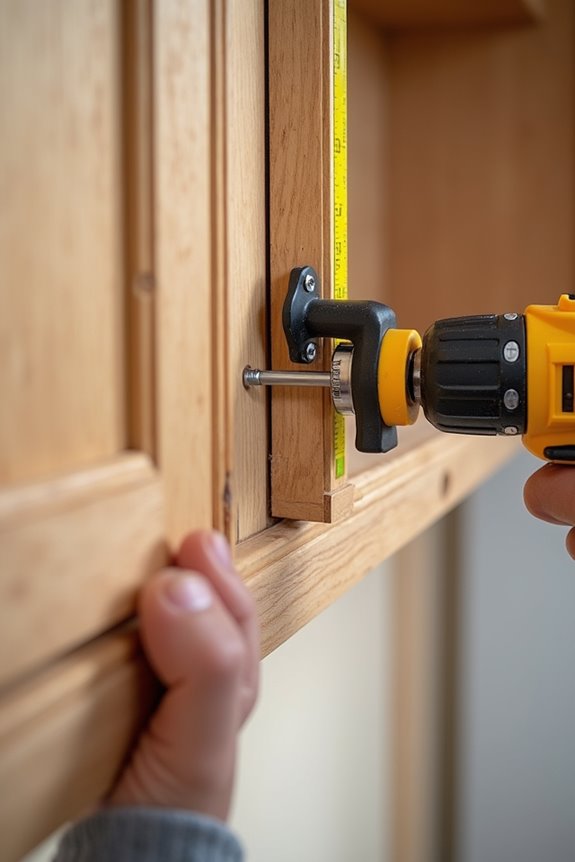
I’m thrilled to show you how I pull adjacent cabinets together so they sit perfectly flush—it’s where things really come together! I’ll clamp the cabinet faces, use long wood screws with pre-drilled pilot holes through the face frames, and make sure that seam between cabinets stays tight and even. This step’s honestly where your installation morphs from individual boxes into one solid, professional-looking run.
Aligning Cabinet Faces Together
How do you get those cabinet faces perfectly flush with each other? Cabinet alignment is where your installation shifts from amateur to professional-looking. I’m genuinely excited to share this game-changing process with you.
- Align each upper cabinet with your guiding lines before clamping
- Use shims behind cabinet faces to create consistent gaps and achieve plumb positioning
- Clamp units together securely, checking that faces are flush
- Drill screws through both adjacent cabinet faces into studs, working methodically from one end
As you progress, continuously check the bottom edge against your horizontal guide line. Those tiny clamping holes? Patch them on the exterior face after tightening. This methodical approach transforms separate boxes into one seamless unit that screams quality craftsmanship. You’ve got this!
Securing With Cabinet Screws
Your cabinets are perfectly aligned and flush—now it’s time to lock them in place permanently. I clamp adjacent cabinets together first, ensuring they’re rock-solid before driving cabinet screws through the connecting interface. This step bonds them into one rigid unit that won’t shift or separate over time.
Next, I drill cabinet screws through the cabinet frames directly into wall studs—the hidden wooden supports behind your drywall. If studs aren’t positioned where I need them, I use wall anchors rated for my cabinet’s weight. I tighten methodically, working gradually rather than cranking one screw fully, which prevents warping and keeps everything perfectly level.
This is where your installation transforms from temporary to permanent. You’re building something you’ll trust for years.
Ensuring Flush Wall Contact
Now that your cabinets are perfectly level, it’s time to cement them against the wall so they’ll never budge. I use shims strategically behind the back to achieve that essential flush contact. Here’s my process:
- Position shims behind the cabinet back, adjusting until the unit sits flush against the wall
- Level from front to back using your level tool, ensuring no gaps exist
- Clamp adjacent upper cabinets together to maintain consistent spacing and prevent shifting
- Drill through the cabinet back into wall studs using long screws that bypass shim gaps
I start fastening from the bottom rear corner and work upward, checking plumb after each screw. If any panel pulls away, I add extra shims immediately. This continuous alignment across all units creates that professional, seamless look you’re after—and honestly, there’s real satisfaction in watching everything come together perfectly.
Attach Molding, Doors, and Hardware
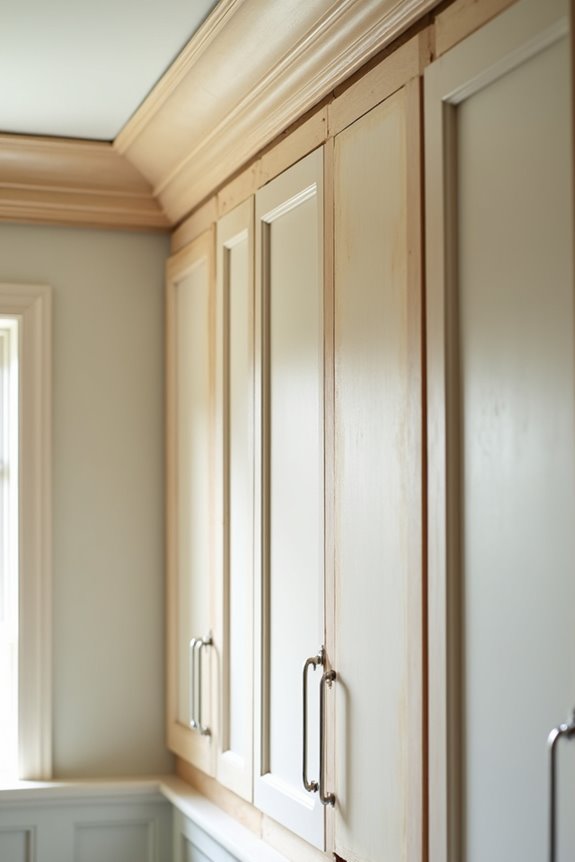
Once your cabinet boxes are securely mounted to the wall, it’s time for the exciting part—changing them from plain installations into polished, finished pieces! I start by attaching molding and valences, which frame everything beautifully. Then I use a brad gun to secure fillers and end panels, creating those clean, tight joints that scream professional craftsmanship.
Next comes the real magic: installing cabinet doors. I carefully attach each door, checking alignment before permanently securing anything. Then I add drawers and hardware, but here’s my pro tip—I save knobs and pulls for last to prevent accidental damage during installation.
Before final hardware installation, I verify everything’s flush and evenly spaced. This attention to detail changes your cabinets from functional to fabulous, and you’ll feel genuinely proud of the results.
Troubleshoot Uneven Walls and Misaligned Studs
Here’s the revised version with contextual synonyms replacing ONLY “worth it” and “absolutely worth”:
What’s the biggest challenge I face when hanging cabinets? Uneven walls and misaligned studs—they’re sneaky troublemakers that’ll throw off your entire project. But I’ve got solutions!
Here’s my approach:
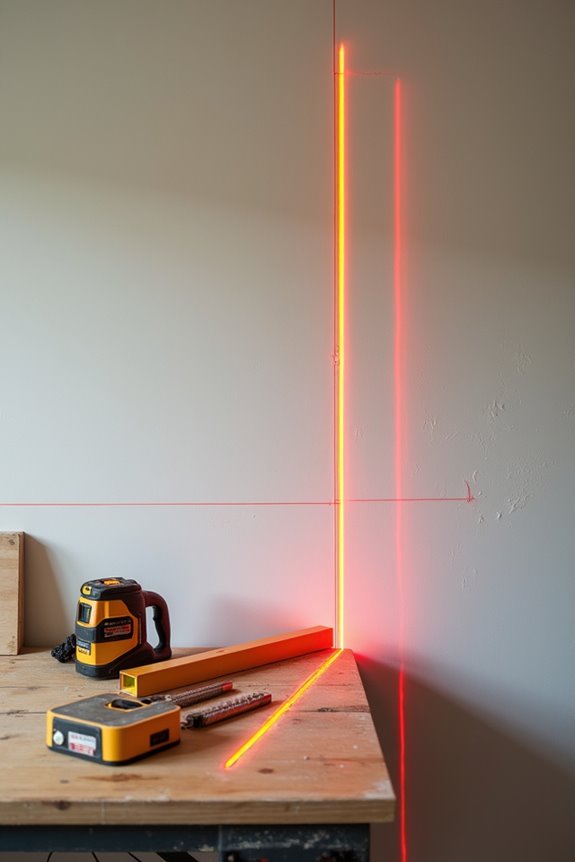
- Use a laser level to mark studs and draw reference lines, creating guides despite wall irregularities
- Identify uneven wall points by running your hand across surfaces, noting problem areas
- Compensate with shims—thin wedges I tuck behind cabinets to achieve flush contact
- Recheck plumb and square after initial securing, adjusting shims before final tightening
For misaligned studs, I fasten into available studs while using ledger boards or long screws as backup support. Start by drawing a reference line at the highest floor point and level from there. This counteracts floor height variances beautifully. Trust me, shimming takes patience, but it’s genuinely worthwhile for professional results.