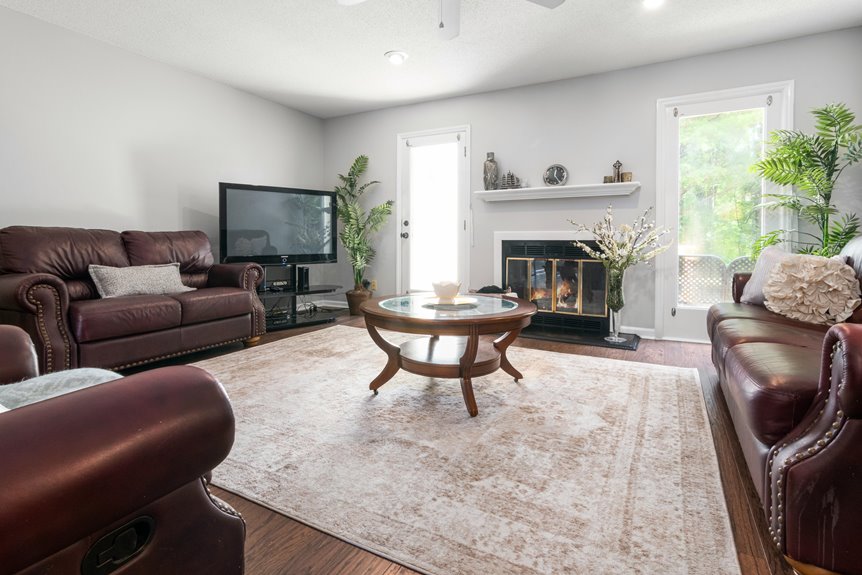
Yes, you can suspend a television over your fireplace—I’ve done it successfully. The key is safeguarding your TV from heat damage by maintaining at least 12 inches of clearance above the fireplace opening and using heat shields. Mount it roughly 42–48 inches from the floor to align with your eye level when seated, not higher. I’d recommend a full-motion mount that tilts and pulls down, reducing neck strain and letting you adjust for comfort. The real challenge isn’t whether you can do it; it’s doing it correctly to avoid costly mistakes.
Can You Hang a TV Over a Fireplace?
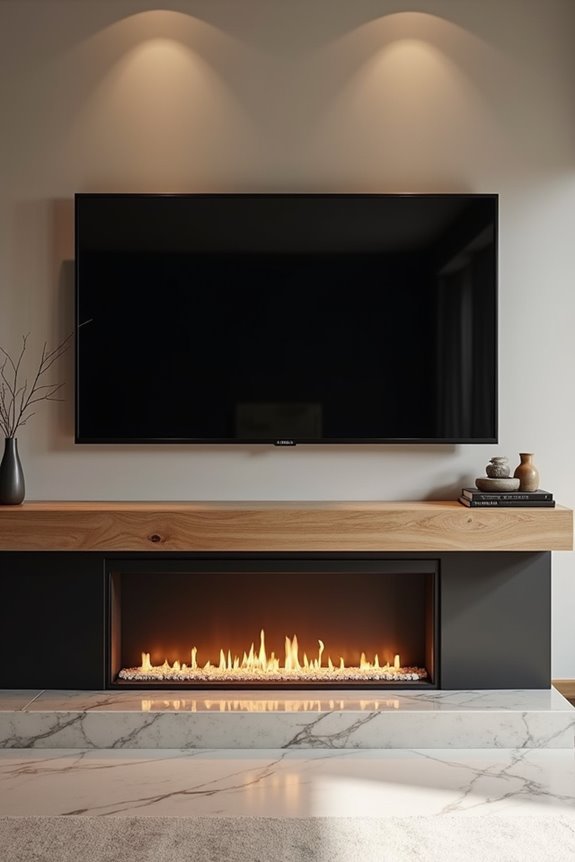
Why does mounting a TV above a fireplace feel like such a natural fit when it actually requires some careful planning? I’ve learned that it’s absolutely doable, but you’ll need the right TV mount and heat protection strategies. Here’s the thing: heat from gas or wood-burning fireplaces can damage your TV, so using a mantel, heat shields, or creating an air gap between them becomes essential. The optimal viewing height sits around 42–48 inches to your screen’s center, though above-fireplace placement often ends up higher. That’s where full-motion mounts shine—they let you lower your TV to eye level when watching, eliminating that annoying neck strain. Always consult both your TV and fireplace manuals for specific clearances. Professional installation ensures everything’s safe and compliant.
Fireplace Heat and Your TV: Damage Prevention
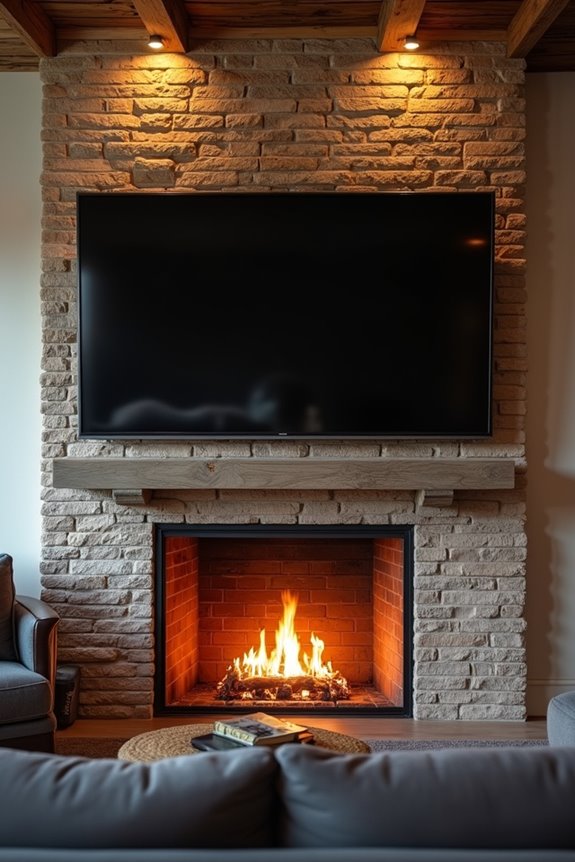
How much heat’s actually radiating from your fireplace right now? Most manufacturers recommend keeping electronics below 40°C (105°F), and fireplaces easily exceed that near the mounting area. I’ve learned that heat damages TV components faster than you’d think, shortening lifespan significantly.
Here’s what I do: I create an air gap between the chimney wall and TV using spacers or a specialized mounting bracket. This isolation reduces heat transfer dramatically. I also consider heat shielding—either a mantel design or reflective barriers redirect warmth away from vulnerable electronics.
Tilt and full-motion mounts give me flexibility too. I position my TV away from direct heat exposure when the fireplace runs. These simple strategies protect my investment while letting me enjoy both features guilt-free. Your setup’s success depends on respecting heat’s power.
Avoiding Neck Strain When Mounting High Above a Fireplace
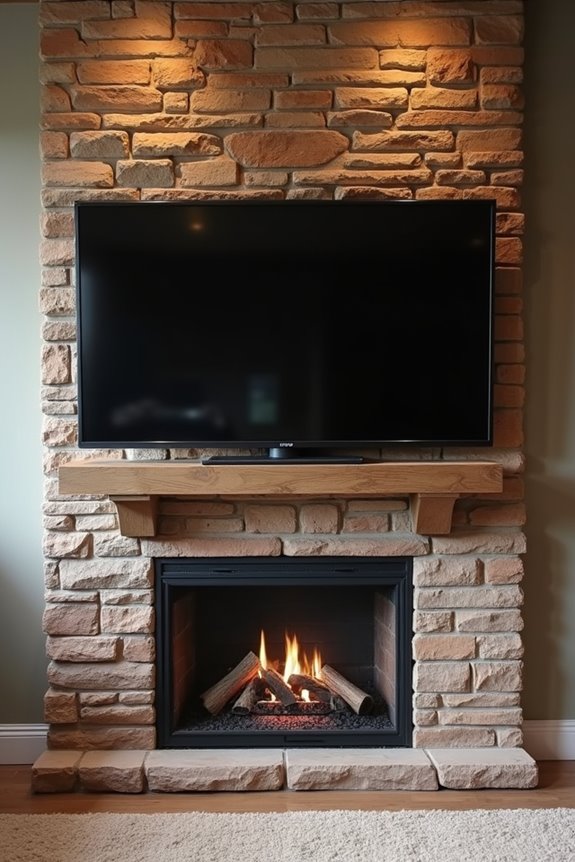
I’ve found that mounting your TV too high above the fireplace can really mess with your neck—trust me, after a few hours of craning upward, you’ll feel it! The good news is that full-motion mounts let you pull the screen down to your actual eye level (measure from your couch to find that sweet spot), which transforms the whole viewing experience. With these adjustable mounts, you get the best of both worlds: that gorgeous fireplace focal point and a comfortable, strain-free position that keeps your neck happy during movie marathons.
Optimal Viewing Height Selection
Finding the sweet spot for your TV’s height above a fireplace is genuinely exciting because it’s where comfort and aesthetics finally come together. I’ve discovered that the magic happens around 42–48 inches from floor to TV center, but your fireplace height and seating distance matter tremendously.
| Seating Distance | Recommended Height | Viewing Angle |
|---|---|---|
| 6-8 feet | 48 inches | Slightly upward |
| 8-10 feet | 45 inches | Eye level |
| 10-12 feet | 42 inches | Slightly downward |
| High mantel | Lower with mount | Reduced strain |
| Standard mantel | 45 inches | Optimal comfort |
Before final installation, I measure from my usual spot and test alignment. When your fireplace height forces the TV upward, a tilting mount becomes your best friend—it angles the screen down, eliminating that annoying neck strain. You’ll feel the difference immediately.
Full-Motion Mount Solutions
Once you’ve nailed down that ideal height on paper, the real enchantment occurs with a full-motion mount—and trust me, this is where your neck will thank you. A full-motion wall-mount lets you pull your TV down from above eye level to a comfortable viewing position, transforming that high fireplace placement into something actually enjoyable. You’re not stuck staring upward anymore. Instead, you’ll use the mount’s tilt capability to angle the screen downward toward your seating area, eliminating that uncomfortable neck strain. I love positioning the TV center at eye level initially, then lowering it during viewing sessions. This setup gives you flexibility you won’t find with fixed mounts. Your neck stays neutral, your viewing experience improves dramatically, and you’ve solved the fireplace-mounting challenge perfectly.
Determine Your Safe Mounting Height
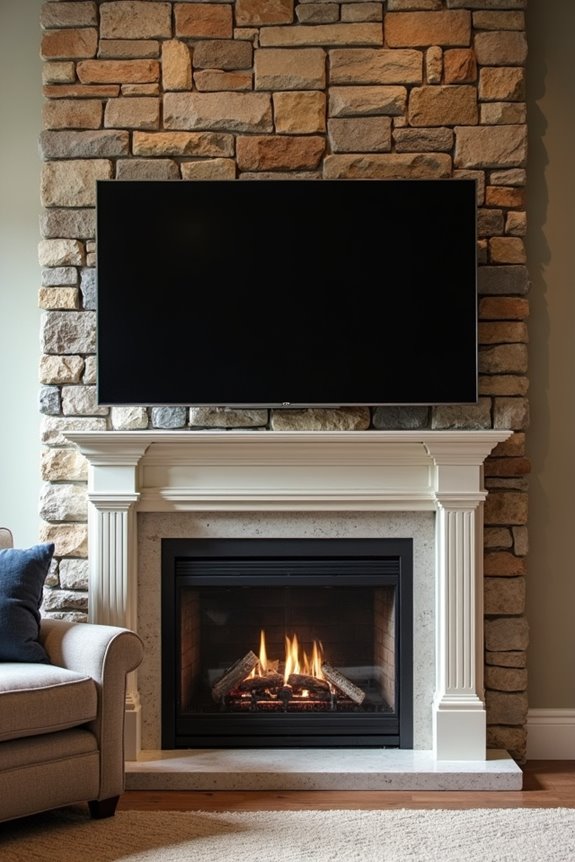
I’m excited to help you nail this—the sweet spot for your TV’s center is typically 42–48 inches from the floor, though your seating distance and eye level should guide where you land in that range. To find your viewing angle, I’d suggest sitting in your favorite spot and noting where your eyes naturally rest, then measuring up from the floor to see if you’re hitting that comfortable zone or if you need to adjust. Once you’ve got those measurements locked in, you’ll be ready to mount with confidence, knowing you’re protecting your neck and getting the best picture possible!
Optimal Center Height Range
How do you know you’ve nailed the perfect TV height? You’ll feel it the moment you sit down. I recommend aiming for 42–48 inches from the floor to your TV’s center. This range works beautifully for most living rooms, but here’s what matters most: your eye level when seated. Forget about mantel height for a second and focus on what feels natural for your neck and eyes. Sit in your favorite viewing spot, mark where your eyes naturally rest on the wall, and make that your target. If you’ve got a fireplace with a mantel, you might place your TV 6–8 inches above it, adjusting based on your room’s layout. Trust your body—comfort always wins.
Measuring Your Viewing Angle
Your seating distance from the wall is the real game-changer when it comes to comfortable viewing. Measure from your couch to where you’ll mount the TV—this distance determines everything about your setup’s success.
Here’s the magic: sit in your favorite spot and notice where your eyes naturally rest. That’s your eye level, and it’s your golden target. Mark it on the wall with a pencil.
Now measure from your seating to that wall. If you’re sitting 8–10 feet away, you’ll want your TV’s center hitting that eye-level mark perfectly. This keeps your viewing angle straight-on instead of forcing you to crane your neck upward.
The distance-to-height relationship matters tremendously. Closer seating needs lower mounting. Further distance allows higher placement. Getting this right transforms your entire viewing experience from uncomfortable to genuinely enjoyable.
Choose the Right Mount Type
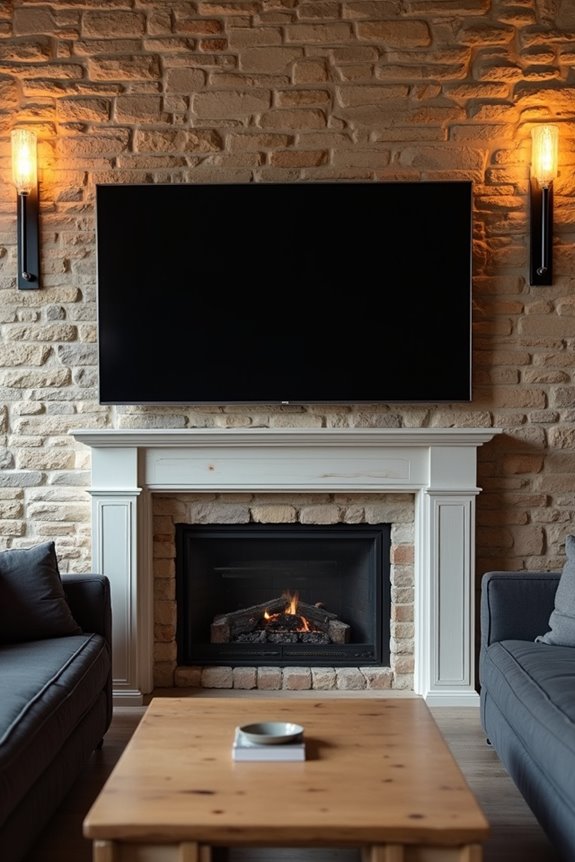
When it comes to mounting your TV above a fireplace, selecting the right bracket makes all the difference between a comfortable viewing experience and constant neck strain. I’d recommend a full-motion mount that tilts and pulls down toward eye level. This mount type adjusts your screen’s angle, reducing glare and that annoying upward stare that leaves your neck aching after movie night.
Full-motion mounts let you position your TV exactly where you need it, bringing the screen closer to your natural sightline from the couch. They’re genuinely game-changing for above-fireplace setups. Before purchasing, verify your TV’s weight and VESA pattern—those four-hole measurements on your TV’s back panel—match your mount’s specifications. Getting this right means enjoying your favorite shows without discomfort.
Install Heat Protection Before Mounting
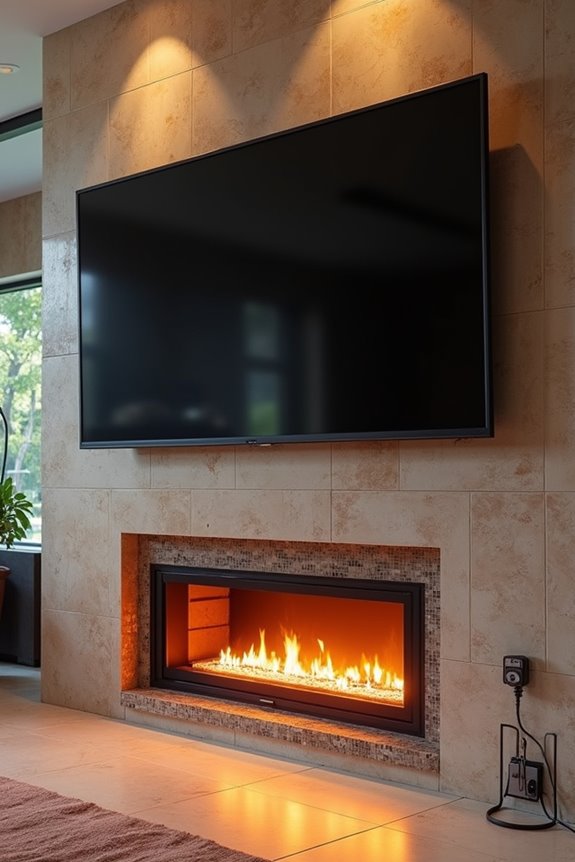
Why does everyone forget about the heat until their TV starts acting weird? I’ve learned that heat protection isn’t optional—it’s essential. Before mounting anything, I install multiple safeguards:
Why does everyone forget about the heat until their TV starts acting weird? Heat protection isn’t optional—it’s essential.
- Install a heat shield or isolation material between the wall and chimney
- Maintain several inches of air gap, following both TV and fireplace manufacturer guidelines
- Use fireplace-rated spacers to prevent direct contact with hot surfaces
- Check local building codes and your fireplace manual for maximum temperatures and required clearances
I’ve seen friends skip this step and regret it. Your TV’s electronics hate heat. Consider upgrading to a non-heating decorative fireplace if you’re still planning the setup. Those clearances matter—they’re not suggestions. Trust me, protecting your investment upfront beats replacing a fried TV later. We’re all in this together, making smarter home choices.
Should Your TV Be Bigger or Smaller Than Your Mantel?
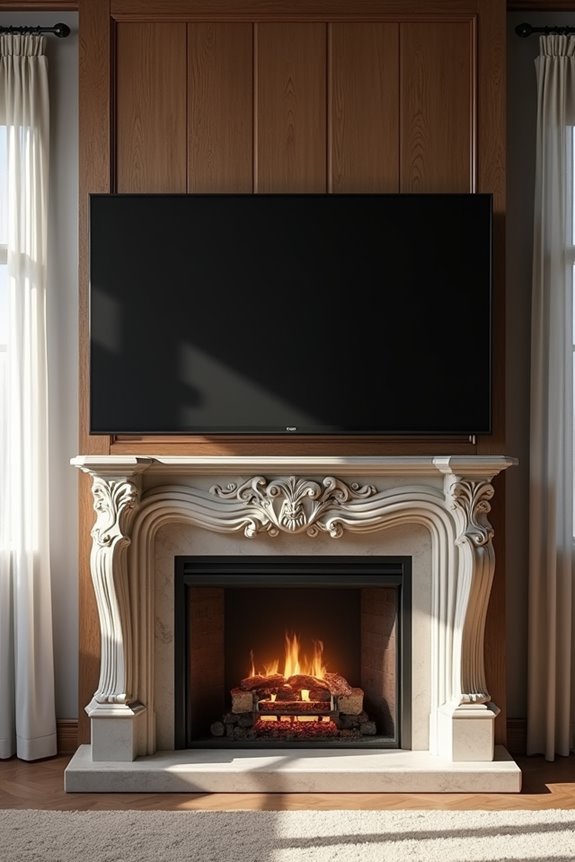
How do I pick the perfect TV size for my fireplace setup? I’ve learned that your TV should be proportional to your mantel—ideally between two-thirds and seven-eighths of its width. For a 69-inch mantel, I’d target a TV between 46 and 60 inches. This balance creates visual harmony that feels deliberate and refined.
I always avoid going oversized. A TV wider than your mantel looks awkward and dominates the space. Conversely, undersizing makes everything feel disconnected. The sweet spot? I position my TV roughly 5 to 8 inches above or below the mantel, depending on seating distance.
Before committing, I create mock-ups using cardboard cutouts. This helps me visualize how a 55-inch versus 65-inch TV actually looks above my specific mantel. It’s genuinely worth the effort—getting proportions right transforms your entire room’s aesthetic.
How to Mount Your TV (Step-by-Step)
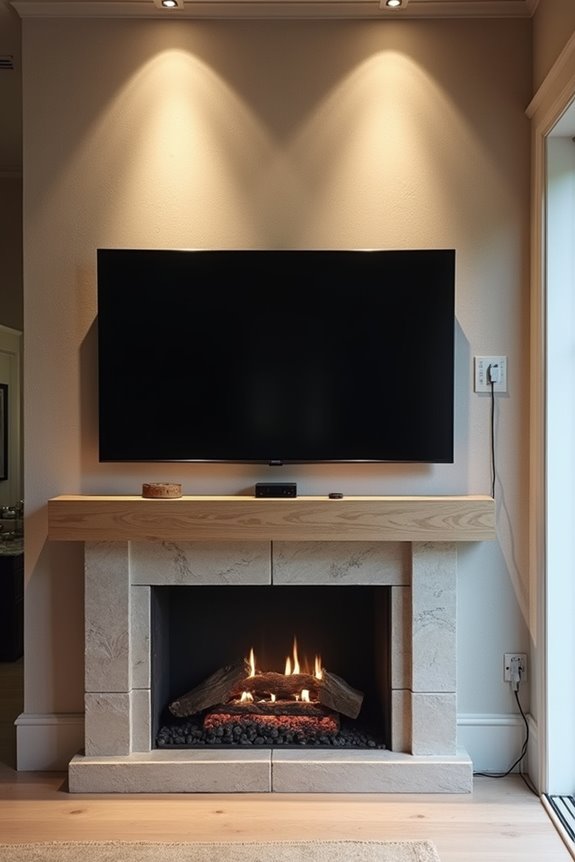
Once you’ve nailed down your TV size and positioning, the actual mounting is where the transformation occurs—and honestly, it’s easier than you might think. You’ve got this!
The actual mounting is where the transformation occurs—and honestly, it’s easier than you might think.
Here’s what I do to secure my TV wall setup:
- Gather your tools: stud finder, drill, level, measuring tape, pencil, and mounting bracket
- Locate wall studs behind your drywall and attach the bracket securely with level checks
- Lift your TV carefully, connect cables, then secure it to the bracket with screws
- Test stability with gentle pressure before concealing wires
For tilting or full-motion mounts, I adjust the tilt angle first to nail that perfect viewing perspective. Then I straighten everything for a polished, level finish. Verify alignment throughout—that’s when you’ll feel genuinely proud of your work. You’re creating something practical and stunning together.
Running Cables Behind a Fireplace-Mounted TV
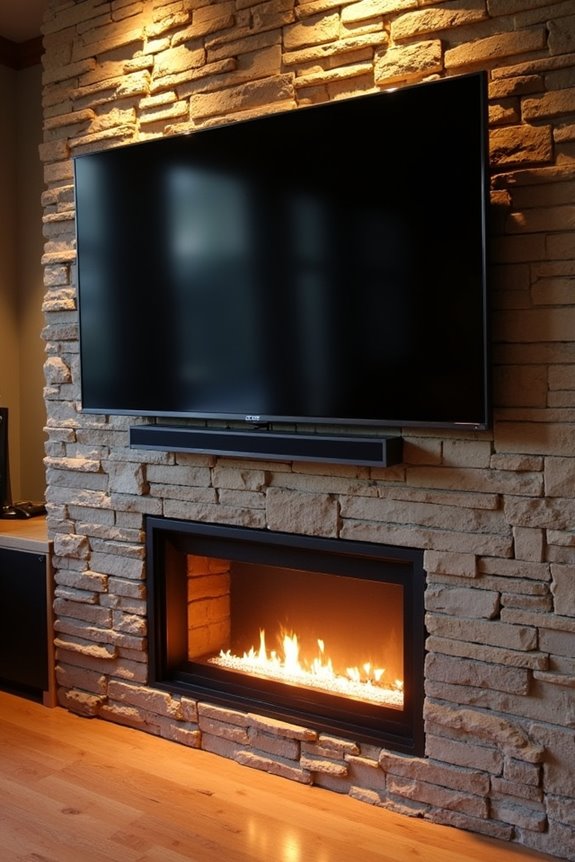
The moment your TV’s mounted and looking sleek, there’s one thing that can totally ruin the vibe: a tangled mess of cables snaking down your wall. I’ve learned that smart cable routing before mounting saves major headaches later. Here’s what works: plan your in-wall power setup first—consider installing a Power Bridge kit to safely bring electrical outlets directly behind your TV without exposed cords running everywhere. Use wall cable channels or sleeves to hide remaining wires, creating that polished look you’re after. If no power source exists behind your fireplace, run cords to a nearby closet instead. Honestly, hiring a professional for in-wall runs ensures everything meets building codes and stays safe. Your future self will thank you for that clean, clutter-free wall.
Mistakes That Destroy TVs When Mounting Over Fireplaces
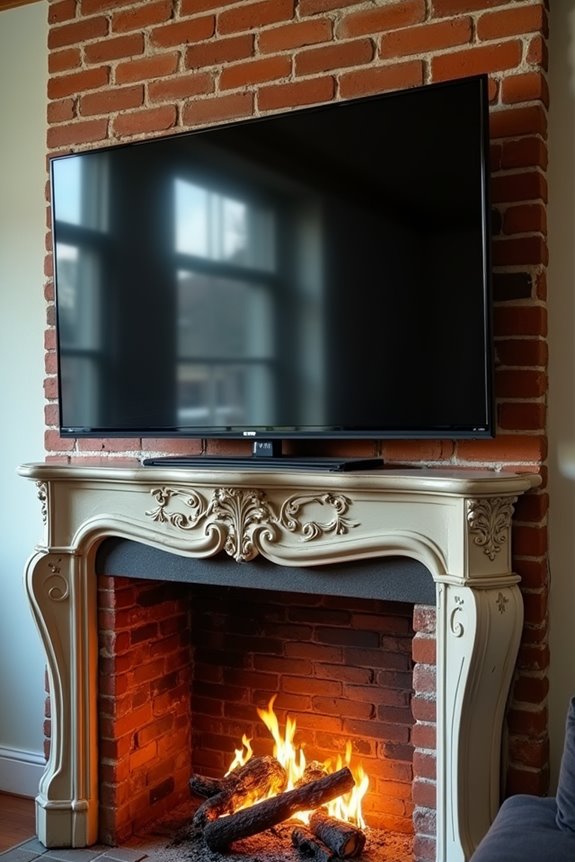
I’ve made plenty of fireplace TV mounting mistakes myself, and I’m genuinely excited to help you avoid destroying your expensive display like I almost did. The three biggest killers are ignoring heat management—letting your TV bake above 40°C without proper airflow or isolation—botching the mount installation with wrong hardware or unstable anchors into unknown wall materials, and overlooking clearance specs that leave your TV too close to rising heat. You’ll want steel brackets instead of aluminum, at least 12 inches of air gap above the fireplace opening, and a mount that lets you tilt or angle your screen away from direct heat exposure.
Ignoring Heat Management Protocols
Why do so many homeowners overlook heat management when mounting a TV above their fireplace? I’ve seen it happen repeatedly—people focus on aesthetics and miss critical temperature exposure dangers. Here’s what happens when you ignore proper heat protocols:
- Ambient temperatures exceed your TV’s rated limits, accelerating component wear
- Chimney heat transfer raises internal temperatures, shortening lifespan and voiding warranties
- Repeated exposure degrades LCD/LED backlights, reducing color accuracy permanently
- Capacitors degrade and power supplies destabilize from cumulative heat damage
Without heat shields or proper clearance, even occasional fires damage your investment. I learned that mounting directly over fireplaces without air gaps invites disaster. You’ll notice performance issues before catastrophic failure. Smart heat management—using thermal barriers and maintaining 12-inch clearance—protects your setup. Trust me, planning ahead saves thousands in replacements.
Improper Mount Installation Errors
How many homeowners install their TV brackets without ever checking what’s actually behind that brick façade? I’ve seen it happen constantly, and it’s a disaster waiting to happen. You can’t just drill into unknown chimney backing—you’ll crack mortar joints and loosen surrounding brick courses. That’s structural damage nobody wants.
Here’s what I’ve learned: proper mounting requires locating actual studs or using appropriate masonry fasteners rated for your wall type. Aluminum hardware? Skip it. High heat causes expansion and warping, which shears your bracket right off the wall.
Then there’s heat isolation. You absolutely need an air gap between your TV and that chimney. Without proper spacing and heat isolation barriers, internal electronics degrade fast. I recommend tilting mounts that allow adjustment, keeping your screen angled away from concentrated heat exposure while you nail the installation correctly.
Overlooking Clearance Specifications
Most homeowners skip the manual—and that’s exactly when TVs start failing. I learned this the hard way. Manufacturers specify minimum clearances for good reason: protecting your TV from heat exposure and chimney damage.
Here’s what I wish I’d checked first:
- Gas fireplaces need 12-24 inches of clearance above the unit
- Wood-burning fireplaces demand even more space—often 36 inches or higher
- Heat can reach 40°C (105°F) near the chimney, damaging internal components
- Aluminum brackets degrade quickly in these conditions; steel hardware resists better
The manual isn’t boring—it’s your TV’s survival guide. I now measure twice, mount once. That air gap between your TV and chimney wall? It’s your best friend. Respecting these clearances means your setup stays beautiful and functional for years.
Should You Mount Your TV Over a Fireplace?
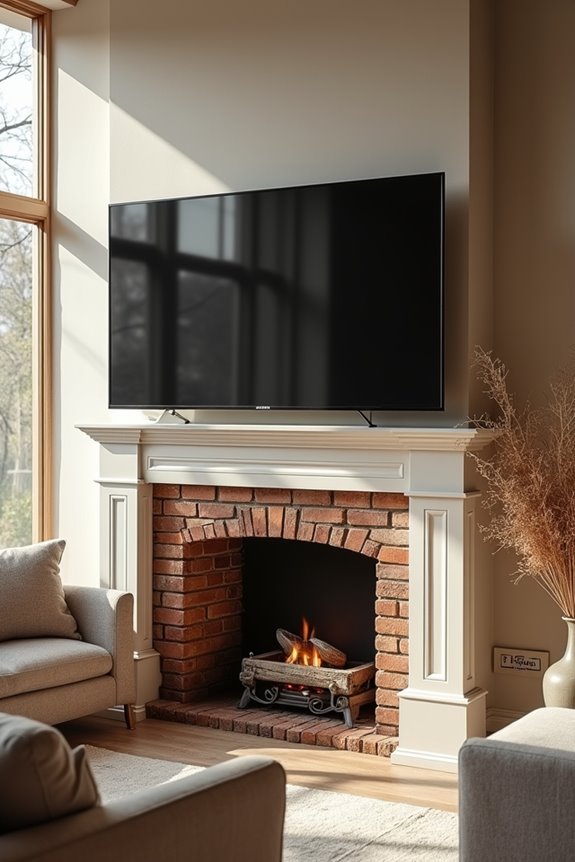
Mounting your TV directly above a fireplace seems like the perfect solution—it’s the natural focal point of most living rooms, and you’ll save wall space while creating a sleek, centered entertainment setup. However, I’d encourage you to pause before drilling holes.
Heat transfer from your chimney can seriously damage your TV’s internal components, potentially voiding your warranty. The real game-changer? Consider alternatives. Placing your TV on an adjacent wall lets you avoid heat issues entirely while maintaining that cohesive look you’re after. If you’re set on mounting above the mantel, install a full-motion tilt mount that adjusts your mounting height so you’re not straining your neck upward constantly.
Trust me—your comfort and your TV’s longevity matter more than perfect symmetry.