Yes, you can burn pine safely—but here’s what matters: creosote buildup comes from low-temperature fires, not pine’s resin. Season your pine to roughly 10% moisture (check with a meter), keep flue gases above 125°C, and maintain hot, active flames through proper airflow. Mix seasoned pine with hardwoods for extended burn time. Schedule annual chimney inspections and professional sweeps. Done right, pine burns hot and clean. Stick around to discover the specific techniques that’ll transform your fireplace experience.
Why People Warn Against Pine (And What’s Actually True)
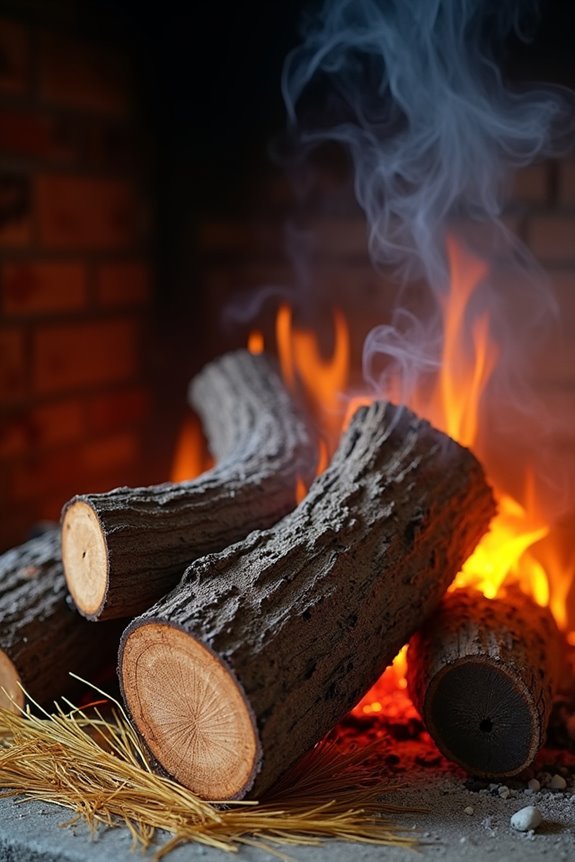
Why does pine get such a bad reputation among fireplace enthusiasts? I’ll tell you—it’s mostly about creosote, that sticky black substance that builds up inside chimneys. Pine has high resin and sap content, which creates more tar when burned, especially in cooler fires. Historically, open fireplaces with only 15% efficiency let vapors escape and condense on chimney walls, causing dangerous creosote buildup. Here’s the truth though: the warnings aren’t entirely fair. Modern wood stoves and properly lined chimneys keep gases hot enough to prevent wall condensation. If you burn dry, seasoned pine with moisture levels around 10%, it burns hotter and cleaner. Regular chimney maintenance and proper operation basically eliminate the creosote risk. You’re not making a mistake choosing pine.
Creosote Builds up From Low Heat, Not Resin Content
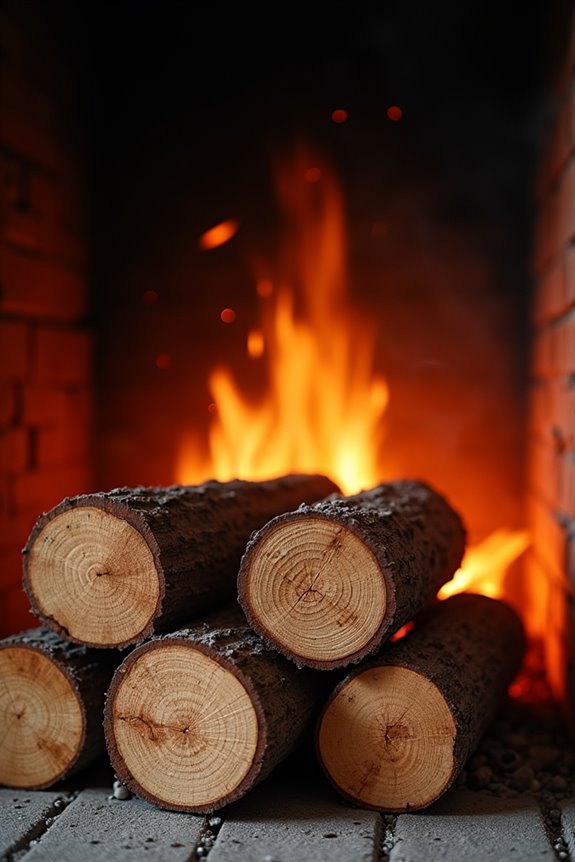
I’ve got exciting news that’ll change how you think about burning pine: creosote buildup actually comes from low flame temperatures and sluggish combustion, not from pine’s resin content like everyone assumes. When you burn properly seasoned wood—moisture content below 20%—at high heat with good airflow, you’re creating the hot, efficient fires that prevent creosote from forming in your chimney, regardless of whether you’re using pine, oak, or any other wood species. So the real secret isn’t avoiding pine altogether; it’s mastering hot burns and keeping your wood dry.
Temperature Controls Creosote Formation
it’s all about temperature, not the wood you’re burning.
I’ve learned that creosote forms when flue gases cool down instead of burning completely. You control this through smart combustion practices:
- Burn seasoned wood with moisture below 20% to maintain hotter fires
- Achieve high-temperature combustion by ensuring proper airflow and complete burning
- Keep flames bright and active, never “goopy” or sluggish
- Monitor your flue temperature—aim for sustained heat rather than cool smoldering
- Schedule regular chimney inspections to catch buildup early
The truth? Pine works fine when you’re intentional about how you burn it. Focus on creating efficient, hot fires, and you’ll dramatically reduce creosote regardless of wood species. That’s the real secret to a clean, safe chimney.
Seasoning Wood Reduces Buildup
they blame the wood’s natural sap content when they should really blame moisture and lazy fires. I’ve learned that seasoning wood for about a year drops moisture to around 10%—that’s the sweet spot. Wet wood cools your flue gases, making creosote stick around like unwanted guests. Properly seasoned wood burns hotter and cleaner, which honestly feels incredible when you nail it.
| Moisture Level | Burn Temperature | Creosote Risk |
|---|---|---|
| 25%+ (green) | Low | High |
| 15-20% | Medium | Medium |
| 10% (seasoned) | High | Low |
You’ll notice the difference immediately—brighter flames, less buildup, easier chimney maintenance.
Pine Resin Isn’t The Culprit
Why do so many people blame pine’s resin for creosote buildup? I’ll tell you—it’s actually a misconception we’ve all inherited. The real culprit isn’t pine resin itself; it’s low-temperature fires. Here’s what actually matters:
- Hot, efficient burns prevent creosote regardless of wood type
- Dry, well-seasoned wood combusts at higher temperatures than green wood
- Pine’s sap increases sparking and emissions, not necessarily creosote
- Low-temperature fires create creosote with any wood species
- Proper combustion temperature matters infinitely more than resin content
Industry experts like Paul Pugliese confirm this: maintaining flame fullness and heat is your primary defense. When you burn hot and efficiently, pine performs fine. The takeaway? Stop worrying about pine resin and start focusing on fire temperature. You’ve got this.
When You Absolutely Shouldn’t Burn Pine
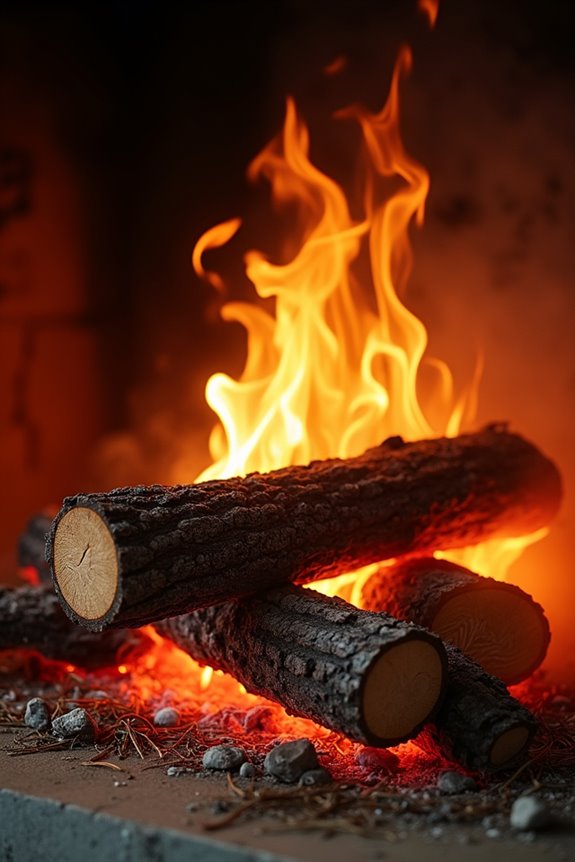
When should you keep pine logs out of your fireplace entirely? I’d skip pine completely if you’re dealing with green wood, poorly maintained chimneys, or older open fireplaces. Here’s why: wet pine and inefficient fires create dangerous creosote buildup—that sticky, flammable substance coating your flue.
| Situation | Risk Level |
|---|---|
| Green/freshly cut pine | Critical—avoid |
| Moisture content above 20% | High—dangerous |
| Old fireplace, no liner | High—chimney fire risk |
| Low-efficiency open fireplace | Moderate—creosote forms faster |
Your moisture meter becomes your best friend. If your wood reads above 20% moisture, burn seasoned hardwoods instead. Similarly, if your fireplace lacks proper baffles or chimney liners, pine’s resinous nature practically invites creosote disasters. Modern stoves handle pine better than vintage setups, but honestly? Play it safe with hardwoods when you’re unsure.
How to Season and Prepare Pine for Safe Burning
proper seasoning makes all the difference.
I’ve learned that moisture content is absolutely crucial when preparing pine for your fireplace. You’ll want to get that moisture down to 20% or less, ideally around 10%. Here’s your game plan:
- Split pine wood fresh to expose the interior for faster drying
- Use a moisture meter on freshly split edges to check progress accurately
- Store seasoned pine in a dry location with good air circulation
- Stack wood off the ground to prevent moisture absorption from soil
- Allow 6-12 months for proper seasoning before burning
When you’re ready to burn, mix your seasoned pine with hardwoods. This combination prolongs burn time and boosts heat output while reducing soot formation significantly. You’re creating the ideal fire—one that burns hot enough to combust those volatile gases safely.
Burning Pine vs. Hardwood: Which Should You Choose?
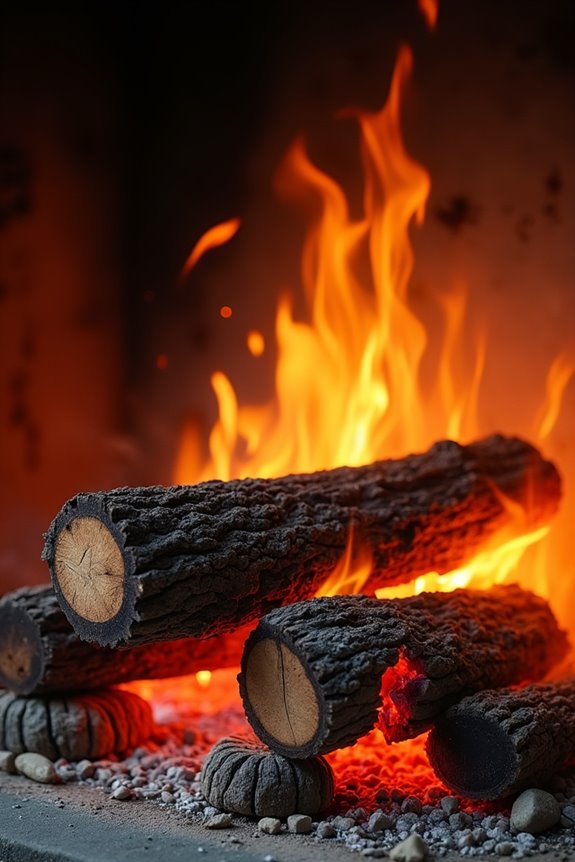
Now that you’ve got your pine seasoned and ready to go, it’s time to figure out how it stacks up against hardwoods—and honestly, there’s no single “winner” here. Pine burns hot and fast, which I love for quick warmth, but it produces more ash and popping than hardwoods do. Here’s the thing though: mixing pine with hardwoods gives you the best of both worlds. You’ll extend your burn time while keeping that satisfying heat output. The real game-changer? Proper seasoning below 20% moisture dramatically reduces creosote buildup and smoke, regardless of wood type. Yes, pine is a soft wood with higher resin content, but when you combine seasoned pine with efficient burning techniques and regular chimney maintenance, you’re not sacrificing safety or performance.
Best Practices for Burning Pine Safely
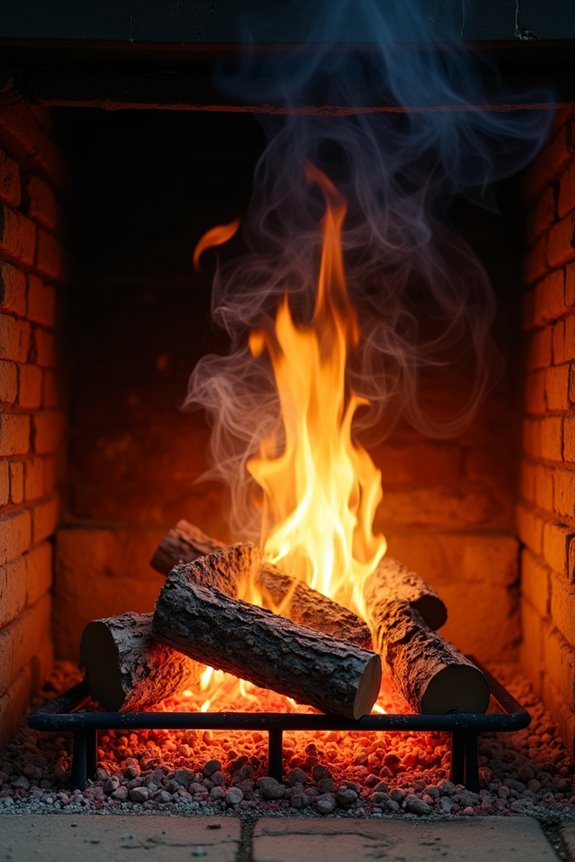
To burn pine safely and effectively, I’ve learned that proper wood seasoning is absolutely essential—you’ll want to use a moisture meter to check that your pine has reached 10% moisture content, not the 20% maximum, before you even think about lighting it. I control my fireplace temperature by burning the wood hot enough to maximize gas combustion and minimize creosote buildup, which honestly takes practice but makes a huge difference in reducing those grimy tar deposits. Finally, I stick to a regular chimney maintenance schedule with professional inspections and annual sweeps because pine’s high sap content means I need that 150 mm stainless steel liner to stay clean and keep my chimney system working hard for me.
Proper Wood Seasoning Methods
How’s your pine wood’s moisture content looking? I’m genuinely excited to share what I’ve learned about getting this right, because seasoning time makes all the difference in your fireplace experience.
Here’s what I do to prepare pine properly:
- Check moisture content with a meter at freshly split edges—aim for ≤20%, ideally 10%
- Season pine for 6–12 months in dry, well-ventilated spaces to reduce moisture considerably
- Store seasoned wood off the ground with excellent airflow between logs
- Use a protective cover that shields from rain while still allowing drying
- Mix properly seasoned pine with hardwoods for balanced, efficient burning
I’ve discovered that skipping seasoning creates creosote buildup and wimpy flames. Patience here genuinely pays off. Your fireplace will burn hotter, cleaner, and you’ll feel that pride knowing you’re doing it right.
Temperature Control Techniques
Why does temperature matter so much when you’re burning pine? I’ve learned that keeping your flue gases above 125°C prevents condensation and creosote buildup—that sticky, dangerous stuff that clogs chimneys. You’ll want to maintain steady, hot flames by managing your air supply carefully and using well-seasoned pine with moisture content around 10-20%.
| Temperature Zone | What Happens |
|---|---|
| Below 125°C | Creosote condenses in chimney |
| 125-200°C | Efficient, clean burn zone |
| Above 200°C | Maximum heat output achieved |
| Smoldering fires | Excessive smoke and soot |
| Hot, oxygen-rich flames | Optimal combustion occurs |
I’ve found mixing hardwoods with pine sustains hotter flames beautifully. Ensure cross-ventilation so oxygen flows constantly—this prevents smoldering and keeps temperatures climbing. You’re building a fire that burns smart and safe.
Regular Chimney Maintenance Schedule
When you’re burning pine regularly, your chimney becomes a battleground against creosote—that flammable tar buildup that accumulates faster with pine’s high resin content than it would with hardwoods alone. I’ve learned that staying ahead of creosote buildup means committing to a solid chimney maintenance schedule.
Here’s what I do to keep my system running safely:
- Schedule professional inspections annually before the heating season starts
- Book a certified sweep after each season or whenever I burn pine heavily
- Have my chimney checked mid-season if I notice increased smoke or odors
- Document all maintenance visits to track buildup patterns
- Hire professionals to inspect for soot, tar, and structural cracks
This routine keeps my flue airtight and hot gases venting properly. Trust me, this preventative approach saves serious headaches later.
Chimney Maintenance to Prevent Creosote Buildup
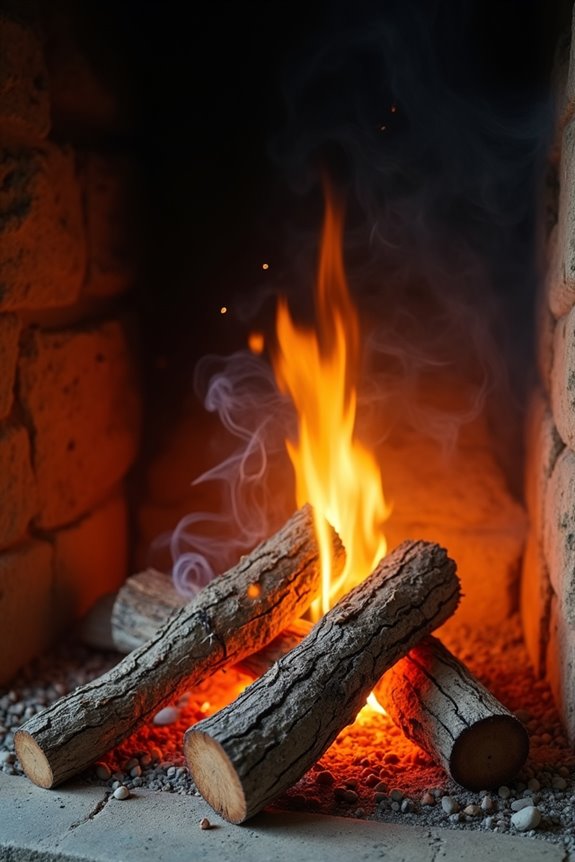
keeping your chimney clean isn’t just about preventing fires—it’s about protecting your entire home and keeping your fireplace running safely for years to come.
I’ve discovered that creosote buildup isn’t really about burning pine—it’s about how you’re burning it. When I switched to hot, well-seasoned fires, I noticed tar accumulation dropped considerably on my chimney walls. Here’s what actually prevents that sticky creosote:
| Prevention Method | Impact |
|---|---|
| Burn seasoned wood only | Dramatically reduces creosote |
| Maintain hot fires | Minimizes tar buildup |
| Annual professional cleaning | Catches hidden accumulation |
| Regular inspections | Identifies problems early |
| Proper airflow management | Supports efficient burning |
Professional chimney sweeps catch problems I’d miss. They’re worth every penny for safety and peace of mind.