
Yes, your gas fireplace absolutely needs regular cleaning—even though it’s cleaner than wood-burning models. I recommend annual professional inspections to catch hidden problems like gas leaks or blocked vents before they become serious. Soot buildup, dust, and debris accumulate inside, restricting airflow and reducing efficiency. Skipping maintenance risks carbon monoxide exposure, higher energy bills, and worn components. Think of it like your car’s checkup—routine care keeps everything running safely and smoothly. There’s plenty more to discover about what’s actually happening inside your chimney.
Do Gas Fireplaces Actually Need Cleaning?
Why would something that burns so cleanly still need regular upkeep? I’ve learned that gas fireplaces aren’t maintenance-free machines. Even though they burn cleaner than wood, residues and soot gradually accumulate inside, reducing efficiency and performance. Annual inspections catch problems early—like gas leaks or vent obstructions that compromise safety. I discovered that dirt, debris, and spider webs can clog gas lines, affecting operation. Chimney cleaning removes these blockages and ensures unobstructed venting, which prevents dangerous carbon monoxide buildup in your home. Think of it like maintaining your car; regular checkups keep everything running smoothly. You’ll notice reduced heat output or unusual sulfur smells when cleaning’s overdue. Professional annual inspections give you peace of mind and keep your fireplace operating safely and efficiently.
Signs Your Gas Fireplace Needs Attention
How do you know when your gas fireplace is crying out for help? I’ve learned that several clear signs tell you it’s time for cleaning and inspection. If you notice weak or flickering flames, your fireplace probably needs attention—that’s your venting struggling. Strange odors like sulfur or burnt gas? That’s a red flag for safety issues. Soot buildup on the glass doors and around burner ports means combustion isn’t happening efficiently. Visible debris near your chimney signals potential blockages that compromise venting. I also watch for longer heating times and higher energy costs, both indicating your gas fireplace isn’t operating optimally. Regular inspections caught hidden hazards before they became dangerous. Trust your instincts—these signs matter for your home’s safety and comfort.
What Accumulates in Your Gas Fireplace Chimney
Just what’s hiding inside your chimney right now? I’ll tell you—it’s more than you’d think. Your gas chimney buildup includes materials that quietly accumulate and affect your fireplace’s performance.
Your gas chimney buildup includes materials quietly accumulating and affecting your fireplace’s performance.
Here’s what collects in there:
- Soot and carbon buildup from incomplete combustion, coating your glass doors and burner ports
- Dust and pet hair settling on logs and creating visual grime
- Debris particles restricting airflow through venting passages
- Mineral deposits from moisture interacting with combustion byproducts
These accumulations create venting obstruction, reducing heat output and efficiency. You won’t see most of it happening behind closed doors. That’s why professional cleaning becomes essential—technicians spot hidden obstructions I’d miss. Annual inspections catch problems early, keeping your fireplace running safely and beautifully while protecting your home’s air quality.
How Often Should You Schedule Professional Cleaning?
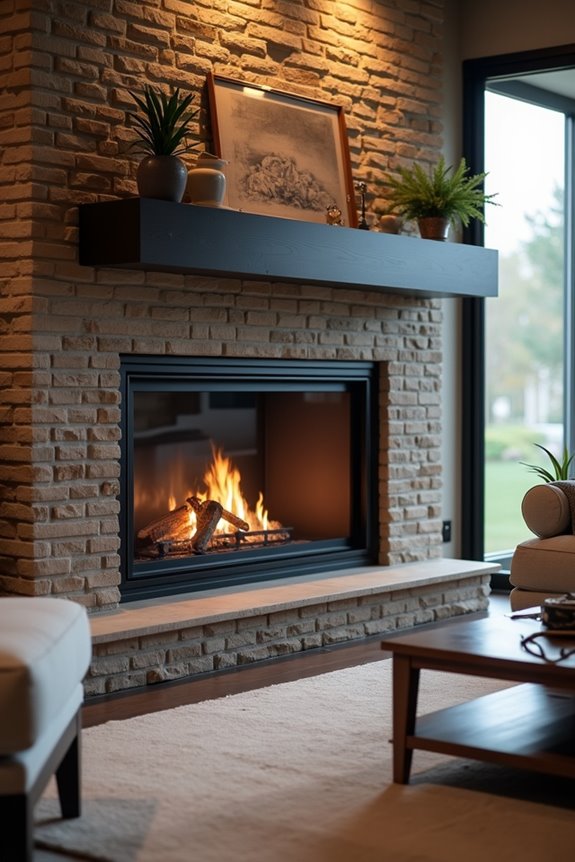
Once a year—that’s the golden standard for keeping your gas fireplace in top shape, and I can’t stress enough how much this simple schedule protects your investment. I’ve learned that annual maintenance catches the sneaky stuff: debris, spider webs, and residue buildup that clogs gas lines. Here’s what gets me excited: professional inspection reveals hidden problems like gas leaks or cracked flues that DIY efforts miss completely. If you use your fireplace heavily, though, I recommend bumping up cleaning frequency. A certified technician checks venting efficiency and ensures safe, reliable operation every single time. Your annual professional cleaning isn’t just maintenance—it’s peace of mind knowing your gas fireplace runs safely all season long.
Professional vs. DIY Cleaning: Which Approach Suits You?
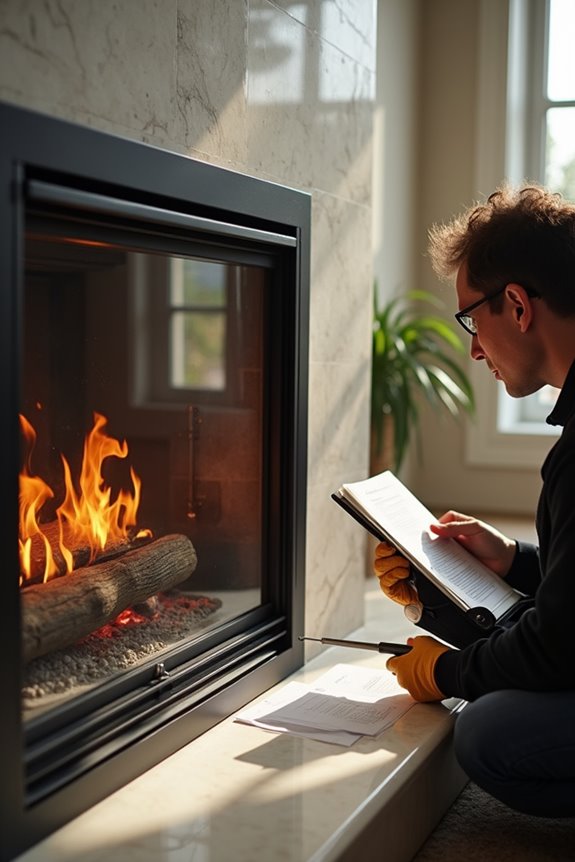
Should you grab your tools and tackle gas fireplace cleaning yourself, or call in the professionals? I’ve found that understanding both approaches helps you make the smartest choice for your home.
Here’s what you should consider:
- Professional cleaning bundles inspection, venting checks, and carbon monoxide risk assessment into one comprehensive service
- DIY safety requires turning off your gas line first and using specialized brushes—but risks damaging burner ports
- Chimney inspection by professionals catches hidden issues like cracked flues that you’d easily miss
- Annual professional maintenance preserves component lifespan and ensures safety standards compliance
I’d recommend letting professionals handle the heavy lifting annually. They’re equipped to spot problems I can’t, protecting my family from carbon monoxide dangers while saving me time and headaches.
What Happens If You Skip Gas Fireplace Cleaning
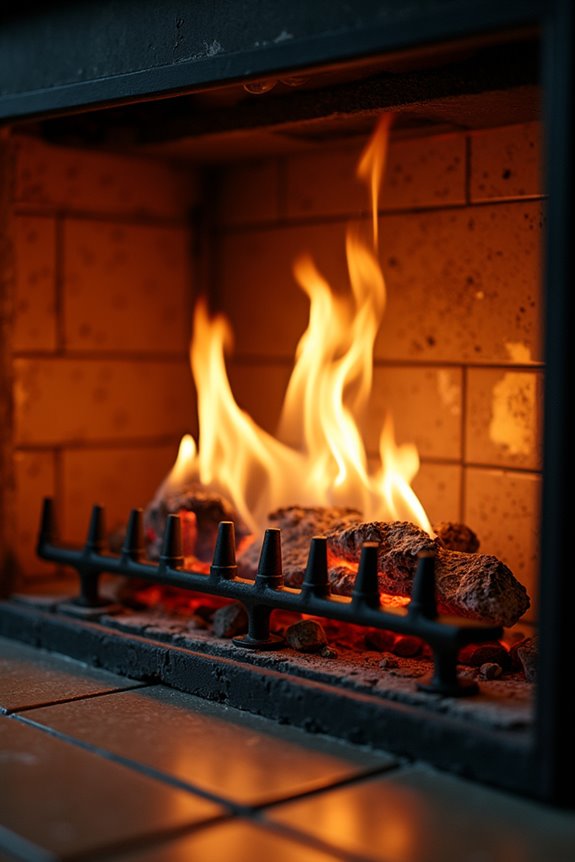
Skipping regular cleanings puts you at serious risk for carbon monoxide exposure, since buildup in vents and burner ports prevents gases from venting safely outside your home. You’ll also watch your heating efficiency drop and energy bills climb while soot accumulates on glass doors and internal components, making your fireplace work harder to produce the same warmth. Left unchecked, this neglect can damage expensive parts like thermocouples and igniters, turning a simple cleaning into costly repairs that could’ve been prevented with annual professional inspections.
Carbon Monoxide Exposure Risks
While gas fireplaces seem like the low-maintenance cousin of wood-burning stoves, neglecting regular cleaning can turn them into a serious safety hazard that you won’t even see coming. Carbon monoxide—that invisible, odorless gas—becomes a real threat when you skip maintenance.
Here’s what happens when you ignore professional cleaning:
- Vent obstruction from debris prevents proper combustion and traps CO indoors
- Gas ignition issues develop, causing incomplete burning and higher emissions
- CO exposure rises silently without warning signs you can detect
- Professional cleaning removes buildup and catches problems before they’re dangerous
Even though gas burns cleaner than wood, unmaintained units still release dangerous CO levels. Annual inspections aren’t just recommended—they’re essential. You deserve a fireplace that warms your home safely, and that means committing to regular maintenance.
Reduced Efficiency And Costs
What happens when you let your gas fireplace go without cleaning? You’re inviting trouble into your home. Soot buildup clogs burner ports, weakening those beautiful flames you love. I’ve watched efficiency drop dramatically—your fireplace works harder but heats less effectively, which means your energy bills climb.
Here’s the real kicker: obstructions in vents create backdraft risks, forcing heated air back outside. You’re literally paying to warm the neighborhood. Without annual professional cleaning, hidden blockages stay hidden. Gas leaks might develop silently. Your fireplace becomes unreliable and potentially dangerous.
Think of it this way—regular gas fireplace cleaning protects your investment and wallet. You’ll maintain peak efficiency, prevent costly repairs, and keep your family safe. That’s worth celebrating.
Component Damage And Repairs
When you neglect regular gas fireplace cleaning, the damage compounds faster than you’d think. I’ve seen it happen—small problems snowball into expensive repairs that could’ve been prevented.
Here’s what happens when you skip maintenance:
- Soot buildup clogs your burner ports, forcing your ignition system to work overtime and eventually fail
- Your chimney liner develops cracks from corrosive deposits, compromising the entire venting system
- Dampers get stuck or damaged, preventing proper combustion byproduct escape
- Hidden wear on components means costly replacements instead of simple cleaning
Without professional inspection, you won’t catch these issues early. That degraded venting system? It’s silently jeopardizing your home’s safety. The worn dampers? They’re already affecting performance. Regular cleaning keeps everything functioning smoothly, protecting both your fireplace and your wallet long-term.