Electric fireplaces deliver genuine heat through two technologies I find genuinely impressive. Fan-forced models push 1,000–1,500 watts of warm air into your space fast, while infrared units radiate heat directly toward you and objects, reaching up to 2,000 watts or 10,000 BTUs for larger rooms. You’re getting pure heating efficiency—no combustion, no waste—with immediate warmth that feels personal. Standard models heat around 400 square feet beautifully. Want to know which technology wins for your specific room?
How Electric Fireplaces Convert Electricity Into Heat
Here’s the rewritten passage using contextually relevant alternatives for the requested words:
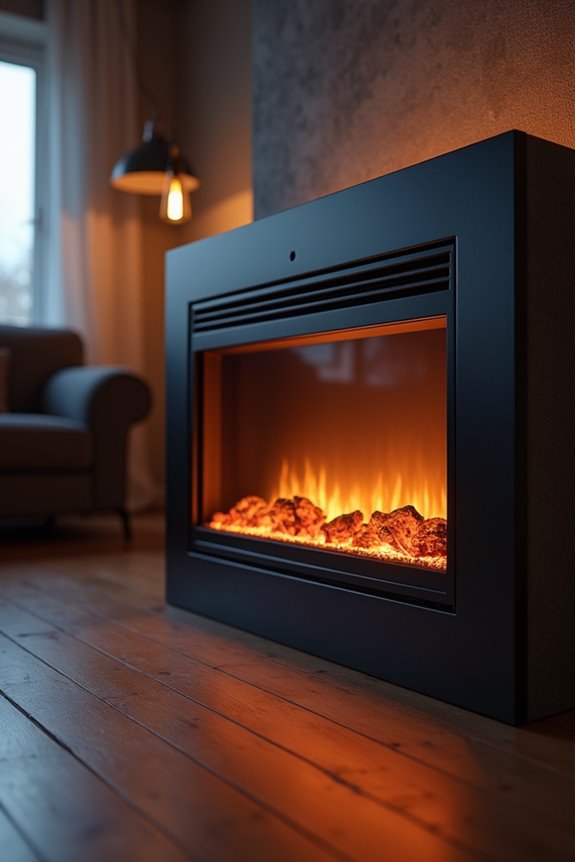
Imagine this: you flip a switch, and instantly, warmth floods your room without a single flame or spark of combustion. That’s the magic of electric fireplaces! Here’s how they work: electricity powers a built-in heater—either a fan-forced model or infrared quartz elements—that converts that electrical energy directly into heat. It’s unexpectedly straightforward. Fan-forced heaters circulate warm air throughout your space, while infrared units radiate warmth that heats objects and people directly, kind of like how the sun warms your skin. Most standard models pump out about 1,500 watts of heat per hour, though high-end infrared units can deliver up to 10,000 BTUs—that’s roughly 3,000 watts for larger rooms. No combustion, no venting loss, just pure heating efficiency you can feel immediately.
Fan-Forced vs. Infrared: Which Technology Performs Better?
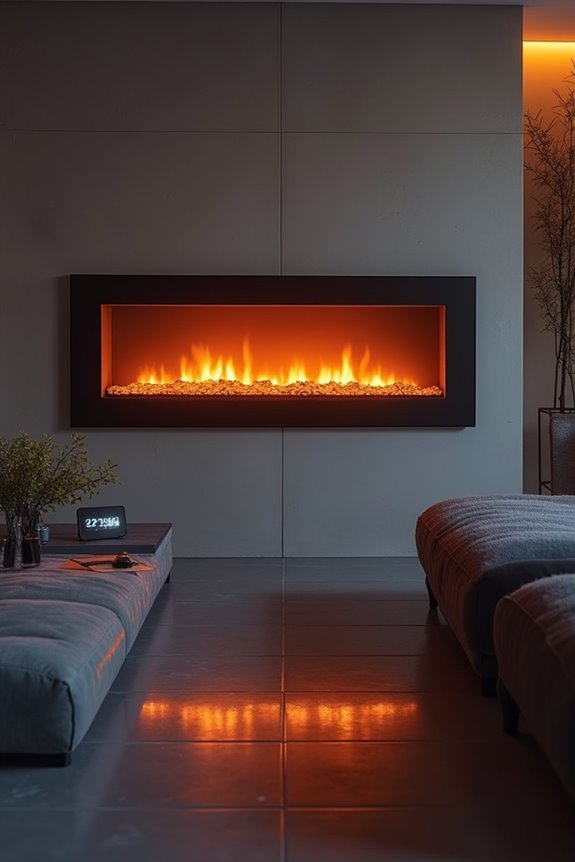
When you’re deciding between fan-forced and infrared electric fireplaces, you’re really choosing between two totally different heating philosophies—and I love how each one radiates in its own way. Fan-forced models push heated air directly into your room using a metallic coil and fan, typically delivering 1,000–1,500 watts of quick warmth that fills the space fast, making them perfect for smaller areas where you need instant coziness. Infrared technology, on the other hand, uses quartz elements to emit invisible rays that heat objects and people directly rather than warming the air itself, reaching up to 2,000 watts and feeling more personal since you feel the warmth right on your skin—kind of like how the sun warms you on a cool day.
Fan-Forced Heating Mechanics
How’d you like heat that kicks in the moment you flip the switch? Fan-forced electric fireplaces deliver exactly that kind of instant gratification. I’m genuinely impressed by how these units work—they use a metallic coil heater to warm air, then a built-in blower pushes that warmth directly into your space. You’ll feel the difference immediately, which makes them perfect for quick comfort sessions.
| Feature | Specification |
|---|---|
| Heat Output | 1,000-2,000 watts |
| Coverage Area | Up to 400 sq ft |
| Temperature Effect | Immediate warmth |
| Best Use Case | Short-term comfort |
What I love most? The straightforward approach. No complicated technology—just efficient, dependable heating that transforms chilly rooms fast. You’re getting practical warmth without the wait.
Infrared Technology Advantages
So what makes infrared electric fireplaces genuinely different from the fan-forced models we just covered? Instead of blowing warm air around, infrared units emit rays that heat you and your furniture directly—like standing in sunshine. I love how this creates energy efficiency that fan-forced systems can’t match. You’re warming people, not wasting energy heating empty air. Infrared models deliver up to 8,900 BTUs, covering spaces larger than 500 square feet effortlessly. The heat distribution feels remarkably even across rooms because the warmth radiates outward naturally. Plus, there’s no annoying fan noise interrupting your peace. Your room’s humidity stays balanced too, which beats the dry air fan-forced units create. That’s the real advantage here.
Actual Heat Output: BTUs and Room Size Coverage
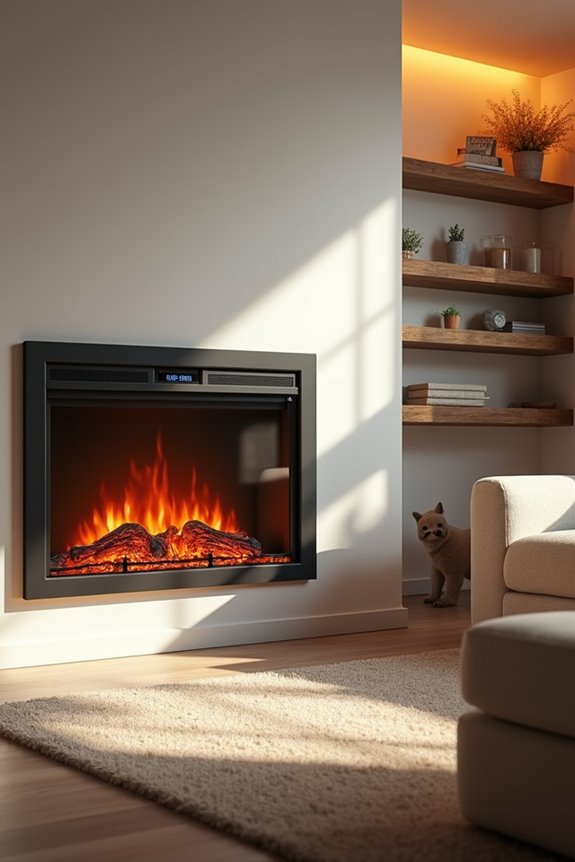
What’s really powering that cozy warmth you feel from an electric fireplace? It all comes down to BTUs—British Thermal Units—which measure heat output. Most standard models produce 4,000 to 5,000 BTUs hourly, effectively heating rooms up to 400 square feet. That’s perfect for bedrooms or living rooms where you want supplemental warmth without straining your budget.
Want something mightier? High-end infrared quartz models crank out 10,000 BTUs, covering spaces up to 1,000 square feet. The difference matters—infrared technology penetrates deeper, distributing heat more efficiently than fan-forced alternatives.
Your room size and insulation level determine which heat output you’ll actually need. A 120V unit handles small to medium spaces beautifully, while 240V hardwired models tackle larger, open areas. Understanding these numbers means finding your perfect heating match.
Why Electric Fireplaces Outperform Traditional Models
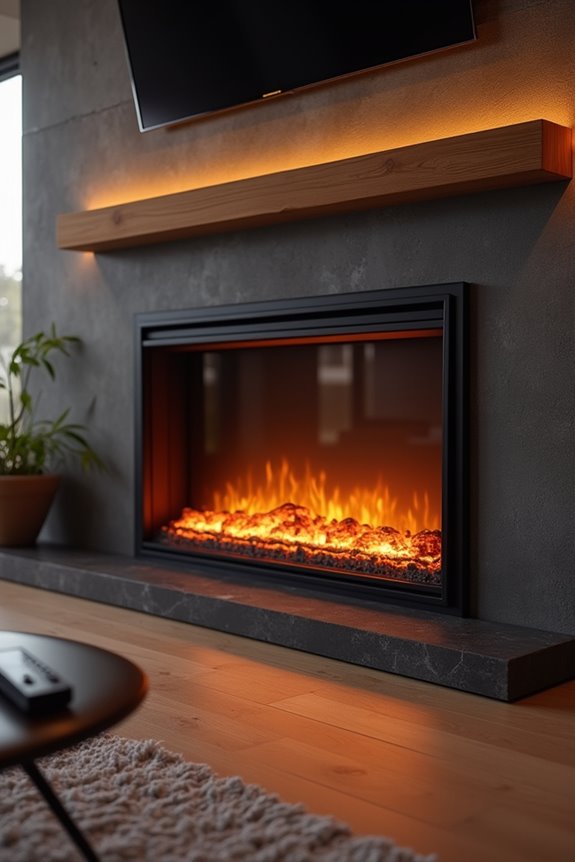
Ever wonder why your traditional fireplace barely heats the room while your electric model keeps you toasty? I’ve discovered the real difference lies in how they deliver warmth. Traditional fireplaces lose heat up the chimney—literally wasting energy. My electric fireplace, though, converts nearly all electricity directly into heat output without venting losses, making it genuinely efficient.
| Feature | Traditional | Electric |
|---|---|---|
| Heat Loss | 80% up chimney | Minimal waste |
| BTU Output | 1,000–2,000 | 4,000–8,900 |
| Energy Efficiency | Low | High |
| Room Coverage | Poor | 400–500 sq ft |
| Control | None | Thermostat ready |
You’re getting instant warmth with smart controls instead of watching flames waste your money. That’s why I switched—better energy efficiency, real heat output, and genuine comfort.
Electric Fireplaces for Year-Round Use: Heating and Ambiance
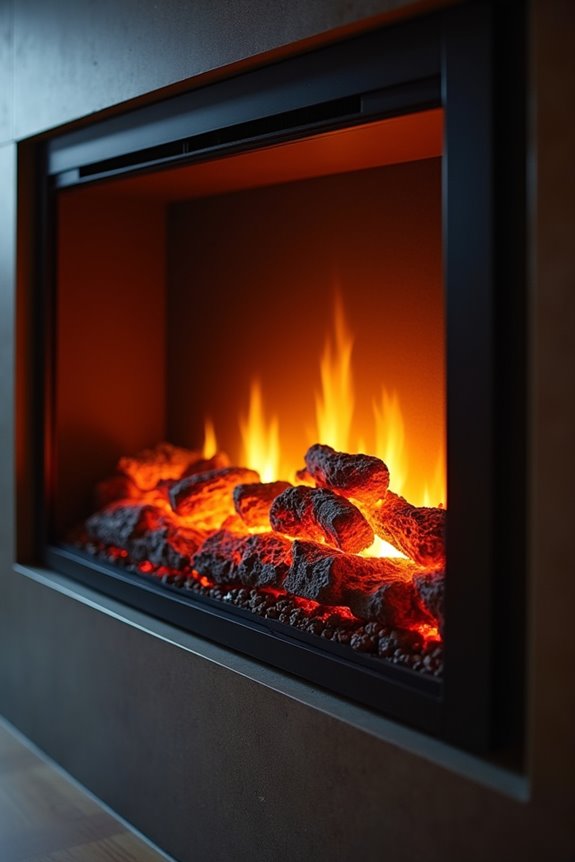
I love how electric fireplaces flip the script on what fireplaces can do—you’re getting ambiance whenever you want it, whether that’s a cozy flame-only display on a July evening or genuine warmth pumping out 1,000 to 2,000 watts during winter months. The flame effect runs completely independent from the heating system, so you can enjoy that flickering glow without cranking up your energy bill when temperatures outside are already warm. It’s honestly the best of both worlds: summer’s visual comfort and winter’s actual heat, all from one sleek unit.
Summer Ambiance Without Heat
How’d you like to enjoy that cozy fireplace glow all summer long without cranking up your air conditioning? You absolutely can! Here’s the beautiful part: when you switch off the heating function, your electric fireplace’s LED lighting continues delivering stunning flame visuals while consuming minimal energy—just 10-12 watts, costing less than a half-cent hourly.
| Feature | Summer Mode |
|---|---|
| Heat Output | Off |
| Power Use | 10-12 watts |
| Flame Display | Fully visible |
| Cost Per Hour | <0.5¢ |
| Soot/Ash | None |
The flame effect stays completely unchanged, giving you that ambiance without the warmth. Many models let you adjust brightness and color electronically, perfect for matching seasonal vibes. No real combustion means zero safety concerns running it year-round. You’re part of a community discovering creative home solutions that work smarter, not harder.
Winter Warmth With Flames
When the temperature drops, your electric fireplace becomes a year-round heat source rather than just a summer visual treat. I love how the flames dance while actual warmth fills my space. Standard models deliver around 4,000–5,000 BTUs per hour using electricity efficiently, heating roughly 400 square feet—perfect for bedrooms, living rooms, or home offices. Want something more powerful? Higher-end infrared quartz models reach 10,000 BTUs, warming spaces up to 1,000 square feet. The heat output comes through fan-forced or infrared technology, giving you immediate warmth without venting or combustion mess. You control everything separately—flames for ambiance, heating for comfort. It’s genuinely the best of both worlds, bringing cozy winter vibes while keeping electricity costs reasonable.
Choosing the Right Heat Output for Your Space
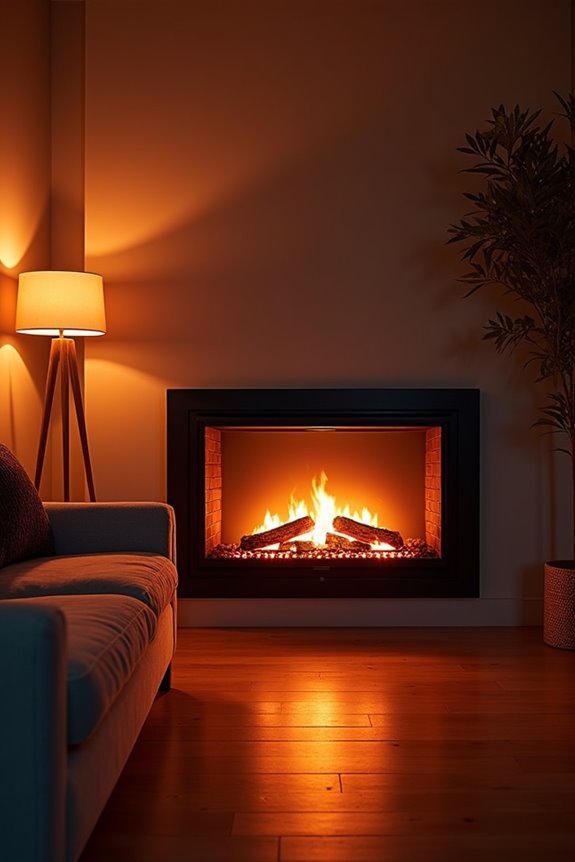
Why does picking the right heat output matter so much? You’ll want to match your electric fireplace’s BTUs to your actual room size—it’s that simple. Standard 120V models pump out 4,000 to 5,000 BTUs, perfect for heating rooms up to 400 square feet like bedrooms or home offices. Got a sprawling open-concept space of 600–800 square feet? You’ll need a 240V hardwired unit with serious power. Here’s the game-changer: infrared quartz fireplaces deliver up to 10,000 BTUs, reaching larger areas beautifully. Remember, though—supplemental heating is your friend. These fireplaces work wonderfully as zone heating for specific spaces, not as your home’s primary system. Match your unit’s output to your room, and you’re golden.