Electric fireplaces actually consume far less electricity than you’d think—I’m talking 750 to 1,500 watts on full heat, costing roughly $0.30 per hour. That’s genuinely affordable! Here’s the exciting part: switch to flame-only mode and you’re down to just 20–40 watts, which is basically nothing. Add a thermostat that automatically shuts off once your room hits the target temperature, and your costs plummet even further. Plus, zone heating one room beats running your central system all day. The numbers might surprise you once you dig deeper.
How Much Electricity Do Electric Fireplaces Actually Use?
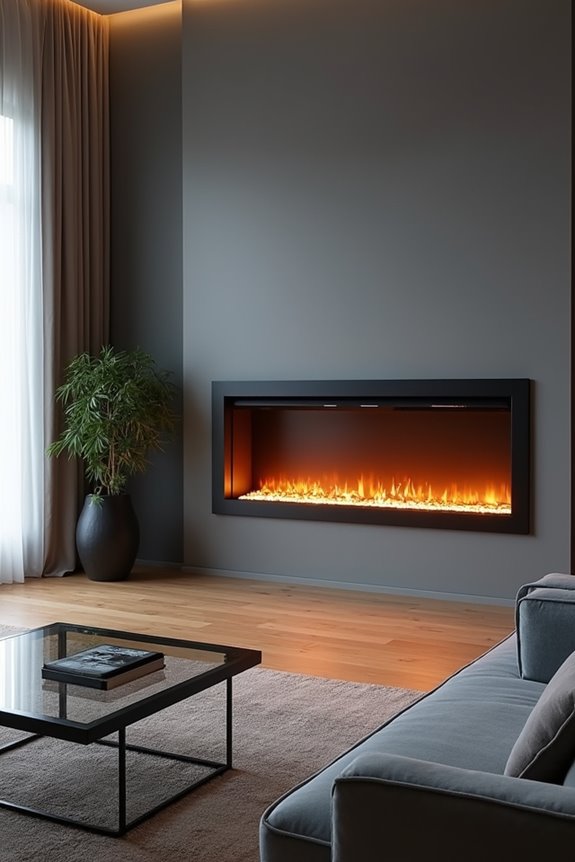
Ever wonder if that cozy electric fireplace is quietly draining your wallet? Here’s the truth: most electric fireplaces consume 750 to 1,500 watts when the heater runs, translating to about 0.75 to 1.5 kWh per hour. At $0.20 per kWh, you’re looking at roughly $0.30 hourly for full heat output.
But here’s where it gets exciting—flame-only mode drops electricity use dramatically to just 20–40 watts. That’s a game-changer for ambiance without the energy guilt. Thermostatic controls automatically shut off or reduce power once your room reaches the target temperature, eliminating waste.
For zone heating in smaller spaces like a 400-square-foot room, electric fireplaces prove remarkably energy-efficient compared to central heating. You’re heating only what you need, no chimney losses involved. Smart use beats high consumption every time.
Why Electric Fireplaces Cost Less to Run Than You’d Expect?
What makes electric fireplaces so revitalizingly affordable to operate? Here’s the truth: you’re actually controlling your electricity consumption far more than you realize. Running one at full 1,500 watts for just four hours daily costs around $9—but here’s where it gets exciting. Switch to flame-only mode, and you’re dropping down to a mere 20–40 watts. That’s lightweight heating that barely registers on your bill.
The real magic? Thermostatic controls and timers. These features automatically cycle your fireplace based on room temperature, preventing wasteful continuous operation. You’re paying only for heat output you actually need. Since electric fireplaces eliminate chimney losses entirely, heat efficiency soars. Every kWh converts directly into warmth for your space. Energy savings compound monthly when you embrace smart settings and zone heating strategically.
Electric Fireplaces vs. Central Heating: Where You Really Save Energy
How much could you actually save by ditching your central heating in favor of strategic zone heating? I’ve discovered the real magic happens when you compare electricity usage between the two approaches. With zone heating, you’re running 750–1500 watts in just one room instead of heating your entire home. That’s the central heating comparison that matters most. You’ll pull roughly 0.75–1.5 kWh per hour during full heat settings, while your central system works overtime everywhere. The energy efficiency secret? Thermostatic controls prevent unnecessary operation, and you can lower your main thermostat significantly. Those heat losses that plague central systems simply disappear. Between targeted warmth and flame-only mode’s tiny 20–40 watts for ambiance alone, energy savings add up fast. You’re joining smarter homeowners who’ve mastered efficient heating.
Electric Fireplace Thermostats and Heat Settings: Lowering Your Bills
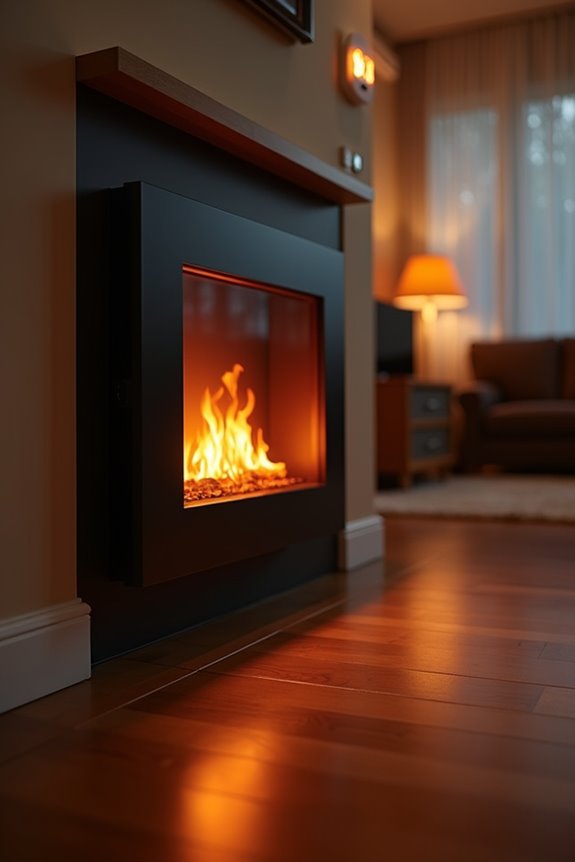
The real power to shrink your electricity bills lies right in your fireplace’s thermostat and heat settings—and honestly, I’m thrilled to share how simple this actually is.
Your electric thermostat is your secret weapon. I’ve discovered that using standby mode prevents unnecessary operation, cutting wattage dramatically. Here’s what transforms your energy savings:
| Strategy | Wattage | Monthly Savings |
|---|---|---|
| Full heat mode | 1,500W | Baseline |
| Zone heating | 750W | 50% reduction |
| Ambient flame only | 30W | 98% reduction |
Lowering heat settings from maximum to moderate reduces kilowatt-hours significantly. I love using the ambient flame effect alone—it preserves cozy ambiance while nearly eliminating cooling load concerns.
Timer functions are game-changers. Set automatic shut-offs so your fireplace doesn’t run unattended. Combined with zone heating targeting specific rooms, you’ll genuinely notice lower bills within weeks.
Daily Use: Is It Safe and Practical?
Can you safely run your electric fireplace every single day without spending a fortune or risking your home’s safety? Absolutely! I’ve found that daily use is entirely practical when you’re smart about it. Running your fireplace at full 1,500-watt heating for four hours costs roughly $9 monthly—totally manageable. Here’s the key: thermostatic controls automatically shut off once your room reaches the desired temperature, preventing wasteful electricity usage. You’re not constantly burning energy; the system works intelligently. For extra savings, I switch to flame-only mode when I just want ambiance without heating. This drops wattage to just 20–40 watts. Zone heating one room instead of your whole house keeps operating costs low and practical. Your electric fireplace remains safe for daily use, making it a genuinely sustainable comfort choice for your home.