First, I check for gas leaks by sniffing around the fireplace and verify my carbon monoxide detector has fresh batteries. Then I identify my ignition type—whether it’s remote, control panel, or key valve—since each requires different steps. Finally, I activate it: remote units need a simple button press, control panels require turning to Pilot then ON, and key valves need a counterclockwise turn. Within minutes, I’ve got steady flames warming my space. Want to master the specific steps for your setup?
Safety Pre-Checks Before Lighting Your Gas Fireplace
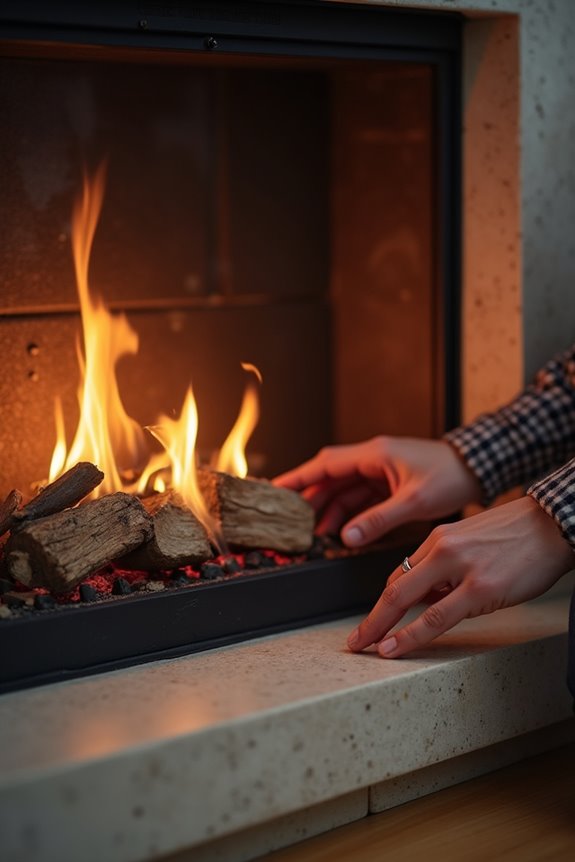
Before you ignite that cozy flame, preparation is your best friend—and it’s honestly the difference between a safe, enjoyable fire and a stressful situation you’d rather avoid. I always start by checking for gas leaks, sniffing around the fireplace area for any odd odors that signal trouble. Next, I verify my carbon monoxide detectors are working and have fresh batteries installed. I ensure my vent or open chimney is completely unobstructed so combustion gases escape properly. Then I clear the area of flammable objects and confirm all safety precautions are in place. If I detect any gas smell whatsoever, I don’t touch that pilot light—I contact a licensed professional immediately. These safety steps protect my family and let me enjoy my fireplace with genuine peace of mind.
Identify Your Ignition Type: Remote, Control Panel, or Key Valve
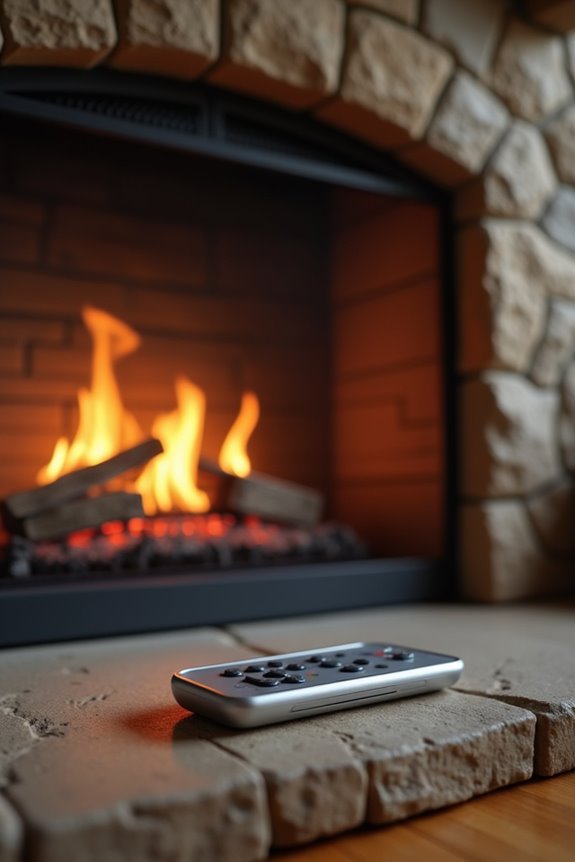
How do you actually start your gas fireplace—with a sleek remote, a dashboard-style control panel, or an old-school key valve? Here’s the exciting part: identifying your ignition type transforms the lighting process from confusing to straightforward. Remote control units let you press an ON button or adjust your thermostat settings from your couch. Control panel systems have a knob you’ll turn to Pilot or ON, sometimes followed by an ignition button push. Key valve setups demand inserting the key and turning it counterclockwise to open gas flow, then using manual ignition near the burner. Once you recognize which system you’re working with, you’ll feel genuinely confident starting your fireplace. This simple identification step eliminates guesswork and gets you enjoying that cozy warmth faster than you’d expect.
Turn On Your Fireplace: Steps for Your Specific Type
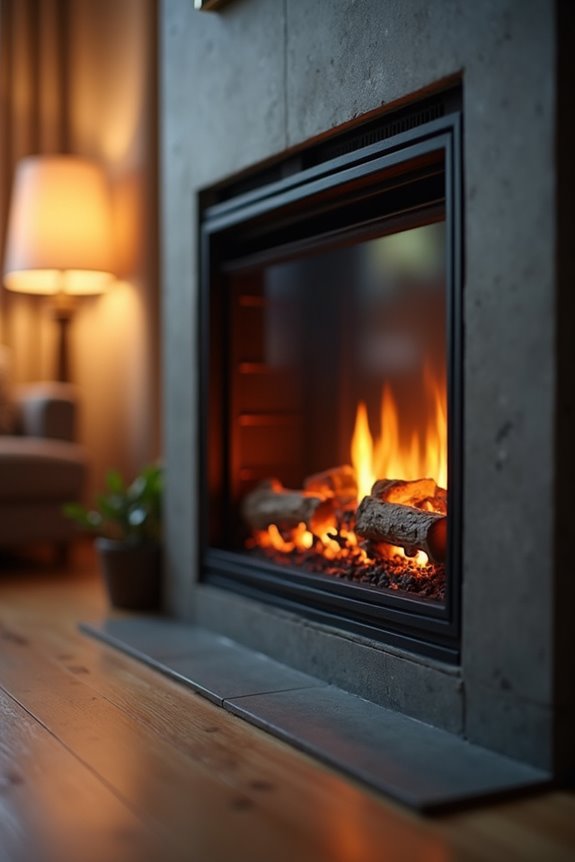
Ready to watch those flames come alive? I’ll walk you through your specific ignition type—it’s easier than you think!
Ready to watch those flames come alive? Lighting your fireplace is easier than you think!
- Control Panel Systems: Turn your gas valve Off, wait five minutes, then switch to Pilot. Press and hold to flow gas, ignite that pilot light with your lighter, and hold for 15–30 seconds. Finally, switch to On to light your main burner.
- Key Valve Systems: Clear the area first, insert your key, turn counterclockwise, and position your igniter near the burner to spark those flames.
- Electronic Ignition: Turn on your venting, activate ignition via wall switch or remote control, then adjust your flame height to your preference.
After ignition, confirm a steady flame and complete your safety check. Reattach any removed screens, grab your remote control, and enjoy that cozy warmth you’ve earned!