Yes, weed smoke does stain your walls, though it’s gentler than tobacco. Cannabis leaves behind sticky oil residue that clings to surfaces, especially on flat or matte paint finishes. Light-colored walls show discoloration quickest. Porous materials absorb particles faster than glossy surfaces, and warm, humid rooms accelerate staining considerably. Poor ventilation amplifies the problem dramatically. The good news? Semi-gloss paint resists stains better, and you’ve got effective cleaning options available—but there’s more to preventing permanent damage.
Does Weed Smoke Actually Stain Walls?
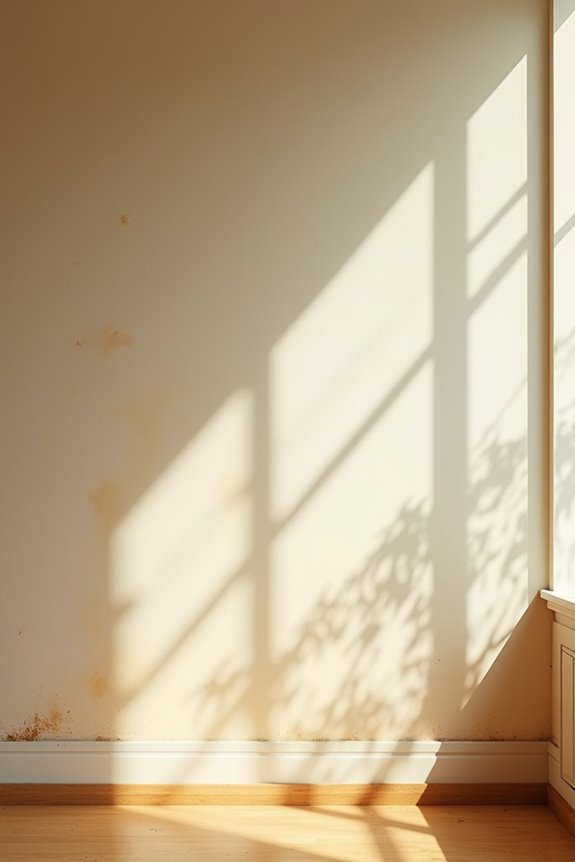
Yes, weed smoke absolutely does stain your walls, and I’ve seen it happen firsthand in plenty of homes. The smoke leaves behind a yellowish or brownish film made of tar and sticky residues that builds up over time. You’ll notice it first on light-colored surfaces where the discoloration becomes visible pretty quickly. Here’s the thing: your wall finishes matter tremendously. Glossy or semi-gloss paints resist staining way better than flat or matte finishes, which absorb particles like sponges. Porous surfaces combined with warm, humid conditions make stains stick harder and become tougher to remove. The cannabis odor doesn’t help either—it clings alongside the visible residue. Good ventilation and regular cleaning slow this staining process significantly, but without them, you’re fighting an uphill battle against those sticky particles settling onto your surfaces.
What Happens When Cannabis Smoke Hits Your Walls
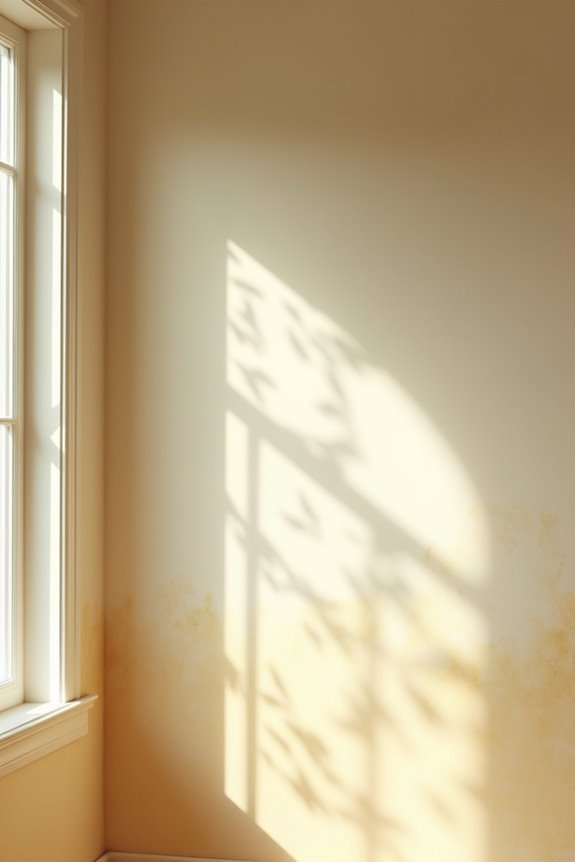
When cannabis smoke particles hit your walls, they don’t just disappear—they cling to surfaces like dust settling on a forgotten shelf, gradually building up a visible film over weeks and months. I’ve noticed that warmer, more humid rooms (think 70°F+ with 50% humidity) actually speed up this staining process because the particles stick harder and faster to paint, drywall, and fabric. Light-colored walls get hit the worst, developing yellowish or brownish discoloration that’s tougher to clean than you’d expect, especially since cannabis leaves behind an oily residue that lingers even after the visible stains disappear.
Smoke Particles and Adhesion
How does cannabis smoke actually cling to your walls? I’ve noticed that cannabis smoke particles stick through adhesion—they’re essentially tiny specks grabbing onto surfaces like magnets. Your indoor air quality matters here. When ventilation’s lacking, more particles settle and build residue buildup over time. Temperature and humidity act like adhesive boosters; hot, humid conditions make particles cling harder to drywall.
Surface finish plays a huge role too. I’d recommend glossy or semi-gloss paint because their smooth texture resists particle adhesion better than flat finishes. Matte walls? They’re basically particle magnets. That tar and oily component in smoke creates a thin film requiring periodic cleaning.
Your wall stains depend entirely on these factors working together. Better ventilation means fewer particles depositing. Choosing the right surface finish prevents stubborn wall stains before they start.
Surface Discoloration Patterns
The moment cannabis smoke touches your walls, something invisible but consequential starts happening—those tiny particles I mentioned earlier are sticking around and building up into visible stains. Here’s what I’ve observed unfolds on different surfaces:
- Glossy paint resists staining better than flat matte finishes, which trap particles easily
- Porous materials absorb smoke particles faster, creating darker discoloration zones
- Oil residue accumulates over weeks, forming a persistent film requiring intensive cleaning
- Heat and humidity accelerate particle adhesion to wall surfaces significantly
- Poor indoor ventilation means smoke settles quickly, creating noticeable yellowing and browning
The discoloration pattern tells a story—darker around vents, lighter in well-ventilated corners. Your wall finish choice matters tremendously. Upgrading air filtration and improving ventilation quality genuinely slows this process, protecting your investment while keeping your space looking fresh.
Temperature and Humidity Impact
Your walls’ vulnerability to cannabis smoke staining skyrockets in warm, humid conditions—and I’ve watched this happen firsthand in homes across different climates. When temperature and humidity spike together, cannabis smoke staining becomes dramatically worse because oilier residues stick harder to wall surfaces.
| Condition | Effect | Cleaning Difficulty |
|---|---|---|
| Warm + Humid | Heavy adhesion | Very hard |
| Cool + Dry | Slower settling | Moderate |
| Poor ventilation | Amplified staining | Extremely hard |
| Good ventilation | Reduced buildup | Easier |
| High humidity alone | Tar clings firmly | Hard |
I’ve noticed that humidity effect transforms tar and oily components into stubborn films on porous surfaces. Poor ventilation interaction magnifies both odor persistence and discoloration. In cooler, drier environments, particles settle slower initially but still leave films with repeated exposure. Your indoor air quality directly impacts surface discoloration patterns and cleaning difficulty significantly.
Cannabis vs. Tobacco: Why the Stains Are Different
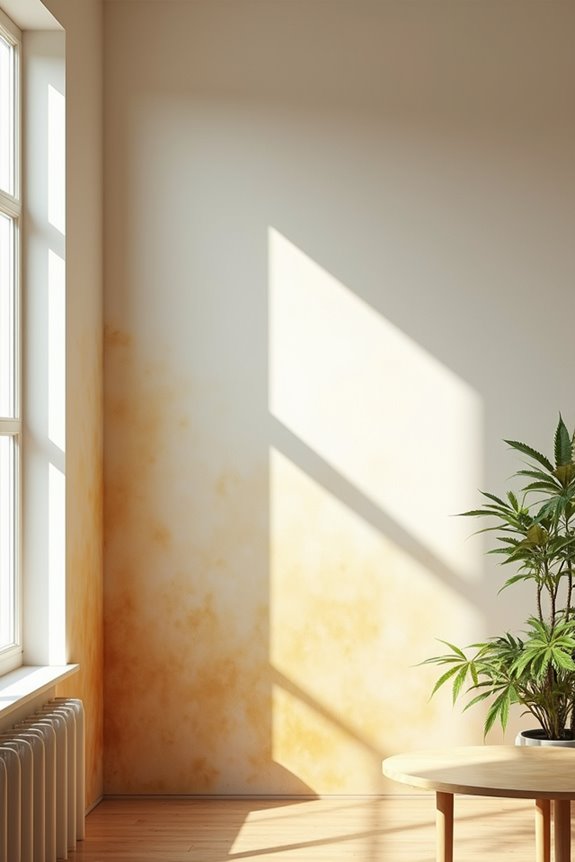
Cannabis and tobacco smoke actually stain your walls differently because of what’s in each one. While tobacco’s nicotine and tar create those stubborn yellow-brown marks that bleed right through paint (forcing you to grab stain-blocking primer or repaint entirely), cannabis smoke tends to leave oily residues that are way less aggressive and visually noticeable. I’ve found that understanding these chemical differences—nicotine’s persistence versus cannabis’s gentler buildup—totally changes how you’d tackle cleanup and whether you’re facing a quick wipe-down or a full wall restoration project.
Chemical Composition Differences
Why does weed smoke leave such different stains than cigarette smoke? The answer lies in what’s actually in each smoke. I’ve discovered that cannabis residues contain THC, CBD, and terpenes—compounds that create sticky, oil-based residues. Tobacco smoke, meanwhile, carries nicotine that bonds aggressively to surfaces.
Here’s what makes cannabis staining unique:
- Oily films that cling to walls without nicotine’s invasive penetration
- Particulate matter that binds to your home’s natural surface oils
- Nicotine absence means fewer persistent yellow-brown deposits
- Staining chemistry that’s gentler visually but tricky for cleaning
- Oil-based residues requiring different removal strategies than tar
The key difference? Cannabis leaves oily, less visible wall stains, while tobacco creates those dramatic yellow-brown marks. Understanding this staining chemistry helps you tackle cleaning challenges more effectively and protect your space.
Staining And Odor Patterns
How do two different smokes create such wildly different wall damage? I’ve noticed cannabis smoke stains differ dramatically from tobacco’s aggressive yellowing. While tobacco’s nicotine and tar aggressively coat wall surfaces, cannabis smoke leaves sticky oil residues that create a subtler, grimy film over time. You’ll see wall discoloration happening differently—tobacco produces harsh yellow-brown staining, whereas cannabis tends toward less noticeable brownish tones.
Here’s what I’ve learned about odor persistence: cannabis has a herbaceous smell that dissipates faster, but tobacco’s odor clings stubbornly to everything. Both create lingering smoke particles requiring ventilation efforts, yet their cleaning methods differ significantly. Cannabis needs gentle degreasing for oil residues, while tobacco demands intensive wall treatments. Understanding these staining patterns helps you choose appropriate cleaning methods and prevention strategies for your space.
Which Walls Stain Worst: Paint Type and Material
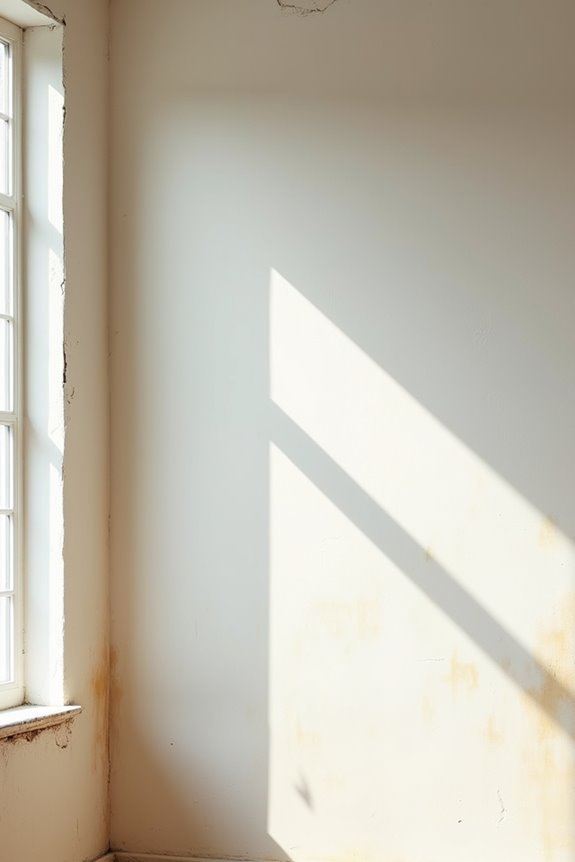
Ever notice how some walls in a room stay pristine while others turn dingy? The truth is, your paint type and wall material dramatically affect how cannabis smoke stains show up over time.
Here’s what matters most:
- Matte vs glossy finishes: Glossy sheens repel smoke particles, while matte surfaces absorb them like sponges
- Light colors amplify stains: Pale walls reveal yellowish-brown discoloration instantly; darker tones hide damage better
- Porous surfaces trap smoke: Painted drywall absorbs particles more readily than non-porous alternatives
- Primer sealers block seep-through: Quality stain-blocking primers prevent discoloration from penetrating your paint
- Ceramic tile wins: Non-porous tile surfaces resist staining far better than standard drywall
Your wall material choice genuinely impacts long-term appearance. Semi-gloss paint with primer underneath? That’s your best defense. You’ll notice the difference immediately.
Why Ventilation Gaps and Heavy Use Cause Faster Staining
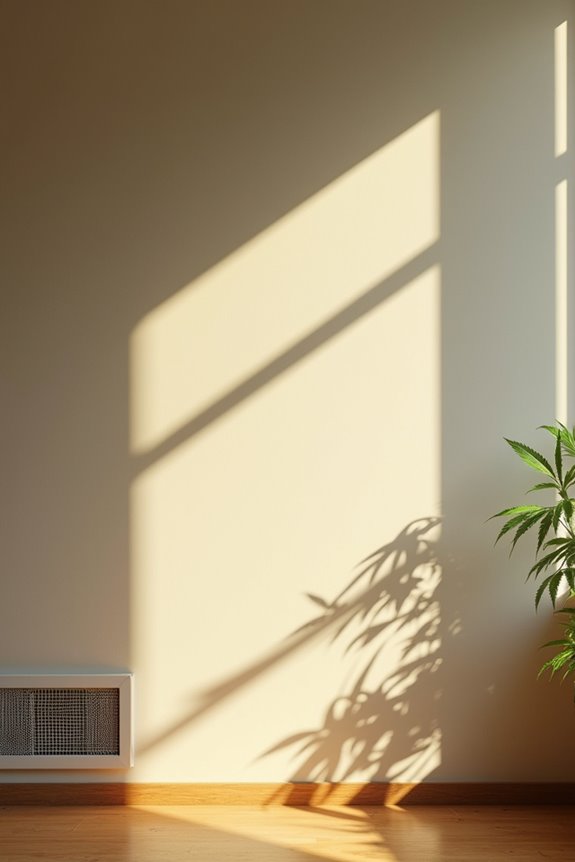
Think about what happens when you smoke indoors without cracking a window—that stale, sticky feeling that clings to everything? That’s your indoor air quality deteriorating fast. When you lack proper airflow, smoke particles don’t escape; they settle directly on your walls instead. Heavy use compounds this problem dramatically, creating thick residues that penetrate paint layers over time.
| Factor | Impact on Staining |
|---|---|
| Poor ventilation | Particles linger 3-5x longer |
| Heavy daily use | Stains visible within weeks |
| Limited airflow zones | Localized dark patches form |
| Warm, humid conditions | Faster particle adhesion |
| Paint penetration | Harder removal required |
I’ve learned that gaps in ventilation trap oily residues, making stains stubborn and aggressive. Strategic airflow prevents this damage, keeping your walls cleaner longer.
Stop Stains Before They Stick: Prevention Strategies
The good news? You can totally prevent those stubborn stains from ruining your walls. I’ve learned that getting ahead of smoke particles makes all the difference in keeping your space fresh.
Here’s my winning strategy:
- Designate a smoking area with strong ventilation to catch smoke before it settles
- Install HEPA air purification systems and direct airflow toward them
- Clean immediately after sessions using mild detergent and water
- Sprinkle baking soda on surfaces to absorb lingering odors
- Switch to natural leaf wraps for cleaner-burning sessions
I also upgraded to gloss paint finishes—they’re way easier to wipe clean than flat paint. If staining sneaks through anyway, stain-blocking primer on your wall surfaces stops seepage dead. These practical moves let me smoke freely without stressing about permanent wall damage. You’ve got this!
3 DIY Cleaning Recipes for Fresh and Set-In Stains
How do you tackle smoke stains without calling in the professionals? I’ve got three solid recipes that work brilliantly for marijuana smoke damage on your walls.
| Recipe | Best For | Key Ingredients | Application | Results |
|---|---|---|---|---|
| Water & Vinegar | Fresh stains | Equal parts water, vinegar | Spray, scrub gently | Odor neutralization |
| Baking Soda | Set-in stains | Pure baking soda | Sprinkle, wait 4-6 hours | Odor absorption |
| Baking Soda & Peroxide | Tough stains | Baking soda, hydrogen peroxide | Test first, apply, wipe | Deep cleaning power |
Start with water and vinegar for fresh stains—it’s your quickest win. For stubborn discoloration, baking soda absorbs deep odors when left overnight. Tackle serious damage by mixing baking soda with hydrogen peroxide, always testing hidden spots first to protect your paint. Maintain strong ventilation throughout your cleaning to prevent smoky residues from resettling. You’ve got this!
Professional Stain Removal: When DIY Isn’t Enough
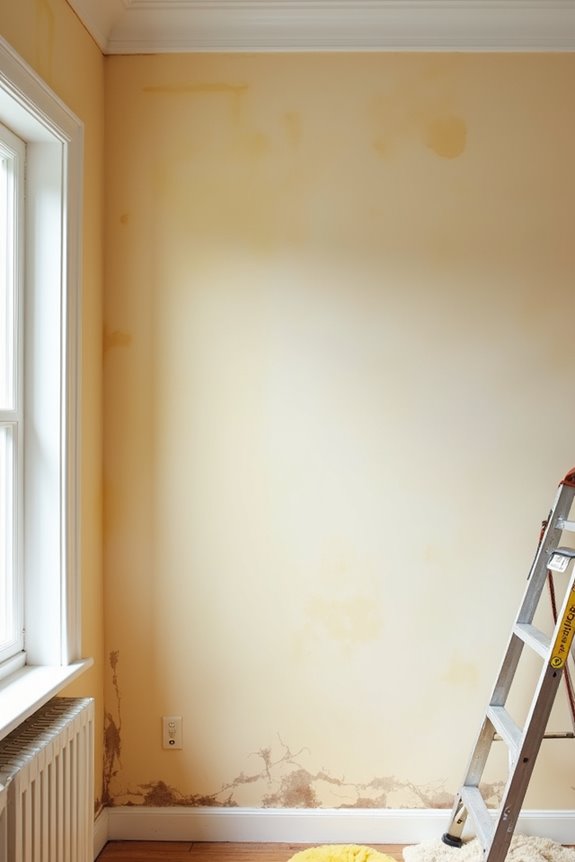
When DIY methods leave stubborn brown or yellow stains that won’t budge after repeated scrubbing, that’s your signal to call in the professionals who’ve got industrial-grade cleaners and techniques your basic toolkit just can’t match. These experts use specialized solvents and deeper surface penetration methods that target the embedded residues smoking leaves behind, often restoring your walls to near-original condition with guarantees DIY efforts can’t promise. I’ve seen how the right professional team doesn’t just clean—they also apply stain-blocking primers and durable finishes afterward, which means you’re not watching those stains ghost back through your fresh paint in six months.
Industrial-Grade Cleaning Solutions
Why do some cannabis smoke stains refuse to budge no matter how hard you scrub? Industrial-grade cleaners pack serious power that DIY products simply can’t match. Professionals deploy heavy-duty solutions specifically engineered for stubborn residue:
- Heavy-duty emulsifiers that break down sticky tar and oils
- Solvent-based degreasers formulated for cannabis smoke buildup
- Specialized wall cleaners targeting nicotine-like deposits
- HEPA-equipped vacuums removing embedded particulates
- Odor neutralization through thermal fogging or ozone treatment
These industrial-strength products penetrate deeper into porous substrates where regular cleaners fail. After professional remediation, contractors apply stain-blocking primer followed by durable semi-gloss or satin paint, creating a fresh barrier. You’ll notice the difference immediately—walls that looked permanently stained transform completely. That’s the magic of professional-grade intervention when your best efforts aren’t enough.
When To Hire Experts
At what point does that stubborn yellowish-brown discoloration on your walls stop being a DIY problem and become a job for the professionals? If you’ve scrubbed thoroughly yet stains and odor persistence linger beyond a few weeks, it’s time to call experts. Cannabis resin bleeds through paint differently than regular smoke, requiring industrial-grade cleaners and HEPA vacuums that penetrate deep. When yellowed wall surfaces cover large areas, professionals deploy thermal fogging—a powerful technique that reaches hidden residues DIY methods miss. Document your no-smoke policy enforcement; this helps determine whether professional remediation is necessary. These specialists tackle what homemade solutions can’t, restoring your walls completely. Your property deserves this investment when persistence fails.
Restoring Original Wall Condition
Once you’ve decided that scrubbing and spot treatments aren’t cutting it, professional stain removal becomes your wall’s best friend. I’ve learned that pros tackle what regular cleaners simply can’t—those stubborn embedded tar and smoke stains that won’t budge.
Here’s what professionals bring to your wall restoration:
- Industrial-grade cleaners that penetrate deep surface layers
- Stain-blocking primer application to seal lingering pigments
- Professional repainting for seamless color matching
- Thermal fogging and odor-neutralization techniques
- Warranties guaranteeing results
Professional remediation addresses both visible scorch marks and invisible residue. They’ll restore your walls faster while minimizing damage risk. I appreciate how their expertise transforms smoke-stained walls back to original condition, often including guarantees on their work. That peace of mind? absolutely worth it.
Why Odor Lingers Longer Than Stains
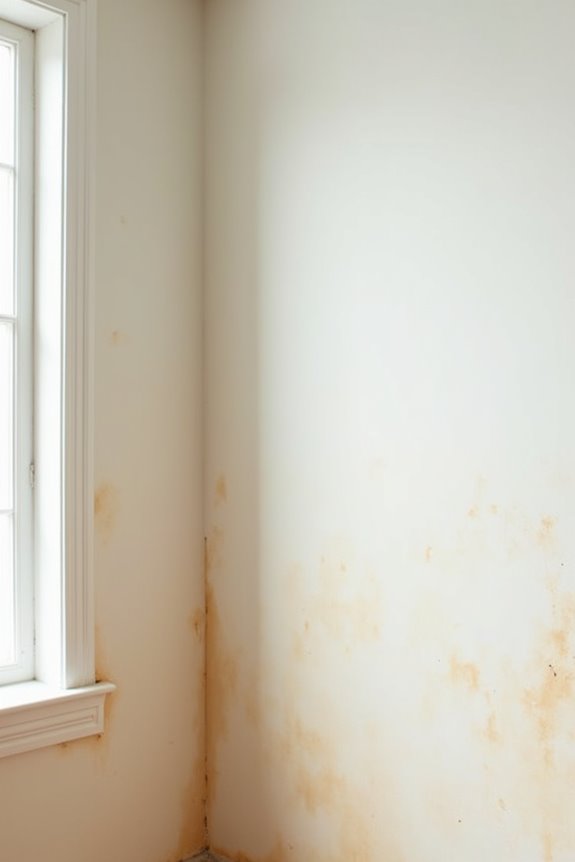
your walls can look completely clean while still smelling like a smoke shop. That lingering odor happens because volatile compounds from cannabis smoke don’t disappear when visible stains do. While you’re painting over staining, those odor molecules are sneaking into your porous materials—drywall, fabrics, carpets—creating a scent reservoir that releases slowly over weeks or months.
I’ve discovered that surface cleaning alone won’t cut it. You need serious air purification with HEPA filters and activated carbon, plus aggressive ventilation to tackle smoke residues at their source. Poor air circulation means that nasty smell just hangs around, mocking your freshly painted walls. The staining versus odor battle taught me this: visible problems disappear fast, but invisible scent molecules? They’re stubborn.
Keeping Walls Stain-Free After Cleanup

Now that you’ve tackled the invisible odor problem, let’s focus on keeping those walls actually looking clean—because prevention beats cleanup every single time.
I’ve learned that staying ahead of cannabis smoke residue means building smart habits:
- Clean after sessions to prevent permanent buildup on your walls
- Choose semi-gloss paint instead of flat finishes—it resists stains way better
- Use ventilation during and after cleaning to stop smoke particles from resettling
- Run a HEPA purifier continuously to capture lingering particles
- Stock a wall cleaner and baking soda paste for quick touch-ups
When stubborn marks won’t budge, I apply stain-blocking primer before repainting with quality semi-gloss. Your walls stay fresher longer when you’re proactive. Trust me, this approach saves serious frustration.