
I’ll hang your picture on brick by first assessing your brick type and mortar condition—this determines whether I use no-drill clips for lightweight frames or drill into mortar joints for heavier pieces. I’ll gather my tools, plan my layout with painter’s tape, and prep my workspace. Then I’ll install anchors, hang my picture, and use a level to verify it’s perfectly straight. Finally, I’ll test stability from multiple angles and fix any issues like loose anchors or misalignment. Stick with me for the complete breakdown of each technique.
Assess Your Brick Type and Mortar Condition to Choose the Right Method
Why does one hanging method work beautifully on your neighbor’s brick wall but fail miserably on yours? The secret’s in understanding what you’re actually working with. I’ve learned that identifying your brick type—solid, cavity, or veneer—completely changes my approach. Then I assess the mortar joints: are they recessed and intact, or rough and crumbling? That determines whether I’ll drill into mortar safely or reach for clips instead. Smooth, sealed brick welcomes adhesive solutions, while rough, unsealed brick demands either clips or drilling. I always check brick hardness too; softer older brick needs mortar drilling for security, while newer brick tolerates direct drilling cautiously. Testing a small area first prevents regret. This foundational assessment transforms hanging from guesswork into confident action.
Pick No-Drill Clips for Light Frames or Drill for Heavier Artwork
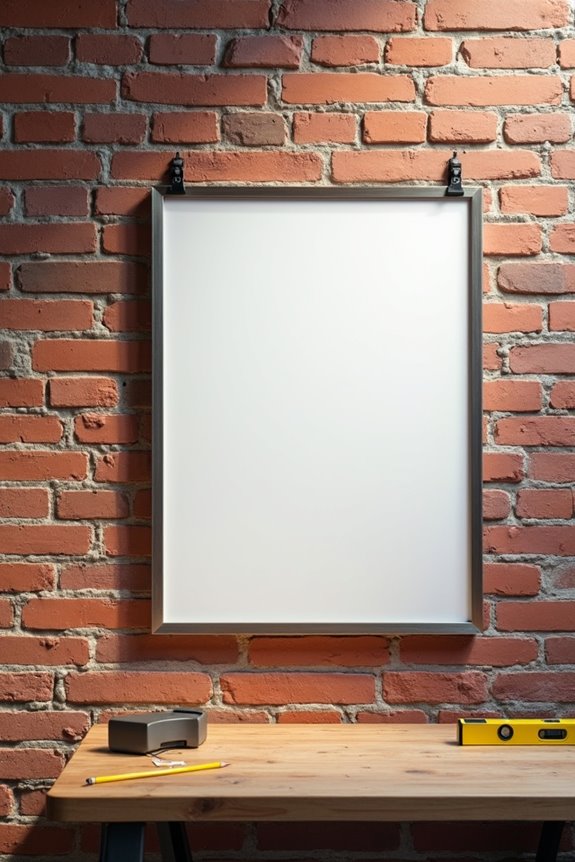
Once you’ve assessed your brick and mortar, here’s where the real enchantment unfolds—choosing between the simple elegance of no-drill clips and the permanent power of drilling. For lightweight frames, brick clips grip recessed mortar joints, delivering flush mounting without any holes. These two-hook designs have teeth that bite into brick, creating gravity-supported attachment points you’ll trust completely. Want extra security? Place two clips on heavier pieces to distribute weight across your wall. Prefer avoiding drills entirely? Adhesive hooks and command strips work beautifully on smooth surfaces—just verify weight limits first. Consider a picture rail system too; it suspends artwork from wall-mounted rails using cords or hooks, eliminating mortar and brick penetration completely. You’re building something meaningful here.
Gather Your Tools: What You’ll Need for Clips, Nails, or Drilling
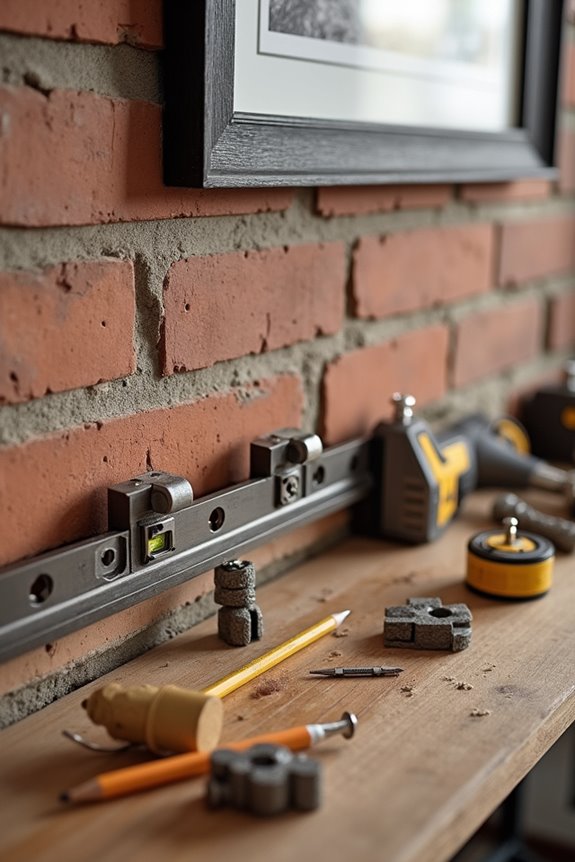
How you’ll hang your picture depends entirely on which method you’ve chosen—and I’m genuinely excited because gathering the right tools makes everything that follows so much smoother.
For clips, grab brick clips that grip mortar joints with two sturdy hooks, perfect for lighter frames. If you’re using nails, a hammer and quality nails work best when they enter mortar rather than brick face itself. Planning to drill? You’ll need a power drill or hammer drill paired with a masonry drill bit sized for your specific anchors or screws.
Here’s what truly matters: bring a level, chalk, and protective gear—gloves and goggles protect you while ensuring accurate holes. These essentials transform the entire process from stressful to manageable, giving you confidence that your artwork will hang beautifully and safely.
Plan Your Layout and Test It Before Making Any Marks
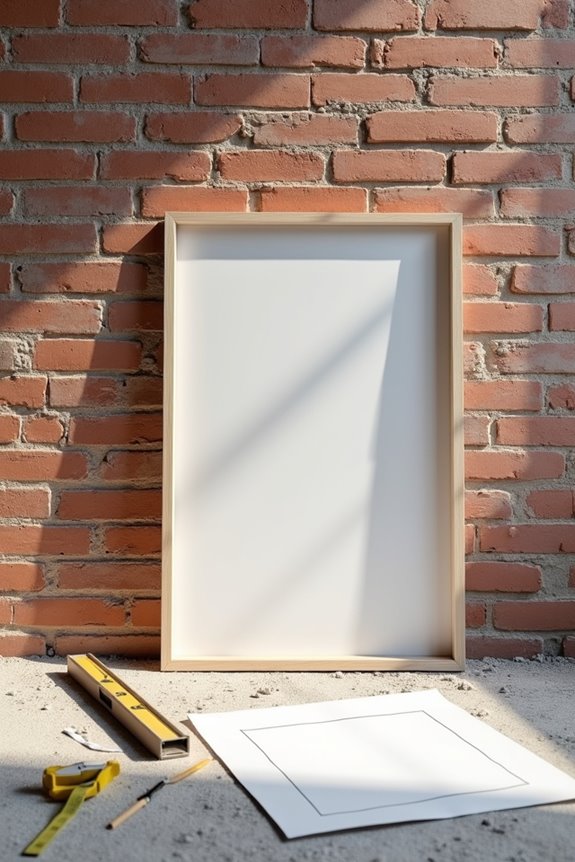
Before I touch a single nail to that brick, I’m going to plan my layout—whether I’m creating a gallery wall with multiple frames or keeping it simple with one statement piece. I’ll grab painter’s tape and paper templates to map out exactly where everything goes, testing different spacing and heights until it feels just right on my wall. This dry-run approach saves me from those frustrating nail holes and lets me visualize the whole design with my buddy’s help before committing to anything permanent.
Gallery Wall Design Options
Why rush into drilling holes when you can preview your entire gallery wall first? I love testing layouts using painter’s tape and cardboard cutouts—it’s genuinely fun and saves so much frustration. You’ll align everything with mortar joints, those natural lines in your brick that guide perfect placement. I start by sketching my vision, then use layout templates to visualize spacing and balance before committing to anything permanent. Whether you’re planning a single statement piece or an ambitious gallery wall, this preview stage reveals what actually works. For larger pieces exceeding 30×40 inches, I mark where two screws or brick clips will go. Testing with tape costs nothing but prevents expensive mistakes. Trust me, this step completely transforms your entire hanging experience into something confident and satisfying.
Using Paper Templates First
What’s the secret to hanging pictures on brick without second-guessing yourself halfway through? A paper template. I tape a full-size paper guide directly to my brick wall, mapping out exactly where each hanging point goes. This lets me test my layout planning without making permanent marks. I mark location points on the template for every picture, then carefully transfer those positions onto the wall. Here’s the crucial part: I always align my marks with mortar joints—those gray lines between bricks—rather than drilling into brick faces. Mortar holds anchors way better. Once I’ve repositioned the template until everything looks balanced and leveling feels right, I’m confident proceeding. No regrets, no misaligned frames. That’s the magic of testing first.
Painter’s Tape Layout Testing
Painter’s tape becomes your best friend when you’re mapping out a gallery wall on brick, and I’m genuinely excited to share this game-changing technique. I place strips directly on the brick to mark exactly where each piece will hang—no permanent damage, no stress. Here’s the magic: I align the tape along level lines and mortar joints, those natural grout spaces between bricks, ensuring everything sits perfectly straight. Then I create a mock-up by taping paper cutouts of each frame onto my layout. This lets me visualize spacing and balance before committing to anything permanent. I’ll even use a hanging template held temporarily with tape for precise positioning. Once I’m completely satisfied, I remove the tape, revealing clean marks only where I need them. This approach transforms the entire hanging process into something controlled and confident.
Prep Your Workspace: Protect Floors and Wear Safety Gear
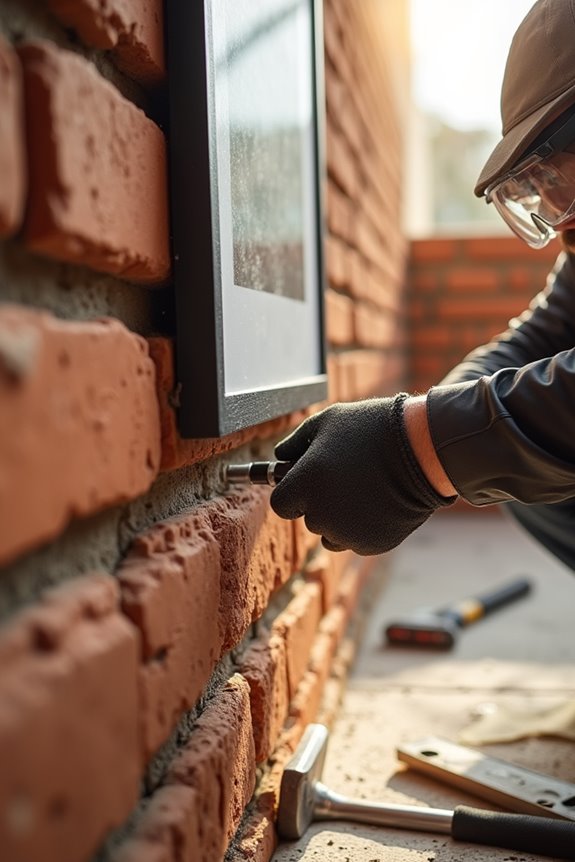
Before you grab that hammer and drill, here’s the honest truth—prepping your workspace isn’t the flashy part of hanging a picture, but it’s absolutely the smartest move you’ll make. I move furniture away from the brick wall first, creating clear working space. Then I lay down a tarp or newspaper to protect floors from dust and debris. Safety gear matters tremendously—I always wear eye protection when drilling or hammering. Flying particles can seriously hurt, and you’re worth protecting. I cover nearby fragile items with plastic sheets before starting work. Next, I mark my intended hanging locations with chalk marks directly on the brick wall, ensuring accurate picture hanging placement. Having a buddy nearby helps tremendously for centering and holding frames during alignment checks. These prep steps transform the entire experience from stressful to manageable and genuinely enjoyable.
Drill Into Mortar, Not Brick, for Maximum Support
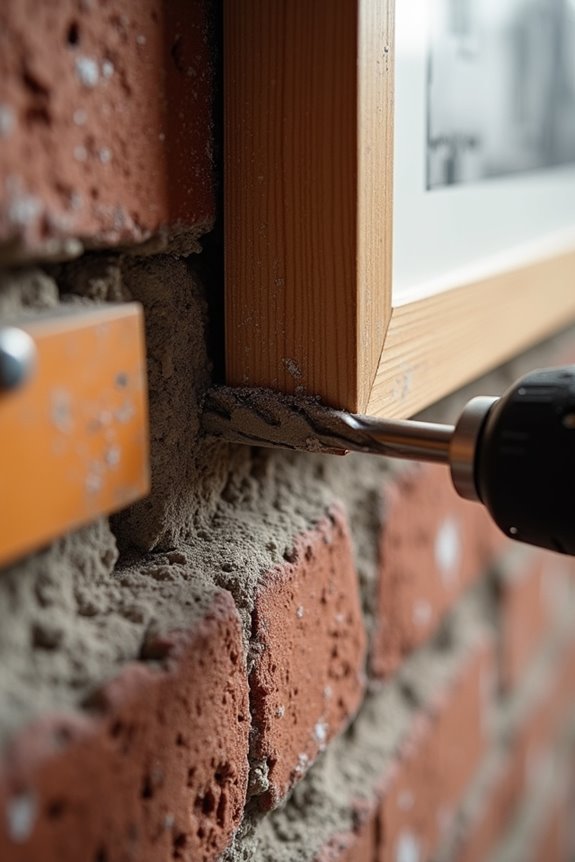
drilling into mortar joints instead of the brick face itself prevents cracking and gives you superior holding power.
| Material | Ease of Drilling | Anchor Hold |
|---|---|---|
| Brick | Difficult | Weak |
| Mortar | Easy | Strong |
| Concrete | Very Hard | Medium |
Grab a masonry drill bit matching your screw size, then carefully drill into the mortar at your marked locations. Insert wall anchors into those holes, drive your screws in, and leave them slightly proud of the wall—that’s the magic spacing for hanging a picture securely. Use a level to verify perfect alignment. Test that weight capacity before trusting it with your artwork. You’ve got this.
Install Anchors and Hang Your Picture on the Hooks
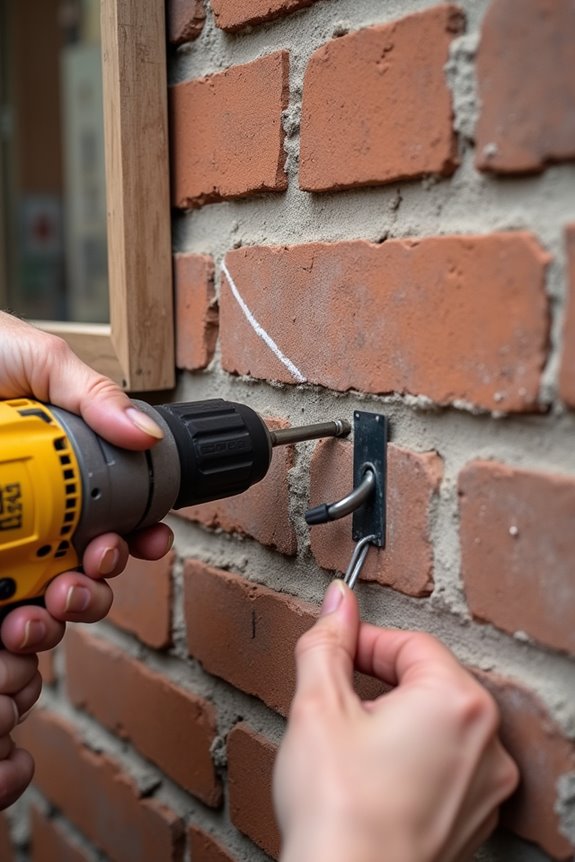
How satisfying is it when those anchors slip perfectly into the holes you’ve drilled? I tap my brick anchors flush into the mortar joints, making sure they’re snug and level with the wall surface. Now comes the exciting part—screwing into anchors that’ll actually hold my artwork securely.
I position my picture hanger onto the embedded anchors, aligning everything with my level to catch any tilts. That click when the screw seats properly? Pure joy. The hardware sits rock-solid, no wobbling or shifting.
Finally, I hang my frame on those mounted hooks and double-check with my level one more time. A slight adjustment here, a tiny tweak there, and it’s perfect. My picture hangs exactly where I envisioned it, proud and straight on my brick wall.
Use a Level and Step Back to Check Your Work
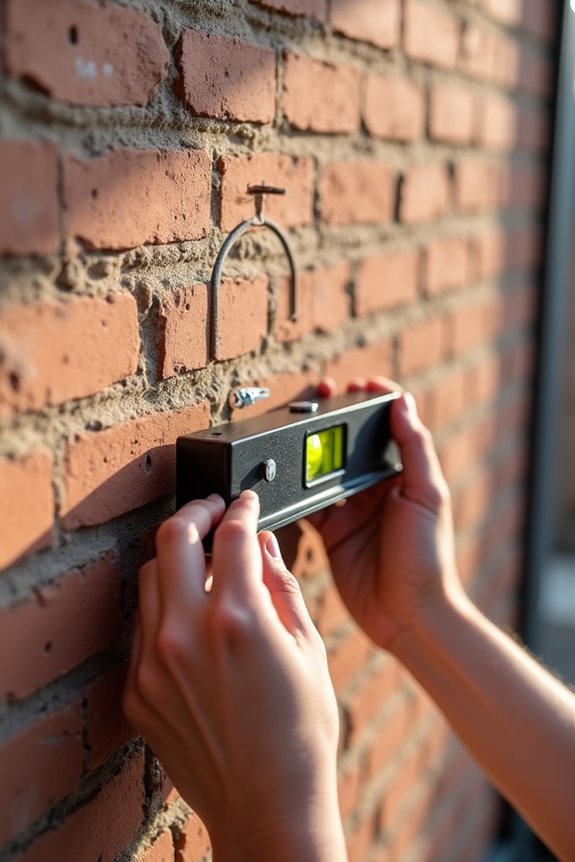
You’ve got your picture hanging on those anchors—now here’s where you make sure it’s absolutely perfect. I grab my level and check that the frame sits completely horizontal against the brick. Here’s my process to nail the alignment:
- Place the level on top of the frame to confirm it’s perfectly straight
- Step back 10–12 feet to assess how it aligns with nearby frames or wall features
- Sight along the top edge, checking for subtle left-right tilts that need correction
- Verify the frame sits evenly without rocking or gaps along the bottom edge
After these adjustments, I take that back view seriously. Small tweaks make enormous differences. You’ll feel that rush of satisfaction when everything clicks into place—your brick wall now displays artwork that’s genuinely level and visually balanced. That’s the mark of real craftsmanship.
Test Stability and Verify Your Picture Won’t Slip
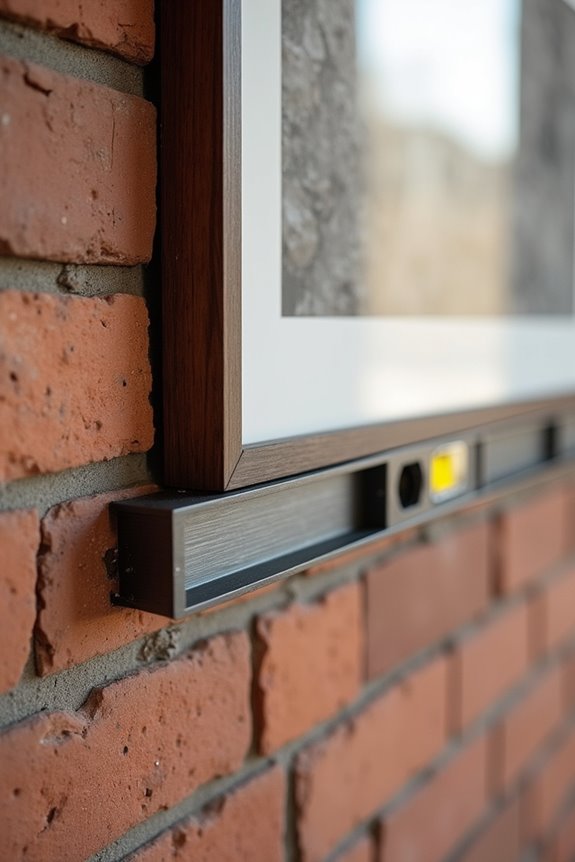
Now comes my favorite part—actually testing whether your frame’s going to stay put! I’ll gently tug on the frame from multiple angles to confirm the hardware grips securely and the fasteners aren’t slipping, then verify my anchors can handle the weight with a comfortable 2x safety factor cushion. Finally, I’ll double-check that everything’s still perfectly level and positioned exactly where I want it, because even small shifts from gravity add up over time.
Weight Capacity and Load Limits
Before you hang that beautiful piece on your brick wall, we’ve got to talk about something that separates a stunning gallery from a disaster waiting to happen: weight capacity. I’ve learned this the hard way, and trust me, understanding your limits saves heartbreak and drywall repair bills.
Here’s what you need to know about load limits:
- Brick clips typically hold 25–50 pounds depending on clip type and brick variability
- Wall anchors require a safety factor of at least 2x your total weight
- Adhesive hooks have defined maximum loads you absolutely cannot exceed
- Masonry drilling with rated anchors handles heavier pieces safely
Your hanging hardware’s job is protecting both your art and your walls. When using wall anchors, I always leave 1/8 to 1/4 inch space between the screw head and brick. This gap prevents slippage and ensures secure hang. Knowing these specifics means you’re hanging confidently, not nervously.
Hardware Grip and Security Check
Once you’ve got your hardware installed and rated to handle your artwork’s weight, there’s one more thing standing between you and a picture that’ll stay put: making sure everything actually grips like it’s supposed to.
I always perform a load test with a lightweight frame first—it’s your safety net. Then comes the security check: gently tug your artwork from multiple directions. It shouldn’t budge even slightly. For brick clips, verify those teeth have properly engaged the mortar joints; recessed areas are where they grip best. Use your level to confirm the frame sits plumb, not tilted. Check that screws feel snug but not over-tightened, which paradoxically weakens the hold. Run your fingers along masonry anchors to ensure they’re flush. This tactile verification gives you the confidence knowing your piece stays exactly where you want it.
Level Alignment and Wall Position
How’d you like to walk past your artwork a month from now and find it hanging perfectly straight—exactly as you positioned it?
Here’s what I’ve learned through trial and error:
- Use a level against your frame’s top edge, checking both horizontally and vertically before securing anything
- Mark your hanging spots directly on mortar joints, never on brick faces, for genuine structural support
- Have a buddy hold the piece at eye level (around 57 inches) so you can verify balance and alignment together
- Step back several feet afterward, examining how the frame sits relative to surrounding elements
For gallery layouts, I apply chalk marks on all sides, maintaining consistent spacing throughout. This approach transforms what feels overwhelming into manageable steps. After mounting, I recheck everything—tiny adjustments prevent slipping and ensure that pride-worthy result you’re after.
Fix Common Problems: Loose Anchors, Cracked Mortar, and Misalignment
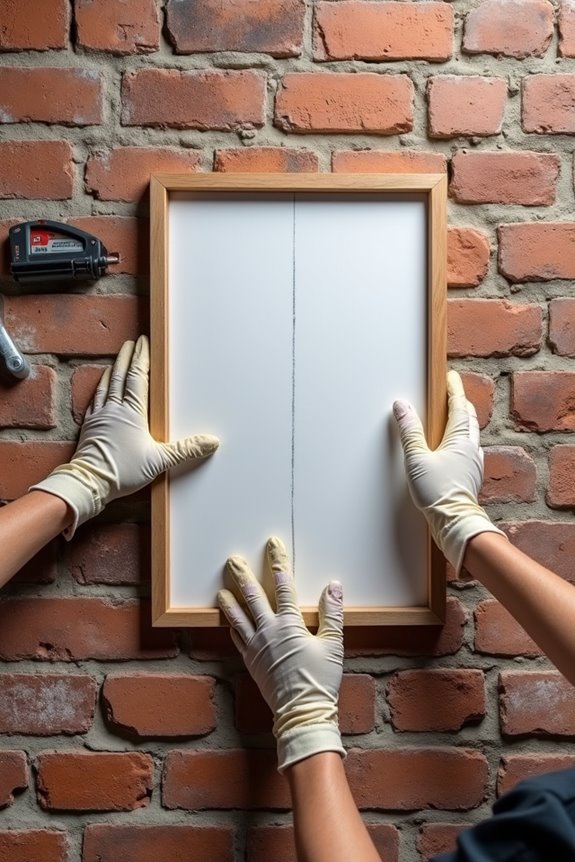
Even when you’ve followed every step perfectly, sometimes your picture hanging doesn’t go exactly as planned—and that’s totally normal! If your anchors feel loose, you’ve likely drilled into weak mortar. Here’s what I do: I re-tap the hole with heavier-duty mortar anchors rated well above my picture’s weight. For cracked mortar, I skip it entirely and drill directly into solid brick instead. Misalignment trips up most of us—I prevent it by marking mortar joints with a pencil, using my level religiously, and testing my layout with a hanging guide before touching the drill. After hanging, I check monthly for movement since brick settles over time. These fixes transform frustrating hangups into successful displays you’ll genuinely love showing off.