
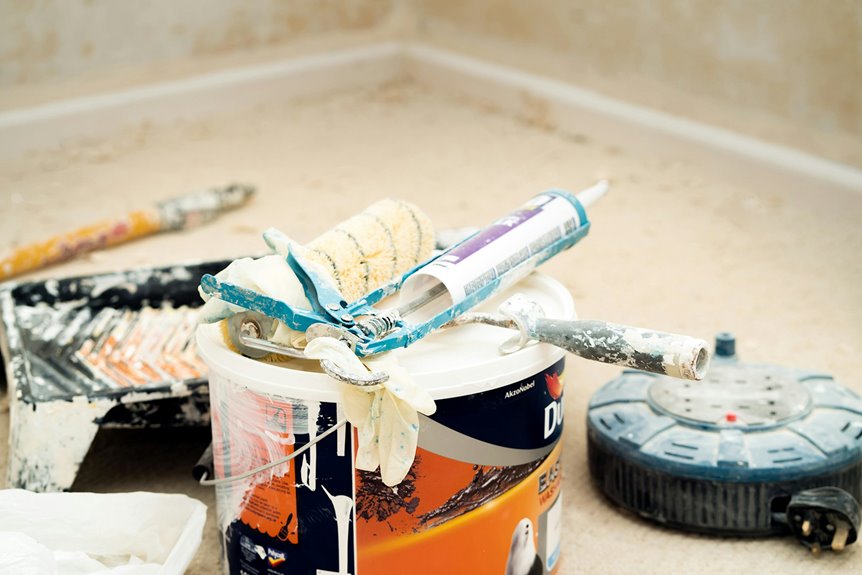
You can use ceiling paint on walls, but I wouldn’t recommend it for most spaces. Ceiling paint’s thick, flat finish—designed to prevent drips overhead—lacks the washability and durability wall paint offers. It’ll show fingerprints, scuffs, and stains you can’t easily clean. It might work in low-traffic closets or basements, but kitchens and hallways? Forget it. You’ll likely need extra coats and watch it peel faster than proper wall paint. I’ll show you why choosing the right product matters.
Can You Use Ceiling Paint on Walls?

Ever wondered if that gallon of ceiling paint sitting in your garage could work on your walls instead? Here’s the honest truth: yes, you can use ceiling paint on walls, but it’s not ideal for most spaces. I’ve learned that ceiling paint on walls works best in low-traffic areas like closets or basements where durability isn’t critical.
The flat finish hides imperfections beautifully, creating that cohesive, subtle look we all want. However, here’s the catch—ceiling paint lacks washability. It’s thicker and harder to clean, so spills and marks stick around. You’ll likely need extra coats on vertical surfaces, and your color options shrink dramatically.
For living rooms or kitchens? Skip it. But for that forgotten mudroom? Absolutely go for it. It’ll save you money while delivering professional results in the right spot.
How Ceiling Paint Differs From Wall Paint

Why does ceiling paint feel so different when you’re rolling it onto your overhead surface? The answer lies in its specially formulated thickness. I’ve discovered that ceiling paint’s extra viscosity prevents those frustrating drips and splatters that plague regular wall paint applications.
Here’s where they truly diverge: ceiling paint features a flat or low-sheen finish that masks imperfections beautifully, while wall paint offers diverse finish options—eggshell, satin, semi-gloss—letting you customize your look. Wall paint prioritizes washability and stain resistance because walls endure constant contact and cleaning. Ceiling paint, conversely, focuses on creating uniform, non-reflective appearance without those concerns.
You’ll also notice wall paint boasts wider color selections for aesthetic variety. Understanding these distinctions helps you appreciate why each paint type serves its specific purpose brilliantly.
Why Ceiling Paint’s Flat Finish Fails on Walls

When I paint my walls with ceiling paint, I’m essentially asking for trouble because that flat finish—the kind designed to hide imperfections on textured ceilings—actually reveals every wall bump, dust particle, and uneven roller stroke under normal lighting. I’ve learned the hard way that ceiling paint’s lower durability and weak washability mean those inevitable fingerprints, scuffs, and stains stick around like unwelcome houseguests, and scrubbing them away risks damaging the paint itself. Here’s the real kicker: ceiling paint simply can’t match the resilience and stain-fighting power of actual wall paint, which is formulated specifically to withstand the daily wear that vertical surfaces endure.
Flat Finish Reveals Imperfections
that flat ceiling paint you’re considering for your walls? It’ll betray you. The non-reflective flat finish that hides ceiling imperfections actually does the opposite on vertical surfaces—it emphasizes every flaw, roller mark, and uneven texture like a spotlight. I watched this happen in my own bedroom when I tried it, and the disappointment was real.
The problem is that ceiling paint’s thickness and matte sheen create an uneven appearance that screams “mistake” rather than intentional design. Small dents, bumps, or previous patch jobs suddenly become glaringly obvious. Unlike wall paints with subtle sheen that reflect light evenly, flat finish paint absorbs it unevenly, magnifying surface irregularities you’d never notice otherwise.
Trust me—save ceiling paint for ceilings where it actually belongs.
Limited Sheen and Durability
ceiling paint’s flat finish doesn’t just look flat on walls—it actually fails to protect them. You see, that low-sheen coating lacks the washability you need for living space. When I tried scrubbing marks off my kitchen wall painted with ceiling paint, the flat finish just smudged. Unlike eggshell or satin wall paints, ceiling paint can’t handle repeated cleaning without showing wear.
The durability issue really hit home when fingerprints became permanent fixtures. Ceiling paint simply wasn’t designed for the daily abuse walls endure. Standard wall paints offer superior durability through better adhesion and tougher finishes. If you’re considering ceiling paint for walls, remember: you’re sacrificing both protection and longevity for a product that’ll disappoint you within months.
Washability and Stain Resistance
Why does ceiling paint turn your walls into stain magnets? That flat finish designed to hide imperfections on ceilings actually works against you on walls. Here’s the thing: ceiling paint’s thick, matte texture resists scrubbing, making washability nearly impossible. When your kids brush their hands across the wall or you accidentally splash coffee, that stain’s staying put.
I’ve learned the hard way that this texture/finish lacks the stain resistance you need in living space. Unlike eggshell or satin wall paints, ceiling paint can’t handle repeated cleaning. High-traffic areas deteriorate faster because the flat finish simply won’t tolerate the gentle scrubbing that removes marks.
You’re investing in a product that fights against maintenance rather than supporting it. Your walls deserve better durability.
When Ceiling Paint Works: Low-Traffic Rooms

Where can you actually get away with using ceiling paint on walls? I’ve found that low-traffic areas like basements, storage rooms, and closets are perfect spots for ceiling paint on walls. Here’s why I’m genuinely excited about this option: these spaces don’t see constant foot traffic, so durability isn’t your main concern. The flat finish works beautifully here, hiding wall imperfections just like it does on ceilings. I appreciate how ceiling paint’s thicker consistency means fewer drips and splatters during application—honestly, that alone makes the job more enjoyable. Plus, you’ll achieve that sophisticated matte appearance without worry. Since these rooms prioritize function over design impact, you’re not sacrificing your home’s visual goals. It’s a smart, practical solution that works wonderfully when conditions align.
Where Ceiling Paint Fails: High-Traffic Spaces

I’ve learned the hard way that ceiling paint simply can’t handle the wear and tear of busy spaces like kitchens and hallways where you’re constantly touching walls, spilling things, and needing quick cleanups. The flat, porous finish that makes ceiling paint great at hiding imperfections on overhead surfaces becomes a liability on walls—it won’t wipe clean like quality wall paint with eggshell or satin finishes, and stains seem to set in permanently rather than coming off. If you’re tempted to use ceiling paint on walls in high-traffic zones to save a few dollars, you’ll find yourself repainting way more often and struggling to remove everything from fingerprints to kitchen splatters.
Durability Issues In Kitchens
When you’re standing in your kitchen making dinner, that’s exactly when ceiling paint starts showing its weaknesses. That grease splattering from your stovetop? It’ll stick to ceiling paint and won’t come off easily because this paint lacks washability—the ability to handle scrubbing without damage. Your kitchen’s moisture from cooking steam attacks ceiling paint relentlessly, causing peeling and chipping around your range hood and sink areas.
I’ve watched standard ceiling paint deteriorate within months in kitchens. The thicker consistency that prevents drips during application actually traps grime, making cleaning nearly impossible. You’ll notice discoloration spreading across walls near appliances.
Wall paint with superior kitchen moisture resistance and scrubbability handles these challenges brilliantly. It’s designed tough—built for the humid, messy reality of actual cooking spaces. That’s the real difference between struggling with ceiling paint durability and enjoying walls that stay beautiful.
Washability Concerns For Hallways
Why does ceiling paint look so rough in your hallway after just a few months?
I’ll tell you—ceiling paint simply isn’t built for high-traffic spaces. You see, ceiling paint has a flat finish with minimal sheen, making it far less washable than wall paints. When I tested this in my own hallway, I noticed scuffs and stains appeared constantly, and here’s the kicker: frequent cleaning caused chipping and peeling.
Ceiling paint’s thicker formula prioritizes hiding imperfections, not withstanding repeated scrubbing or moisture exposure. That’s why I switched to eggshell or satin wall paint instead. These durable finishes maintain their appearance while staying cleanable—exactly what busy hallways demand. Trust me, choosing the right paint saves frustration down the road.
Using Ceiling Paint in Bathrooms: Moisture Problems
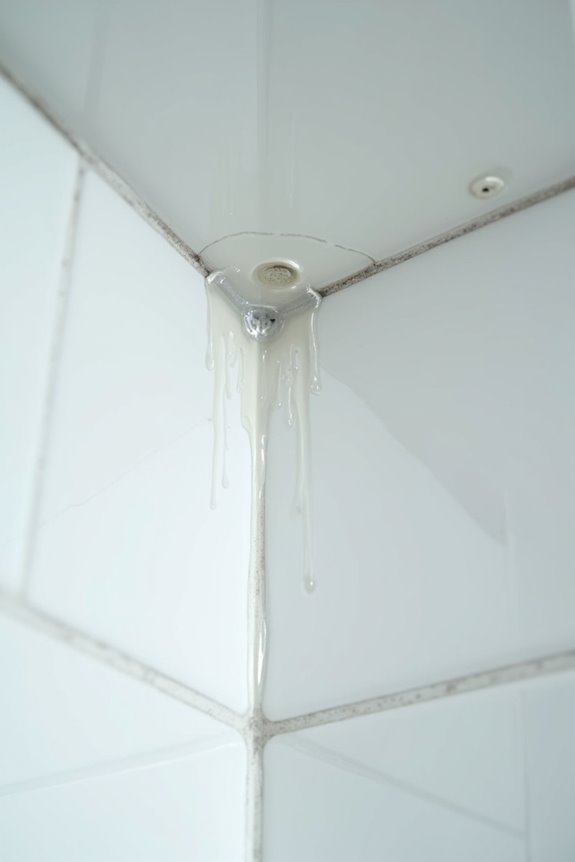
Because bathrooms are basically moisture factories—think steamy showers, running sinks, and that humidity that makes your mirror fog up every single time—ceiling paint’s flat finish becomes a real problem in these spaces. I’ve learned that ceiling paint absorbs moisture way too easily, leading to peeling and mold growth on your bathroom walls.
| Issue | Ceiling Paint | Bathroom Wall Paint |
|---|---|---|
| Moisture Resistance | Poor | Excellent |
| Washability | Low | High |
| Mold Risk | High | Low |
| Durability | Fades Quickly | Long-lasting |
I’d skip ceiling paint entirely here. Instead, use satin or semi-gloss bathroom wall paint—they’re specifically formulated to handle moisture and resist mildew. Pair this with proper ventilation, and you’re golden. Your bathroom deserves paint that actually fights back against humidity.
How to Apply Ceiling Paint to Walls
So you’ve decided ceiling paint is worth a shot on your walls—I get it, maybe you’ve got some leftover paint or you’re working with a tight budget. Here’s what I’ve learned: your application technique matters tremendously. Start by prepping thoroughly with primer, especially on darker walls. Use a quality roller with a thicker nap (that fuzzy covering) to handle ceiling paint’s density better than standard brushes. Apply thin, even coats rather than one thick layer—this prevents drips and ensures uniform coverage. I’d recommend waiting the full drying time between coats, even though it’s tempting to rush. Work in sections, maintaining wet edges to avoid lap marks. Expect needing two, possibly three coats on walls compared to ceiling application. Take your time; patience transforms this challenge into success.
Blending Ceiling and Wall Paint Sheen
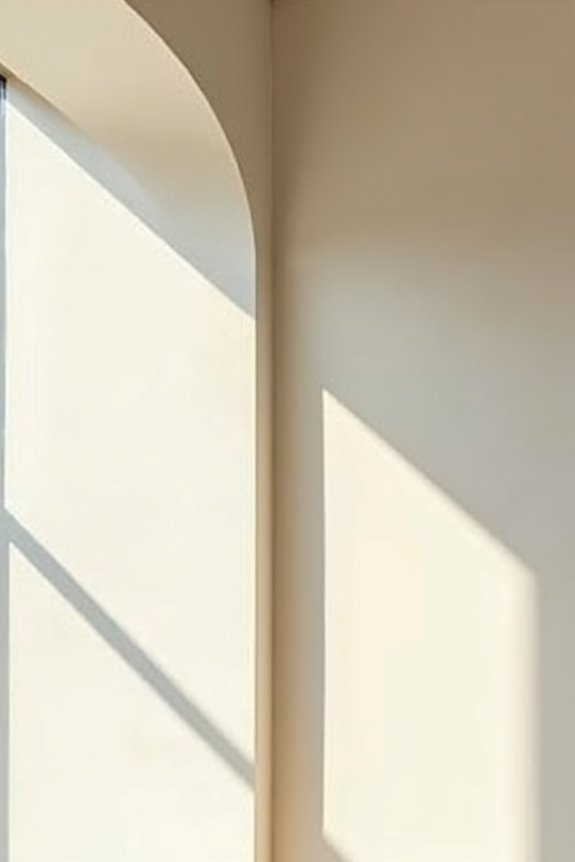
When you’re mixing ceiling and wall paints, here’s what I’ve learned: the sheen—that’s the glossiness level—has to match, or you’ll end up with distracting bright spots where the light bounces off differently. I discovered that pairing a flat ceiling paint with a flat or low-sheen wall finish (like matte or eggshell) keeps everything looking cohesive and prevents those annoying reflections that make flaws pop right out. Testing a small 2-by-2-foot section first saved me from a full-room redo, since ceiling paint doesn’t clean or hold up quite like dedicated wall paint does.
Sheen Compatibility And Blending
How’s your ceiling paint going to look when it meets your wall paint? That’s where sheen compatibility matters most. I’ve learned that matching sheens creates seamless transitions—flat ceiling paint paired with flat wall paint looks purposeful and refined. But here’s where I got excited: mismatched sheens actually highlight where they meet, making the line super obvious under lighting. When I tested ceiling paint on my living room walls, the flat finish looked duller than I’d hoped, especially in high-traffic zones. For blending success, I recommend using ceiling paint on walls only in low-traffic spaces where that non-reflective, matte appearance works beautifully. Always test a small area first under your room’s actual lighting. You’ll catch any inconsistencies before committing fully.
Visual Effects Of Mixed Finishes
Why does the line between your ceiling and walls sometimes disappear while other times it practically glows under your overhead lights? The answer lies in sheen compatibility. When you use ceiling paint on walls, you’re introducing a flat, non-reflective finish that differs dramatically from standard wall paint’s subtle sheen. This mismatch creates visual inconsistency under lighting.
I’ve learned that matching finishes transforms everything. A flat ceiling paired with flat wall paint produces a cohesive, uniform look that feels intentional and polished. But mix a glossy wall with flat ceiling paint? You’ll notice the wall practically shouts while the ceiling whispers.
The glare reduction benefit of ceiling paint’s matte surface vanishes when adjacent finishes compete visually. Your room loses that unified, designer-quality appearance you’re aiming for.
Washability and Durability Issues With Ceiling Paint

Should you actually use ceiling paint on your walls? Here’s the honest truth: you’ll run into real washability and durability problems. I’ve learned that ceiling paint isn’t built to handle the wear and tear walls face daily. Its flat finish hides imperfections beautifully, but it can’t withstand scrubbing or cleaning like wall paint does.
| Feature | Ceiling Paint | Wall Paint |
|---|---|---|
| Washability | Low | High |
| Durability | Prone to dulling | Resists stains |
| Touch-ups needed | Frequent | Minimal |
Once you smudge or stain ceiling paint on walls, you’re stuck. That thicker consistency that prevents drips makes cleanup nearly impossible. Your walls will show marks quickly, requiring constant maintenance. Even paints claiming mildew resistance don’t match wall paint’s protective standards. You’d be investing in ongoing frustration rather than lasting results.
Better Budget Paints for Walls Than Ceiling Paint

When you’re working with a tight paint budget, reaching for ceiling paint might seem like smart math—but you’d actually save money long-term by choosing wall paint instead. Here’s why: budget wall paints labeled specifically for walls cost less per gallon and deliver superior washability compared to ceiling paint. I’ve learned that ceiling paint’s flat finish and poor stain resistance mean you’re replacing it faster. Wall paint’s durability matters when you’ve got kids, pets, or messy moments. You’ll appreciate the eggshell and satin finishes available in wall paint—they’re tougher and cleaner than ceiling paint’s basic options. Plus, wall paint resists marks and fingerprints better, protecting your investment. Choosing the right product upfront beats repainting repeatedly.
How to Prepare Walls Before Using Ceiling Paint
Because ceiling paint’s thick, flat formula works so differently than wall paint, proper prep work becomes your secret weapon for avoiding a blotchy, uneven mess. I can’t stress this enough—walls clean and dust-free are non-negotiable. Wipe down surfaces thoroughly, removing grease and peeling coatings that’ll sabotage your results.
Here’s what transforms your space: lightly sand glossy areas so the thicker paint grips properly. Fill deep holes and cracks, then remove any nails or hardware lurking beneath. This ceiling paint preparation prevents imperfections from showing through.
Don’t skip primer before painting! If your walls have stains, shine, or odors, apply a quality drywall or stain-blocking primer first. This step ensures even coverage and professional-looking results. You’ve got this!
Will Ceiling Paint Peel or Crack on Walls?
How much wear and tear does your wall really take?
Here’s what I’ve learned: ceiling paint isn’t built for walls. It’ll peel and crack on you, especially in tough spots. The problem? Ceiling paint’s thick formula lacks proper adhesion to vertical surfaces.
Why ceiling paint fails on walls:
- Poor adhesion design — formulated to stick to horizontal ceilings, not vertical walls requiring stronger grip
- Moisture trapping — higher viscosity holds humidity in bathrooms and kitchens, causing loosening and peeling over time
- Low durability — not engineered for daily contact, cleaning, or humidity exposure like quality wall paints are
I’d skip using ceiling paint on walls entirely. Choose eggshell or satin finishes instead—they’re specifically formulated for adhesion and washability. You’ll dodge frustrating peeling and cracking down the road.