I’ll walk you through hanging your skateboard like a pro. First, pick your mounting method—fishing line works great for renters, while screws with wall anchors give permanent displays serious staying power. Gather your supplies and locate studs using a stud finder for maximum security. Mark anchor points aligned horizontally, install them carefully, then hang your deck using fishing line looped through nails. Finally, level everything with a spirit level and test the stability by pressing laterally. Stick around to discover which method works best for your specific wall type.
Step 1: Choose Your Skateboard Mounting Method
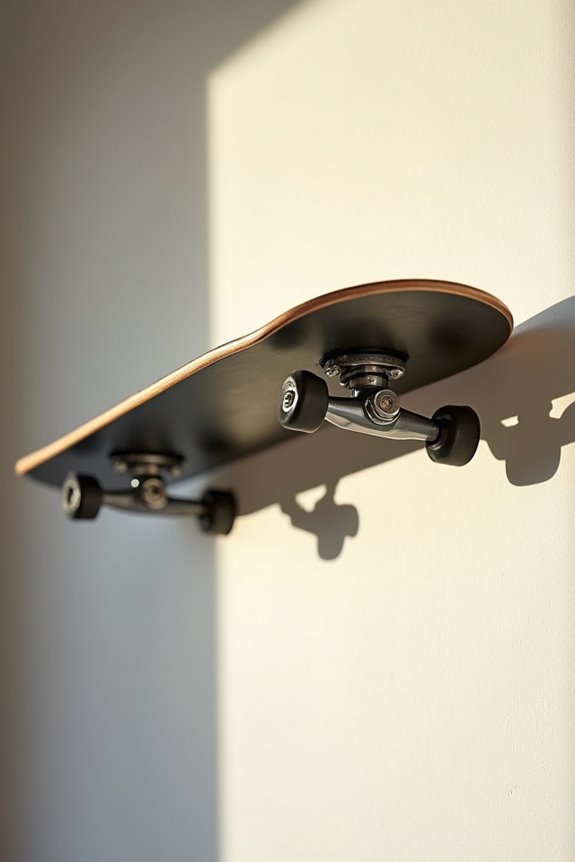
Several mounting methods exist for displaying your skateboard, and picking the right one is honestly the most essential decision you’ll make in this whole process. I’ve found that your choice depends on your wall type and how much your board weighs. If you’re renting or want zero damage, drill-free options like adhesive strips or wall mounts work beautifully. For permanent skateboard mounting on solid walls, traditional screws with wall anchors give you serious holding power. Here’s the thing: installing into studs—those hidden wooden supports behind your drywall—means maximum support and minimal wall damage. Consider your wall display vision too. Want it floating mysteriously away from the wall? Rope or fishing line creates that gallery-worthy effect. Want something bulletproof? Heavy-duty bracket systems are your answer.
Step 2: Gather Supplies and Prepare Your Wall
Before you hang that beautiful deck, isn’t it smart to grab everything you need?
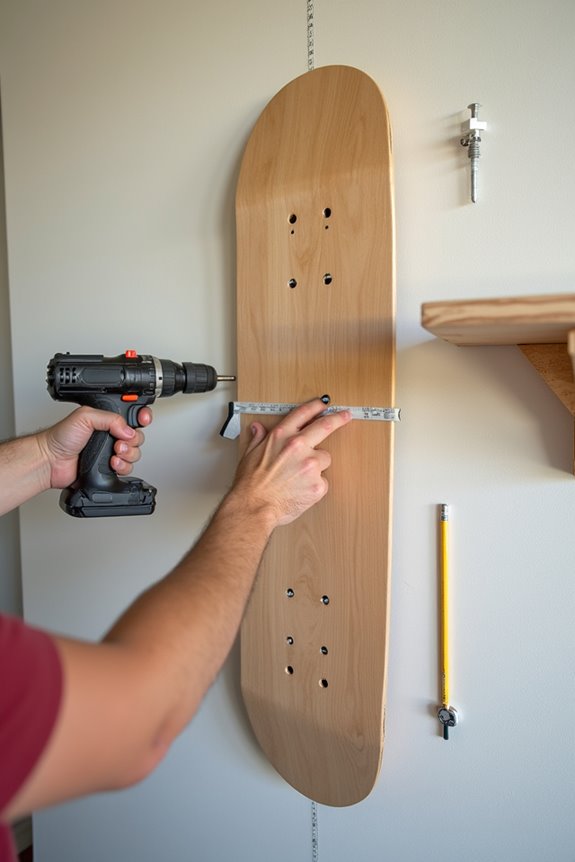
I’m gathering my supplies right now, and honestly, it’s exciting to see this project come together. Here’s what I’ve collected: the skateboard itself, nails or screws, fishing line for my hanging line, a hammer, and basic wall hardware. The fishing line is crucial—I’m using sturdy stuff that won’t snap under the deck’s weight.
Next, I’m prepping my wall carefully. I’m checking for studs with a stud finder because I want this secure. I’m examining the space where I’ll mount everything, measuring twice to ensure proper placement. This preparation step matters tremendously. Once I’ve marked my spot and verified the wall’s condition, I’m ready to move forward confidently. Taking time now prevents frustration later, and that’s something I’m genuinely grateful for.
Step 3: Mark and Install Your Anchor Points
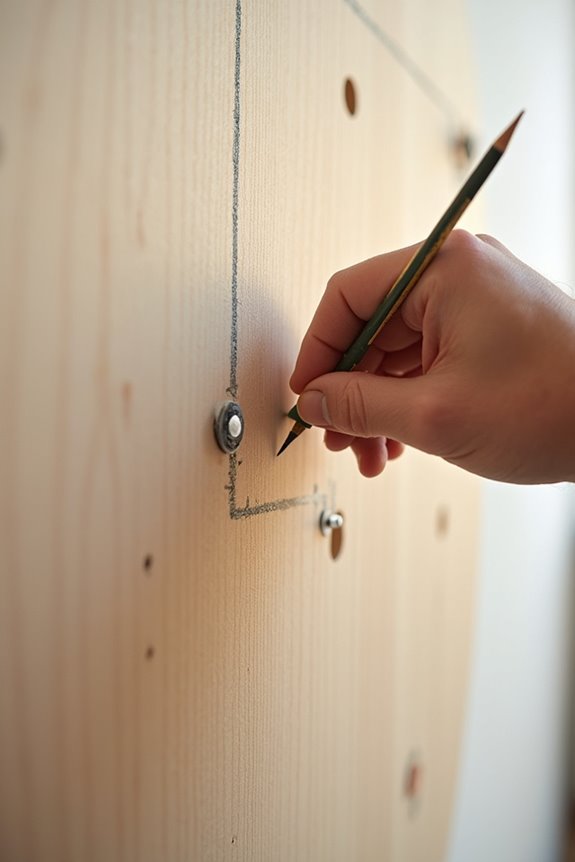
Now that my wall’s prepped and ready, it’s time to mark exactly where those anchor points go—and I’m genuinely excited about this part because precision here truly matters. I’m measuring the distance between my skateboard’s truck holes, then finding the matching spots on my wall at that same height. Here’s where my level becomes my best friend: I’m placing it horizontally between my two marked points to ensure they’re perfectly aligned. Nothing’s worse than a tilted board staring back at you! Next, I’m drilling pilot holes or inserting wall anchors depending on whether I’ve got drywall or plaster. I’m being careful and deliberate with each step because these anchor points are literally supporting my board’s weight. Testing everything lightly before committing feels smart.
Step 4: Hang Your Skateboard and Level It
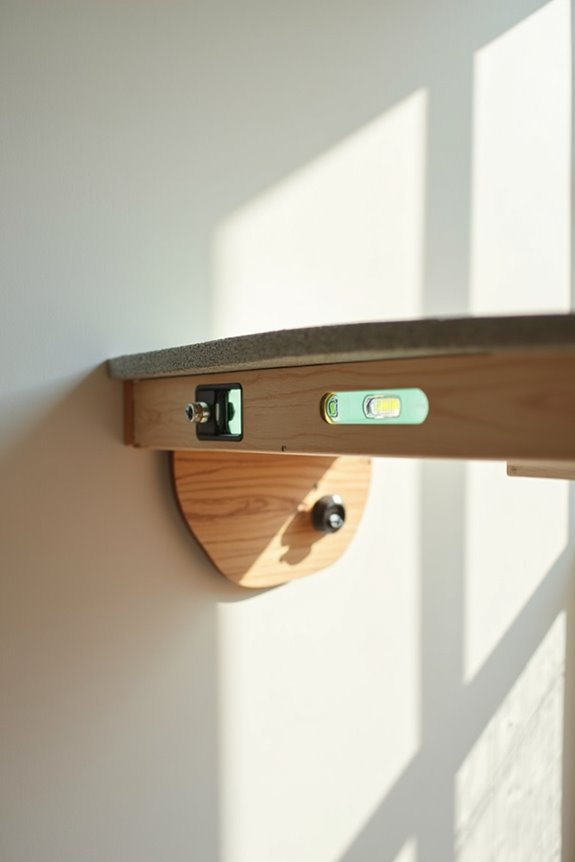
How satisfying is it to finally see your skateboard taking its place on your wall?
Now comes the fun part—actually hanging it! I loop the fishing line onto the nail I’ve installed, then adjust the line length so my deck hangs at exactly the height I want. This is where precision matters.
I grab my level and check that the skateboard sits perfectly horizontal. If it tilts even slightly, I readjust the knot tension until everything’s aligned. This detail makes all the difference between looking awesome and looking off.
Before I call it done, I verify the loop stays secure with zero slack. Then I gently nudge the deck to test its stability. When it holds firm, I know I’ve nailed it—literally and figuratively.
Step 5: Confirm Your Skateboard Hangs Securely
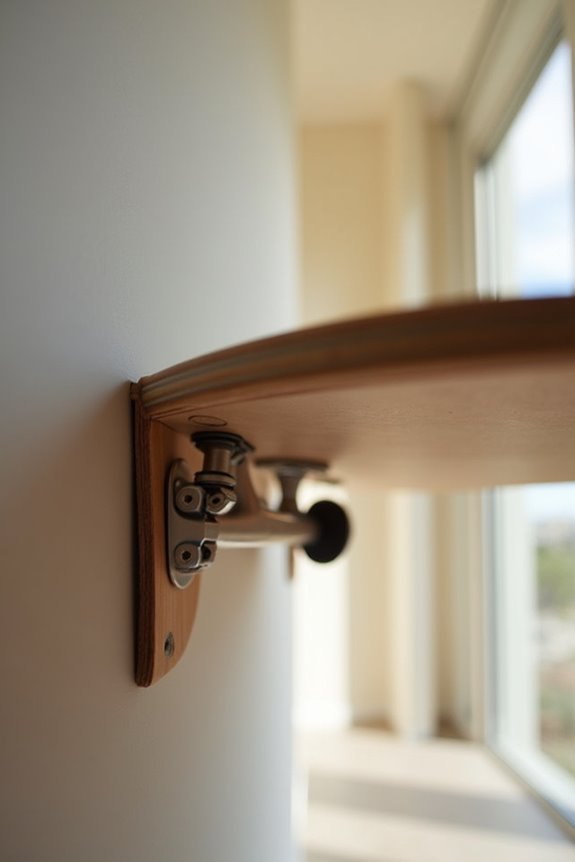
Why stop at “good enough” when you’re this close to perfection? Now’s the moment you verify everything’s rock-solid. I gently press the skateboard deck laterally, checking that my looped line or hook bears the full weight without any slipping—this is essential. I ensure the mounting point stays perfectly level, with the deck sitting evenly and flat against the wall.
Next, I inspect the wall hardware carefully. Whether I’ve used a nail, screw, or anchor, I confirm it shows zero signs of loosening or pulling away from the stud or drywall. I examine the line, knot, or picture hanger to guarantee it’s completely intact and capable of supporting my deck’s weight during typical handling and occasional movement.
Finally, I observe the display for several minutes, watching for unexpected nose or tail contact with the wall and checking for movement during breezes or touches. You’ve earned this victory.