
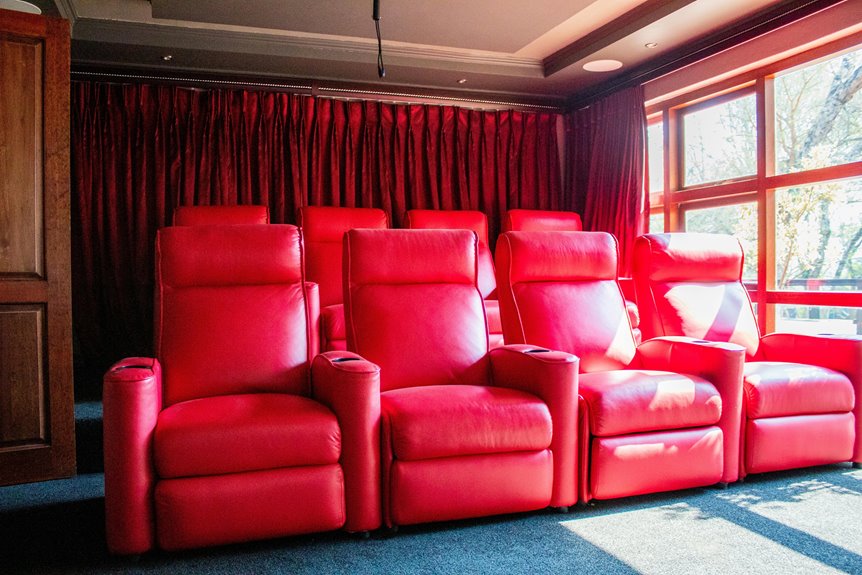
A wall recliner’s your secret weapon for cramped spaces. Instead of tilting backward like traditional recliners—which demand 12–36 inches clearance—this ingenious chair glides forward as you recline, staying just 4–6 inches from the wall. Its synchronized track-based mechanism coordinates the seat’s forward movement with the backrest’s tilt, delivering full lay-flat comfort without sacrificing your room’s layout. You’ll find manual lever options for simplicity or power models for effortless adjustability. Whether you’re furnishing an apartment or home theater, this space-saving design transforms tight quarters into genuinely usable living areas—and there’s plenty more to discover about maximizing your specific setup.
What Is a Wall Recliner?
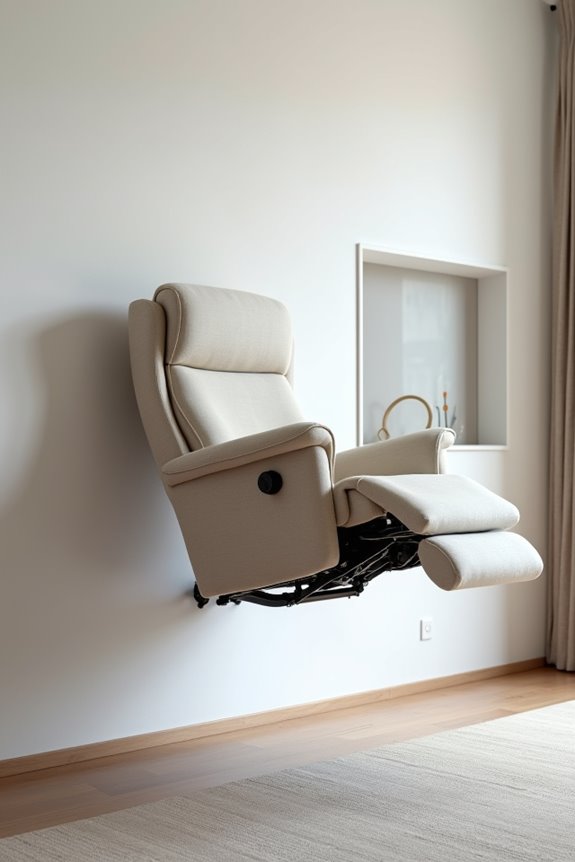
Ever wondered how you could fit a full recliner into a cramped apartment without it swallowing your entire living room?
Fitting a full recliner into a cramped apartment without sacrificing your entire living room space? Wall recliners make it possible.
That’s where a wall recliner—also called a wall-hugger or wall-away recliner—comes in. I’m genuinely excited about this ingenious furniture piece because it solves a real problem for people like us living in tight quarters.
Unlike traditional recliners that tilt backward and demand massive space, wall recliners use a forward-gliding mechanism. They slide smoothly forward on a track instead of tipping back. The result? Your chair stays within four to six inches of the wall while fully reclined. That’s incredible near-wall placement for small spaces, apartments, and home theaters.
You get complete comfort with adjustable headrests and lumbar support—no compromises. Available in leather, fabric, and micro-suede, these space-saving recliners prove you don’t sacrifice ergonomics for practicality.
How Wall Recliner Forward-Glide Mechanism Works
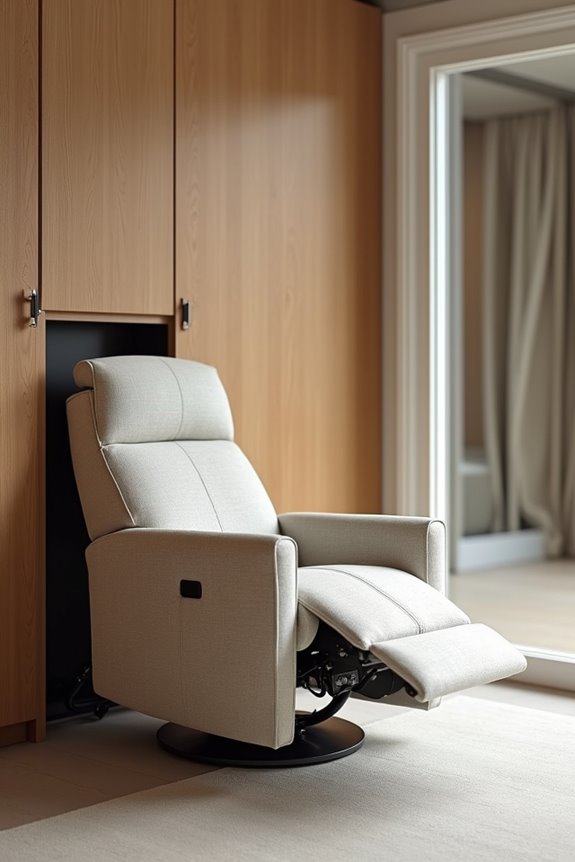
I’m genuinely excited to walk you through the engineering that makes wall recliners work their magic—it’s all about that forward-gliding mechanism that defies what you’d expect from a traditional recliner. The synchronized glide system uses a track-based design where the seat smoothly moves forward as the backrest reclines, so instead of pushing backward toward the wall (like standard recliners that need 12-18 inches of space), your chair stays within just 4-6 inches of clearance. This coordinated motion is what transforms a tight corner into the perfect spot for your favorite relaxation spot, all while keeping that near-wall distance constant throughout the entire recline.
Forward Motion Engineering
How does a chair recline fully while staying inches from the wall? The answer lies in brilliant recliner engineering called the forward-gliding mechanism. Instead of tilting backward like traditional recliners, your wall recliner slides forward on a smooth sliding track as the backrest tilts. This synchronized reclining motion keeps the chair just 4-6 inches from the wall—that’s your wall clearance sweet spot.
Here’s what makes it genius: as you recline, the seat glides forward, shifting your body away from the wall rather than into it. This forward motion transforms wasted space into usable room area. The compact design delivers full reclining comfort without requiring the massive clearance behind standard recliners. Near-wall placement becomes possible through this innovative approach. Space efficiency meets comfort—that’s the magic of smart recliner engineering.
Synchronized Glide System
What’s really happening inside your wall recliner when you press that recline button? The synchronized glide system orchestrates a beautifully coordinated dance between your seat and backrest. Here’s how this space-saving magic unfolds:
- Track-based guidance channels your chair’s movement forward as the backrest tilts backward simultaneously
- The forward-gliding mechanism keeps you hugging the wall, maintaining just 4-6 inches of clearance
- Coordinated motion between components ensures smooth, unified recline without jerky movements
- Full lay-flat comfort emerges as your wall hugger extends forward instead of pushing away
This recline mechanism transforms small rooms entirely. Unlike traditional recliners demanding excessive wall clearance, your synchronized glide system delivers complete relaxation while optimizing precious floor space. You’re getting luxury without sacrifice—that’s genuinely exciting.
Wall Recliners vs. Traditional Recliners: Why Clearance Matters
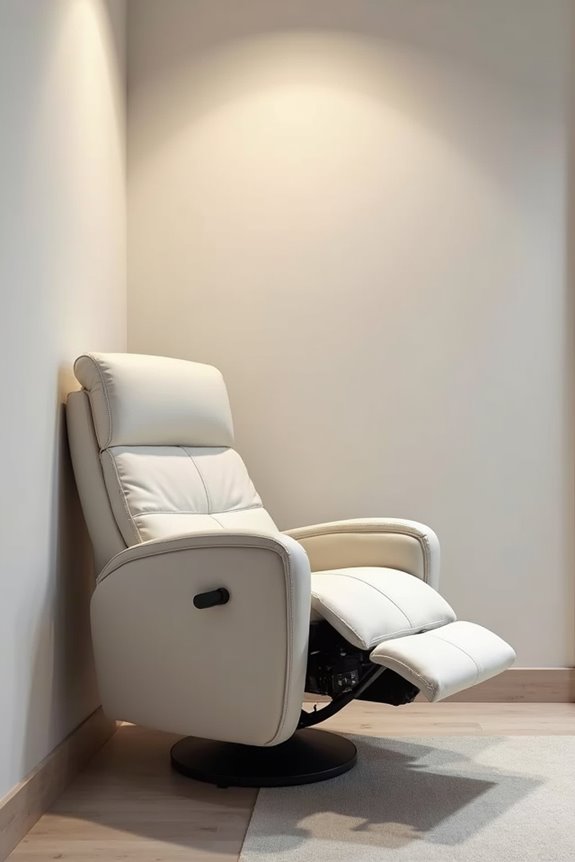
I’m genuinely excited to show you why this clearance difference changes everything about living in smaller spaces. Wall recliners need just 4-6 inches of breathing room from the wall because they glide forward as they recline, while traditional recliners demand a whopping 12-36 inches of open space behind them as they tilt backward. That’s the game-changing advantage—you’re basically getting a fully reclined lounger without sacrificing your room’s layout or tripping over chair legs every time you walk by!
Space-Saving Design Advantage
Ever measured the space behind your current recliner only to realize you’ve wasted precious room?
Here’s where wall huggers transform your home:
- Traditional recliners demand 12–36 inches of clearance, stealing valuable floor space you could use for other furniture
- Wall recliners need just 4–6 inches, thanks to their forward-gliding mechanism that slides the chair away from the wall as it reclines
- The zero-wall design keeps your recliner close when upright, then moves forward during reclining without blocking walkways or layouts
- Tight spaces become genuinely usable, letting you add side tables or lamps nearby without compromising the reclining distance
I’ve personally witnessed how space-saving recliners unlock rooms that felt cramped before. That forward-gliding, zero-wall technology converts dead space into livable area. You’re not just gaining comfort—you’re reclaiming your home’s potential and creating room for what matters to you.
Clearance Requirements Comparison
Because wall space behind furniture often determines whether a room feels cramped or open, understanding clearance differences fundamentally changes how you’ll furnish your home. Here’s what I’ve discovered about these essential measurements:
| Recliner Type | Behind-the-Chair Clearance |
|---|---|
| Wall Recliners | 4–6 inches |
| Traditional Recliners | 12–36 inches |
| Zero-Wall/Wall-Hugger | 0 inches |
Wall recliners use a forward-gliding track mechanism that lets you recline without pushing back. Traditional recliners? They need serious space. The difference is genuinely transformative. That extra wall space you’re saving converts dead zones into genuine room flow. You’ll fit side tables, lamps, or additional seating where traditional recliners demand emptiness. Wall-hugger designs take space-saving even further, hugging your wall completely. I’m genuinely proud of how these innovations let you reclaim your home’s potential while enjoying complete comfort.
Ergonomic Support Without Eating Up Your Room
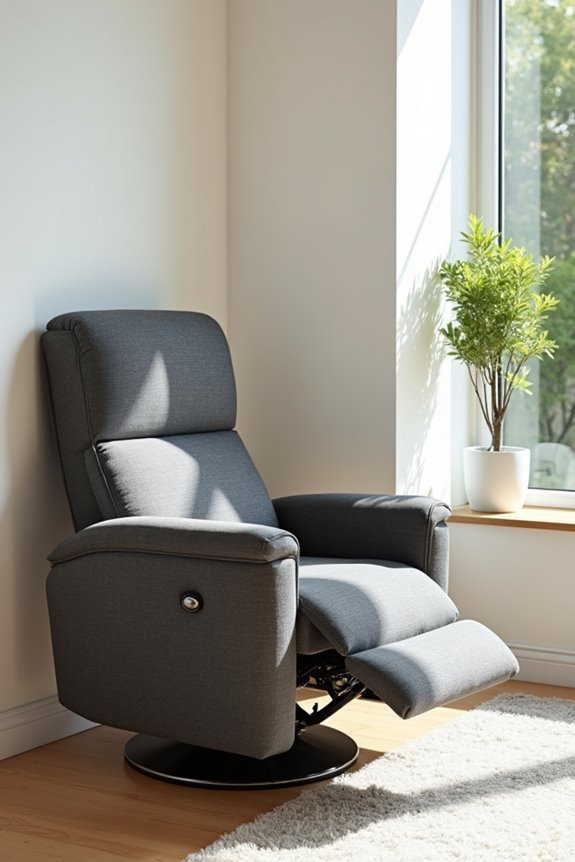
How does a chair give you ultimate comfort while practically hugging your wall? I’ll tell you—the wall recliner’s zero-wall mechanism delivers ergonomic support without stealing your space. Here’s what makes this possible:
- Adjustable headrests that cradle your neck exactly how you need it
- Lumbar support built into the seat to protect your lower back
- Power recline features letting you find your perfect position with precision
- Padded seats that feel luxurious against your body
The wall-hugger design means I’m getting full comfort with just 2–6 inches of wall clearance instead of needing 12–36 inches. My compact living space finally feels spacious. This space-saving design doesn’t compromise—I’m reclined, supported, and my room still breathes. That’s the magic of ergonomic design meeting smart engineering.
Sizing Your Space and Choosing the Perfect Wall Recliner
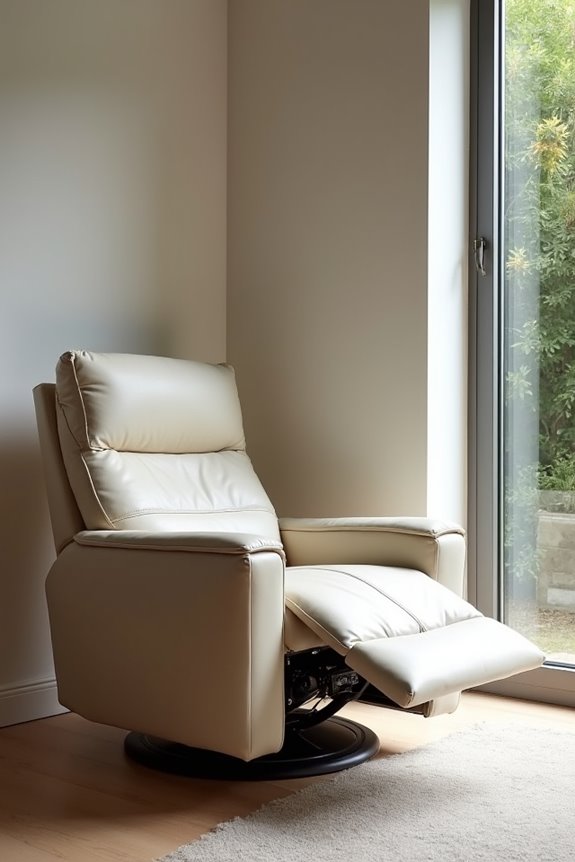
Now that you’ve seen how a wall recliner delivers comfort without sacrificing your room’s openness, it’s time to figure out if one actually fits your space—and which model deserves a spot in your home.
Here’s what I’ve learned: measure your upright width and depth first, then check the extended length when fully reclined. Most wall huggers need just 4–6 inches of wall clearance, but some zero-wall options require absolutely none. I always sketch my room dimensions on paper, marking where near-wall placement makes sense.
Consider your recliner layout carefully. Does a corner spot work? Will it block traffic? These space-saving designs thrive in apartments and home theaters when positioned thoughtfully. Take those measurements seriously—they’re your ticket to confident purchasing.
Manual or Power: Which Wall Recliner Type?
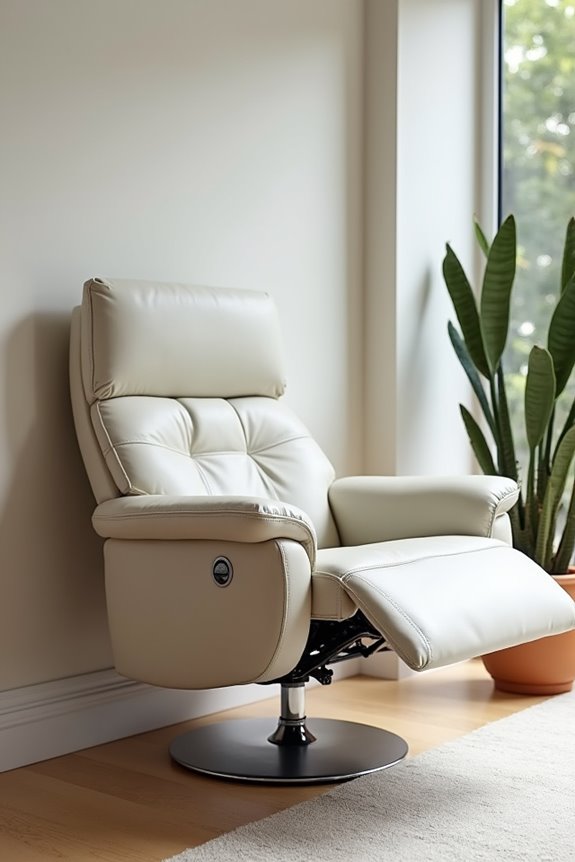
Once you’ve measured your space and found the perfect spot, you’ll face another decision: manual or power?
Here’s what I’ve discovered about each option:
- Manual wall recliners use a lever or pull mechanism, giving you complete control without electricity—perfect for quiet, independent reclining.
- Power wall recliners feature a quiet motor and motorized controls, letting you adjust your position effortlessly at the touch of a button.
- Dual-motor models offer separate controls for your backrest and footrest, delivering customized comfort and maximum ergonomic support.
- Space-saving benefits remain identical—both types use the forward-gliding reclining mechanism, requiring only 4-6 inches of wall clearance for near-wall placement.
I’d choose manual if you value simplicity and reliability. Pick power if you appreciate convenience and don’t mind the electrical investment. Either way, your wall hugger delivers the same impressive space efficiency and comfort you’re craving.