
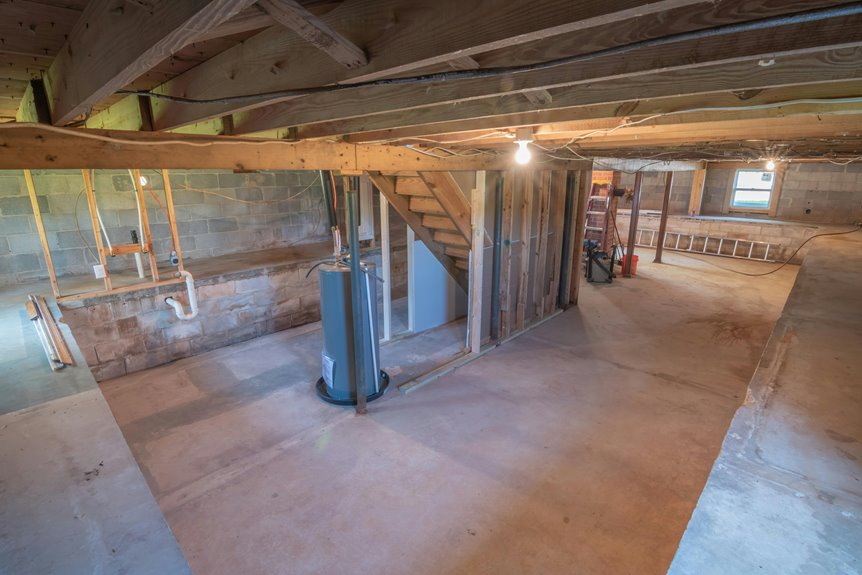
A finished basement transforms your unused lower level into functional living space—bedrooms, offices, entertainment zones—that I’d estimate adds roughly 70% return on investment. You’ll start by testing moisture with a plastic sheet, seal any leaks, then handle insulation and vapor barriers before drywall. Building permits are non-negotiable; they protect your investment and future resale. Sketch your layout with exact measurements, plan electrical outlets every six to eight feet, and budget 15-20% extra for surprises. The payoff? A dramatically expanded home that feels entirely new.
What Is a Finished Basement (and Why Homeowners Choose One)
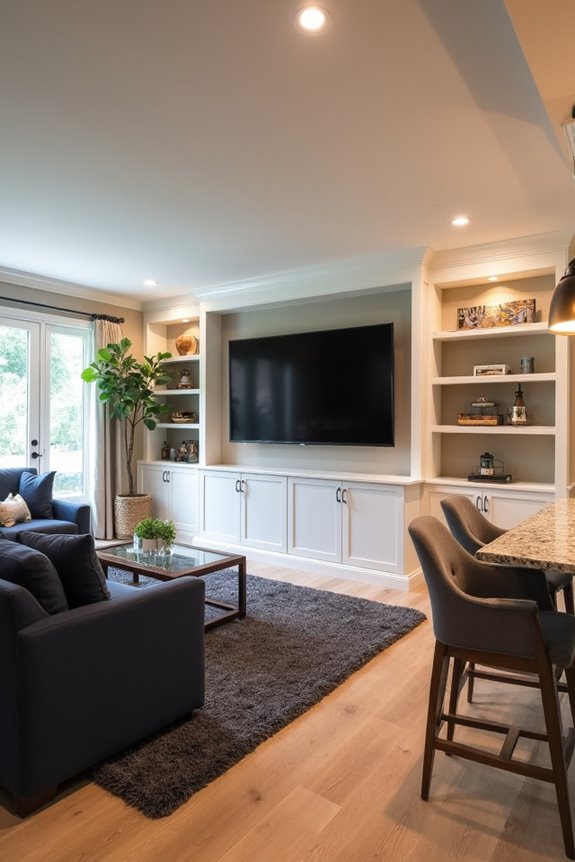
Why leave thousands of square feet sitting empty and unused when you could transform your basement into a vibrant living space? A finished basement converts that dark, chilly area below your home into functional rooms—bedrooms, offices, family gathering spots, or entertainment zones. I’m genuinely excited about how this space utilization boosts both your lifestyle and your wallet. You’ll see approximately 70% return on investment when you eventually sell. Beyond the financial gains, finishing your basement addresses real concerns. Proper moisture management keeps everything dry and healthy. You’ll catch structural issues early, preventing expensive future repairs. With integrated HVAC planning and ventilation systems, you’re creating comfortable, climate-controlled rooms your family actually wants to use. That’s transformative—turning forgotten square footage into spaces where memories happen.
Is Your Basement Ready? Moisture, Codes, and Feasibility
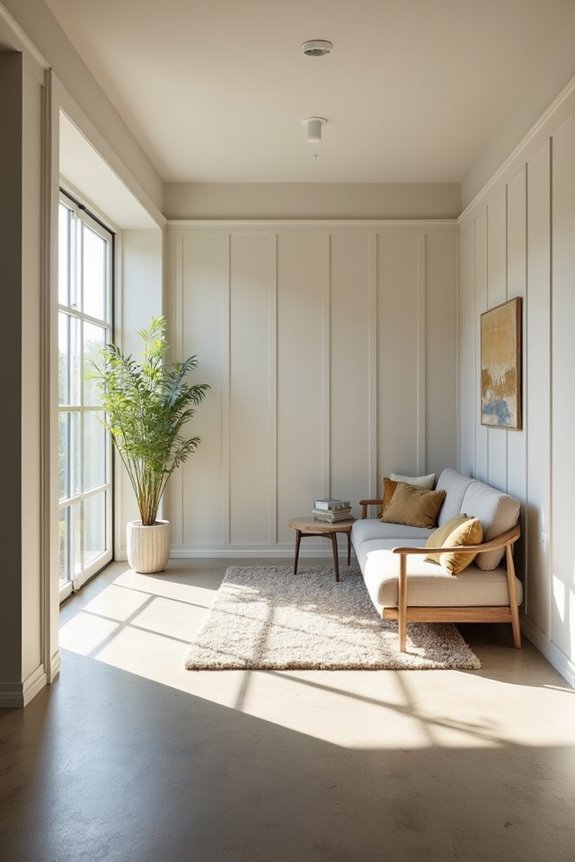
Before you pick out paint colors or imagine your new entertainment space, I’ve got to be honest—you’ll want to tackle two critical things first: making sure your basement’s actually dry and that your plans pass code. Moisture creeping in from below-ground walls can ruin flooring, drywall, and your whole project faster than you’d think, so you’ll need to spot active leaks, efflorescence (that white powdery stuff), and test for wicking with a simple plastic sheet taped to the foundation. Getting the moisture and structural issues handled now, plus confirming your layout meets ceiling height requirements and has proper egress windows, means you’re building on a solid foundation instead of fighting problems down the road.
Moisture Control Essentials
How’s your basement’s moisture situation—truly? I’m asking because this is where your entire finished basement dream either thrives or crumbles. Before touching drywall or flooring, you’ve got to master moisture control. Start by inspecting for active drips, dark stains, and efflorescence—those white, chalky mineral deposits on concrete. I recommend the plastic sheeting test: tape a sheet to your floor for 24 hours and check for condensation underneath, which signals wicking moisture rising from below. Next, consider waterproofing solutions like interior sealant coatings that create a protective barrier. If you’re dealing with significant moisture, you’ll likely need a sump pump and interior drainage system installed. These aren’t luxuries—they’re essential investments protecting your basement’s long-term success and your family’s health.
Code Compliance Requirements
Once you’ve conquered your basement’s moisture problem, there’s another critical guardian standing between you and a truly finished space: building codes. I can’t stress this enough—permits and inspections aren’t bureaucratic hurdles; they’re your protection. You’ll need licensed professionals for electrical, plumbing, and HVAC work to maintain compliance and safety.
| System | Requires Permit? |
|---|---|
| Framing walls | Yes |
| Electrical installation | Yes |
| Plumbing work | Yes |
| HVAC setup | Yes |
| Waterproofing application | Often |
Your local building department sets specific requirements—ceiling heights, egress windows, ventilation standards. I’ve learned that skipping inspections invites costly problems later and tanks your home’s resale value. Engage professionals early. Your finished basement’s legitimacy depends on it.
Permits, Egress Windows, and Building Code Essentials
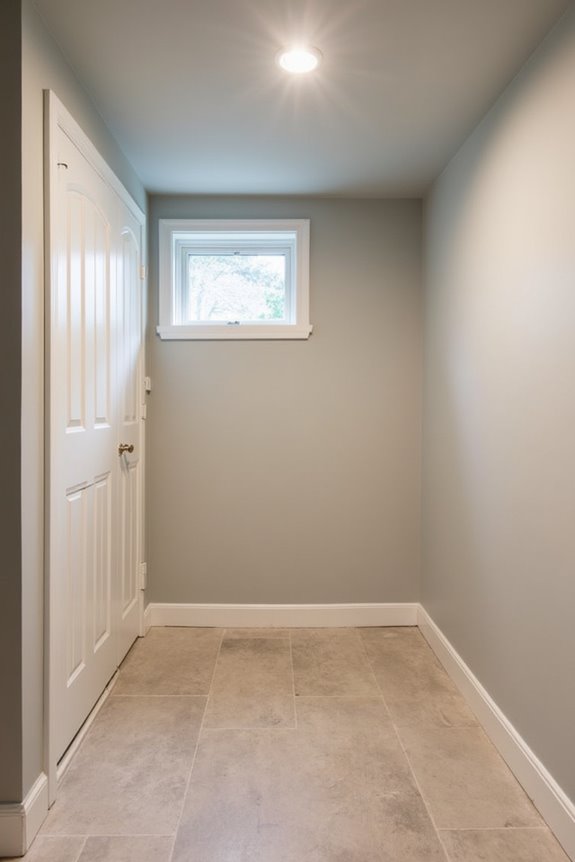
Why do so many basement projects hit snags halfway through? Skipping permits and building codes creates costly problems later. I’ve learned that getting these essentials right upfront saves tremendous headaches.
Here’s what you absolutely need:
- Permits – Your local building department requires them before framing or finishing, ensuring your work meets safety standards through inspections
- Egress windows – These emergency exits (typically 5.7 square feet minimum) are mandatory in bedrooms, letting occupants escape safely during emergencies
- Building codes compliance – Structural checks and moisture controls prevent mold and water damage, protecting your family’s health and your investment
I document everything—plans, permits, inspection dates—creating a paper trail that supports smoother approvals and long-term habitability. You’re not just building a room; you’re creating a safe, code-compliant space your family can genuinely enjoy for decades.
Design Your Layout Before Breaking Ground
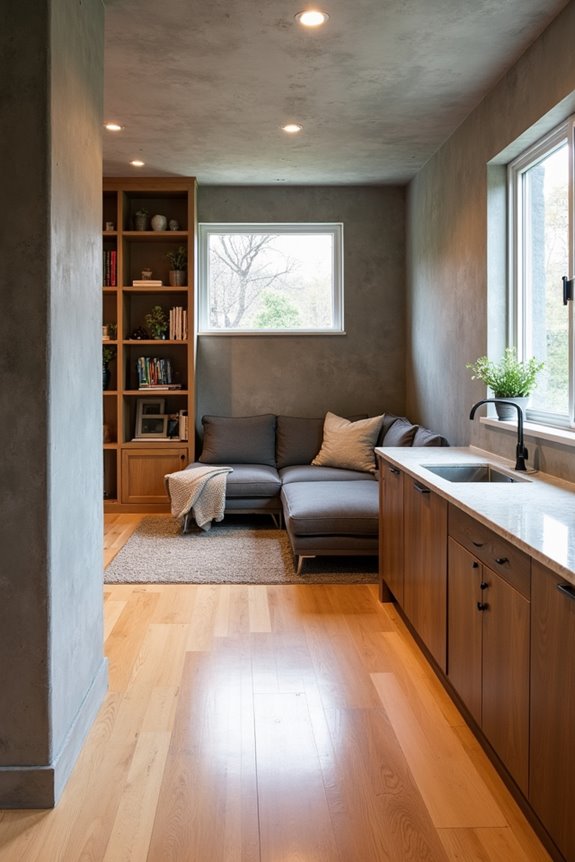
With your permits approved and building codes locked down, you’re ready for the fun part—actually designing your space. I’d grab a tape measure and sketch your basement layout on paper, marking wall locations, doors, and windows with exact dimensions. This basement layout becomes your design planning foundation—your roadmap before any framing happens.
| Design Element | What to Include |
|---|---|
| Electrical Planning | Lights, outlets, switches for future systems |
| Structural Features | Wall, door, window locations with measurements |
| Functional Zones | Recreation, storage, laundry areas |
I recommend starting with existing home builder designs as inspiration. They’ll show you what works. You don’t need fancy blueprints—simple PDFs speed up permit approvals considerably. Including electrical elements now prevents costly relocations later, ensuring your finishing basement project stays on track and within budget.
Budget-Friendly Basement Finishes: Paint, Rugs, and DIY Flooring
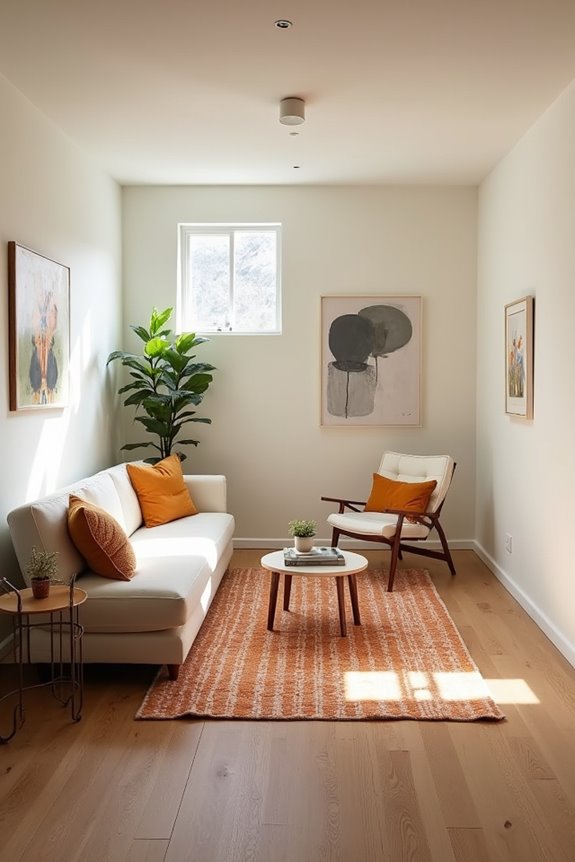
How do you transform a dark, cold basement into a warm, inviting space without spending thousands? I’ve discovered that smart basement finishes don’t require a renovation budget—they require creativity.
Start with these budget-friendly essentials:
- Paint concrete walls and floors in light neutrals like soft gray or cream to brighten everything instantly
- Layer peel-and-stick vinyl tiles or modular carpet squares for DIY flooring that you install yourself in hours
- Add cozy textures through area rugs, throw blankets, and fabric wall hangings that warm the space emotionally
Lighting and texture work together beautifully. I’ve found that combining these elements creates functional zones for work, play, or relaxing. Rolling carts and open shelving adapt as your needs change. You’re not just finishing a basement—you’re building a space where your family actually wants to gather.
Move Up: Vinyl Plank, Built-Ins, and Kitchenettes
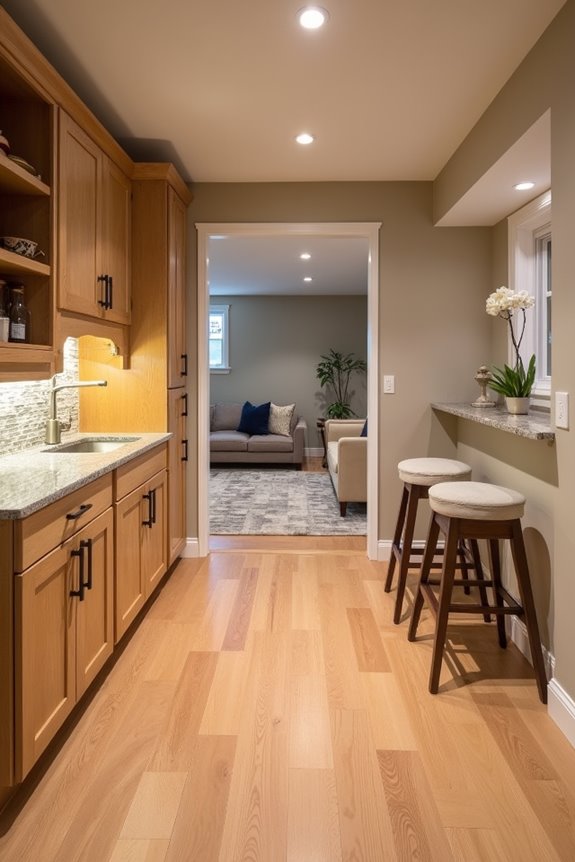
I’m thrilled to show you how stepping up your basement game transforms it from basic to genuinely impressive—and luxury vinyl plank flooring is where I’d start, since it handles moisture like a champ while looking way more polished than budget options. Built-in shelving and cabinets are my best-kept secret for conquering clutter in tight spaces, giving your basement that custom, expensive feel without the custom price tag. Then here’s where entertaining dreams come true: a compact kitchenette or wet bar with integrated lighting and a mini fridge turns your finished basement into the hangout spot everyone actually wants to visit.
Luxury Vinyl Plank Flooring
Durability meets style when you choose luxury vinyl plank (LVP) flooring for your finished basement—and honestly, it’s a catalyst for finished spaces. I love how this waterproofing solution handles moisture while looking remarkably lovely. Here’s what makes LVP a game-changer for your basement:
- Water-resistant surface keeps moisture from ruining your investment, perfect for basements prone to dampness
- Click-lock installation means you’ll spend less time prepping and more time enjoying your new space
- Rigid SPC/WPC core adds stability and reduces sound between levels, creating a truly polished feel
You’ll find realistic wood and stone textures that coordinate perfectly with built-ins and kitchenettes. The wear layer resists foot traffic stains effortlessly. Plus, maintenance is refreshingly simple—just sweep and occasionally mop. Your finished basement finally gets the flooring it deserves.
Custom Built-In Storage Solutions
Once you’ve locked down that gorgeous LVP flooring, it’s time to build upward—literally. Custom built-in storage transforms your finished basement from cluttered to curated. I’m talking wall-to-wall closets, bookcases, and media cabinets that claim vertical space without eating up floor area—perfect for a basement remodeling that actually works.
Adjustable shelving lets you shuffle things around as your needs shift. Games here, seasonal decorations there, entertainment equipment wherever fits. Hidden electrical outlets behind built-ins keep cables invisible and your home design looking intentional.
The real magic? These storage solutions handle the multi-use chaos. Your basement becomes guest bedroom, game room, and workout zone without looking like you’re living in a storage unit. That’s the belonging we’re after—a space that feels like *yours*.
Kitchenette Design and Functionality
A basement kitchenette reimagines your lower level into a genuine gathering spot. Here’s what makes it work:
- Moisture-resistant flooring: Vinyl plank (LVP) handles basement dampness beautifully while staying easy to clean—perfect for spills and humidity
- Built-in storage: Vertical cabinets and open shelving maximize your compact layout without eating up floor space or your budget
- Lighting layers: Combine ambient overhead lights, task lighting for countertops, and dimmable LEDs to create an inviting cooking area
You’ll need proper plumbing with correct slope (1/4 inch per foot) and venting—definitely hire a licensed plumber for this. A well-designed basement kitchenette isn’t just functional; it’s the heart that makes your finished basement feel like home where people actually want to spend time.
Go Luxury: Theater Rooms, Wine Cellars, and Spa Baths
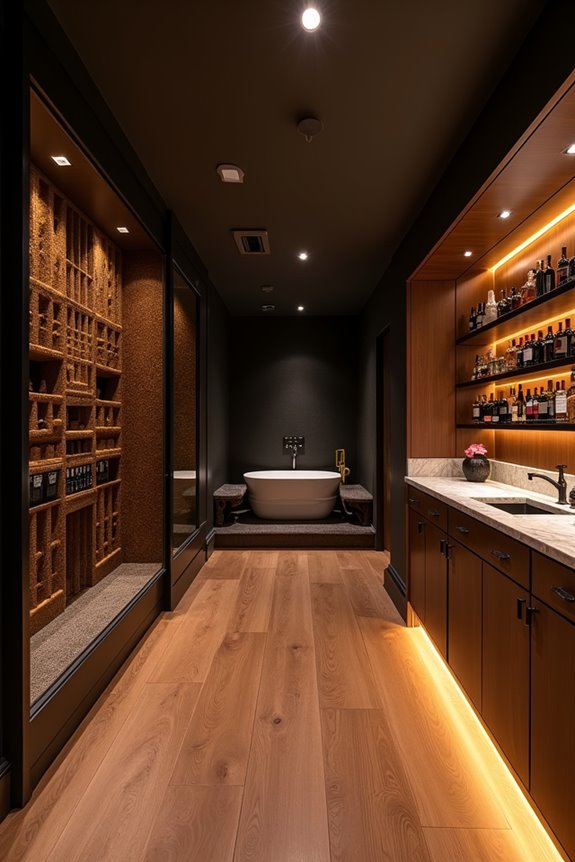
Why settle for a basic finished basement when you can transform it into a luxury retreat that rivals high-end resorts and entertainment venues?
I’m talking about creating spaces that genuinely impress. A dedicated home theater with soundproof walls, tiered seating, and premium projection systems delivers cinema-quality viewing. Wine cellars feature climate control maintaining perfect temperatures while ambient lighting showcases your collection beautifully. Spa-style baths with rainfall showers and heated tile floors create that resort feeling right at home.
| Feature | Key Element | Value Add |
|---|---|---|
| Home Theater | Soundproof walls | Immersive experience |
| Wine Cellar | Climate control | Collection protection |
| Spa Bath | Heated floors | Luxury comfort |
These basement finishing touches require quality materials and thoughtful design, but they boost your home’s long-term value significantly. You’re not just upgrading—you’re creating spaces where memories happen.
Install It Right: When to Hire for HVAC, Plumbing, and Electrical
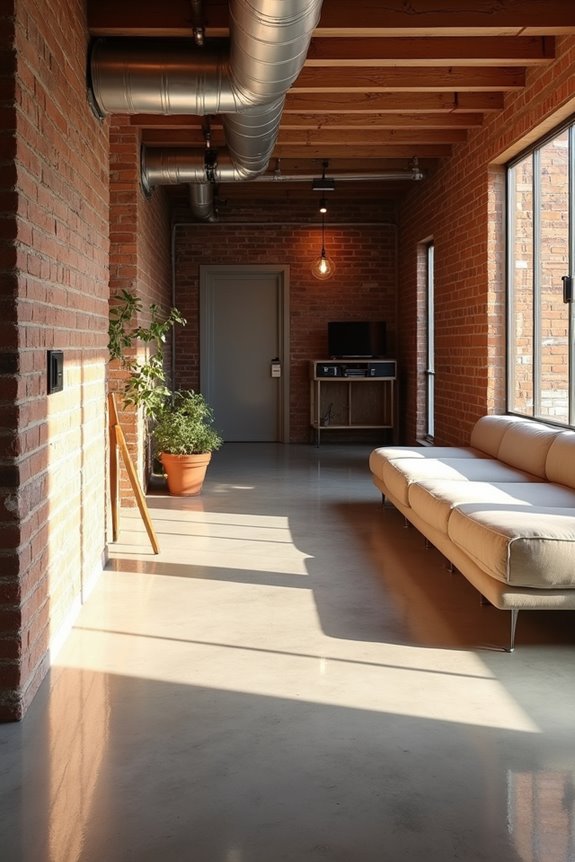
I can’t stress enough how much hiring licensed pros for electrical, plumbing, and HVAC transforms your basement from a DIY disaster waiting to happen into a genuinely safe, functional space. You’ll want electricians placing outlets every 6 to 8 feet with dimmable switches for that perfect movie-night ambience, plumbers ensuring proper drainage slopes and venting (especially if you’re adding a wet bar or bathroom), and HVAC specialists extending conditioned air through zoning systems so your basement stays comfortable year-round. Getting these three systems right during the rough-in phase—before drywall goes up—saves you thousands in costly rework and ensures your finished basement actually performs like the luxury retreat you’re imagining.
Professional Electrical Installation Requirements
Electrical work is where your finished basement really comes to life—literally—and it’s absolutely one area where you’ll want a licensed electrician handling the job. Here’s why this matters for your space:
- Basement electrical requires code compliance and proper wiring layout to keep your family safe
- A licensed professional handles box placement, circuit planning, and potential subpanel installation for heavy-duty equipment
- Strategic outlet placement every 6 to 8 feet along walls eliminates messy extension cords
Your electrician coordinates with your zones, placing outlets exactly where you need them. If you’re dreaming of a home theater or home office down here, they’ll future-proof your setup with adequate circuits and dimmable lighting options. This upfront professional work transforms your basement from a storage dump into a genuinely functional living space.
Plumbing System Integration Planning
Once your electrical’s humming along beautifully, plumbing becomes your next big player in the basement alteration—and honestly, it’s where things get really interesting if you’re adding a bathroom or wet bar. You’ll need hot and cold water lines running through, plus proper drainage and venting that prevents sewer gas from creeping upstairs. Here’s the key: waste lines must slope at least 1/4 inch per foot downward—gravity does the heavy lifting. Coordinate everything early with your HVAC and electrical runs so nothing conflicts. If you’re installing a bathroom, you’ll likely need an ejector pump since basements sit below grade. Hire a licensed plumber who understands basement finishing; this integration work prevents costly mistakes that’ll haunt you later.
HVAC Zoning And Capacity
How do you keep your finished basement comfortable year-round without cranking up your whole-house system and watching your energy bills skyrocket?
HVAC zoning is your answer. I’ll break down what makes it work:
- Calculate your BTU load by measuring the basement’s square footage, accounting for insulation quality, window area, and moisture control needs to avoid overworking your main system
- Install dedicated ductwork or consider a mini-split system that gives your basement independent climate control, separate from upstairs zones
- Hire a licensed HVAC contractor to design everything properly, ensuring compatibility with existing equipment and local code compliance
You’re essentially creating separate temperature zones throughout your home. One register per basement area ensures even heating and cooling. This approach keeps your new space comfortable while maintaining energy efficiency everywhere else. Your future self will thank you for getting this right from the start.
Insulation and Vapor Barriers: Why They Matter (and What to Expect)
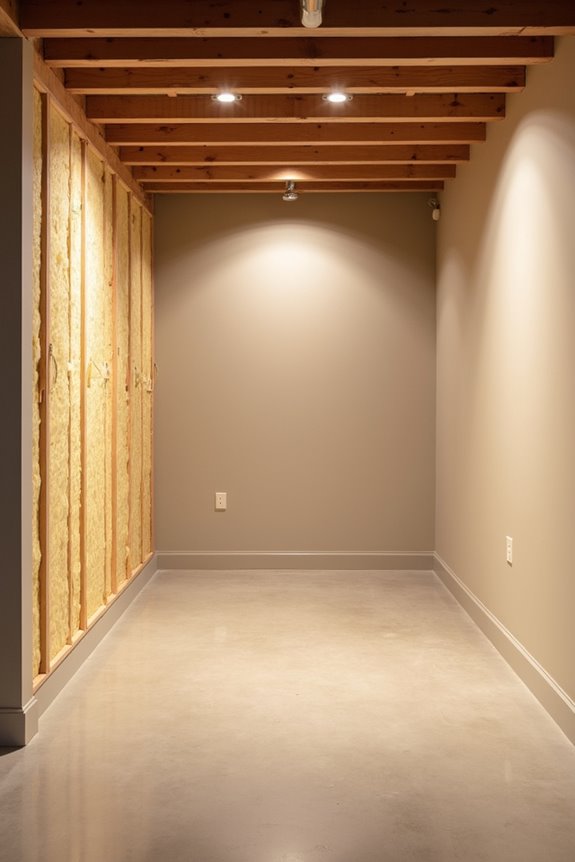
Why do so many basement finishing projects struggle with moisture and discomfort? The answer lies beneath the surface—literally. I’ve learned that proper insulation and vapor barriers form your basement’s defensive foundation. Spray foam insulation behind walls delivers high R-values, sealing air leaks that drafts exploit. But here’s what really matters: vapor barriers prevent ground moisture from creeping into your walls and insulation, which stops mold before it starts. Think of them as your basement’s protective shield. I’ve seen the difference a layered approach makes—combining insulation, vapor barriers, and sound-dampening materials transforms uncomfortable spaces into cozy retreats. The real secret? Meticulous installation details like seam sealing and proper drainage considerations. These specifics prevent expensive framing damage down the road. You’re not just finishing a basement; you’re building lasting comfort and energy efficiency.
Design Tools: Free SketchUp vs. Paid Home Designer Software
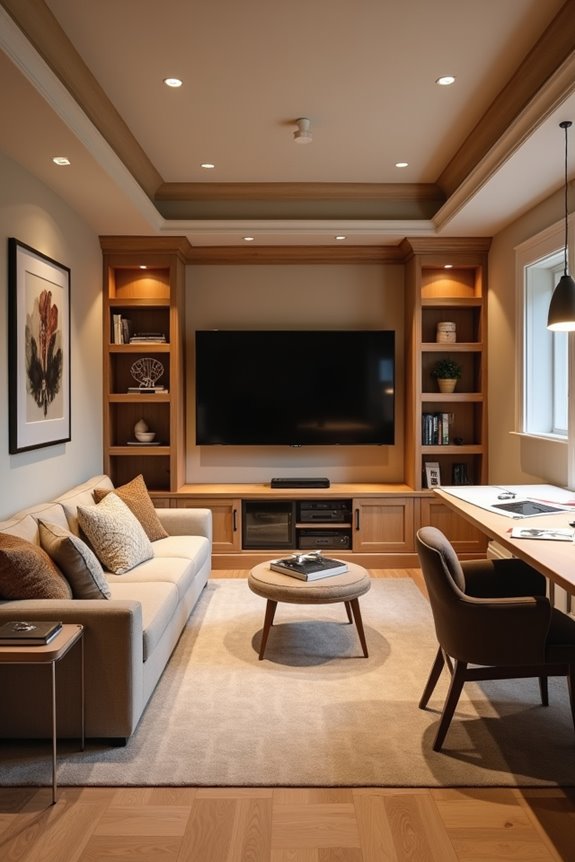
Visualizing your finished basement before you break ground—that’s the real game-changer, and I’m thrilled to show you how software makes this possible without draining your wallet.
You’ve got solid options here:
- SketchUp (free version) lets you sketch floor plans and 3D layouts for non-work projects—perfect for dreaming up your space
- Home Designer costs under $100 and generates professional renderings you can walk through virtually before construction starts
- Both tools create permit-ready plans that contractors actually respect
I love that these programs bridge the gap between imagination and reality. You’ll nail measurements, visualize layouts, and communicate clearly with your team. Whether you choose SketchUp’s free flexibility or Home Designer’s polished renderings, you’re investing in clarity and confidence for your basement transformation.
How Long? How Much? Budget, Timeline, and When to Hire Help
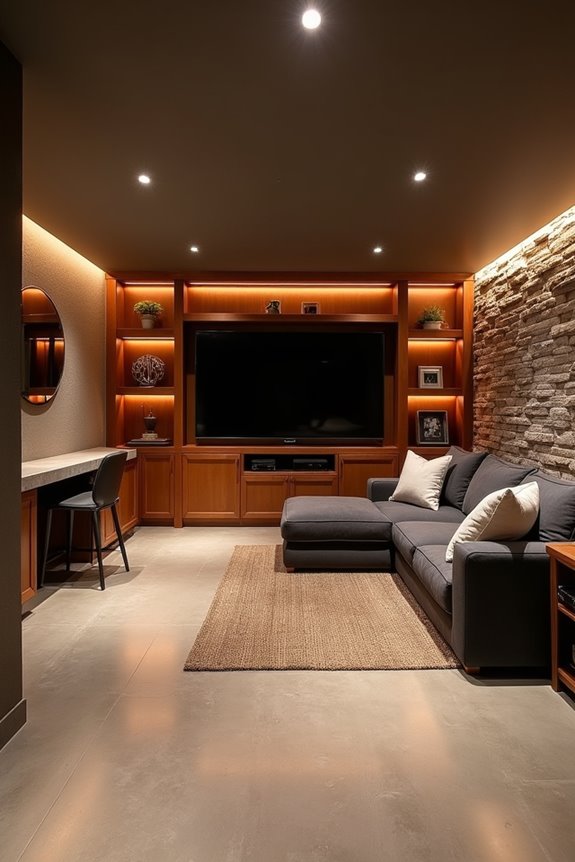
Now that you’ve got your basement mapped out in software, it’s time to talk about the real numbers—both the dollar amount and the calendar days you’ll need to complete this conversion.
| Phase | Timeline |
|---|---|
| Planning & Permits | 2-4 weeks |
| Moisture Prep & Systems | 3-6 weeks |
| Final Finishing | 4-8 weeks |
Your budget should detail every expense: framing, drywall, electrical, plumbing, HVAC, insulation, flooring, permits, and labor. I’d recommend adding 15-20% contingency for surprises. Licensed professionals handle electrical and plumbing work—non-negotiable for permits and inspections.
Timeline varies based on basement size and complexity. A 500-square-foot space typically takes 3-4 months start to finish. Your planning spreadsheet becomes your accountability partner, tracking costs and preventing budget creep. Permits aren’t obstacles; they’re your protection, ensuring everything meets code.
The Real ROI: What a Finished Basement Adds to Home Value
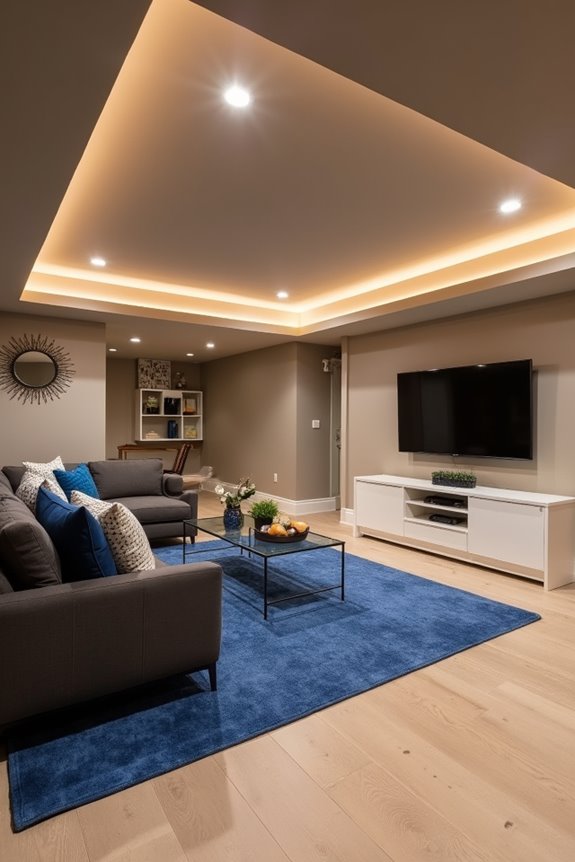
Here’s the thing about finished basements—they’re not just about having extra space to store holiday decorations or create a cozy hangout spot (though those are nice bonuses). You’re actually making a smart investment in your home’s future value and your family’s lifestyle.
Finished basements transform unused space into smart investments that boost home value and create gathering places your family will love.
Consider these real benefits:
- 70% return on investment means you’ll recoup most of what you spend when you eventually sell
- Living space expansion transforms unused square footage into functional bedrooms, bathrooms, or entertainment zones that buyers genuinely want
- Home value increase positions your property competitively in today’s market where 19.3% annual growth shows people crave additional living areas
I’ve seen firsthand how a finished basement becomes the heart of a home—where families gather, guests stay comfortably, and memories happen. That’s not just financial wisdom; it’s creating the home you deserve.