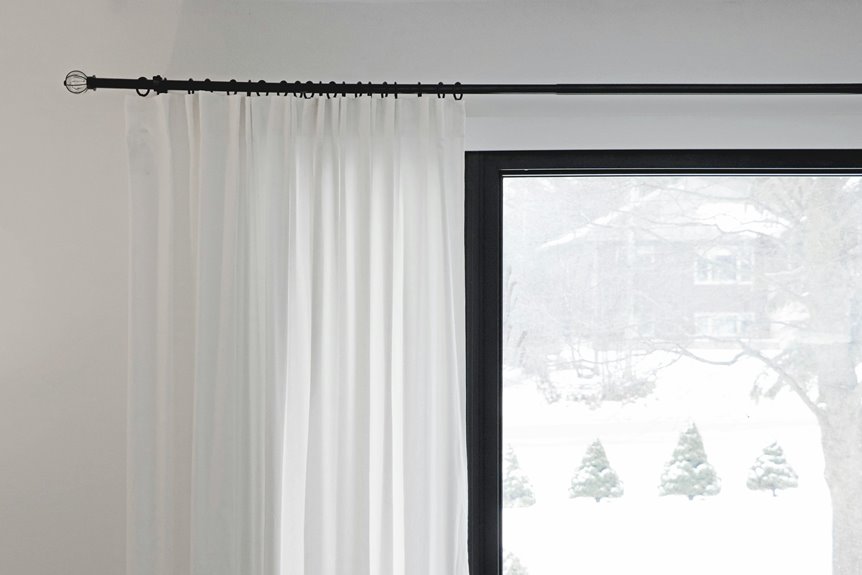
Rod pocket curtains are fabric panels with a sewn sleeve—typically 2.5 inches wide—that slides directly over your drapery rod. When you feed the rod through this pocket, the fabric gathers into soft, elegant pleats that instantly elevate any window. I love how they hide all the hardware while creating that luxurious, cascading look. They’re perfect for bedrooms and living rooms where you don’t need constant adjusting. Lightweight fabrics like linen work beautifully, and you’ll discover there’s much more to mastering their installation and care.
What Are Rod Pocket Curtains?
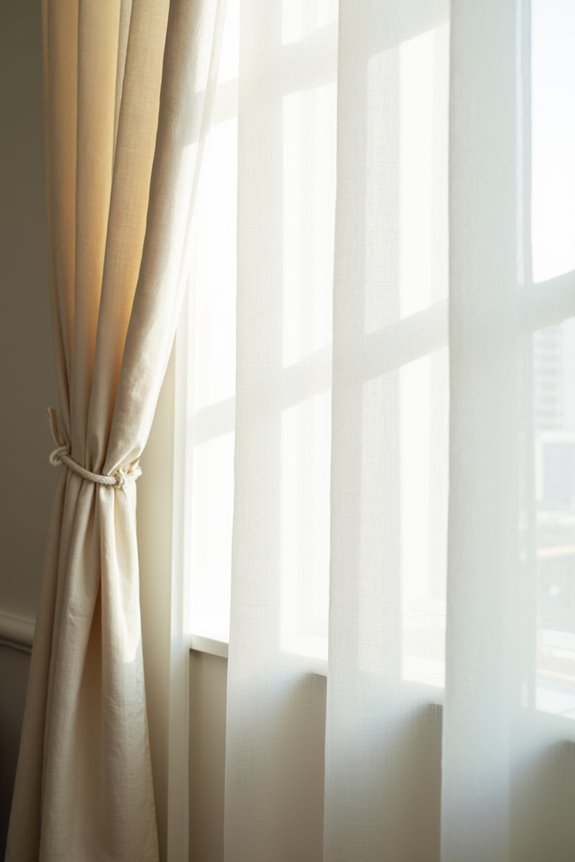
Rod pocket curtains are fabric panels with a sewn pocket running along the top—typically 2.5 inches wide—through which you slide a drapery rod to hang them on your window. I love how simple yet elegant they are! The rod creates that gorgeous gathered, ruched look that instantly transforms any space. What makes them truly special is their versatility. You can pair them with layered window coverings like sheer panels or valences for depth and dimension. Some versions feature a decorative header (frill)—that upstand above the pocket—adding a feminine, polished touch. They work beautifully with lightweight to medium-weight fabrics, giving you that perfect cottage or rustic vibe. No complicated hardware needed either. Just brackets, a pole, and you’re done!
How Rod Pocket Curtains Work on Your Drapery Rod
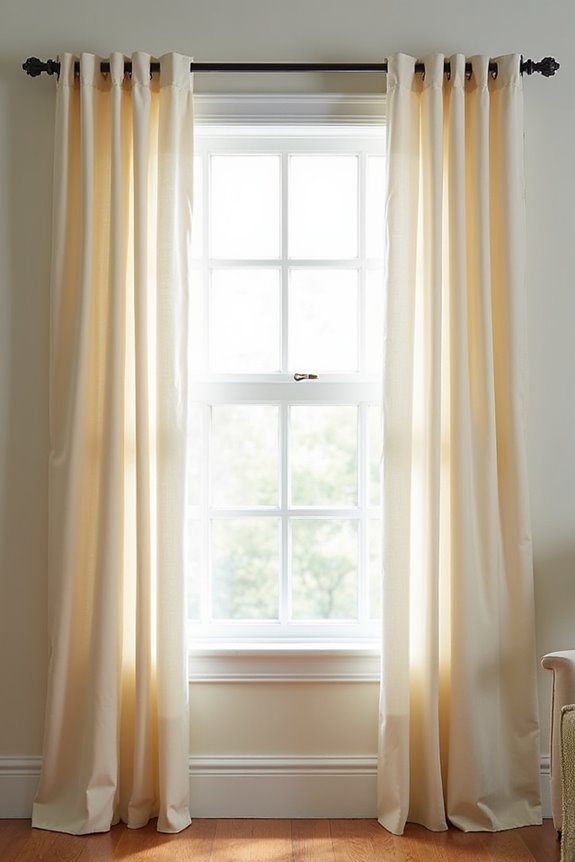
Now that you understand what makes rod pocket curtains so charming, let’s explore exactly how they work on your drapery rod!
The magic happens through the header pocket—that sewn channel running across your curtain’s top. You simply slide your drapery rod through this pocket, and the fabric bunches into those gorgeous soft gathers we love. The rod stays hidden inside, peeking out only slightly at the ends when closed.
| Feature | What It Means |
|---|---|
| Pocket Width | Usually 2.5 inches for standard rods |
| Rod Visibility | Hidden inside with small visible ends |
| Installation | Slide rod through—no complicated hardware |
| Movement | Fabric slides along rod, requiring more effort |
This pocketed heading creates that distinctive gathered look, though I’ll be honest—opening and closing heavy curtains takes more effort than ring systems. But you’re joining countless decorators who adore this timeless style!
Rod Pocket Curtain Styles: Standard, Ruffle, Sheer, and Blackout
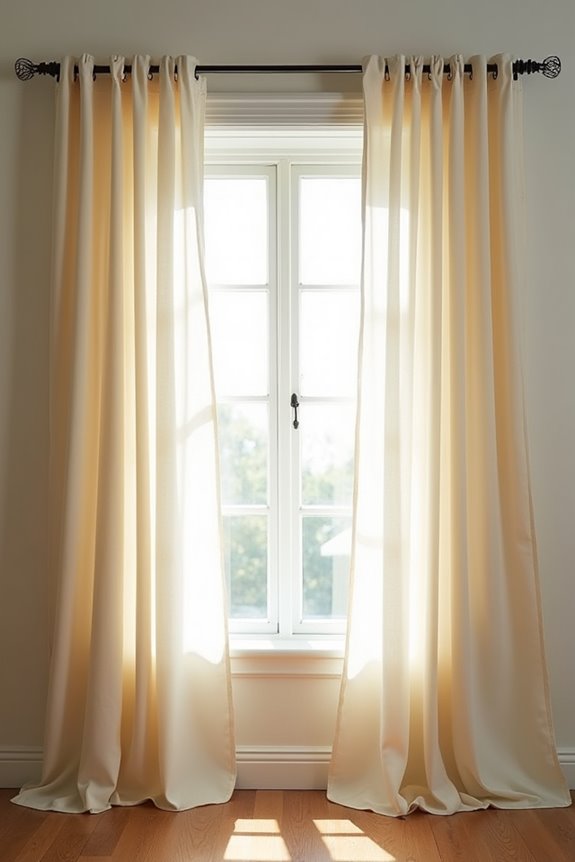
What if I told you that one simple curtain style comes in four completely different personalities? I’m genuinely excited to share this with you because rod pocket curtains truly transform based on their design.
Standard rod pocket curtains offer that timeless, elegant look we all crave—perfect for lightweight fabrics that drape beautifully. Want something more dramatic? Header frills create a 4 cm upstand, producing gorgeous ruching that feels luxurious and feminine.
Header frills create dramatic 4 cm upstands with gorgeous ruching—the luxurious, feminine upgrade to timeless elegance.
Then there’s sheer curtains, which soften incoming light while letting you layer them with heavier drapery for total flexibility. Finally, blackout curtains incorporate special lining that blocks light completely—absolute game-changers for bedrooms and media rooms.
Each style hangs identically on your curtain rod, yet delivers completely different vibes. You’re not just picking curtains; you’re choosing the exact personality your space deserves.
How to Measure Your Window
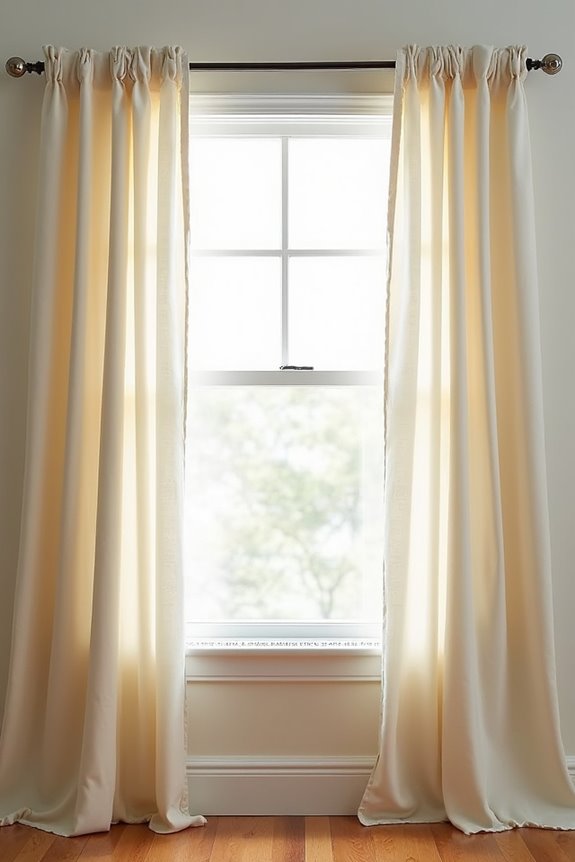
Now that you’ve picked your rod pocket style, I’m genuinely excited to help you nail the measuring part—because getting it right means your curtains’ll hang beautifully! I’ll walk you through measuring your window’s width and length, figuring out how much fabric you actually need when you account for that 2.5-inch pocket, and determining the fullness (usually 1.5x) so your panels drape with those gorgeous soft gathers we talked about. Let’s break down each measurement so you can confidently order exactly what you need without any guesswork!
Measuring Width and Length
How do you know what size panels to buy for your rod pocket curtains? I’ll walk you through it—it’s simpler than you’d think.
First, measure your pole width from finial to finial (those decorative end pieces). This measurement determines your panel width. For 2x fullness, I double the pole width for luxurious, gathered fabric. Want something lighter? Use 1.5x fullness instead, which reduces bunching and lets more light through.
Next, measure length from the top of your drapery pole down to your desired endpoint—sill or floor. That’s your length measurement. Adding a frilled header? Add 4 extra centimeters.
Here’s the magic: divide your total width by the number of panels you’re hanging. This gives each panel’s individual width. You’ve got this!
Accounting for Pocket Depth
The sewn pocket at the top of your curtains—that fabric tunnel where the rod slides through—is absolutely essential, and I’m thrilled to help you get it right! Your pocket depth is how far the fabric wraps around your rod, and it directly affects your curtain panels’ fabric gathering and overall fullness.
| Pocket Depth | Rod Diameter | Best For |
|---|---|---|
| 2.5 inches | Standard rods | Most homes |
| 3 inches | Thicker rods | Heavy panels |
| Custom sizes | Various diameters | Specialty needs |
I measure by checking how much rod remains visible when closed. This compatibility matters tremendously—wrong pocket depth causes snagging on brackets or finials. Many custom options let you adjust depth to match your rod and desired gather. Getting this detail right ensures smooth gliding and beautiful drapes you’ll love for years!
Fullness and Fabric Requirements
Ever wonder why some curtains look gorgeously full and voluminous while others hang flat and thin? That’s all about fullness—how much fabric you need relative to your drapery rod width.
I learned that rod pocket curtains typically use 1.5x fullness, meaning if your pole measures 100 cm, you’ll want 150 cm of total fabric. This creates those signature gentle pleats that make curtains look professionally designed.
Here’s my trick: double your pole width to get the total fabric needed, then split it evenly between panels. So a 200 cm pole requires roughly 100 cm per panel width. The pocket size—usually 6.5 cm—stays consistent regardless of fullness.
Getting this calculation right means your curtains drape beautifully, not skimpily. Trust me, proper fullness transforms your entire room’s appearance.
Hanging Your Rod Pocket Curtains: Step-by-Step
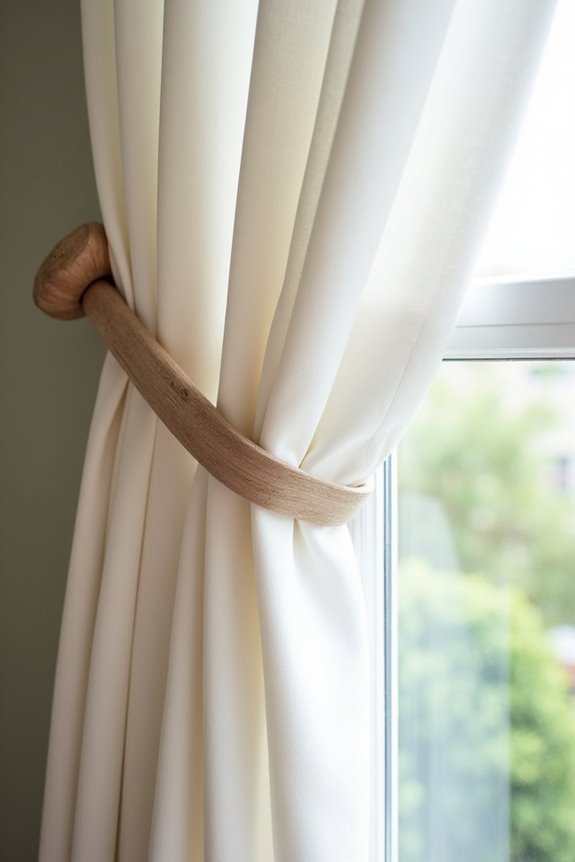
Now that you’ve measured your window, I’m excited to walk you through the actual hanging process—it’s honestly easier than you’d think! We’ll cover mounting your drapery pole securely on its brackets, sliding those fabric panels through the sewn pocket (which is typically around 2.5 inches wide), and then spreading everything out to create those gorgeous gathered folds you’re after. Once you’ve got the rod positioned and your curtains arranged just right, you’ll add the decorative finials to cap off each end and complete that polished, professional look.
Measuring Your Window Space
How do you know exactly what size rod pocket curtains you’ll need? I’ll walk you through measuring your window space like a pro.
First, measure your rod pocket dimensions carefully. Here’s what matters most:
- Pole width: Measure your curtain rod end-to-end, then double it for proper width fullness (aim for 1.5x to 2x coverage)
- Header type: Standard rod pockets measure from pole top to your desired endpoint; frilled headers need an extra 4 cm for the upstand
- Panel width flexibility: A 300 cm panel works beautifully with a 100 cm pole—you’ll adjust pleat density as needed
Your measurements determine everything about how your curtains hang. I’ve found that taking time here prevents frustrating installation mistakes later. Jot down your numbers, double-check them, and you’re ready to create those gorgeous gathered folds you’re envisioning.
Installing The Curtain Rod
Your curtain rod is the backbone of this whole operation—it’s what holds everything together and makes those beautiful gathered folds possible. I’m genuinely excited to walk you through this because it’s honestly simpler than you’d think.
Start by mounting your drapery rod securely on wall brackets at your desired height. Most rods work with standard hardware, so you won’t need anything fancy. Now comes the satisfying part: sliding your rod pocket curtains onto the rod. That sewn header—basically a long sleeve at the top of your panels—slides right over, and the fabric naturally bunches into those gorgeous soft gathers we love.
The pocket typically measures about 2.5 inches wide, accommodating most rod diameters. Adjust how tightly you bunch the fabric depending on your style preference. Tight bunching creates a polished look; loose gathering feels relaxed and casual. You’ve got this!
Sliding And Securing Panels
Ready to bring those beautiful curtains to life? Now comes the satisfying part—sliding those panels onto your drapery rod. I feed the rod through the header pocket carefully, working from one end to the other. It’s like threading a needle, except way more rewarding!
Here’s what I’ve learned works best:
- Slide panels slowly to prevent bunching and maintain even gathers across the rod pocket
- Space multiple panels evenly for balanced coverage and professional appearance
- Use gentle pressure when adjusting to avoid stretching fabric or damaging stitching
Once everything’s positioned, I secure the rod firmly on its brackets. The panels now hang beautifully, creating those soft, elegant folds I love. You’ll notice the rod ends peek through slightly, but that’s totally normal and actually adds charm!
Rod Pocket Curtains vs. Grommet and Back Tab Options
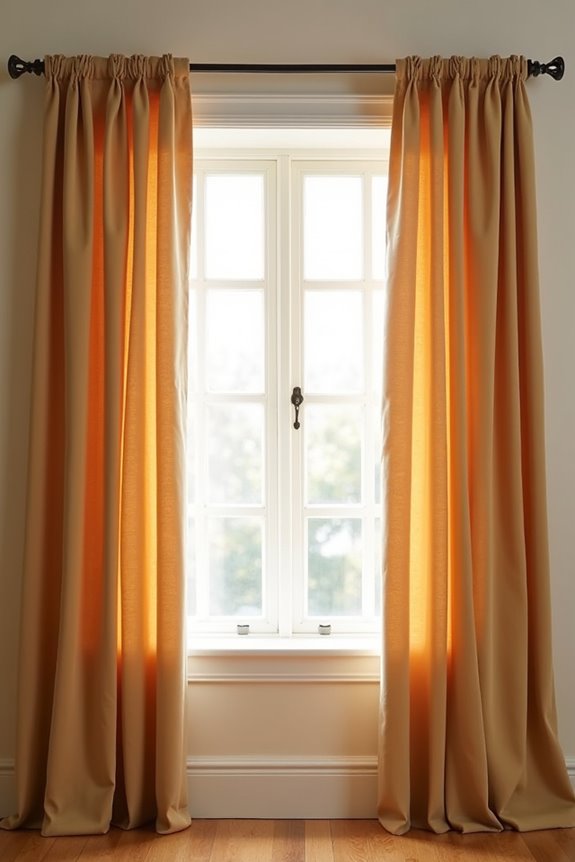
What makes rod pocket curtains so special compared to other hanging styles? I’ll tell you—they’re the understated elegance of window treatments. Unlike grommet curtains with their bold metal rings or back tab options that show off hardware, rod pocket curtains keep things beautifully hidden. The sewn pocket cradles your rod, concealing everything except maybe tiny rod ends when closed. Sure, they slide less smoothly than grommets since fabric glides directly on the pole rather than through rings, but honestly? That trade-off feels worth it for the soft, gathered aesthetic you get. The typical 2.5-inch pocket fits most pole diameters perfectly, and if you’re feeling fancy, a frill header adds 4 centimeters of decorative upstand above the pocket. That’s genuine charm wrapped around your window.
Choosing Fabrics for Rod Pockets: What Weight and Texture Matter
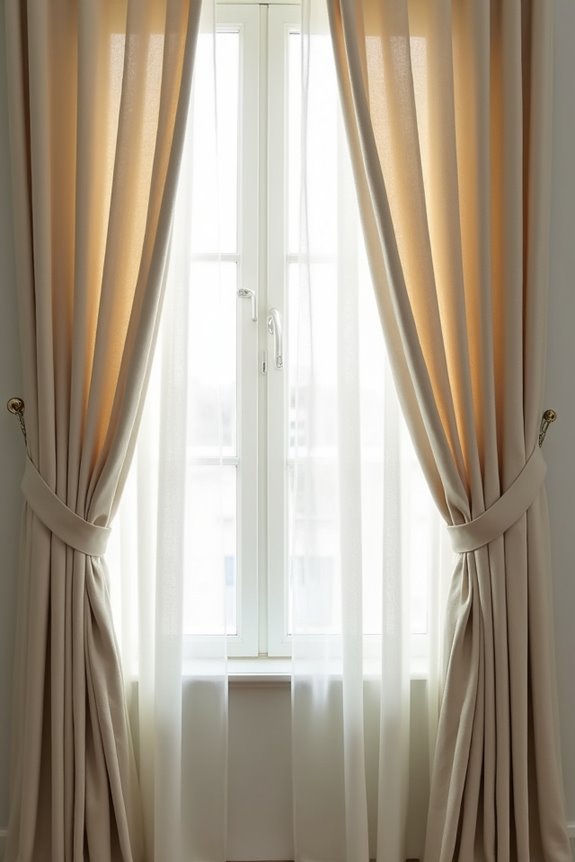
Here’s where the magic really happens—choosing the right fabric makes or breaks your rod pocket curtains. I’ve learned that fabric weight truly matters for your rod pocket’s performance and beauty.
Lightweight to medium-weight fabrics? They glide beautifully and create those soft, graceful gathers we all love. Heavier materials, unfortunately, resist movement and prevent fullness from showing properly. Cotton and linen blends work wonderfully, giving you that casual, textured look many of us crave.
Lightweight to medium-weight fabrics glide beautifully through rod pockets, creating soft, graceful gathers that heavier materials simply cannot achieve.
Consider these essentials:
- Fabric weight determines how freely your curtains move through the rod pocket
- Texture variations add visual interest—think subtle patterns or woven details
- Fullness levels (1.5x or 2x) dramatically affect your drape’s impact and elegance
The standard pocket width of 6.5 cm accommodates most rods, but I recommend checking your specific rod diameter. Pairing the right fabric with appropriate fullness transforms your windows into statement pieces you’ll genuinely love living with.
Rod Pocket Hardware and Finials: Customize Your Look
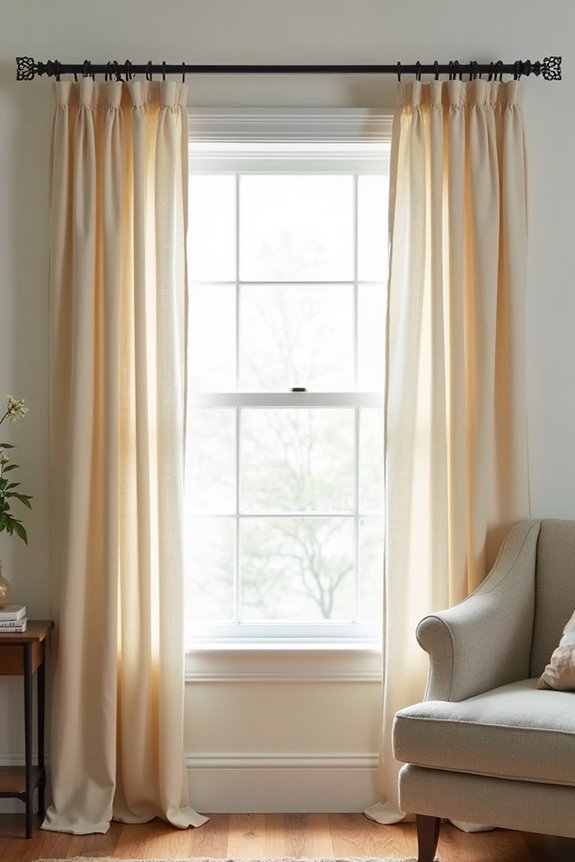
Once you’ve got your fabric and fullness sorted, the hardware becomes your chance to really make these curtains shine—and honestly, finials are where I get genuinely excited about the details. Finials are decorative end pieces that cap your drapery pole, and they’re transformable. I love how they can match your color scheme, echo your patterns, or completely shift your room’s style. Your rod pocket headers slide directly onto the pole—typically 6.5 cm wide, though you can customize this for different diameters. Here’s what thrills me: finials disguise where the rod ends, creating polished, intentional looks. Unlike some curtain systems requiring separate rings or hooks, standard rod pockets keep things beautifully simple. That hardware-finials combination? It’s your design signature, your chance to belong to your space completely.
How Rod Pockets Block Light and Protect Your Privacy
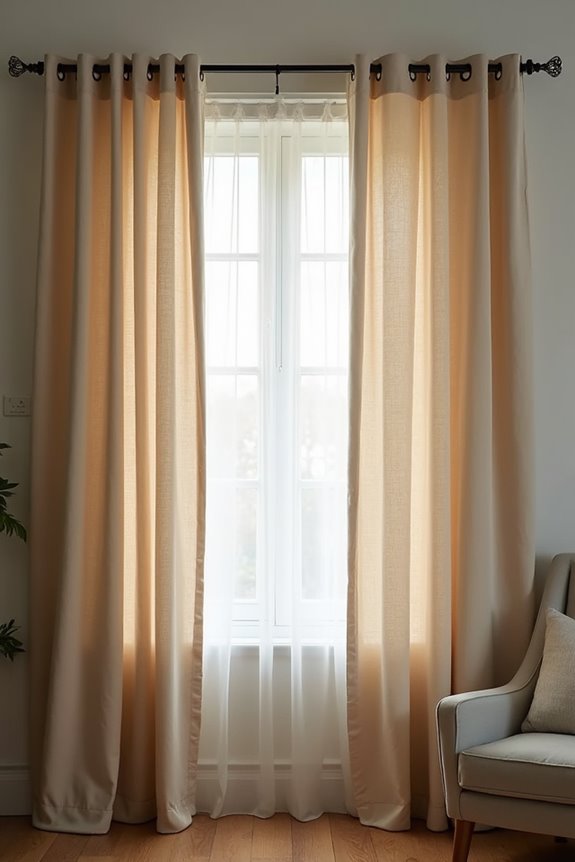
I’m excited to show you how rod pocket curtains actually handle light and privacy, because it’s honestly more nuanced than you might think! The key is understanding that your fabric’s weight and how full it hangs—not the pocket mechanism itself—does the real work of blocking out sunlight and keeping prying eyes away. I’ll walk you through exactly which materials and installation tricks I’ve found work best for protecting your space, whether you’re dealing with morning glare or just want some cozy daytime privacy.
Light Control Effectiveness
Ever wonder why your rod pocket curtains seem to block light differently than other window treatments? I’ve discovered that light control effectiveness depends heavily on your fabric weight and how you layer them.
Here’s what I’ve learned about maximizing darkness:
- Lightweight fabrics offer moderate light reduction but allow some transparency, especially near edges where the pocket wraps around the rod
- Medium-weight materials provide better blockage, though minimal gaps still permit light peeking through when fully closed
- Layering with blackout liners or heavier drapery transforms your setup into a privacy powerhouse that truly darkens rooms
The continuous header wrap gives you consistent coverage compared to separate hardware, but it’s not foolproof alone. I’ve found that pairing rod pockets with additional liners dramatically improves light control and privacy protection.
Privacy Protection Methods
While fabric weight definitely matters for blocking light, what really transforms your privacy game is understanding how the rod pocket design itself works to seal gaps and protect your space from prying eyes. That sewn pocket wraps snugly around your rod, creating continuous header coverage that practically eliminates those sneaky light leaks at the top. I love how the gathered panels minimize gaps where outsiders might peek through. For serious privacy, you can layer rod pocket curtains with lining or blackout fabric behind them, which honestly doubles your light blockage power. The heavier your fabric weight, the more seclusion you’ll get. Plus, without hanging rings or tracks, there’s nothing creating visible openings at window edges. That’s genuine privacy protection you can feel proud about.
Rod Pocket Curtain Pros and Cons: Is This Right for You?
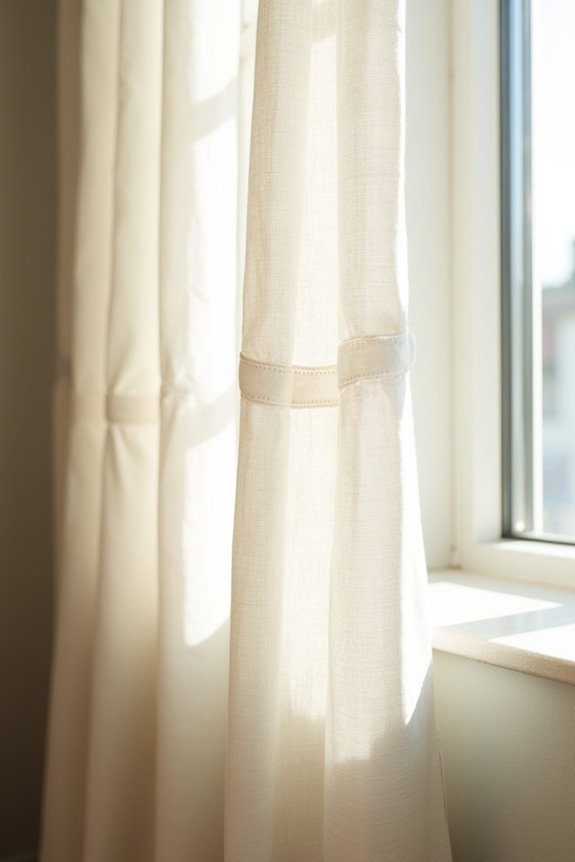
How do you know if rod pocket curtains are the perfect fit for your windows? I’ve discovered they’re ideal if you love easy installation and want beautiful layering options with sheers or valances. The standard 2.5-inch pocket creates gorgeous soft gathers that feel luxurious and cottage-inspired, especially with 1.5x to 2x fullness for that balanced look we all crave.
However, I’ll be honest about the tradeoffs:
- Installation simplicity makes them beginner-friendly, requiring minimal hardware
- Sliding ease lags behind grommets, particularly with heavier fabrics that resist smooth movement
- Incompatibility with tracks limits flexibility for certain window configurations
The real question? Do you prioritize effortless aesthetic appeal over seamless functionality? If soft gathers and straightforward hanging matter more than gliding smoothness, rod pocket curtains might be your answer.
Where Rod Pockets Fit: Rooms and Styles
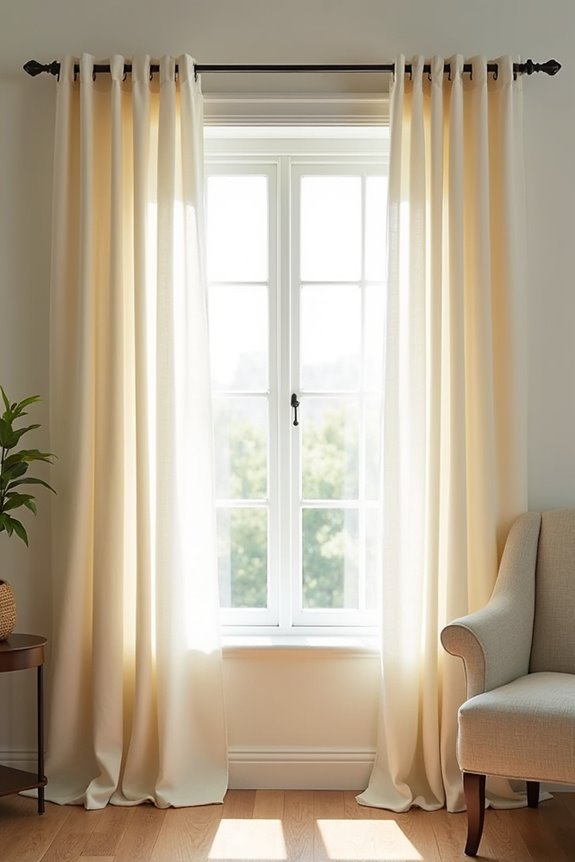
So where do rod pocket curtains truly shine in your home? I’ve found they’re absolutely perfect for creating that cozy, welcoming feel in rustic, cottagecore, and coastal spaces. This header style—where fabric gathers softly around your drapery rod—works beautifully in bedrooms, living rooms, and cottage kitchens where you want casual charm without fussy hardware showing.
I especially love pairing rod pocket curtains with lightweight fabrics like linen or cotton voile. They create such an effortless, breezy aesthetic. Add layered window treatments like delicate sheers or a coordinating valance, and you’ve got something special. The 4 cm header ruffle adds that decorative touch I adore. They’re ideal for smaller windows or rooms where you’re not constantly opening and closing them. Honestly, they make any space feel instantly lived-in and authentically yours.
Caring for Rod Pocket Curtains
Once you’ve hung your rod pocket curtains, keeping them fresh and beautiful requires just a bit of thoughtful attention. I’ve found that rod pocket curtain care depends heavily on your fabric weight—lighter materials need gentler handling than heavier ones.
Here’s what I recommend for maintenance:
- Vacuum regularly using an upholstery brush attachment to remove dust from the fabric and pocket area
- Spot-clean stains immediately with mild soap and cool water, avoiding harsh chemicals that damage delicate fibers
- Hand-wash or dry-clean according to fabric care labels, since machine washing can stress the pocket stitching
For cleaning, I always check manufacturer instructions first. Lighter fabrics require extra care during handling to prevent snagging. You’ll love how simple upkeep keeps your curtains looking professionally styled for years. Taking these steps means your investment stays stunning!