
I’m thrilled to share my shower curtain journey with you! Start by selecting 108″ fabric like Delphinium by Anna Maria, then calculate yardage by adding 16 inches to your finished length and doubling it for two panels. Pre-wash and square your fabric edges carefully. Join narrower panels with ½” seams, hem sides with double folds, and reinforce the top with interfacing strips for durability. Mark and sew vertical buttonholes spacing them evenly across, then hang your curtain to determine the exact bottom length before finishing with a crisp hem. The details really transform this into something spectacular, and there’s so much more technique to discover.
Select Your Shower Curtain Size and Fabric Type
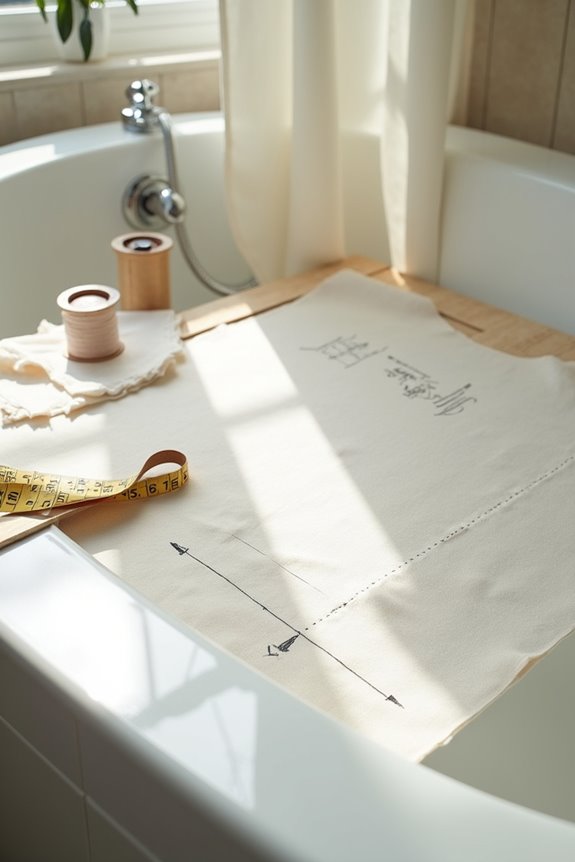
Why settle for a boring, flimsy shower curtain when you can create one that’s absolutely stunning? I’m thrilled to share how I selected the perfect materials for my 72×84 curtain project. I chose 108 backing fabric in Delphinium – Jewel by Anna Maria for its gorgeous color and quality. For an extra-long, full-length look, I used 2¾ yards of this wider fabric—enough to create impact without piecing together two panels. I also grabbed ¾ yard of medium-weight interfacing for stabilizing strips that add structure and durability. Those four 5½” strips keep everything crisp and professional-looking. The beauty of this approach? You’re investing in a shower curtain that feels luxurious and lasts, transforming your bathroom into a space you’ll genuinely love stepping into daily.
Calculate Yardage Based on Finished Dimensions
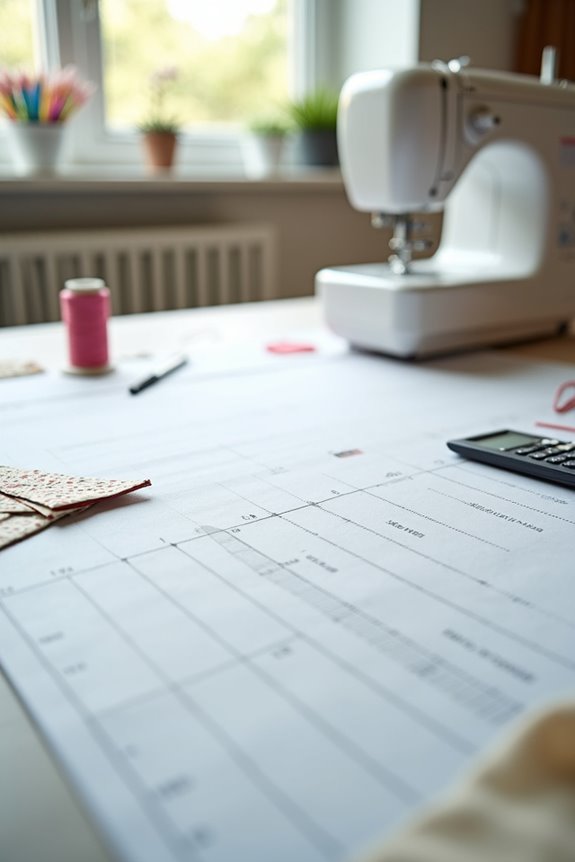
How do you figure out exactly how much fabric you’ll actually need? I’ve learned this calculation makes all the difference between success and frustration!
Here’s my straightforward approach:
- Add 16 inches to your finished length for hems and seam allowances
- Multiply by 2 for two-panel quantity, since most shower curtains need two fabric widths
- Consider your fabric width—108″ backing requires different yardage than standard 45-54″ material
- Account for seam matching if your pattern has repeats you want aligned perfectly
- Factor in your fabric choice—drop cloth or alternative materials might need extra length for piecing
For example, an 86-inch finished length becomes 102 inches total (86+16)×2. That’s roughly 5.7 yards of wider fabric. I always add a little extra because pattern matching genuinely matters for that polished look we’re all after!
Wash, Square, and Cut Your Fabric
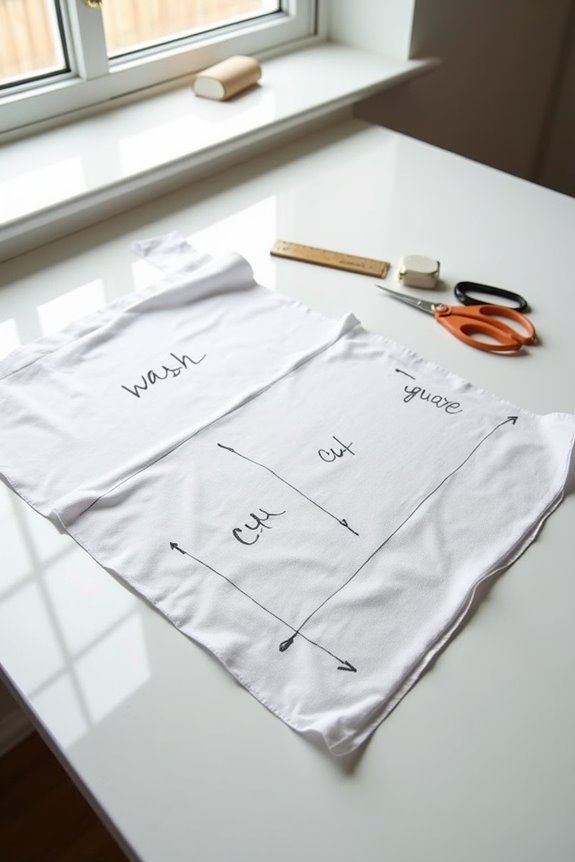
Before I cut into my fabric, I’ll wash it in hot water to shrink out any surprises that’d wreck my finished curtain later. Next, I’m squaring up those edges with a straight edge so my cuts are perfectly perpendicular and my 75″ x 96″ measurements actually land where I want them. If I’m matching a pattern across panels, I’ll trim that second piece carefully to line up with the first, creating one beautiful, seamless look from top to bottom.
Fabric Washing and Preparation
Getting your fabric ready is where the magic actually begins—and I’m genuinely excited about this step because it’s the difference between a shower curtain that looks professionally made and one that warps after the first wash.
Here’s what I do:
- Pre-wash your fabric using the hottest water setting available to eliminate shrinkage before cutting
- Square your fabric edges with a straight edge or garage square for true, perpendicular lines
- Mark measurements across the width with a straight line for accurate finished dimensions
- Plan for pattern matching when joining wide fabric panels together
- Account for seam allowances when piecing panels to maintain a visually continuous design
This preparation prevents frustration later. I’ve learned that skipping pre-wash leads to disappointing results. You’re investing in a shower curtain that’ll look intentional and last longer. That’s worth the extra care upfront.
Measuring and Cutting Techniques
Why does washing fabric before you cut it matter so much? Shrinkage! I’ve learned the hard way that pre-washing prevents your finished shower curtain from becoming disappointingly smaller after its first wash.
Now I’m ready to measure and cut. I square my fabric edge using a straight edge, ensuring precise cutting lines for professional results. Then I mark lines across the width with a ruler, creating consistent panel heights.
For a standard 72″ x 72″ curtain, I trim panels to match my finished length while accounting for seam allowances—those essential edges that hold everything together. If my fabric’s narrower than needed, I simply piece panels together to reach full width.
This fabric prep transforms my project from frustrating to flawless. Accurate measuring and cutting genuinely make the difference between success and disappointment.
Join Panels and Hem the Sides
Now comes the satisfying part where your separate fabric pieces transform into one gorgeous, cohesive panel—I’ll show you how to sew them together with a straight seam, align any pattern repeats so everything looks intentional, and finish those raw edges with a clean 1/2″ to 1″ seam allowance. Next, we’ll tackle those side hems by folding your edges twice (first 1/2″, then 1″) and edgestitching them down, which creates that polished, professional look you’re after. Working in manageable 10–11″ segments while backstitching at the start and end keeps things from getting bulky and ensures your stitches stay rock-solid.
Sewing Panels Together
Once you’ve cut your fabric panels, it’s time to connect them into one gorgeous piece—and this is where your shower curtain really starts taking shape! I love this step because you’re watching everything come together.
Here’s what I do when sewing panels:
- Align raw edges precisely and stitch along the long sides with a 1/2 inch seam allowance
- Press the seam open or to one side for a beautifully flat finish
- Match patterns across the seam, especially with repeat fabrics like Delphinium – Jewel by Anna Maria
- Trim loose threads carefully to keep things neat
- Ensure your final fabric width matches your intended finished width (around 75 inches for a 72-inch curtain)
After sewing, I trim any loose threads and press seam allowances flat to reduce bulk. This prep work makes hemming the sides so much easier!
Creating Side Hems
With your panels sewn together beautifully, it’s time to finish those raw side edges—and this is where your shower curtain transforms from a flat piece of fabric into something truly polished and professional-looking!
I fold each raw edge inward by half an inch, then press firmly. Next, I fold again one full inch and press to create a double-fold hem that looks crisp and intentional. This technique protects against fraying while adding strength.
Now comes the satisfying part: edgestitch along that folded edge with a tight, straight stitch. I reinforce the top corners and bottom corners especially, since these spots endure the most stress. After stitching, I open the internal folds and press again, ensuring my side hems lie perfectly flat. Your shower curtain now looks genuinely handmade—in the best way possible.
Finishing Seam Edges
Your panels are joined and looking sharp, but those raw edges on the sides won’t stay that way without proper finishing—and that’s exactly what transforms a homemade shower curtain into something that actually lasts.
Here’s how I stabilize and finish my shower hems properly:
- Fold raw edges 1/2 inch, then fold another 1 inch for side hems
- Press each fold firmly to set the crease
- Edgestitch along the folded edge on both sides using your machine
- Fuse four 5 1/2 inch interfacing strips between folded lines for reinforcement
- Press everything again to secure the stabilization
The interfacing prevents fraying and keeps your shower curtain hems looking professionally made. When you edgestitch, you’re basically locking everything in place permanently. Trust me—this detail work makes all the difference between something that unravels after one season and a curtain that lasts years.
Reinforce the Top Hem
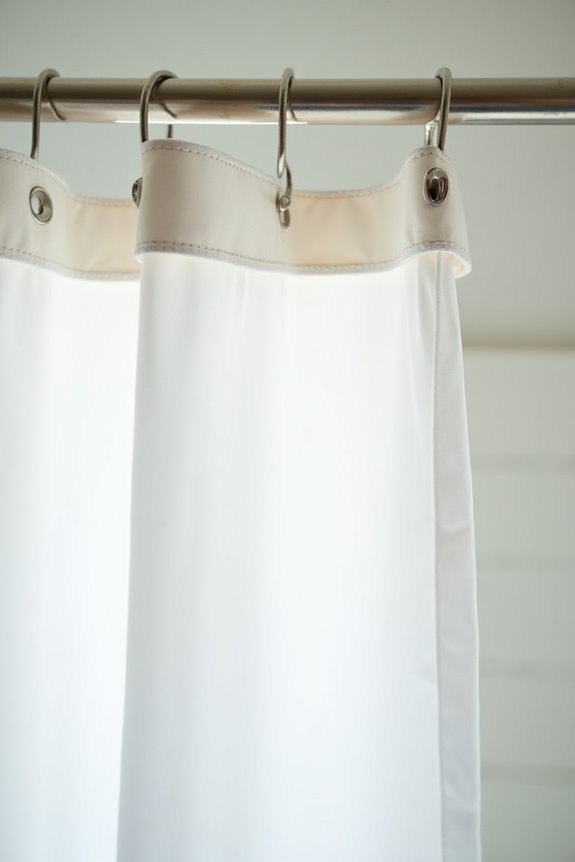
Because your shower curtain’s top edge bears the weight of the entire panel, we’ll reinforce it with a sturdy double hem that’s wider than the sides. I fold the fabric 1/2 inch, press it, then fold again 5 1/2 inches and press once more. Here’s where it gets smart: I open that hem outward to slip stabilizing interfacing between the folded lines. This reinforcement prevents sagging and keeps everything aligned perfectly.
I fuse 5.5-inch interfacing strips to the wrong side before closing the final hem. This extra layer transforms your shower curtain top hem into something genuinely durable. The width accommodates buttonholes or top-edge hardware beautifully. Before finishing, I do a dry run with the liner as my guide, ensuring the top stays straight and perfectly positioned on the rod. You’re building professional-quality results here.
Add Buttonholes to Your Shower Curtain Top
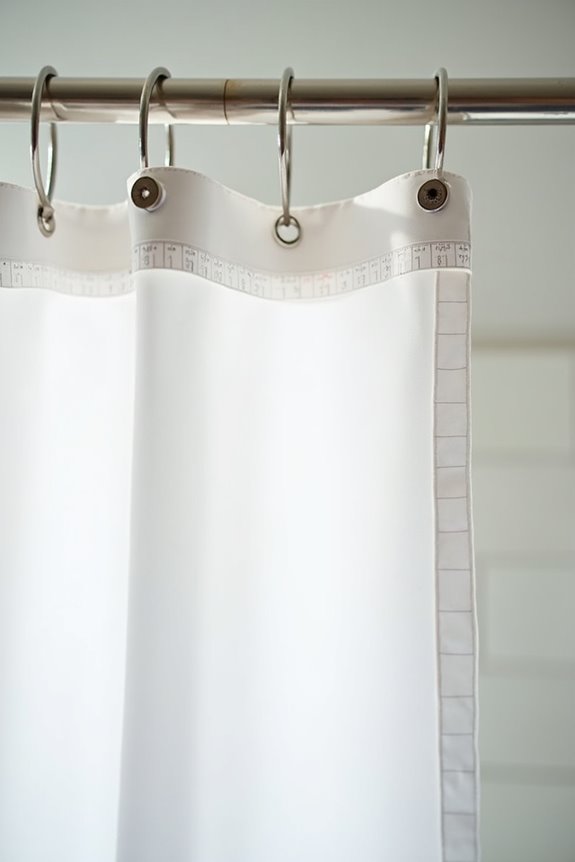
How do you turn that reinforced top hem into something truly functional? Time for buttonholes! I’ll mark my vertical buttonholes strategically across the top edge.
Here’s my approach:
- Start 5/8 inch from each edge for proper edge seam allowances
- Divide remaining width by 11 to space holes evenly with two edge holes included
- Practice on fabric scraps first—seriously, test your buttonhole length and stitch density
- Use my buttonhole foot and follow sewing machine settings for vertical buttonholes in buttonhole mode
- Cut openings carefully with scissors or a seam ripper from inside edges
After sewing, I’ll hang my shower curtain to check curtain alignment. Those functional buttonholes transform my reinforced hem into professional-looking hardware holes. This step feels genuinely satisfying—I’m creating something durable and polished.
Hem the Bottom and Hang Your Shower Curtain
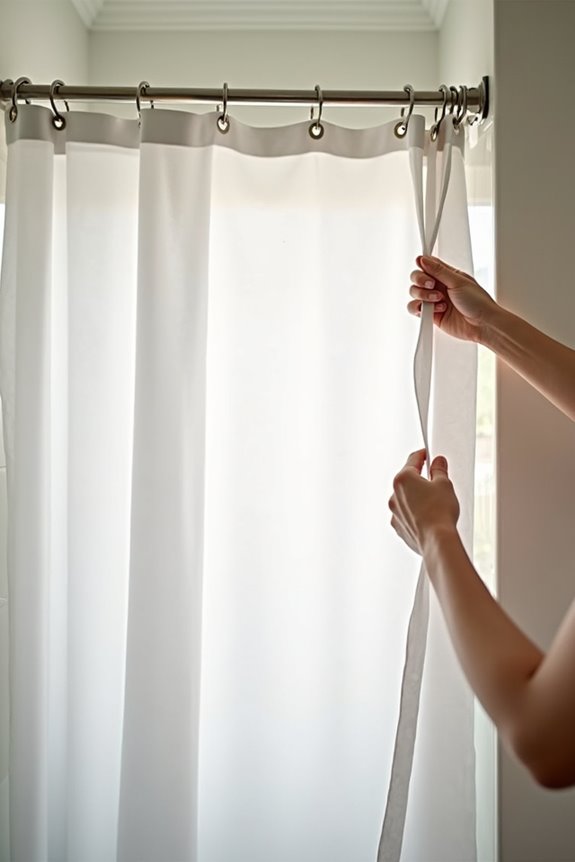
Let’s complete this project by creating a sturdy bottom hem that’ll keep your curtain looking sharp for years. First, I hang the curtain to determine the exact curtain length needed. Then I fold the bottom edge up 1/2 inch, press it firmly, and fold again 5 1/2 inches higher. Using a measurement guide ensures my even hemline stays consistent across the entire width. I press this fold carefully before edgestitch—that’s a visible stitch right along the edge—to secure everything and prevent fraying.
Before the final edgestitch, I verify the hanging hardware clears the top opening. This shower curtain hem is now complete and durable. The even hemline looks professional, and I’m genuinely proud of this custom shower curtain I’ve created from start to finish.