Yes, people can absolutely see through sheer curtains at night when your interior lights are on. Here’s why: when you’re backlit—meaning light’s behind the fabric—it makes those translucent fibers nearly see-through from outside, creating what’s called the fishbowl effect. Darker, denser fabrics with tighter weaves (think 50–70 threads per inch) help somewhat, but honestly, sheers alone won’t cut it for genuine nighttime privacy. You’ll need to layer them with blackout curtains or opaque liners to truly block visibility. The good news? There’s a smart solution waiting.
The Short Answer: Yes, People Can See Through Sheer Curtains at Night
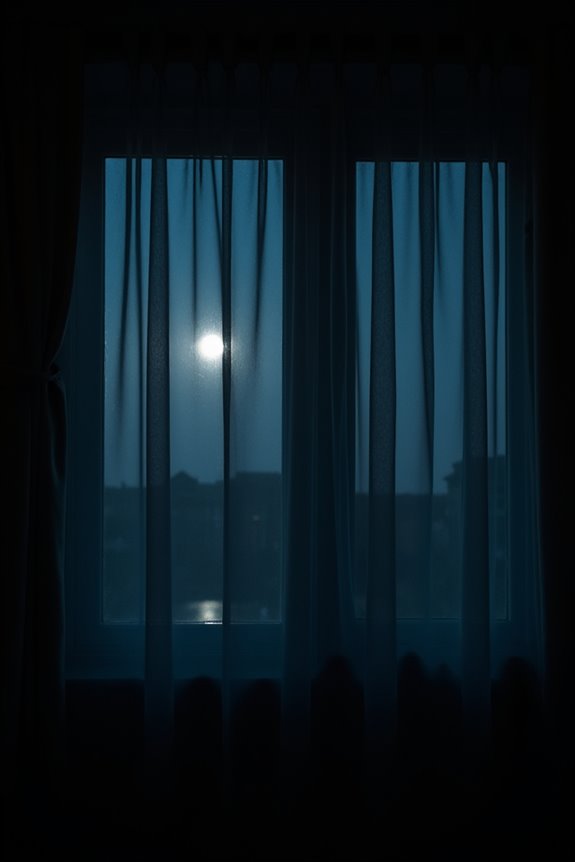
Why do sheer curtains seem to vanish the moment you flip on your living room lights? Here’s the truth: they don’t actually disappear—people outside can see right through them at night. I learned this the hard way when I realized my interior lighting was basically broadcasting my home like a lit stage. Sheer curtains are designed to diffuse daylight, which means they’re semi-transparent by nature. When you turn on your lamps, that interior lighting creates visibility through the fabric, making your silhouette and activities visible to anyone passing by. Night visibility depends on your fabric’s weave density and color—lighter, looser weaves offer less protection. If privacy matters to you, sheers alone won’t cut it. You’ll want layered solutions with blackout curtains or blinds for genuine nighttime security.
How Light Passes Through Sheer Fabric: The Backlight Problem Explained
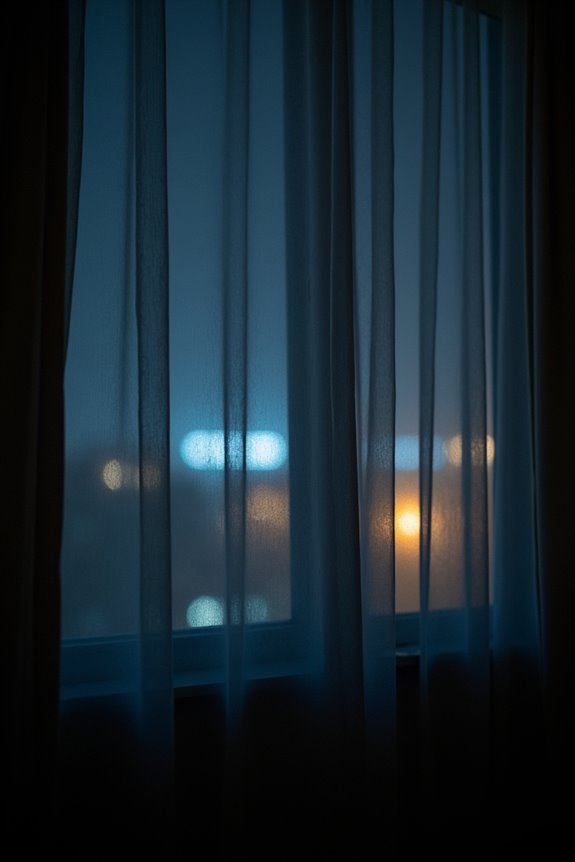
Ever wonder what happens when you flip on your living room lamp and suddenly feel like you’re performing on stage for your entire neighborhood?
That’s the backlight problem. When interior lights turn on at night, they create a stark contrast between your bright home and the dark exterior. Light passes straight through sheer fabric because of its loose weave and low density—those open spaces between threads act like tiny windows. Your curtains become almost translucent from outside, silhouetting everything inside. Darker fabrics help slightly, but they’re still see-through when backlit. Lighter colors? Forget about it. They practically glow. The tighter the weave density, the better your privacy, but sheers simply aren’t designed for nighttime coverage alone. You’ll need layering solutions for real protection.
Why Interior Lights Make Sheer Curtains Transparent at Night
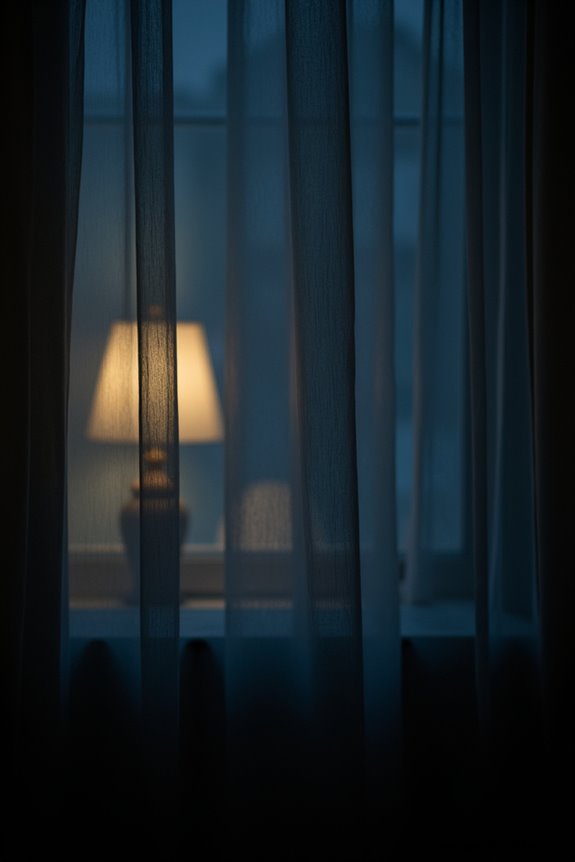
Now here’s where things get really interesting—because understanding the backlight problem is just half the battle. When you flip on interior lighting at night, you’re essentially creating a spotlight effect behind your sheer curtains. That warm glow from your lamps transforms what should be private into a glowing display visible from the street or sidewalk. Here’s the thing: interior lighting essentially backlights your sheer fabric, making it nearly transparent. The light passes right through those loose weaves, betraying your silhouettes and room activities to anyone passing by. It’s like standing behind a glowing screen. Darker or denser weaves help slightly, but honestly, they’ll still show shadows and movement. This is why layering matters—combining sheers with blackout options gives you genuine nighttime privacy without sacrificing daytime light.
Sheer Curtain Materials: Which Fabrics Block Visibility Best?
What makes one sheer curtain practically see-through while another offers genuine privacy is all about the fabric itself—specifically, thread thickness and weave density. I’ve discovered that denier numbers tell the real story. Lower deniers, like 20 or 30, create super-fine, transparent fabrics that practically disappear at night. Higher deniers around 75+ give you slightly better sheer weave transparency control without sacrificing that airy feel we love.
Fabric density matters tremendously too. Loosely woven sheers let light pour through, while denser weaves create genuine barriers. Even so, backlighting visibility remains an issue with traditional sheers. Here’s what I’ve learned: combine higher-denier fabrics with tighter weaves, then layer them with blackout options. That’s your winning strategy for actual nighttime privacy without sacrificing your home’s elegant, welcoming aesthetic.
Does Sheer Curtain Color Affect Nighttime Visibility?
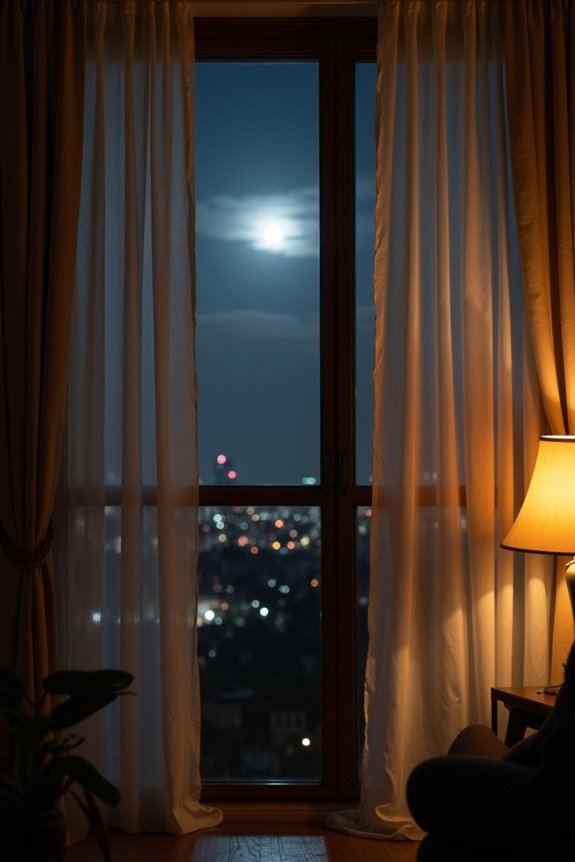
I’ve found that lighter sheer curtains—think ivory or pale cream fabrics—actually let way more light through at night than darker options, which means anyone outside can see your silhouette pretty clearly when your interior lights are on. Darker sheers in charcoal or deep gray do reduce visibility somewhat, but here’s the thing: color alone won’t solve your privacy problem because the fabric’s weave matters just as much, if not more. The honest truth is that whether you pick white or black sheers, you’re still going to need backup like blackout curtains or cellular blinds if you really want to keep prying eyes out after sunset.
Lighter Colors and Transparency
the color of your sheer curtains dramatically changes how much people can see inside your home at night. Light-colored sheers—think ivory or pale cream—diffuse interior backlighting so completely that passersby can actually spot your furniture silhouettes and movement when your lights are on. It’s honestly wild how transparent they become once dusk hits. Darker sheers offer slightly better night privacy, but they’re still see-through when interior backlighting kicks in. I’ve realized that sheer transparency really depends on fabric density and weave tightness. If you’re serious about protecting your space, pairing lighter sheers with a blackout layer genuinely transforms your privacy situation. It’s the perfect combo for having both style and security.
Darker Fabrics Reduce Visibility
How much does going darker actually help your night privacy? I’ve discovered it genuinely matters! Dark fabrics—think deep charcoal or navy—do reduce what outsiders see compared to whites or creams. But here’s the real game-changer: density and weave. A tightly woven dark sheer creates substantially better concealment than loosely woven light ones. I’m talking about fabric thickness and how closely threads pack together.
That said, don’t expect complete invisibility. Backlighting from interior lamps or streetlights still reveals shapes and movement through darkened sheers. I’ve learned that darker fabrics offer meaningful improvement, yet they’re not foolproof alone.
For genuine night privacy, I pair my dark, dense sheers with an additional opaque layer or blackout treatment. That combination? It’s genuinely transformative for peace of mind.
Color’s Limited Privacy Impact
So you’re wondering if switching from white sheers to deep navy or charcoal actually solves your nighttime privacy problem? Here’s the truth: color alone won’t save you. I’ve tested darker sheer curtains myself, and honestly, they’re still see-through when backlit. The real culprit? Your fabric weave and how light behaves through it.
| Curtain Color | Night Privacy Level | Best Use |
|---|---|---|
| White | Very Low | Daytime only |
| Light Gray | Low | Minimal privacy |
| Medium Blue | Low-Medium | Paired with blinds |
| Dark Navy | Medium | Layered solutions |
| Charcoal | Medium | Still needs backup |
What actually matters is combining color with denser weave patterns and layering with blackout options. That’s when you’ll genuinely feel secure. Don’t rely on color alone—it’s just one piece of the night privacy puzzle.
How Outdoor Lights Expose What’s Behind Sheer Curtains
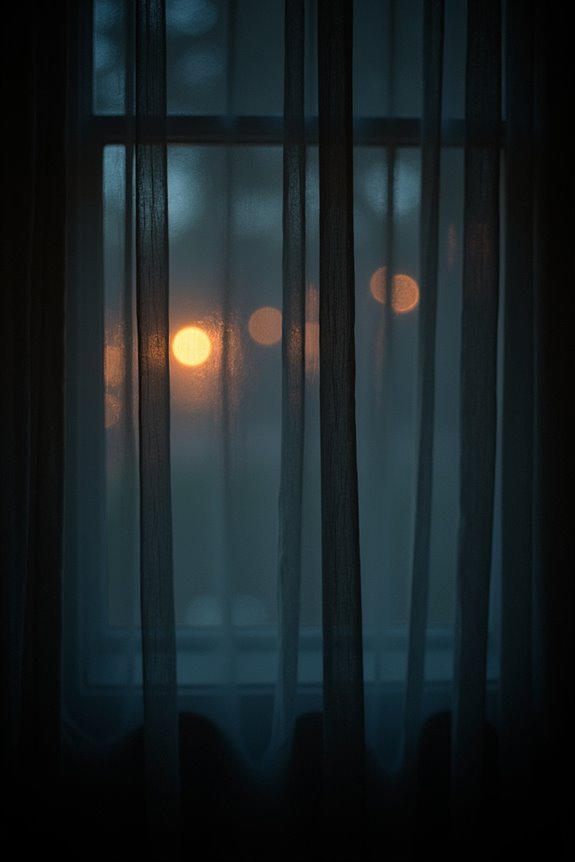
When you’ve got streetlights blazing outside your window, they’re basically turning your sheer curtains into a spotlight for your silhouette—and I’ve learned this the hard way! Here’s what happens: exterior lighting bounces right through that loose weave fabric, making your interior activities visible from the street, especially when your interior lights are on creating that backlight effect we talked about. The farther back you sit from the window, the safer you are, but realistically, most living rooms put us right in that danger zone where outdoor lights and indoor lamps combine to expose way more than we’d like anyone passing by to see.
Streetlights and Visibility
Ever notice how streetlights actually change the privacy game for your sheer curtains at night? Here’s the thing: those outdoor lights reduce visibility somewhat, but they don’t eliminate it completely. When streetlights illuminate your windows from outside while interior lights glow from within, you’re getting a double-whammy effect on your privacy. The external illumination softens shadows and reduces contrast, making silhouettes less distinct than they’d be in total darkness. However, the translucent fabric still allows shapes and movement to show through. Think of it like this: streetlights are helpful allies, yet they’re not your complete solution. They’re teammates, not game-changers. For genuine nighttime privacy, you’ll want to layer your sheers with blackout curtains or heavier opaque treatments. That combination genuinely protects your personal space.
Interior Backlighting Effects
Why does your living room suddenly feel exposed the moment you flip on the lights at night?
Interior backlighting creates what I call the “fishbowl effect.” When your lamps glow inside, they essentially illuminate the sheer fabric from behind, making it act like a glowing screen visible from outside. This backlighting dramatically increases your see-through problem because it silhouettes everything behind the curtain—your furniture, your movements, even you sitting on the couch.
Here’s the reality: darker outdoor lighting won’t save you. Your interior brightness overpowers it completely. The privacy level drops significantly because that backlighting transforms your sheers into a transparency showcase.
I’ve discovered that even quality, densely-woven sheers can’t combat this effect alone. You’ll need layering solutions—pairing sheers with blackout liners or opaque backing—to reclaim your nighttime privacy. That’s when you’ll finally feel genuinely secure.
Distance and Exposure Risk
How far away does someone need to be before your sheer curtains actually shield what’s happening inside your home? Here’s the truth: distance matters less than you’d hope. Even from across the street, backlighting transforms your sheer transparency into a problem. Outdoor lights—streetlamps, porch lights, car headlights—create shadows that silhouette everything inside.
| Distance | Visibility Level | Risk Factor |
|---|---|---|
| 10 feet | High silhouettes | Very risky |
| 25 feet | Moderate shapes | Still exposed |
| 50+ feet | Blurred outlines | Somewhat safer |
Fabric density affects exposure risk, but here’s what surprises most people: even thicker sheers remain compromised at night. Your best move? Layer treatments behind sheers or invest in blackout options. You’re protecting what matters most—your family’s privacy and peace of mind.
Window Position and Distance: Why Location Matters
The spot you choose for your windows dramatically shapes your privacy after sunset—and I’m genuinely thrilled to break down exactly why. Your window position matters tremendously because ground-level rooms facing sidewalks get way more exposure than upper-floor spaces. When your bedroom sits ten feet from a busy street, pedestrians and drivers passing by can absolutely see through sheers when interior lights are on. I’ve learned that windows positioned higher up—say, twelve feet above eye level—create natural protection simply because observers can’t angle their view properly. Distance works powerfully in your favor too. A window forty feet from the nearest sidewalk offers dramatically better night visibility control than one just five feet away. Street lamps and exterior lighting can’t fully block what happens inside when you’ve got bright lamps glowing. Understanding your unique window placement helps you decide whether sheers alone cut it.
The One Time Sheers Deliver Privacy: Daytime Hours Explained
When sunlight floods through your windows during daytime hours, sheer curtains genuinely shine—and I’m honestly amazed how many people miss this sweet spot of privacy. During the day, daylight diffusion works beautifully because exterior brightness overwhelms interior light. You get privacy without sacrificing natural illumination:
- Exterior sunlight creates a diffused view through fabric fibers
- Interior spaces remain hidden from street-level observers
- Natural light fills rooms without harsh glare
- No lamps or overhead lights needed during peak hours
- Fabric density determines exactly how much you’ll see through
This daytime magic happens because light behaves predictably. Stronger outdoor brightness simply overpowers what’s inside. However, once evening arrives and you flip on interior lights, that advantage vanishes instantly. That’s why smart designers layer privacy—combining sheers with blackout options ensures 24-hour protection. Your sheer privacy daytime investment becomes your foundation, not your complete solution.
How to Choose a Privacy Solution: Layering vs. Alternatives
Now that you understand sheer curtains’ nighttime limitations, here’s where the real design decisions happen—and honestly, this is where I get genuinely excited because your options are genuinely flexible. You’ve got two main paths: layering or alternatives. Layering combines sheers with blackout curtains on a double rod, creating smart transparency control. You get daytime light while maintaining nighttime privacy. Alternatively, privacy films or cellular shades work independently, offering solo solutions without layering complexity. I love suggesting dual roller systems—sheers paired with solid shades—because they’re streamlined and effective. Smart glass represents the premium route, adjusting opacity electronically. Your choice depends on budget, aesthetics, and how much control you want. Each approach transforms sheers from privacy liabilities into flexible design elements that genuinely work.
Combining Sheer Curtains With Blinds or Shades
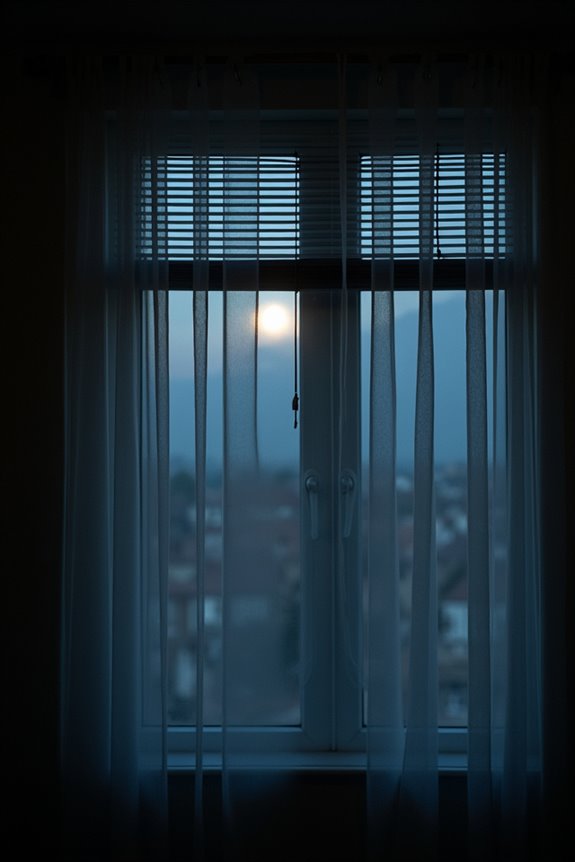
I’ve discovered that pairing sheer curtains with roller shades or wooden blinds positioned behind them creates the perfect privacy solution you’ve been looking for. During the day, light filters beautifully through the sheers while your blinds stay hidden, but at night when your interior lights are on, you simply close those back blinds to block any outside view—giving you both the aesthetic softness of sheers and genuine nighttime privacy. This dual-layer approach is honestly the best way I’ve found to have it all: gorgeous daytime ambiance, complete darkness when you need it, and that stylish look sheers provide without any compromise.
Layering For Enhanced Privacy
Why settle for sheer curtains alone when you can create a privacy powerhouse by layering them with blinds or shades?
I’ve discovered that combining these elements transforms your nighttime visibility concerns completely. Here’s what makes this approach so effective:
- Double curtain rods let inner sheers diffuse daylight while outer blackout drapes handle nighttime privacy
- Dual roller systems share one bracket, so sheer and solid shades work together seamlessly
- Layering adds solid barriers that block interior visibility when your lights are on at night
- Flexible light control means you’re not stuck choosing between style and sheer privacy
- Works everywhere—bedrooms, living rooms, kitchens—without sacrificing your home’s aesthetic
Experts emphasize layering as essential because sheers alone can’t guarantee nighttime protection. I’ve seen firsthand how this strategy delivers both daytime brightness and complete evening privacy. You’re creating something genuinely functional and beautiful.
Blinds And Sheers Together
Here’s what makes this combo brilliant. During the day, I love how my sheer curtains filter sunlight beautifully while maintaining that open, airy feel. Then at night, I simply close my blinds or roller shades for total privacy and darkness—no more worrying about outsiders seeing in.
What I really appreciate is the flexibility. I can tilt the blinds to control exactly how much visibility I want from outside, giving me privacy without sacrificing daylight diffusion. Some people even motorize their setups for effortless transitions between modes.
This layered approach delivers genuine peace of mind. You’re getting aesthetic appeal with serious privacy protection—and honestly, that’s a game-changer for any room.
Maximizing Light And Coverage
The magic really happens when you stop thinking about sheers and blinds as separate solutions and start treating them as a powerful team. I’ve discovered that layered window treatments transform your entire home’s privacy game.
Here’s what makes this combo genuinely brilliant:
- Roller shades behind sheers diffuse light beautifully during day
- Blackout curtains over sheers eliminate nighttime visibility completely
- You control light levels with precision throughout the day
- Night privacy becomes effortless without sacrificing natural illumination
- Darker, denser fabrics work harder when layered strategically
When I combined my sheer curtains with cellular shades, I finally achieved consistent privacy without that trapped, cave-like feeling. The sheer curtains filter harsh sunlight softly while the blinds handle night privacy. This layered approach isn’t complicated—it’s just smart design that actually works for your lifestyle. You’re joining countless people who’ve cracked this code.
Use Privacy Films and Smart Glass as Alternatives to Layering
If you’re tired of stacking curtains on top of curtains just to feel private at night, I’ve got something that might genuinely excite you: privacy films and smart glass technology. These game-changers let you ditch the heavy drape layers entirely. Privacy films stick directly onto your windows, creating an instant barrier that blocks outside views while maintaining your daytime light. Sure, they’re visible from outside, but they’re sleek and modern-looking. Smart glass takes it further—it adjusts electronically, switching from crystal clear to completely opaque at the touch of a button. Imagine controlling your nighttime privacy with zero effort. Both options handle nighttime visibility brilliantly without sacrificing your home’s exterior charm or morning brightness. You’re finally free from the layering game.
Choosing Darker, Denser Sheers for Slightly Better Coverage
Want to squeeze out a little more nighttime privacy without completely overhauling your window setup? I’ve discovered that darker, denser sheers genuinely make a difference. Here’s what transforms your coverage:
Darker, denser sheers genuinely transform nighttime privacy without overhauling your entire window setup.
- Darker colors reduce visibility when interior lights create backlighting effects
- Increased thread density—aim for 50–70 threads per square inch—boosts opacity significantly
- Weave tightness directly impacts how much light passes through your fabric
- Heavier fabric weights naturally block more light transmission than lightweight options
- Dark sheers paired strategically still work best with additional layers
The magic happens when you choose fabrics with real substance. Backlighting from lamps reveals silhouettes with standard sheers, but upgrading to darker, denser materials noticeably limits what outsiders see. You’re not getting complete darkness, but you’re gaining meaningful privacy that genuinely improves your nighttime comfort. It’s a smart intermediate step worth exploring before committing to blackout solutions.
Do Sheers Alone Meet Your Privacy Needs?
Honestly, sheer curtains by themselves just won’t cut it for nighttime privacy—and I’ve learned this the hard way. When my interior lights flip on after sunset, anyone outside can see right through to my living room. I realized sheers work beautifully during the day when outdoor light overwhelms interior brightness, but night-time is a completely different story.
Even my darker, denser sheers—the ones I specifically chose for better coverage—still let silhouettes show through like a backlit movie screen. That’s when I understood that sheers alone don’t meet real privacy needs. They’re gorgeous and light-diffusing, sure, but they’re decorative first, protective second.
Pairing them with blackout curtains, cellular blinds, or privacy films transformed my space. Now I’ve got the best of both worlds: daytime elegance and nighttime security.
The Nighttime Privacy Mistakes Everyone Makes With Sheers
Why do so many people assume sheer curtains work the same way day and night? I’ve learned the hard way that this common mistake leaves your night privacy vulnerable. When interior lights turn on, backlighting transforms those delicate fabrics into see-through screens. Here’s what I discovered about nighttime privacy blunders:
Sheer curtains transform into see-through screens at night when interior lights turn on, leaving your privacy vulnerable to street-level viewing.
- Leaving lights on near windows without layering protection
- Choosing light-colored sheers that glow when backlit
- Ignoring fabric density and weave tightness differences
- Positioning sheer curtains as your only privacy barrier
- Underestimating how visible you are from the street
The solution? I’ve found that pairing sheer curtains with an opaque or blackout layer creates the night privacy you actually deserve. You’re not alone in this discovery—we’re all learning what truly works after sunset.
Which Privacy Solutions Actually Work: A Quick Decision Guide
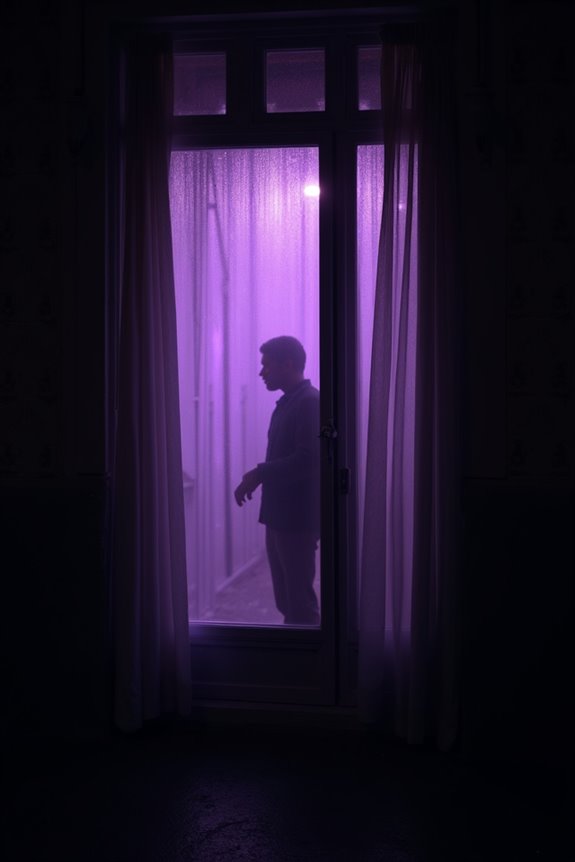
So here’s the thing—once you’ve spotted yourself reflected in your own sheer curtains at night, you’re ready to actually solve this problem. I’ve tested enough solutions to know what actually delivers results, and I’m thrilled to share this with you.
| Solution | Privacy Level | Best For |
|---|---|---|
| Sheer alone | Poor | Daytime only |
| Layering with blackout curtains | Excellent | Complete night privacy |
| Privacy film | Very good | Renters and quick fixes |
The real game-changer? Layering. I pair my sheers with blackout curtains for daytime elegance and nighttime protection. During evening hours, that second opaque layer blocks interior lighting completely, ensuring nobody sees inside. Privacy film works wonderfully too—it’s affordable and removable. You’ve got this.