No single brand wins—it really depends on what matters most to you. Steelcase Flex delivers portability with 18 dB sound reduction, while Loftwall excels in U.S.-made sustainability and felt acoustic panels. Herman Miller shines with flexible reconfiguration, and Haworth Enclose offers serious privacy through glass combinations. Each brand tackles quiet differently: some prioritize easy rearrangement, others focus on acoustic absorption ratings. Your budget, space layout, and whether you need quick installation versus long-term flexibility will guide the perfect choice—and we’ll break down exactly how each stacks up.
Why Modular Dividers Matter in Open Offices
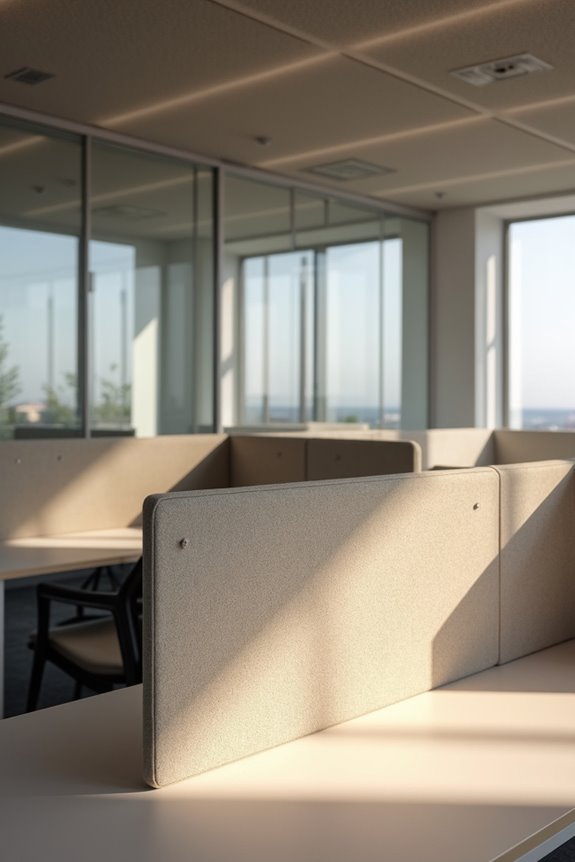
Ever wonder why some open offices feel peaceful while others buzz with constant distractions? I’ve discovered that acoustic partitions transform chaotic workspaces into focused zones. These modular dividers create privacy and noise reduction without boxing you in completely—they’re like having your own quiet corner while staying connected to your team.
What makes them brilliant? They’re reconfigurable. As your team grows or shifts around, these panels move with you. You’re not stuck with permanent walls that scream “closed off.” Instead, you get flexible acoustic solutions that absorb sound waves bouncing around open offices.
I love how they blend seamlessly with existing desks and furniture. The privacy you gain feels genuine, not cramped. It’s belonging without isolation—the sweet spot every modern office desperately needs.
Understanding Acoustic Performance: Which Metrics Actually Matter
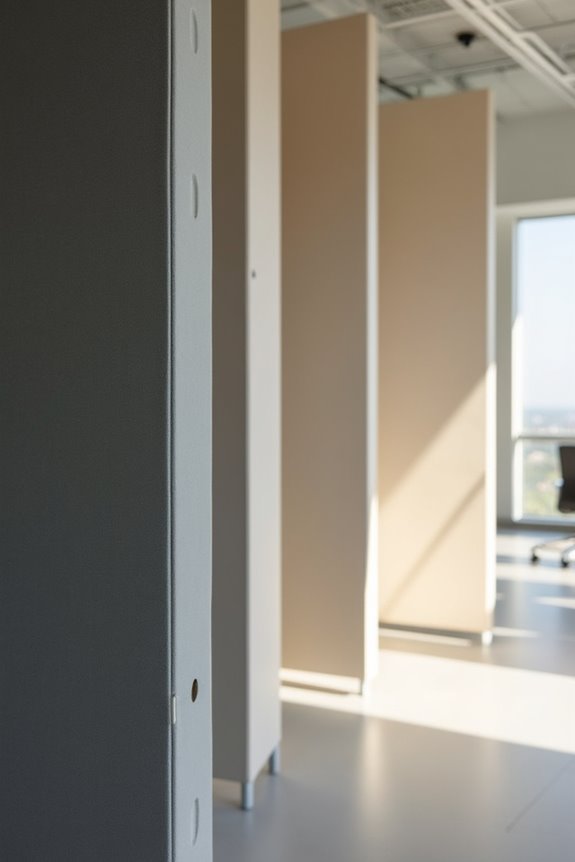
When you’re shopping for modular dividers, I’ve learned that the magic number is NRC—that’s the Noise Reduction Coefficient—and it tells you how well a panel actually absorbs sound, with ratings like 0.75 or higher meaning you’re getting serious quiet (think Steelcase Flex Acoustic Boundary and PET-panel systems that really deliver). Here’s what blew my mind: some quality dividers can cut echoes by up to 40%, which is honestly a game-changer when you’re tired of hearing every conversation across the office. I’ll break down which metrics actually matter—NRC ratings, decibel reduction standards, and how different materials perform—so you can stop guessing and start choosing dividers that’ll actually make your workspace peaceful.
NRC Ratings and Sound Absorption
How’d you like to know the secret number that separates a truly quiet office from one that just *feels* quieter? It’s called the NRC rating—basically a scorecard for sound absorption. I’ve discovered that modular dividers with NRC ratings between 0.75 and 0.90 genuinely transform open spaces into focused work zones. These panels—whether they’re PET fabric, felt tiles, or layered designs—actually trap sound instead of bouncing it around like a pinball machine. Here’s what gets me: you can reconfigure your layout whenever you want, and those absorption benefits stick around. Thicker, denser materials deliver the best results. When you’re shopping for modular dividers, NRC ratings aren’t just marketing fluff; they’re your roadmap to finally achieving that peaceful office atmosphere you’ve been craving.
Decibel Reduction Standards Explained
Why do some office dividers actually work while others just sit there looking decorative? The secret lies in understanding decibel reduction standards—the real metrics that separate performers from pretenders.
I’ve learned that three key measurements matter most:
- NRC ratings (0.75–0.95 range) show how well panels absorb sound across speech frequencies, directly impacting how quiet your space feels
- Sabins measurements reveal absorption power at specific frequencies like 125 Hz to 4000 Hz, giving you the detailed performance picture
- Sound transmission class (STC) ratings measure how effectively dividers block noise traveling to floors and ceilings above
These aren’t just numbers—they’re your promise of a genuinely quieter workspace. When you find dividers hitting those higher NRC scores, you’re joining colleagues who’ve finally escaped constant noise interference. That’s the sweet spot where design meets real acoustic science.
Acoustic Performance Benchmarks Comparison
Now that you understand the standards behind acoustic performance, let’s look at how different brands actually stack up against each other—because knowing an NRC rating means nothing if you can’t compare what you’re really getting. I’ve found that top modular dividers typically target NRC 0.75 or higher, which actually absorbs three-quarters of sound hitting the panels. The real magic happens when you test them across actual office situations: phone calls, focused work, and meetings. Brands using PET felt or fabric cores genuinely outperform glass options for speech privacy. What matters most isn’t just the number—it’s measurable dB reduction during typical conversations. I’m genuinely excited when a modular system delivers consistent acoustic performance while staying reconfigurable. That’s when you know you’ve found something special for your quiet office.
Steelcase Flex Collection: Portable Dividers With Acoustic Performance

I’m genuinely excited about the Steelcase Flex Collection because it nails both portability and sound control—two things that usually don’t go together in office dividers. The lightweight panels, which weigh just enough to feel sturdy but move effortlessly on wheels, let you reconfigure your space whenever your team needs a change, and the integrated sound-dampening materials actually absorb noise rather than just blocking it. You’ll notice the acoustic performance specs matter here: these dividers reduce sound transmission by up to 18 decibels, which transforms a chaotic open office into something you can actually focus in.
Lightweight Mobility and Portability
How’d you like to rearrange your entire office layout without calling in the professionals? I’m genuinely excited about what Steelcase Flex Collection brings to the table here.
These portable dividers feature lockable wheels that let you reposition everything solo—no tools, no demolition needed. Here’s what makes them game-changing:
- Lightweight construction that you can actually move yourself in minutes
- Lockable wheels that keep dividers exactly where you want them, stable and secure
- NRC performance built right in, delivering serious acoustic benefits without sacrificing flexibility
You’re basically getting a privacy solution that grows with your team’s needs. Want to create quiet zones one week, then open things up the next? Done. These dividers integrate seamlessly with your existing furniture, so your office feels intentional and unified while staying wonderfully adaptable to however your team works best.
Acoustic Performance Specifications
What really separates the Steelcase Flex Collection from standard portable dividers is how seriously they tackle sound control. I’m genuinely impressed by their acoustic performance specifications. These modular dividers use specially engineered materials and smart panel construction that actually reduce echo and reverberation—the annoying sounds bouncing around open offices that drive us crazy.
What makes this exciting is that you’re not sacrificing visibility for quiet. The panels maintain light transmission while cutting ambient noise, which feels like having your cake and eating it too. The Flex Collection’s targeted acoustic design creates genuine quiet zones within open-plan layouts without requiring renovation headaches. You simply position these lightweight walls where you need them most, instantly transforming chaotic spaces into focused work areas. That’s practical sound management at its finest.
Herman Miller Modular Systems: Felt Panels and Flexible Reconfiguration
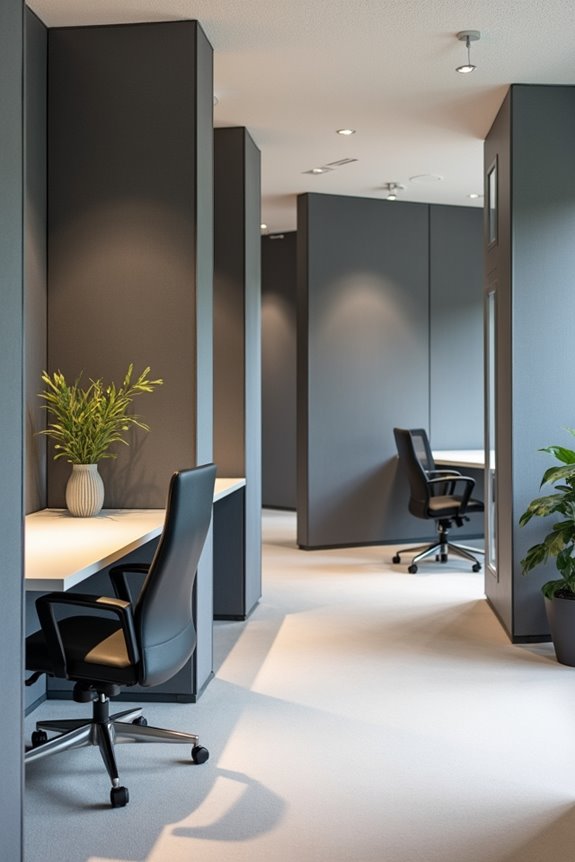
Why stick with permanent walls when your team’s needs keep shifting?
Herman Miller’s modular systems deliver exactly what I’m looking for in a dynamic workspace. The Kivo Panels and OE1 Wall System transform how we think about office flexibility.
Here’s what makes these solutions genuinely game-changing:
- Felt panels absorb sound while letting you reconfigure your space in hours, not weeks
- Removable components mean zero demolition headaches when teams reorganize or expand
- Quick rearrangement capability keeps your workspace perfectly aligned with how your team actually works
I’m genuinely impressed by how these modular systems create quiet, focused spaces without feeling locked into permanent solutions. As part of MillerKnoll’s heritage, Herman Miller understands that today’s offices demand flexibility alongside acoustic comfort. You’re not just buying dividers—you’re investing in a workspace that grows with you.
Haworth Enclose: High-Performance Partitions for Privacy
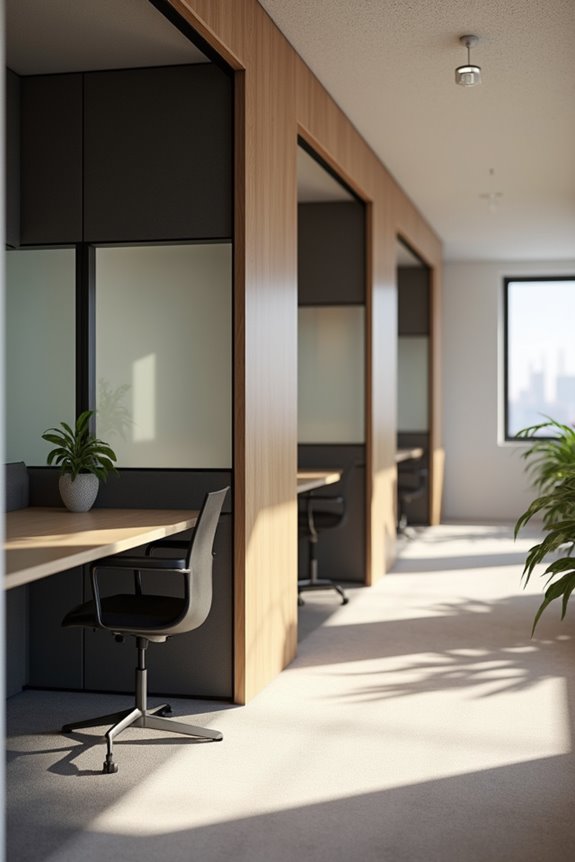
When you need privacy without demolishing your office, Haworth’s Enclose System delivers exactly what modern workplaces demand. I’m genuinely excited about how these modular partitions transform spaces without permanent damage to walls or structures.
| Feature | Benefit |
|---|---|
| Full Panels | Complete visual privacy |
| Glass Combinations | Balanced transparency |
| Glass-with-Transom | Light flow plus sound control |
| Frameless Glass 2-Channel | Modern, sleek appearance |
The high acoustic performance is remarkable—you’ll notice real noise reduction while maintaining that professional look everyone wants. What I love most? Reconfiguring takes minimal effort. As your team’s needs shift, these partitions adapt instantly without hassle or mess. Haworth Enclose proves that privacy and flexibility aren’t mutually exclusive. You’re joining workplaces that choose smart solutions, not permanent commitments.
Teknion Focus Walls: Semi-Enclosed Spaces Without Permanent Installation
Teknion Focus Walls take the flexibility I praised with Haworth Enclose and push it further into semi-enclosed territory—giving you real walls that aren’t actually permanent. You get genuine acoustic privacy without demolition crews or permanent construction headaches.
Here’s what makes these modular dividers truly special:
- Configurable panels blend fabric, glass, and acoustic materials so you customize sound control exactly how you need it
- Quick installation means zero downtime disruption—your team stays productive while spaces transform around them
- Future-proof flexibility lets you reconfigure layouts whenever your needs shift, without costly reconstruction
The Focus Walls system integrates seamlessly with your existing desks and furniture, creating cohesive private zones within open offices. You’re building belonging through choice—letting people find their focus without sacrificing the collaborative energy that makes open plans work.
Loftwall Modular Dividers: U.S.-Made Systems With Sustainability Focus
I’m genuinely excited about Loftwall because they’re building modular dividers right here in the U.S., which means you’re supporting American manufacturing while getting acoustic panels designed to actually reduce noise in your office. Their Rooms system combines felt acoustic panels with sliding track doors and ceiling baffles—think of it as creating custom walls without permanent construction—and they’ve engineered everything to relocate easily when your workspace needs change. What really gets me is their commitment to sustainability; they’re actively recycling materials and designing products that won’t end up in landfills, so you’re getting quiet, flexible spaces *and* doing right by the planet.
U.S. Manufacturing And Sustainability
Why should where your office dividers come from matter to you? I’ve discovered that choosing U.S.-made modular dividers like Loftwall’s genuinely impacts your workspace and values.
Here’s what excites me about their approach:
- Recyclable PET panels reduce environmental guilt—you’re choosing materials that won’t languish in landfills
- Domestic manufacturing supports local jobs while ensuring quality control you can trust
- Sustainable framing materials mean your acoustic partition system aligns with eco-conscious decisions
When I invest in Loftwall’s Rooms system or Hedge panels, I’m not just soundproofing my office. I’m supporting responsible manufacturing practices right here at home. Their commitment to sustainability isn’t marketing speak—it’s built into every felt acoustic panel and durable frame. That’s the kind of belonging I want: a community choosing better for ourselves and our planet.
Modular Design And Acoustic Features
Now that we’ve covered the environmental benefits, let’s talk about how Loftwall actually makes your office quieter—and how you can rearrange everything without calling a contractor.
Loftwall’s modular dividers feature felt acoustic panels that genuinely absorb sound, transforming chaotic open spaces into focused work zones. Their Rooms system works like customizable walls you can reconfigure whenever you need. I’m genuinely impressed by how ceiling baffles complement floor dividers, creating comprehensive quiet throughout your space.
What makes this brilliant? You’re not demolishing anything. Need a different layout next month? Simply adjust your modular dividers. The U.S. manufacturing ensures quality craftsmanship, and the acoustic panels actually perform—they’re not just aesthetic. You’ll notice the difference immediately.
HON Acoustic Dividers: Quick-Install Screens and Configurations
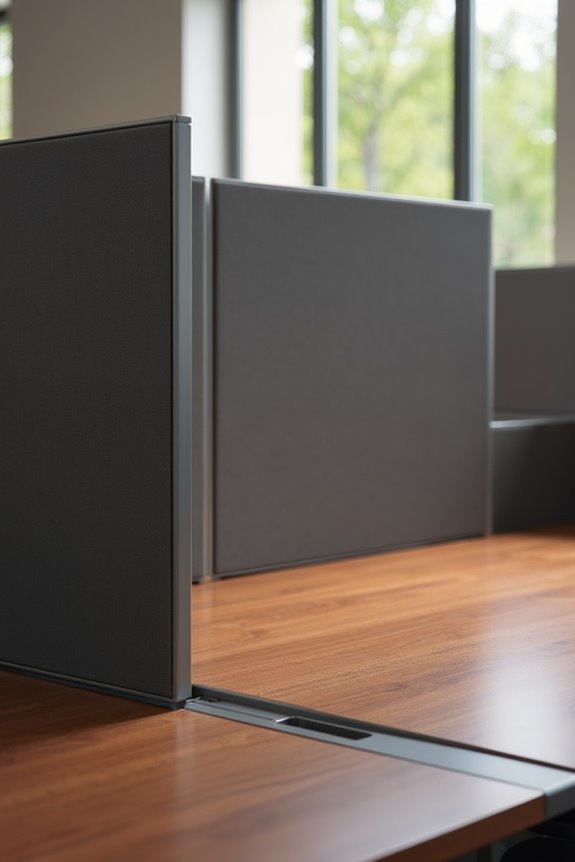
How’d you like to transform your sprawling open office into a network of focused, quiet zones without weeks of construction? HON acoustic dividers deliver exactly that. Their quick-install screens feature compressed PET coating—a material that actually absorbs sound waves instead of bouncing them around. You’re getting real privacy without the renovation headache.
Transform your open office into focused quiet zones fast—no construction required. HON acoustic dividers deliver real privacy through sound-absorbing compressed PET coating.
Here’s what makes HON’s approach brilliant:
- Wall tiles and hanging screens that integrate seamlessly with your existing desks, requiring zero demolition
- Rapid installation paired with acoustic options through their Unika Vaev collaboration, meaning faster quiet zones
- Affordable reconfigurable layouts that adapt as your team’s needs evolve
These modular dividers tackle the core problem: open offices feel chaotic. HON recognizes that teams need affordable, flexible solutions that actually work. You’re not just buying partitions—you’re reclaiming focus.
Knoll Architectural Dividers: Felt-Covered Screens and Desk-Mounted Options
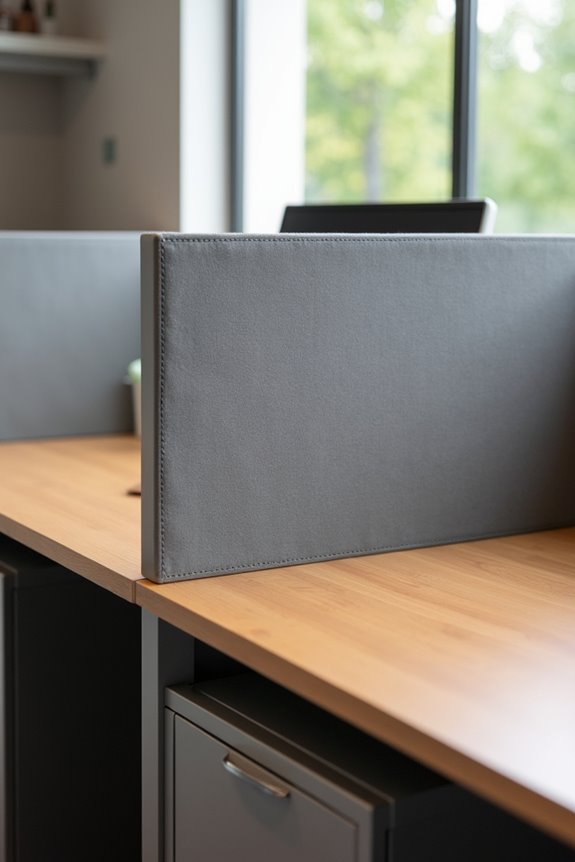
While HON delivers speed and affordability, Knoll takes a different route—one that treats acoustic dividers like design objects you’ll actually want to look at every day. I’m genuinely impressed by their felt-covered screens, which blend beauty with serious sound-blocking power. The Inlet Screens work as fixed or removable standing dividers wrapped in soft felt that actually absorbs noise. Then there’s the Telly Screen—a freestanding, linkable divider available in 2, 3, or 4 panel heights that you can rearrange whenever you need. What sets Knoll apart? They understand that quiet offices shouldn’t feel cold or institutional. These felt-covered screens create warm, inviting spaces where you feel like you belong. The texture matters. The flexibility matters. Your workspace deserves that thoughtfulness.
Matching Brands to Your Budget, Space, and Acoustic Needs
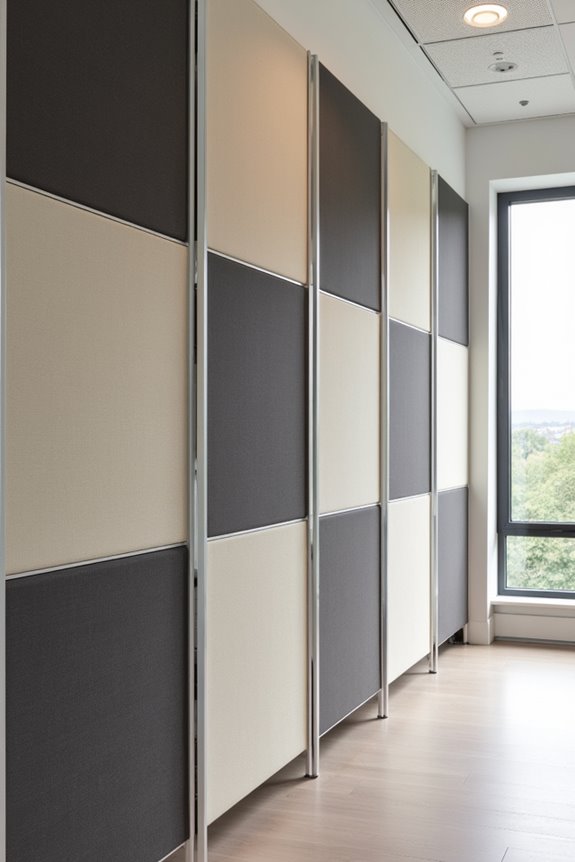
I genuinely believe matching these three elements transforms your workspace into a focused, welcoming environment where everyone thrives together.