I’ll banish your basement mold by tackling moisture sources first—fix leaks, redirect downspouts ten feet away, and keep humidity between 30–50% with a hygrometer. Wear a NIOSH respirator and gloves while ventilating. Discard heavily moldy porous materials like damp drywall and carpet; scrub nonporous surfaces with a bleach-to-water ratio of 1:10. Dry everything thoroughly using fans and dehumidifiers, then monitor continuously to prevent regrowth. Stick with this approach, and you’ll discover exactly how to transform your basement into a genuinely healthy space.
Step 1: Identify Moisture Sources Behind Basement Mold
Why does mold keep coming back to your basement no matter how hard you scrub? You’re probably fighting the wrong battle. I learned the hard way that cleaning mold without fixing moisture sources is like bailing water from a sinking boat without plugging the leak.
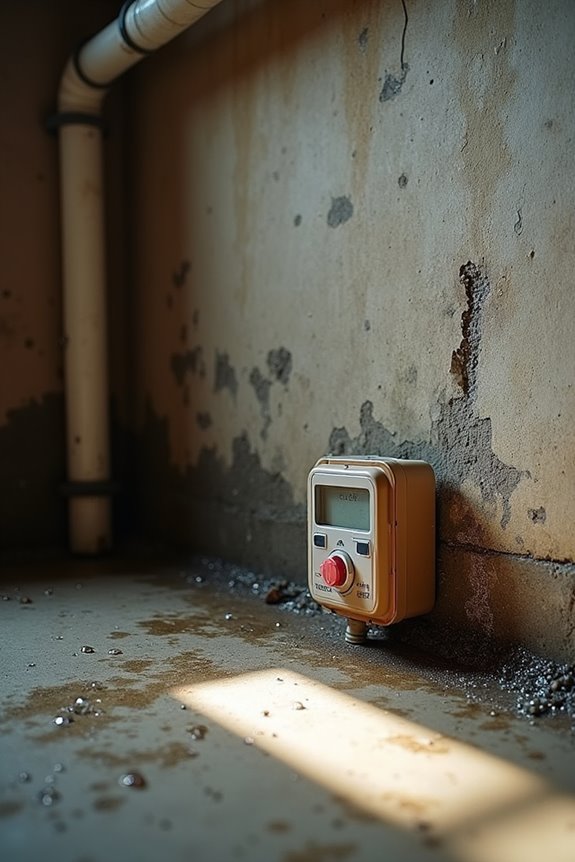
Here’s what I discovered: you’ve got to identify your moisture sources first. Check for leaking foundations, poor foundation drainage, and faulty downspouts—these are the usual culprits driving basement mold growth. Look for water intrusion signs like musty odors, visible dampness, condensation on walls, and water stains.
I grab a hygrometer to measure basement humidity levels. You’re aiming for 30–50% relative humidity. I also verify my gutters discharge at least 10 feet from the foundation. Fix these moisture sources before cleaning anything. That’s your winning strategy.
Step 2: Fix Leaks and Water Problems Immediately
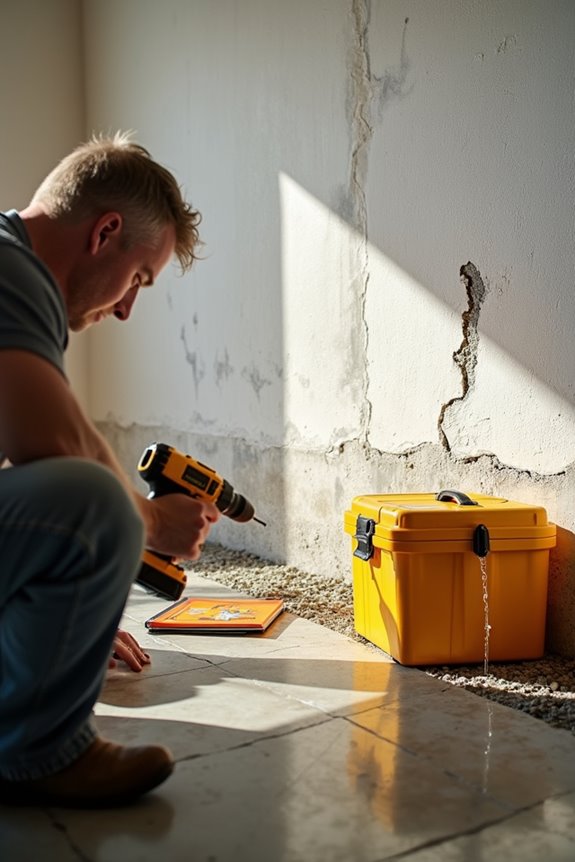
Stop the water at its source—that’s your golden rule for beating basement mold for good. Once you’ve spotted those leaks, fix them immediately. I can’t stress this enough: water problems won’t resolve themselves, and mold feeds on continuous moisture like plants need sunlight.
Stop water at its source—your golden rule for beating basement mold. Fix leaks immediately; mold feeds on continuous moisture.
Here’s what I do: I prioritize the leak repair before touching any cleanup. Patch foundation cracks, redirect faulty downspouts away from your home, and improve grading around your foundation. These actions stop ongoing mold growth dead in its tracks.
Next, I dry everything completely—walls, materials, all affected surfaces. Then I grab a hygrometer to monitor humidity levels, keeping them between 30–50%. This simple device becomes your best friend during remediation.
You’ve got this. Addressing water problems first means you’re building a genuinely mold-resistant basement.
Step 3: Decide What to Clean vs. What to Discard
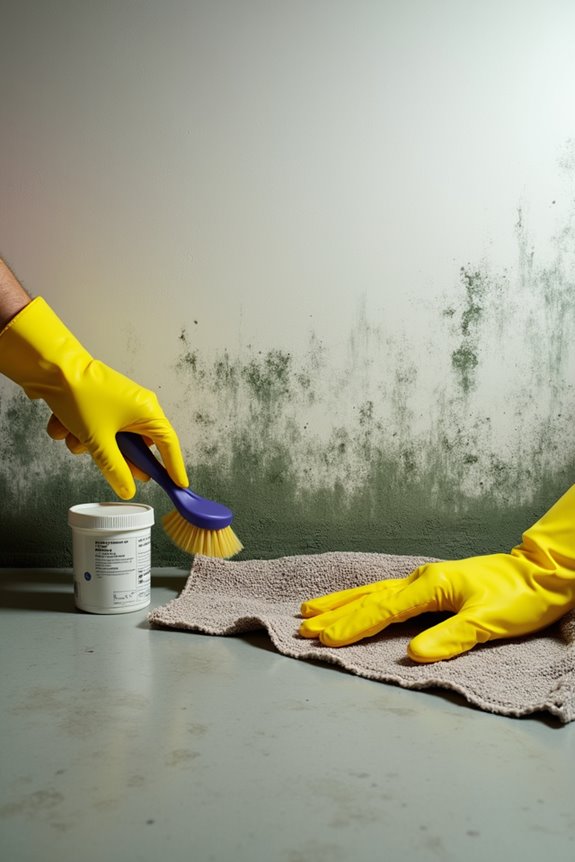
Now that you’ve stopped the water source and dried everything out, you’re ready for the hard part: deciding what stays and what goes.
Here’s my honest take: porous materials like carpet, drywall, and ceiling tiles that are heavily moldy? Discard them. I know it’s tough, but mold burrows into those tiny spaces and won’t fully leave. Your cleaning vs discard decision really hinges on salvageability—if something’s worth saving, it needs to be completely dry first.
For nonporous surfaces like concrete basement walls, cleaning works beautifully. Just scrub thoroughly, then dry completely to prevent regrowth. This mold remediation approach protects your health and prevents future problems. Trust me, removing moldy materials now beats dealing with persistent contamination later. You’ve got this!
Step 4: Put On Your Safety Gear
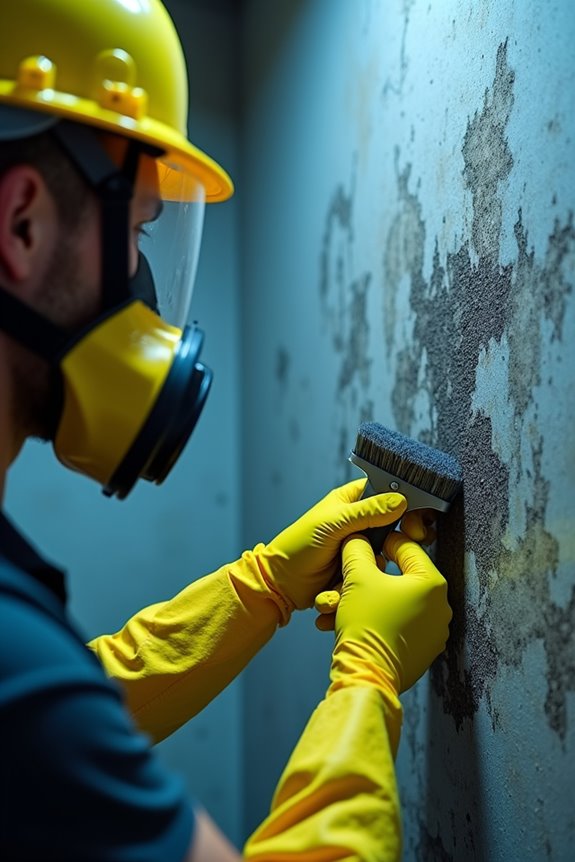
Before you even touch that moldy wall, here’s what’ll protect you: a NIOSH-approved respirator (that’s a special mask rated to filter mold spores), protective goggles, and waterproof gloves.
I can’t stress this enough—your safety precautions come first. You’re joining a community of smart homeowners who take mold removal seriously.
Here’s your protective gear checklist:
- Respirator mask that fits snugly and filters spores effectively
- Safety goggles preventing spores from reaching your eyes
- Waterproof gloves keeping contaminated surfaces off your skin
Put everything on before touching anything moldy. Open windows and use fans for ventilation while you work—this reduces airborne spores circulating through your basement. Wear your gear consistently throughout the entire removal process, whether you’re scrubbing walls or applying cleaners. Afterward, remove contaminated clothing immediately and wash it separately to prevent spreading mold elsewhere in your home.
Step 5: Improve Ventilation Before Starting
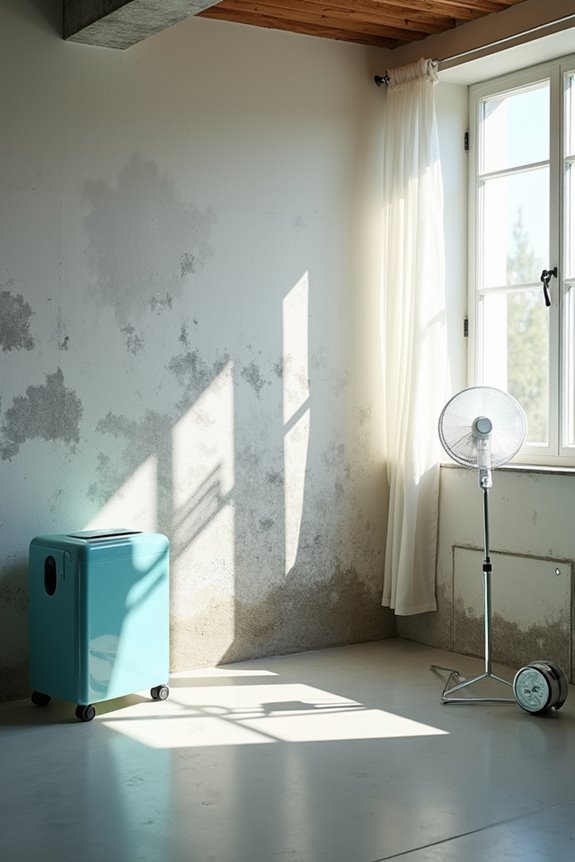
Why does ventilation matter so much when you’re tackling basement mold? Because moving air is your secret weapon against moisture and spores!
I’ll open windows wide and position fans strategically to create continuous airflow throughout my basement. This keeps moisture from settling on walls where mold thrives. I’m careful to move furniture and storage bins several inches away from walls—this allows warm air to reach cool surfaces and prevents moisture buildup in hidden corners.
Here’s my game plan: I’ll connect basement air to my HVAC return when possible for year-round circulation. But I’m smart about timing—I only ventilate when outdoor conditions are drier than indoors, preventing humid air from sneaking inside.
This preparation means faster drying and fewer spores floating around while I work. Success starts with proper airflow!
Step 6: Choose the Right Cleaner to Remove Mold
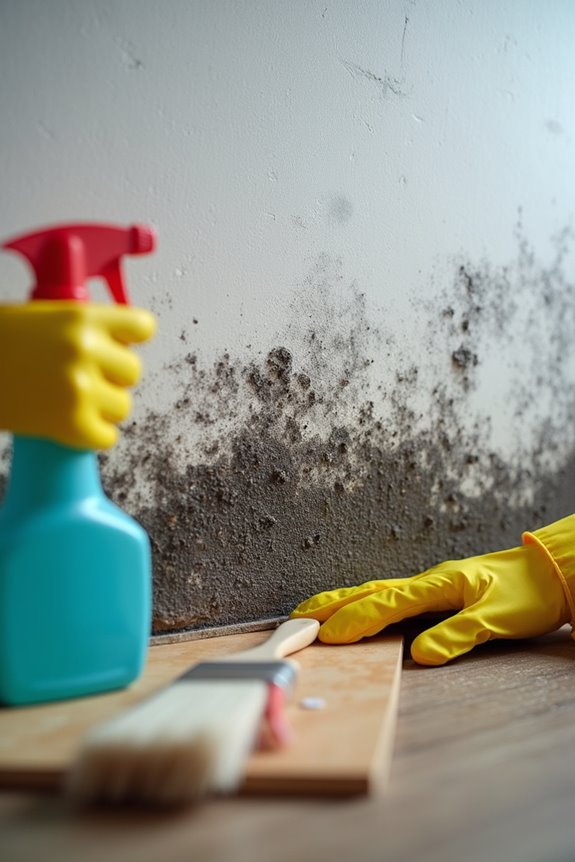
I’m excited to share that your cleaner choice makes all the difference—hard surfaces like concrete or brick deserve bleach solutions, while painted walls and porous materials need gentler alternatives. If you go the bleach route, I’ll mix one part bleach with ten parts water, and here’s the critical part: I never combine it with ammonia since that creates toxic chlorine gas. For painted basement walls, I reach for mild mold removers instead, which protect my surfaces while still tackling that stubborn mold growth effectively.
Bleach For Hard Surfaces
When it comes to tackling mold on non-porous surfaces like concrete, tile, or metal basement walls, bleach is genuinely one of your best weapons. I’ve found this cleaning solution works instantly, eliminating mold right before your eyes. Here’s what makes bleach so effective for your mold removal efforts:
- Mix one part bleach with ten parts water for a powerful yet safe solution
- Scrub affected areas with a brush or sponge, then rinse thoroughly with water
- Always wear gloves and a mask to protect yourself from fumes
The magic happens because non-porous surfaces don’t absorb bleach, letting it destroy mold colonies completely. After cleaning, dry everything thoroughly—this prevents regrowth and keeps your basement walls looking fresh. Just remember: never mix bleach with ammonia, as that creates toxic gas.
Natural Alternatives And Options
Although bleach absolutely dominates when it comes to hard surfaces, you’ve got some fantastic natural options that work wonderfully on your basement walls too. I’m genuinely thrilled about vinegar as a mold cleaning alternative—spray equal parts water and 6% acetic acid, wait an hour, then scrub and rinse. Hydrogen peroxide at 3% works beautifully on painted surfaces and sealed grout; spray it, wait thirty minutes, and scrub away. Here’s the thing about bleach limitations: it struggles on porous surfaces like concrete or brick. That’s where borax solutions shine—mix one cup borax per gallon water, and skip rinsing entirely. Just vacuum first with a HEPA vacuum to minimize airborne spores. These natural mold cleaning alternatives give you flexibility and peace of mind.
Step 7: Scrub and Remove Mold From Basement Walls
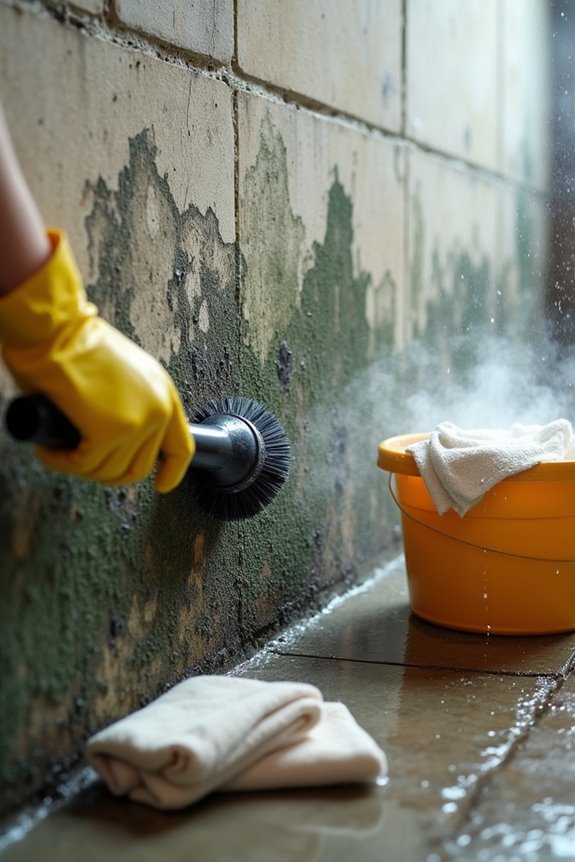
Now that you’ve got your protective gear on and your space properly ventilated, it’s time to tackle the mold head-on with some serious scrubbing power.
Here’s your mold removal game plan for basement walls:
- Mix your cleaning solution using detergent and water, or try hydrogen peroxide and borax for stubborn spots
- Scrub aggressively with a stiff brush until all visible mold disappears from porous surfaces
- Rinse thoroughly and dry completely to prevent regrowth
For non-porous surfaces, your detergent solution works magic. Scrub every inch until that mold’s completely gone—don’t leave any behind. The key? Complete drying afterward. If mold persists deep in porous materials or behind drywall, consider removing those sections entirely rather than fighting an endless battle. You’ve got this!
Step 8: Throw Out Heavily Molded Porous Materials
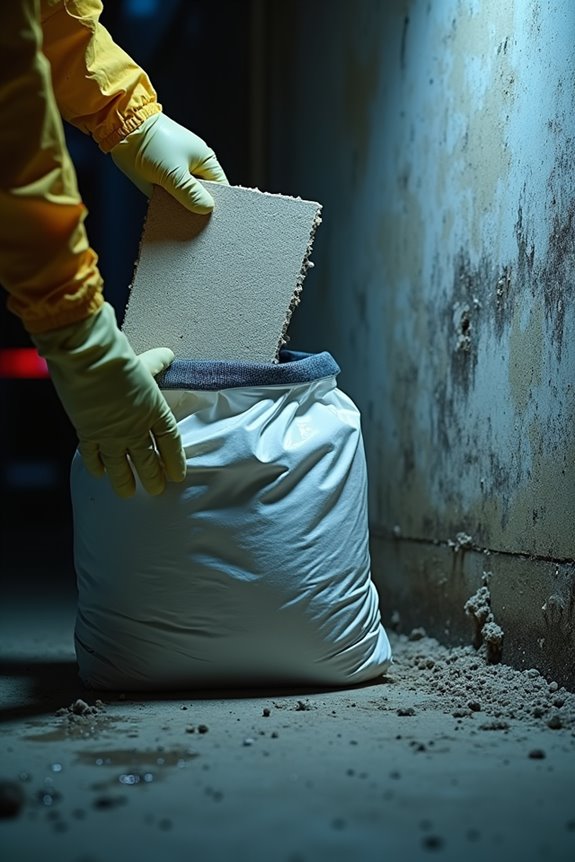
Why do some moldy materials refuse to cooperate? Because mold loves hiding inside porous materials like drywall, ceiling tiles, and carpet padding. I’ve learned that once these materials are heavily infected, salvageable isn’t realistic. The mold penetrates deep into their pores and crevices, making complete removal nearly impossible.
Here’s what I do: I bag severely moldy porous items securely to minimize spore spread during disposal. This containment step matters tremendously—you’re protecting your home and yourself. Rather than waste energy attempting rescue, I discard these materials. It’s genuinely liberating to accept that replacement beats risky cleaning attempts.
Your basement deserves fresh, clean materials anyway. Disposing of heavily molded porous items isn’t failure; it’s smart strategy. You’re building a healthier space for yourself and your family.
Step 9: Dry Everything Thoroughly
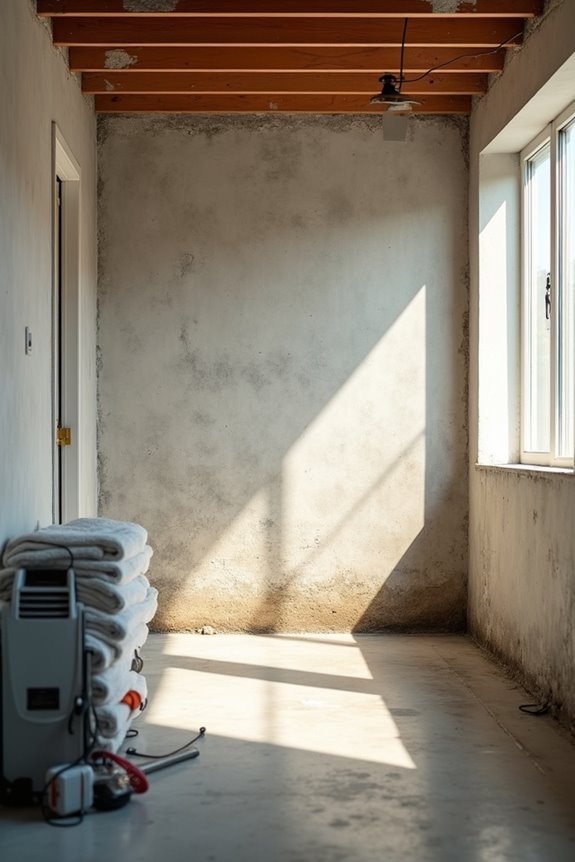
Now that you’ve removed the heavily molded materials, you’ll want to dry everything thoroughly—and I mean *everything*—because moisture is mold’s best friend, and we’re not letting it come back for a sequel. I’ll use fans, dehumidifiers, or open windows to get air moving across all your walls, floors, and any remaining contents, targeting humidity levels below 60% (ideally 30–50%) with a hygrometer to track your progress like a homeowner on a mission. Once everything’s bone-dry and you’ve rechecked for any damp spots or musty odors lingering in corners or behind walls, you’ll be ready to seal things up and finish strong.
Prevent Mold Recurrence
Here’s what makes the difference between temporary cleanup and lasting success:
- Use a dehumidifier to keep basement humidity between 30% and 50%—I monitor mine with a hygrometer to catch moisture creeping back in
- Remove standing water within 24 hours using fans or a wet/dry vacuum, then accelerate drying aggressively
- Discard severely moldy porous materials like damp drywall, carpet padding, or insulation that harbor hidden moisture pockets
The real secret? Reassess your moisture sources—leaks, drainage, ventilation—and verify repaired areas stay dry. This prevents mold recurrence by addressing root causes, not just symptoms. You’ve got this, and your basement will thank you.
Surface Drying Techniques
Once you’ve scrubbed away the mold, the real work begins—because moisture is mold’s best friend, and you’re about to evict it permanently. I turn on fans immediately and deploy dehumidifiers to pull water from the air. Natural ventilation through open windows works too, especially on dry days.
For porous materials like drywall or insulation, I remove anything that’s absorbed too much moisture. Non-porous surfaces? I dry those thoroughly with towels and equipment running continuously.
Here’s my secret: I check behind baseboards and insulation with a moisture meter. Hidden dampness kills your progress. I keep ventilation running until relative humidity drops below 60%—that’s your safety zone. This vigilance transforms my basement from mold magnet into a genuinely dry, healthy space I’m proud of.
Equipment and Tools
The right drying equipment transforms your basement from a wet, mold-friendly environment into a genuinely dry space—and I won’t skip this step because it’s absolutely critical. You’ll need specific mold remediation tools to finish strong.
Here’s what I grab for the job:
- Dehumidifiers (aim for moisture below 60% RH, ideally 30–50%)
- Fans to circulate air and accelerate evaporation
- Moisture meter to verify dryness in multiple locations before closing walls
I also use portable heaters and protective gear throughout. The moisture meter becomes your best friend—it shows you exactly where dampness lingers behind walls or in hidden pockets. Ventilate constantly while drying. This equipment investment pays dividends by preventing mold regrowth and ensuring coatings stick properly. Don’t rush this phase; thorough drying separates successful remediation from costly future problems.
Step 10: Monitor Humidity and Watch for Regrowth
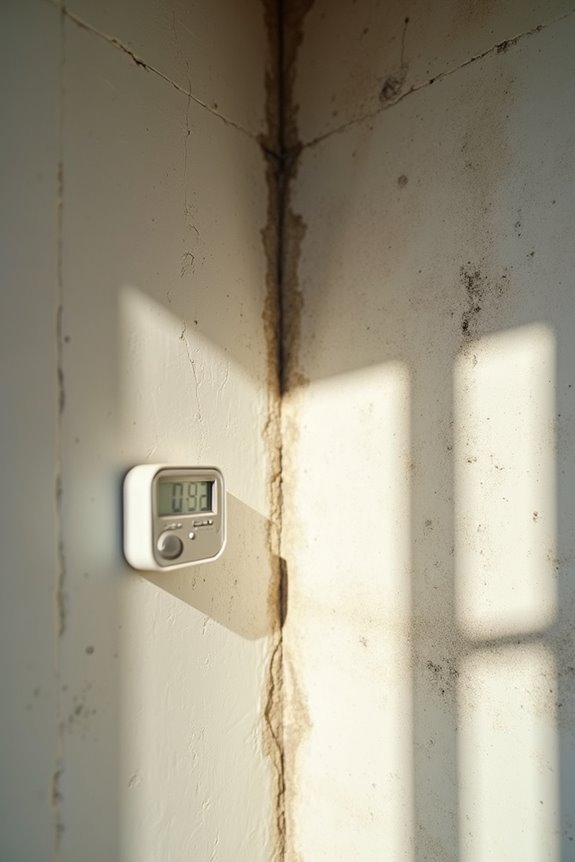
Why does mold keep coming back after you’ve worked so hard to remove it? The answer lies in moisture control. I’ve learned that humidity monitoring is your secret weapon against mold growth. I place a hygrometer in my basement to track moisture levels continuously, keeping humidity between 30–50%. My dehumidifier runs constantly, draining directly into a floor drain—no manual emptying required.
Here’s what I watch for: regrowth indicators like musty odors, wall moisture, or visible mold patches reappearing within weeks. These signs mean I haven’t addressed the moisture sources completely. After remediation, I reassess ventilation and humidity to ensure conditions won’t support regrowth. This vigilant approach gives me genuine peace of mind. I’m protecting my home and my family’s health.