
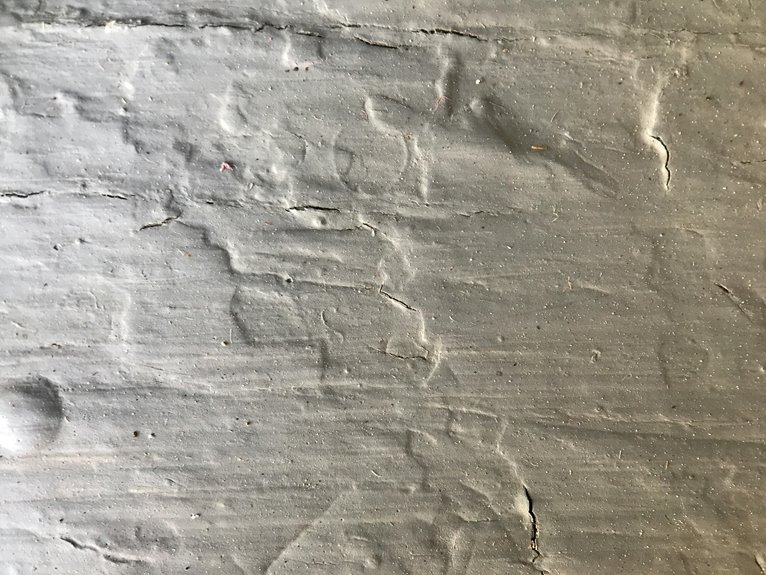
Basement cracks usually stem from five main culprits: loose soil beneath your slab, plumbing leaks, poor drainage around your foundation, seasonal soil shifting, and concrete shrinkage during curing. Hairline cracks under 1/8 inch? Totally normal—they’re just your foundation settling. But wider cracks, especially with doors misaligning or floors tilting, signal serious problems needing professional eyes. The real game-changer is tackling drainage first; hydrostatic pressure from saturated soil drives water through cracks, making them worse. Understanding your specific crack type reveals whether you’re dealing with cosmetic damage or something urgent.
The Five Main Causes of Basement Floor Cracks
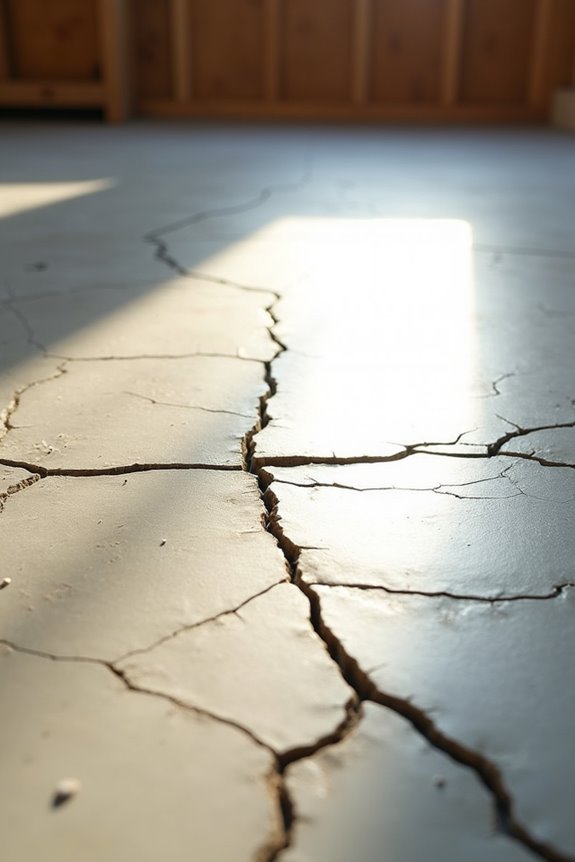
Why do basement floors crack? I’ve discovered five main culprits causing these frustrating issues. First, loosely laid soil beneath your slab creates weak spots. When builders skip proper soil compaction, foundation movement happens faster than expected. Second, plumbing leaks introduce moisture erosion that undermines everything underneath. Third, improper drainage—think clogged gutters or downspouts—creates hydrostatic pressure pushing against your foundation. Fourth, seasonal soil shifting and uneven settling wreak havoc over time. Finally, concrete pour defects matter too. Overly wet mixes during installation cause slab shrinkage and cosmetic cracks mimicking serious damage. Understanding these causes helps you identify what’s happening beneath your feet. I’ve learned that most basement floor cracks stem from these preventable factors, making early detection incredibly valuable.
Is Your Basement Crack Normal Settlement?
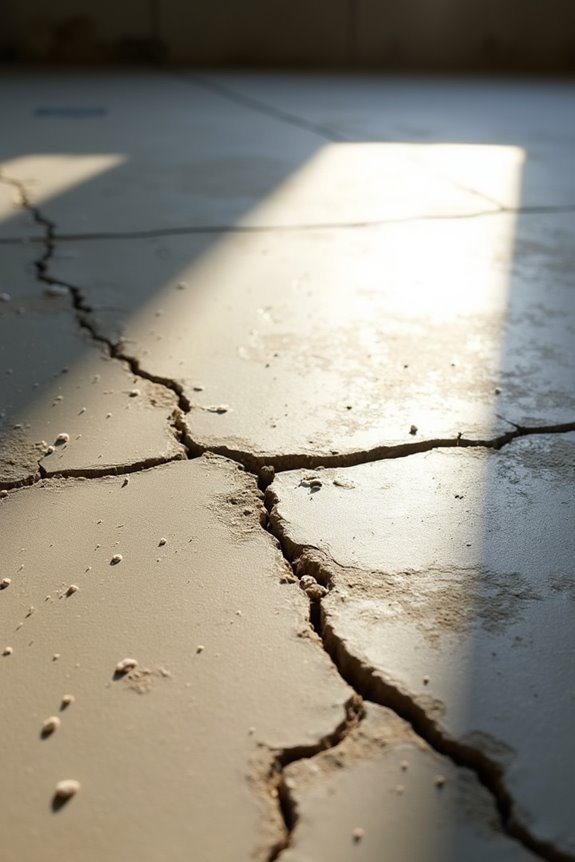
I’m genuinely thrilled to tell you that most basement cracks you’ll spot are actually totally normal—they’re just your house doing what houses do as the soil underneath settles and compacts over months or even years. Here’s the thing: if you’re seeing hairline cracks (think about 1/8 inch wide or thinner) and maybe some minor gaps between your floor and walls, you can breathe easy because that’s classic settlement behavior. But I also want you to know when to get concerned—if those cracks start widening noticeably, doors begin sticking or windows won’t close right, or you notice your floors tilting, that’s when we need to talk about whether your foundation needs professional attention.
Normal Settlement Indicators
How can you tell if your basement crack is just your house settling naturally? I’ve learned that normal settlement indicators are reassuring signs your foundation’s doing fine. Look for hairline cracks—those super thin lines under 1/8 inch wide. They’re non-structural and totally expected as your house settles into the soil.
| Settling Indicators | What They Mean |
|---|---|
| Hairline cracks under 1/8 inch | Normal foundation settlement |
| Stable crack patterns | House has settled, not shifting |
| Minor uneven floors | Typical as soil compacts |
| No door misalignment | Foundation integrity intact |
I monitor my basement floor cracks regularly, checking if they’re widening or staying put. Stable cracks over several months mean you’re experiencing normal settlement, not problematic shifts. This monitoring process gives me confidence my foundation’s healthy and my home’s secure.
When Settlement Becomes Serious
Sometimes that stable hairline crack you’ve been monitoring suddenly starts expanding—and that’s when you know something’s shifted. When settlement cracks widen noticeably or gaps appear between your floor and walls, your foundation support may be compromised. You might notice doors hanging crooked or your uneven floor sloping toward one corner. These signs tell me the soil underneath foundation is moving unpredictably, not settling normally.
I recommend documenting widening cracks with photos and measurements. Track whether they’re growing monthly—that’s your signal to call a professional assessment. Structural settlement gets serious when multiple warning signs appear together. Don’t ignore persistent changes. Your basement floor cracks deserve attention before they threaten your home’s stability. Monitoring cracks consistently helps you catch problems early, protecting what you’ve built.
How Hydrostatic Pressure and Drainage Create Cracks
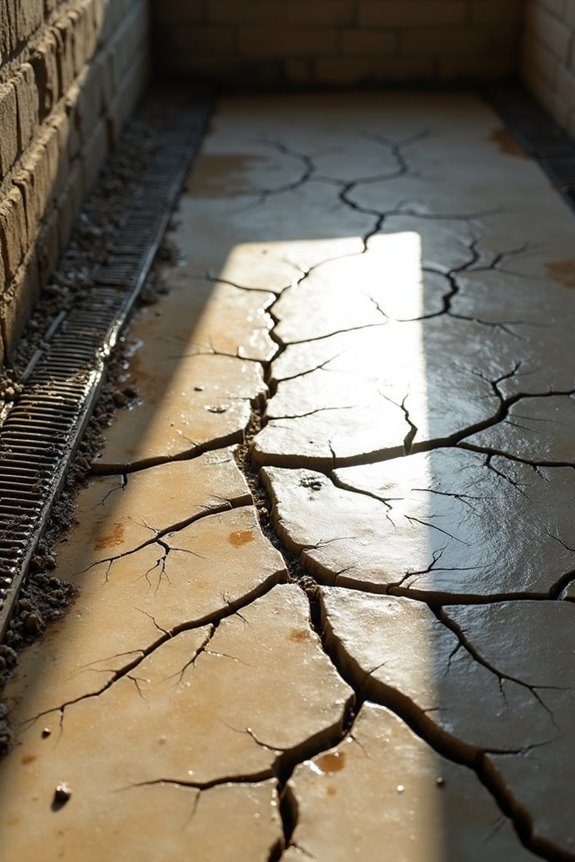
Why do basement cracks seem to appear overnight, even in homes that’ve stood for decades? The answer lies beneath your feet: hydrostatic pressure. When soil around your foundation becomes saturated from poor drainage grading or clogged gutters, water builds up relentlessly against your walls and floors. This groundwater pressure forces moisture through joints and existing weak spots, creating or widening cracks over time.
Here’s what I’ve learned: sealing cracks alone won’t cut it. You’re treating the symptom, not the disease. Instead, tackle the root cause through proper drainage solutions. Clean gutters, direct downspouts away from your home, and grade soil away from the foundation. For serious situations, interior perimeter drainage paired with a sump pump system manages groundwater effectively, reducing that crushing hydrostatic pressure and preventing future water intrusion.
Why Hairline Cracks Appear During Curing
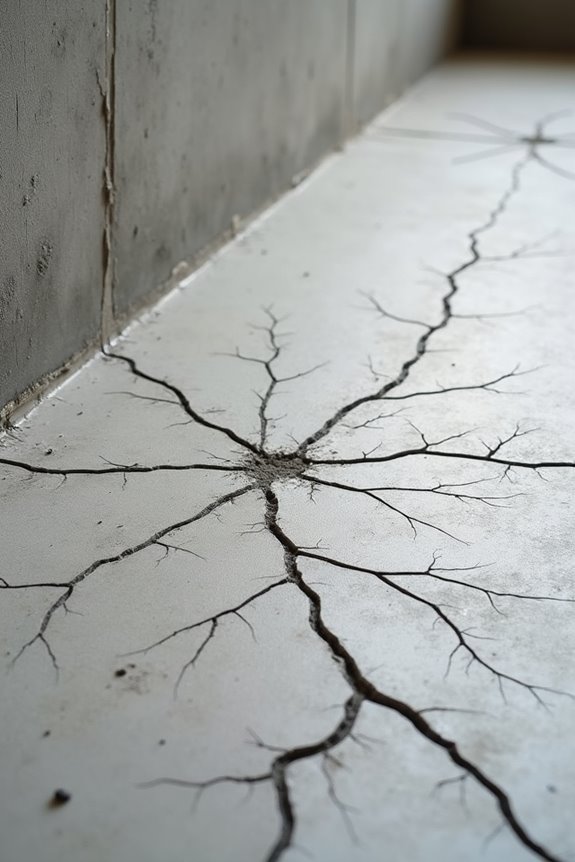
Not all basement cracks stem from water pressure and drainage problems—some are actually baked right into your concrete from day one. During the curing process, your concrete naturally loses moisture through evaporation, causing it to shrink slightly. I’ve found that this curing shrinkage creates those frustrating hairline cracks you spot on your basement floor.
Temperature fluctuation makes things worse. When conditions shift during concrete drying, the material shrinks unevenly, amplifying crack formation. You’ll typically notice shrinkage cracks appearing near doors or sharp corners where stress concentrates.
Here’s the encouraging part: these surface cracks are usually superficial and don’t signal structural danger. They’re genuinely normal during the curing process. While sealing hairline cracks can prevent moisture ingress, it’s not always necessary if they remain stable. Understanding this helps you relax—you’re dealing with typical concrete behavior, not a foundation emergency.
What Your Basement Floor Crack Type Means
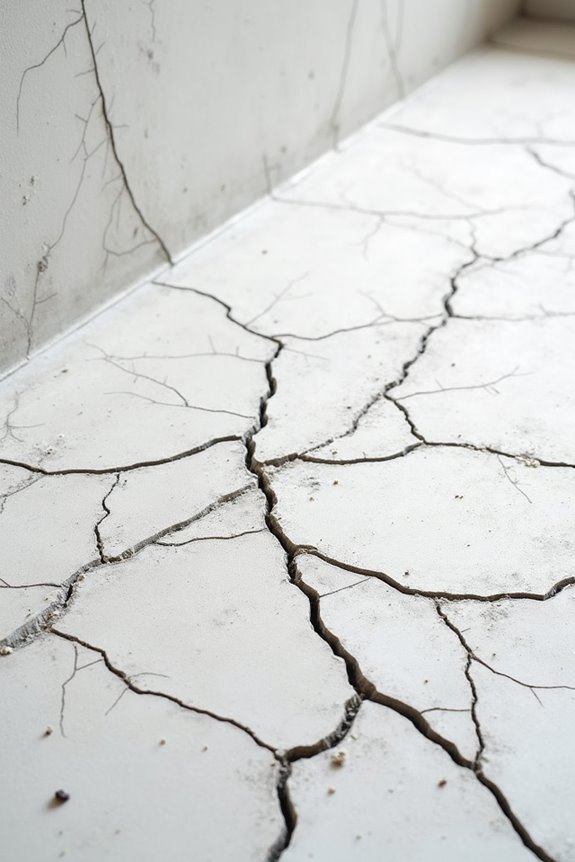
Now that you understand why those hairline cracks form during curing, let’s figure out what different crack types actually tell you about your basement’s health. I’ve found that hairline cracks—those super thin lines barely wider than a pen stroke—are usually just your concrete shrinking as it dries, which is totally normal and honestly nothing to lose sleep over. But here’s the thing: not all cracks are created equal, and spotting the difference between a harmless shrinkage crack and something signaling real structural trouble can save you major headaches down the road.
Hairline Cracks: Shrinkage Signs
When concrete dries and cures after your basement floor is poured, it naturally shrinks—and that’s where hairline cracks come from. You’re looking at superficial lines, typically under 1/8 inch wide, that appear around doors or sharp corners. They’re totally normal, and honestly, most basement owners experience them.
Here’s the thing: these shrinkage cracks don’t indicate structural problems. However, they can allow moisture ingress and radon entry if you leave them unsealed. Seasonal temperature changes and rapid drying intensify cracking, especially in heat.
The good news? Sealing these hairline cracks is straightforward basement waterproofing that prevents moisture control issues without major repairs. I recommend addressing them early—it’s genuinely the easiest way to protect your space and avoid bigger headaches down the road.
Structural vs. Non-Structural Indicators
So here’s what really matters: knowing whether that crack running across your basement floor is just cosmetic or if it’s actually warning you about something serious. Non-structural indicators—those hairline cracks under 1/8 inch wide—are totally normal and won’t compromise your home’s safety. But structural indicators demand your attention: cracks wider than 1/8 inch, especially ones causing floor movement, misaligned doors, or uneven floors, signal genuine concerns. Watch for cracks starting at the wall-floor joint, which suggest hydrostatic pressure rather than simple settlement. Frost heave and expansive soil create seasonal patterns worth monitoring too. When you spot significant cracking with visible tripping hazards or heaving, that’s your cue to call a professional for a thorough safety assessment.
Do You Need a Professional, or Monitor on Your Own?
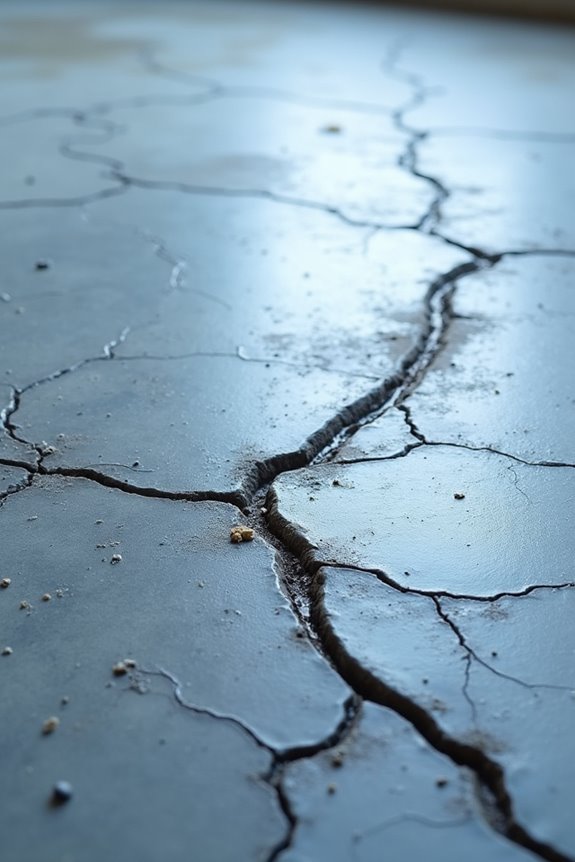
How can you tell if that crack in your basement floor is just a harmless quirk or a red flag that demands expert attention?
I’ve learned that monitoring basement floor cracks yourself works great for hairline cracks under 1/8 inch—they’re typically cosmetic from concrete shrinkage or settlement. But here’s where I draw the line: cracks wider than 1/8 inch, wall-floor separation, or recurring leaks? That’s when I call professionals.
| Crack Type | Action | Timeline |
|---|---|---|
| Hairline (<1/8") | Monitor quarterly | Ongoing |
| Wide (>1/8″) | Professional assessment | Within weeks |
| With heaving | Foundation repair | Immediate |
| Recurring leaks | Drainage improvements | Priority |
| Visible movement | Expert evaluation | Urgent |
I’ve found hydrostatic pressure from poor drainage often worsens cracks, so I address drainage first. Trust your gut—when something feels off, professional evaluation beats guessing.
How to Stop Basement Floor Cracks With Drainage
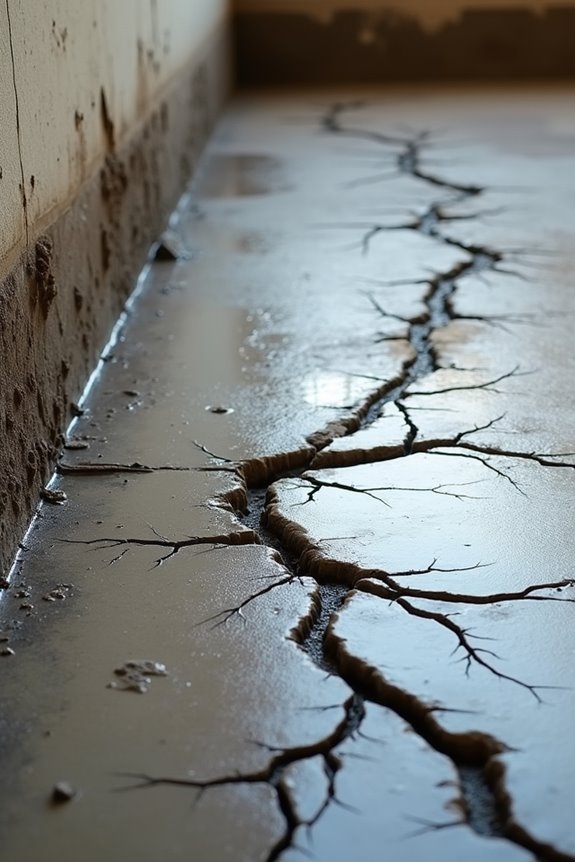
Now that you know when to call in the experts, here’s the game-changer: most basement cracks wouldn’t exist in the first place if water wasn’t pushing against your foundation with all that hydrostatic pressure. I’ve learned that addressing drainage is where the real prevention happens. Start outside by extending your downspouts at least 4-6 feet from your house and cleaning gutters regularly—this stops water from pooling near your foundation. Proper grading slopes soil away from your home too. Inside, consider interior perimeter drainage paired with a sump pump system to manage moisture buildup and relieve that crushing hydrostatic pressure. These drainage solutions tackle root causes, making crack prevention actually stick. You’re not just patching problems; you’re stopping them before they start.
Repair Options: Sealing, Leveling, and Waterproofing
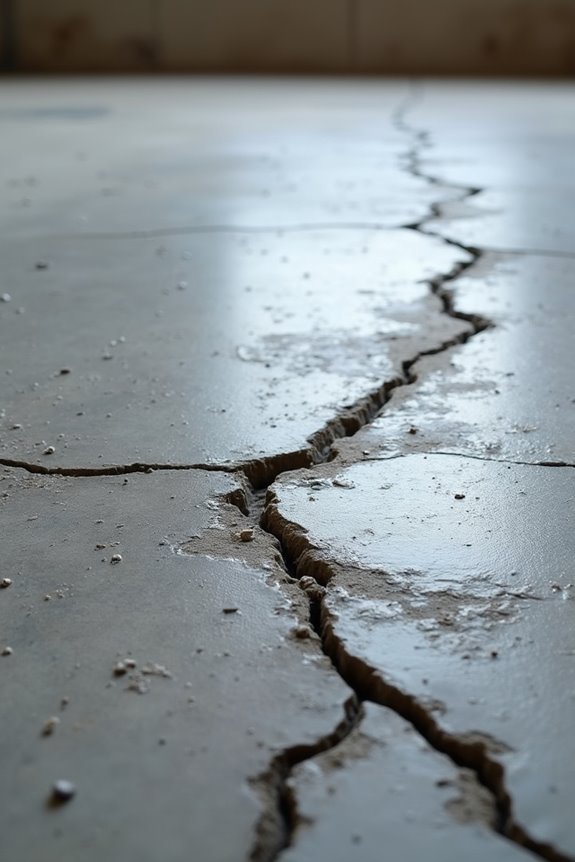
Once you’ve got your drainage strategy locked in, it’s time to talk about the actual crack fixes—and here’s what I’ve discovered: sealing alone rarely cuts it. Sure, crack sealing works for hairline cracks under 1/8 inch, but wider shrinkage cracks demand more aggressive solutions. Here’s the thing: if you’re seeing uneven floors or gaps at wall-floor joints, waterproofing plus interior drainage and a sump pump becomes your real MVP. That hydrostatic pressure won’t quit without proper support. For serious structural movement, floor leveling and concrete leveling require professional assessment first—don’t skip this step. Think of it this way: crack sealing is your first line of defense, but waterproofing combined with interior drainage creates the complete protection your basement actually needs against persistent moisture intrusion.