
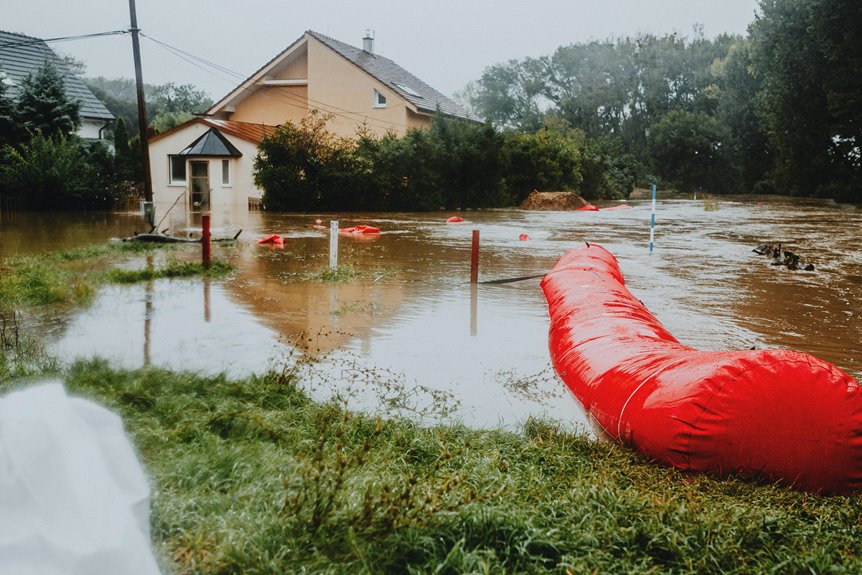
Basements flood during heavy rain because saturated soil creates hydrostatic pressure—that’s inward force pushing groundwater against your foundation walls. When gutters clog or downspouts don’t extend at least 10 feet away, rainwater pools around your foundation. Hairline cracks become water highways under this pressure. If your sump pump fails or weeping tile clogs, groundwater builds up unchecked. Poor yard grading toward your house channels even more water downward. It’s really a cascade of drainage failures working together. Understanding each cause reveals how to stop it.
Why Basements Flood: The Role of Saturated Soil and Hydrostatic Pressure
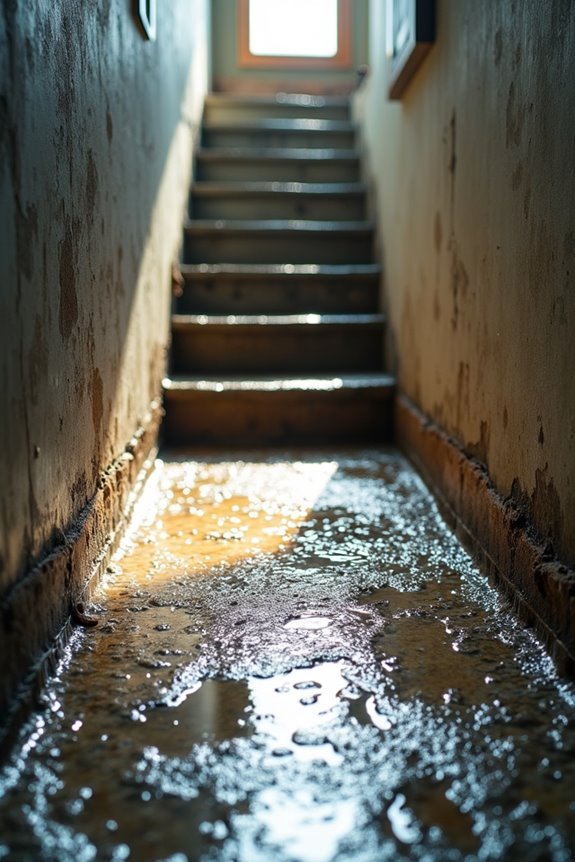
Have you ever wondered why your basement seems to spring a leak right when the storm hits hardest? I’ll tell you—it’s all about hydrostatic pressure and saturated soil working against your foundation.
When heavy rain falls, it saturates the soil surrounding your exterior foundation walls. This soaked earth creates enormous pressure pushing inward on your basement. Meanwhile, groundwater rises, and if that water level exceeds your interior floor level, it forces itself through even tiny cracks and gaps.
Here’s where drainage systems matter: poor drainage grading, clogged gutters, and failing perimeter drainage allow water pooling near your foundation, intensifying these flooding risks. Without a functioning sump pump to redirect groundwater, your basement becomes vulnerable. Proper grading, clean gutters, and reliable drainage systems protect you from this invisible force.
Surface Water Drainage Failures: Gutters, Downspouts, and Grading
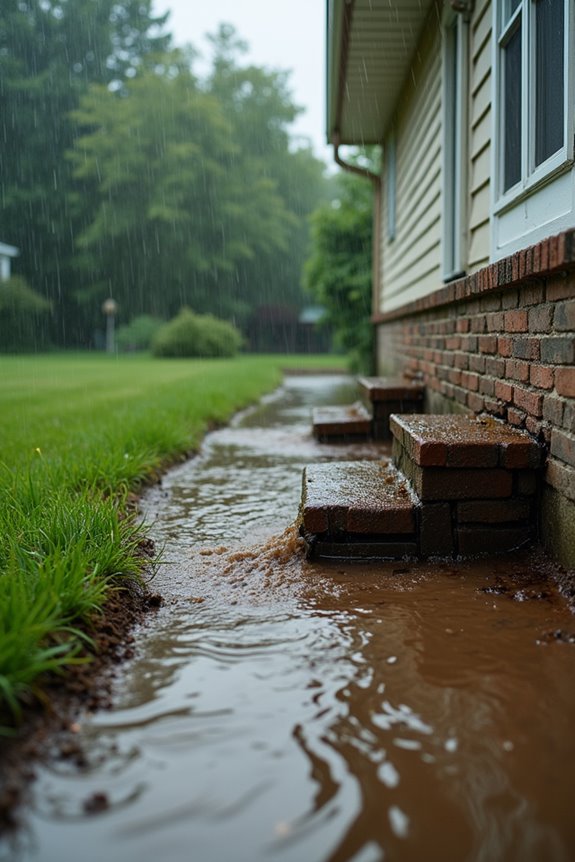
I’ve found that the real culprit behind most basement floods isn’t always what happens underground—it’s what happens right above your foundation when gutters clog or downspouts dump water too close to your home. Your gutters and downspouts are basically your first line of defense, and I can’t stress enough how critical it is to extend those downspouts at least 10 feet away from your foundation so water actually travels away from your basement instead of pooling against your walls. Beyond that, the slope of your yard—what builders call “grading”—matters just as much, because if your landscape and pavement slope toward your house instead of away from it, you’re essentially creating a highway that channels every raindrop straight to your foundation’s most vulnerable spots.
Gutter And Downspout Maintenance
Why do so many homeowners overlook the gutters perched along their rooflines? I’ll tell you—they’re out of sight, out of mind. But here’s the truth: your gutters and downspouts are your foundation’s best defense against water damage.
| Maintenance Task | Frequency | Why It Matters |
|---|---|---|
| Clear debris | Every season | Prevents clogs that stop drainage |
| Inspect for damage | Twice yearly | Catches leaks before water pools |
| Extend downspouts | Once installed | Directs water 10+ feet away |
I learned this the hard way. Overflowing gutters spill water directly onto ground next to your foundation, inviting basement flooding. Clear debris regularly, ensure downspouts discharge runoff far away, and keep them clog-free. This simple waterproofing maintenance protects your entire home from surface water seeping into basements. Your foundation deserves this attention.
Grading And Landscape Slope
Now that you’ve got your gutters and downspouts working like champions, it’s time to look at the ground itself—because even perfect gutters can’t save you if your yard’s sloping the wrong direction.
Your landscape slope and soil grading directly control where water flows during heavy rain. If your yard slopes toward your home instead of away, you’re basically inviting runoff straight to your foundation. Here’s what matters:
- Fill low spots near foundation walls with clay-type soil
- Ensure minimum eight-inch clearance between grass and wood/stucco
- Grade soil away from your home on all sides
- Check for depressions that trap surface water
- Consult engineers for steep hills requiring drainage analysis
Proper grading isn’t glamorous, but it’s your secret weapon for foundation waterproofing and drainage away from foundation problems.
Foundation Cracks and Water Seepage: The Final Entry Point
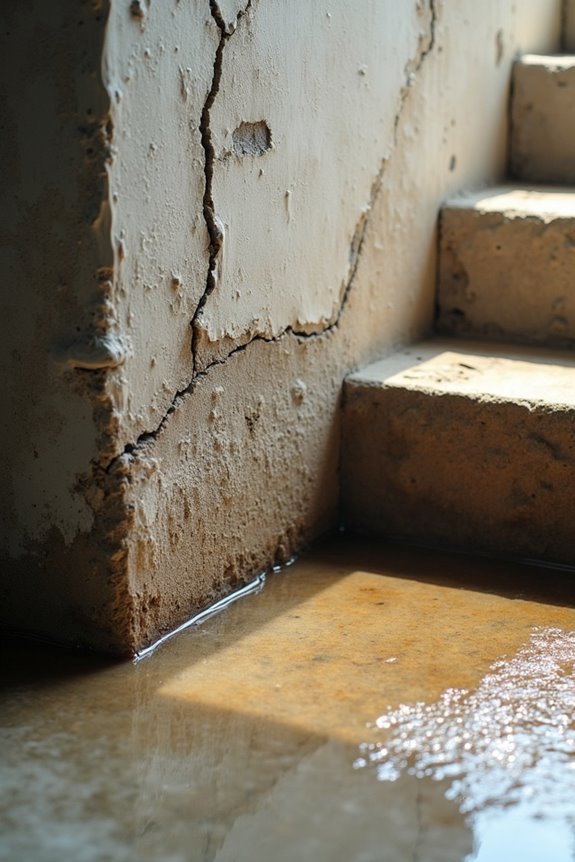
Even the tiniest hairline crack—we’re talking barely visible—can transform into a major water highway once hydrostatic pressure (that’s the force of groundwater pushing against your foundation) kicks in during heavy rainfall. I’ve discovered that these cracks don’t just stay small; freeze-thaw cycles and repeated water stress actually widen them over time, turning a minor seepage issue into a serious flooding problem that demands immediate attention. Let me walk you through how these cracks develop, why water pressure exploits them so effectively, and what repair solutions actually work to keep your basement dry.
How Cracks Develop
Once water builds up pressure in the soil around your home—what we call hydrostatic pressure—it’s got to go somewhere, and unfortunately, those tiny cracks in your foundation become its highway straight into your basement.
Here’s how cracks actually develop:
- Soil settlement shifts your foundation unevenly over time
- Ground thaw and snowmelt expand soil against foundation walls
- Poor grading directs water toward instead of away from your home
- Clogged gutters and downspouts concentrate water near your foundation
- Sump pump failure allows groundwater pressure to build unchecked
When soil expands after thaw, it pushes against your foundation with serious force. Settlement cracks widen gradually. Inadequate perimeter drainage means water sits against your foundation longer, seeping through every tiny opening. That’s why basement flooding during heavy rain isn’t random—it’s predictable physics working against your home’s weakest points.
Water Pressure And Seepage
Why does water keep finding its way through those tiny cracks you’ve been trying to patch? Hydrostatic pressure—that’s the force from accumulating groundwater around your foundation—pushes water through every opening it finds. When heavy rain falls and your perimeter drainage fails or gets clogged, pressure builds around your basement walls and floor. Water seepage happens fastest at foundation cracks, especially when your exterior drainage slopes toward your house instead of away from it.
| Problem | Solution |
|---|---|
| Clogged perimeter drain | Clear debris regularly |
| Poor drainage slope | Regrade away from foundation |
| Foundation cracks | Seal with hydraulic cement |
| Missing sump pump | Install reliable pump system |
| Groundwater buildup | Improve exterior drainage |
A functioning sump pump and properly directed exterior drainage relieve that pressure, stopping water entry before it starts. You’ve got this!
Sealing And Repair Solutions
How much water sneaks through those hairline cracks in your basement foundation? I’ve learned that even tiny fractures become highways for seepage during heavy rain. Here’s what I’ve discovered about stopping water where it starts:
- Thick waterproof coatings and silicate-based sealants dramatically reduce water intrusion through cracks
- Interior waterproofing combined with exterior waterproofing creates a protective shield
- Regular inspections around windows, doors, and foundation edges catch problems early
- Sealant replacement becomes necessary when coatings crack with age or poor installation
- Professional assessment is essential for structural cracks requiring foundation repair
I’ve found that combining sealing with drainage works best. Small cracks need routine maintenance, but larger structural issues demand expert help. You’re protecting your basement—and your home’s integrity—by taking action now.
When Sealants Fail: Waterproofing Breakdown
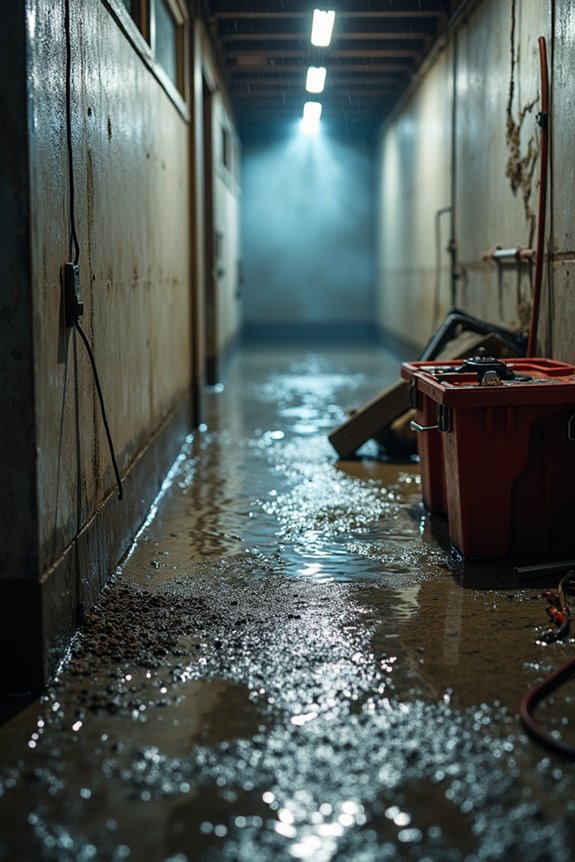
Think about what happens when the protective barrier around your basement cracks—water doesn’t hesitate to find its way inside. I’ve seen sealant failure transform a dry basement into a soggy nightmare during heavy downpours. Your foundation sealant ages, shrinks, and splits, creating tiny pathways for water intrusion right through basement cracks you didn’t even know existed.
When sealant deterioration occurs, your waterproofing breakdown accelerates quickly. Those thick-coating silicate-based products I recommend for basement flooding prevention? They’re your first line of defense against weatherproofing seals failing. Once compromised, crack repair becomes urgent—water won’t wait for next season.
I always stress that waterproofing maintenance prevents disaster. Inspect your foundation sealant regularly, catch deterioration early, and you’ll avoid catastrophic water damage. Trust me, replacing worn sealants beats dealing with basement flooding any day.
Sump Pump Failures and Missing Drainage Systems
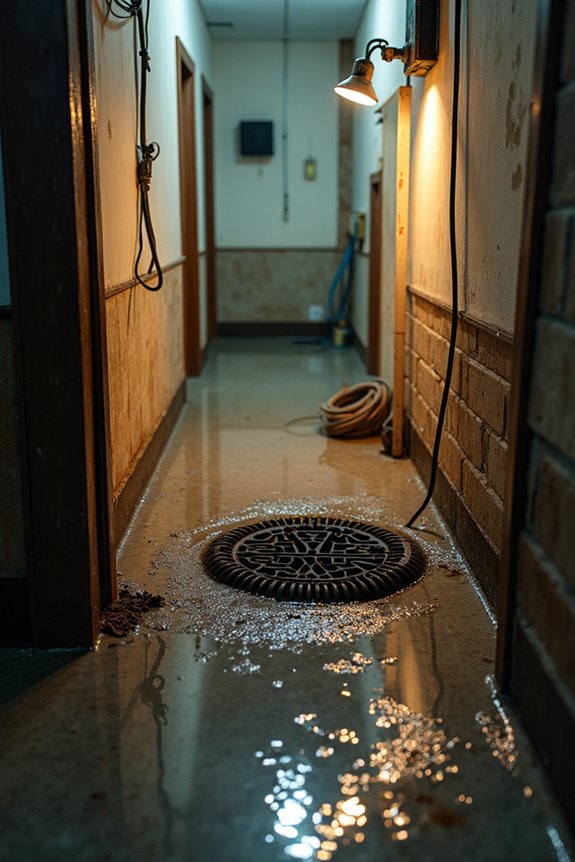
Even the sturdiest sealants can’t stop water that’s already pooled around your foundation—and that’s where your sump pump becomes your basement’s real hero. Your sump pump removes groundwater collected by perimeter drainage systems, relieving hydrostatic pressure that pushes water through cracks. But here’s the reality: power failures and pump malfunctions happen.
When they do, groundwater rises fast, and water floods your basement floor instead of being discharged away. Below-slab drainage and weeping tile failures make things worse by letting water accumulate unchecked. During heavy rainfall, overwhelmed municipal storm sewers cause backflow directly into basements lacking adequate drainage systems.
Why you need both layers of protection:
- Sump pump failures leave basements vulnerable
- Missing foundation drainage increases flood risk
- Weeping tile deterioration accelerates water buildup
- Backflow occurs without proper storm sewer capacity
- Hydrostatic pressure builds dangerously without relief systems
When Weeping Tile Collapses: Blocked Basement Drains
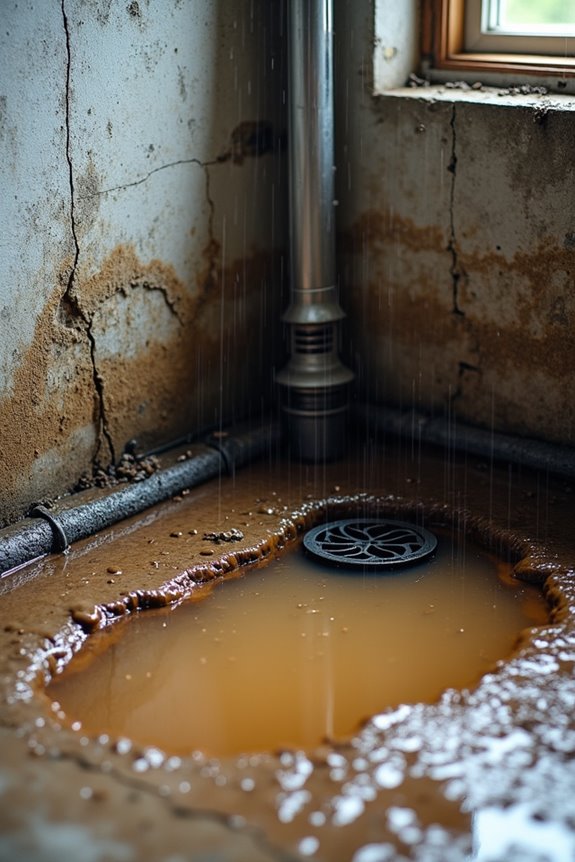
Why does water keep creeping into your basement even when you’ve sealed every visible crack? The culprit often lurks underground: your weeping tile system. This perimeter drainage pipe, installed around your foundation, prevents water buildup by channeling soil drainage away from your home. When it collapses or clogs with sediment, disaster strikes. Blocked drains mean hydrostatic pressure—that relentless underground water force—builds up against your foundation walls. During heavy rain, this mounting pressure finds its way through foundation cracks, your sump pump, or directly into your basement flooding your space. I’ve learned that regular weeping tile inspection isn’t optional; it’s essential flood prevention. Replacing aging underground plumbing before failure occurs protects your basement from water intrusion and keeps your home dry and safe.
Municipal Sewer Backups: When City Systems Overwhelm
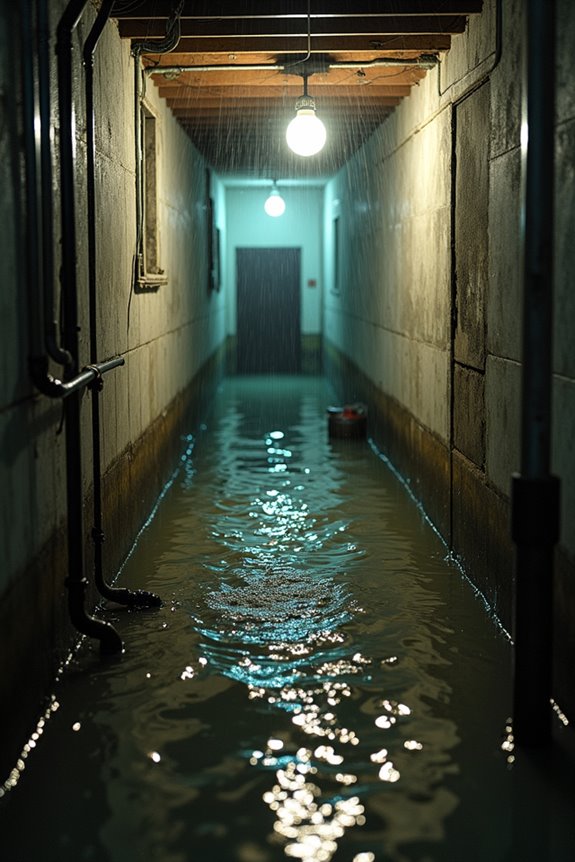
Your foundation’s drainage system isn’t the only pathway water can exploit—sometimes the problem originates from above ground, in the city’s own infrastructure. During heavy rainfall, municipal storm sewers get overwhelmed, and that’s when sewer backups happen right into your basement. Kingston homes with storm sewer laterals connecting to downspout drainage face real risk during floods.
Here’s what you’re up against:
- Municipal storm sewers overflow during intense rainfall events
- Storm sewer laterals backflow sewage into connected basements
- Clogged sanitary sewer lines worsen backup situations
- Extraneous inflow and infiltration from leaks amplify problems
- Backflow preventers effectively block reverse flow damage
A clogged sanitary sewer line compounds these overwhelmed city systems. Installing backflow preventers is your best defense against unwanted sewage returning through your drains. You’re protecting your home’s foundation when you understand these municipal vulnerabilities.
Prevent Basement Flooding: 8 Steps to Protect Your Home
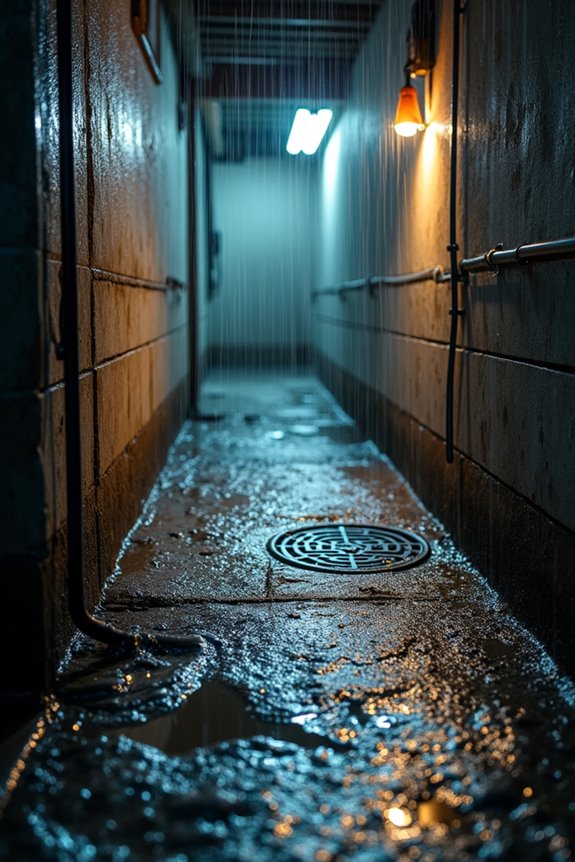
Because water’s relentless during heavy storms, protecting your basement means taking action before the next downpour hits. I’ve learned that a comprehensive approach beats hoping for the best. Start by installing a water seal or foundation sealant on cracks—this stops water intrusion at the source. Next, I’d invest in a functioning sump pump positioned in your sump pit; it’s your basement’s best friend during heavy rain. Clean your gutters and downspouts religiously, directing water at least 6 feet from your foundation. Ensure proper grading away from foundation walls so surface water naturally slopes elsewhere. Finally, consider a perimeter drainage system that channels water safely around your home. These eight steps create a protective barrier that keeps basement flooding from derailing your peace of mind.