
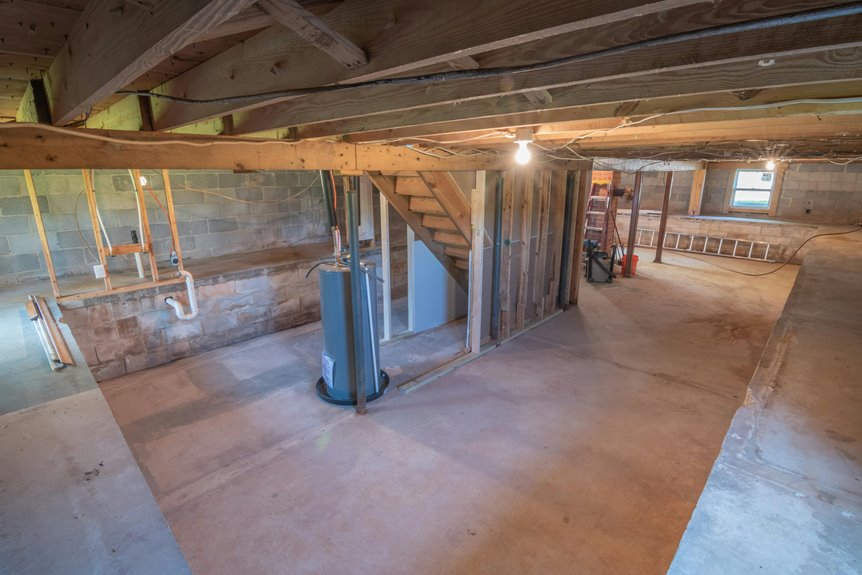
You can absolutely add a basement to an existing house—I won’t sugarcoat it though, it’s genuinely one of the toughest home projects out there. You’ll need a structural engineer to assess your foundation, soil bearing capacity, and crawl space joists before breaking ground. Local permits are non-negotiable, and you’re looking at several months of work plus $50,000–$100,000+ depending on finishes. The real challenges? Managing water pressure, preventing cracks, and keeping your foundation stable during excavation. Getting this right demands professional involvement, but it’s absolutely doable—and there’s plenty more to unpack about making it happen successfully.
Is Adding a Basement to an Existing House Feasible?
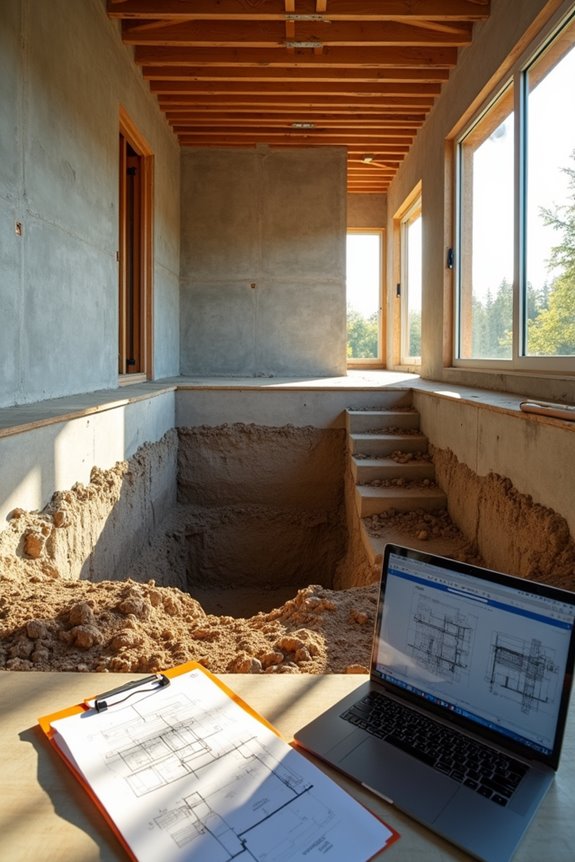
How’d you like to unleash thousands of square feet of hidden potential beneath your feet? I’ll tell you—it’s absolutely transformative. Adding a basement to your existing home is genuinely feasible, though it demands serious groundwork first.
Here’s the reality: basement feasibility depends heavily on structural analysis by a qualified structural engineer who’ll examine your home’s current foundation and crawl space floor joists. You’ll need excavation depth planning that accounts for your existing foundation footings, typically extending 3-4 feet below frost line in most climates.
The process involves reviewing local building codes and securing permits—non-negotiables for staying safe and legal. Depending on your lot and existing structure proximity, you might underpinning or build a stem wall instead.
It’s challenging but absolutely doable. You’re joining countless homeowners who’ve successfully reclaimed this space.
What You Must Assess First: Foundation, Soil, and Code Requirements
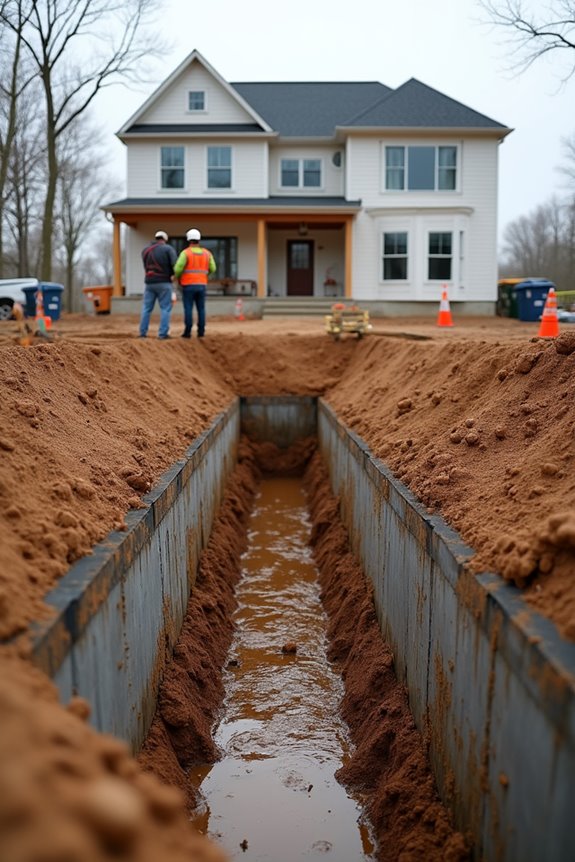
Before you break ground, you’ve got to know what you’re working with—and that means getting your foundation and soil checked out by a professional engineer who can tell you if your house can handle the weight of a basement below it. Your local building codes matter just as much, since they’ll spell out setback distances (how far from property lines), minimum ceiling heights, and drainage requirements that your basement has to meet. I’d honestly say these assessments are non-negotiable; they’re your roadmap for whether this project is actually doable or if you need a completely different approach.
Foundation Structural Integrity Assessment
What’s actually holding up your house right now, and will it survive the excavation process? I’ll tell you—your foundation’s job just got way more serious. You’ll need a structural engineer to examine your existing footings and evaluate the undisturbed soil beneath them. Here’s what you’re really assessing:
- Load-bearing capacity of soil at various depths below your current foundation
- Foundation depth and condition to determine if it’ll handle basement excavation stress
- Compression cone effects that make digging near existing walls risky and technically challenging
- Temporary support systems like needle beams or cribbing needed during construction
Your basement’s success depends entirely on this foundation assessment. Skip it, and you’re gambling with your home’s structural integrity. That’s not acceptable. Get those professionals involved immediately.
Local Building Code Compliance
Your municipality’s building codes aren’t suggestions—they’re the rulebook that’ll either green-light your basement or shut down your entire project. I can’t stress this enough: you’ll need permits before breaking ground.
Here’s what I always check first:
| Requirement | Why It Matters |
|---|---|
| Egress windows (minimum 5.7 sq ft) | Life safety during emergencies |
| Waterproofing specs | Prevents costly moisture damage |
| Ventilation standards | Ensures healthy air quality |
Your local building department will verify that your waterproofing plan meets code—typically requiring interior or exterior membranes depending on your water table. Call them early. Seriously. Getting permits upfront saves thousands in rework later. I’ve seen projects delayed months because someone skipped this step. You’ve got this!
Foundation Integrity, Drainage, and Soil Bearing: Key Structural Challenges
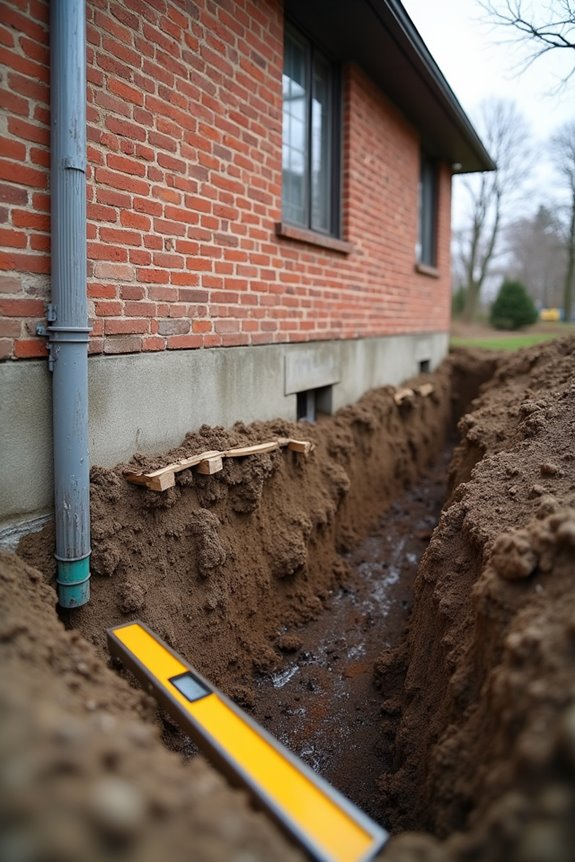
I’ve got to be honest—the moment you decide to add a basement, your existing foundation’s bearing capacity and the soil beneath it become absolutely critical to get right. You’ll need to understand how much weight your current footings (those concrete feet supporting your house) can handle, plus evaluate whether the soil around them can actually support a deeper excavation without shifting or settling unevenly. Here’s where it gets real: poor drainage or unstable soil means water intrusion, cracks, and structural movement that’ll cost you thousands to fix later, so a structural engineer’s assessment isn’t just recommended—it’s essential before you swing a shovel.
Foundation Bearing Capacity
How do you add a basement when your house is literally sitting on top of where you want to dig? That’s where understanding soil bearing capacity becomes your secret weapon. Your existing footings—those underground supports holding up your house—need rock-solid undisturbed soil beneath them. When you excavate nearby, you’re risking everything.
Here’s what I’d consider:
- Leaving a protective strip of undisturbed soil untouched beside existing footings
- Installing underpinning to strengthen and deepen your current foundation supports
- Replacing old footings with deeper bearings that reach better soil
- Cantilevering your new first floor over the excavation area
A structural engineer assesses your specific soil’s bearing capacity and determines if underpinning or reinforcement works for your situation. This isn’t guesswork—it’s precision engineering that protects your home’s foundation integrity.
Soil Drainage Assessment
Before you break ground on that basement excavation, understanding what’s actually beneath your feet becomes absolutely critical—and I can’t stress this enough. I’ve learned that soil drainage assessment directly impacts whether your new basement stays dry or becomes a moisture nightmare. You’ll want to evaluate groundwater levels, especially seasonal high water tables that can fluctuate dramatically. Testing soil composition reveals how quickly water percolates through your yard. This matters tremendously for footing integrity because saturated soil loses bearing strength. I recommend digging test holes to observe water movement patterns. Installing perforated drain tiles and a sump system addresses hydrostatic pressure—that relentless groundwater pushing against your walls. Getting this assessment right prevents costly repairs later and keeps your foundation solid for decades.
How to Add a Basement: The Complete Step-by-Step Conversion Process
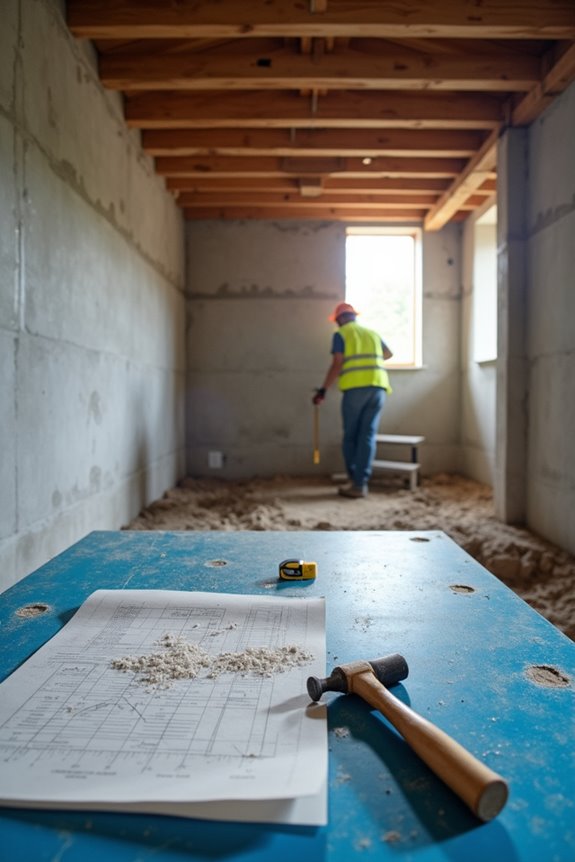
Adding a basement to your existing house is genuinely one of the most metamorphic projects you can undertake—and yes, it’s absolutely doable, though it demands serious planning and coordination.
I’ll walk you through each phase of your basement conversion:
- Planning & Design: Hire structural engineers and architects to ensure everything meets building codes and keeps your home safe
- Temporary Support: Install cribbing, shims, or needle beams to stabilize your house during excavation and construction
- Foundation Work: Replace or underpin existing footings, then pour a new foundation that’ll support your expanded space
- Waterproofing/Drainage: Apply sealants and install drainage systems to prevent moisture problems and protect your investment
This journey typically spans several months to a year. You’re joining countless homeowners who’ve transformed their living space. The result? Genuine, lasting home value and space you’ll treasure.
How Much Does a Basement Addition Cost?
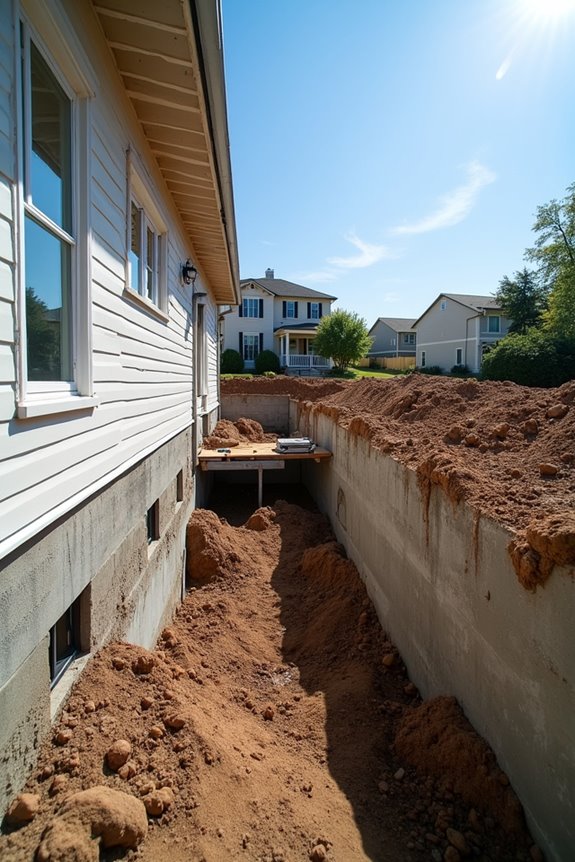
What’s the real price tag on transforming that crawl space or shallow basement into genuine living area? You’re looking at $55 to $80 per square foot, with most projects starting around $50,000. Finishing costs vary wildly depending on your choices—concrete floors run cheaper than tile or vinyl, and a recreation space costs less than finishing bedrooms.
Planning and permitting add upfront expenses before construction even begins, but they’re worth it for avoiding costly mistakes. Soil type, excavation complexity, and foundation work push costs higher. High-end finishes easily exceed $100,000. The basement cost depends on your vision and house size. You’re investing in usable square footage that genuinely increases your home’s value and comfort—that’s something to feel proud about.
Moisture, Cracks, and Code Violations: Preventing Common Basement Problems
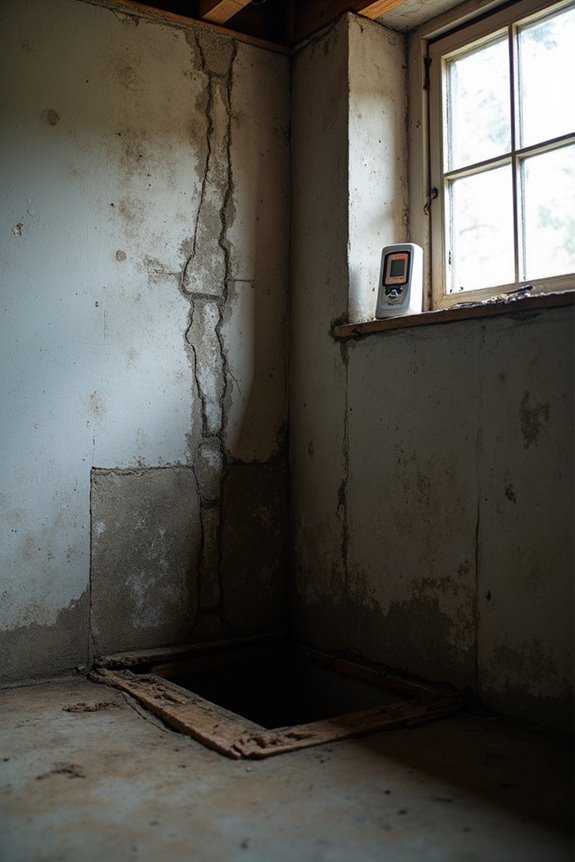
Now that you’ve figured out your budget and dreamed up what that new basement space will look like, it’s time to get real about the hidden challenges that’ll make or break your project. Three critical issues demand your attention:
- Moisture and drainage – Water seeping through walls causes mold and damage; install perimeter drains and waterproof membranes
- Foundation cracks – These signal structural problems; hire an engineer to assess whether you need underpinning or reinforcement
- Hydrostatic pressure – Underground water pressure pushes against walls; manage it with sump pumps and proper grading
- Building codes – Local permits ensure ventilation, egress windows, and fire safety requirements are met
Addressing these upfront prevents costly repairs later. You’re not just adding square footage—you’re protecting your home’s structural integrity. That’s the foundation of a project you’ll truly love.
Hiring a Basement Specialist: What Credentials and Experience Matter Most
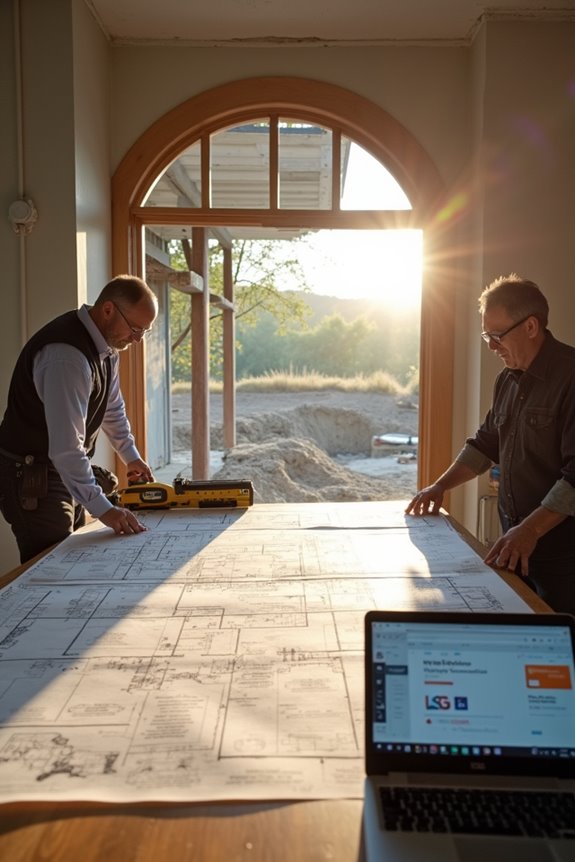
How do you separate a basement contractor who’ll nail your project from one who’ll leave you with cracked walls and regret? I’ve learned that your best bet is finding a licensed contractor backed by bonds, insurance, and current workers’ compensation coverage. You’ll want basement specialists with proven track records converting crawl spaces or adding basements—ask for local references you can actually call. Here’s the crucial part: insist on documented structural engineering involvement before any digging happens. Engineers handle load calculations and foundation design that keep everything standing strong. Also, verify they know your area’s building codes and drainage requirements inside out. Request a detailed written scope breaking down costs for assessment, excavation, underpinning, foundation work, waterproofing, and finishing. That written plan protects both of us.