Blackout curtains stop heat by blocking sunlight before it warms your space—not by magically repelling warmth already inside. Dense fabric with thermal lining creates air pockets that slow heat transfer, while white or reflective backing bounces solar radiation back outside. Proper installation matters enormously: extend curtains 4–6 inches beyond your window frame, seal gaps with weatherstripping, and layer them with cellular shades for real results. You’ll notice a genuine temperature drop when you nail these details.
How Blackout Curtains Actually Block Heat
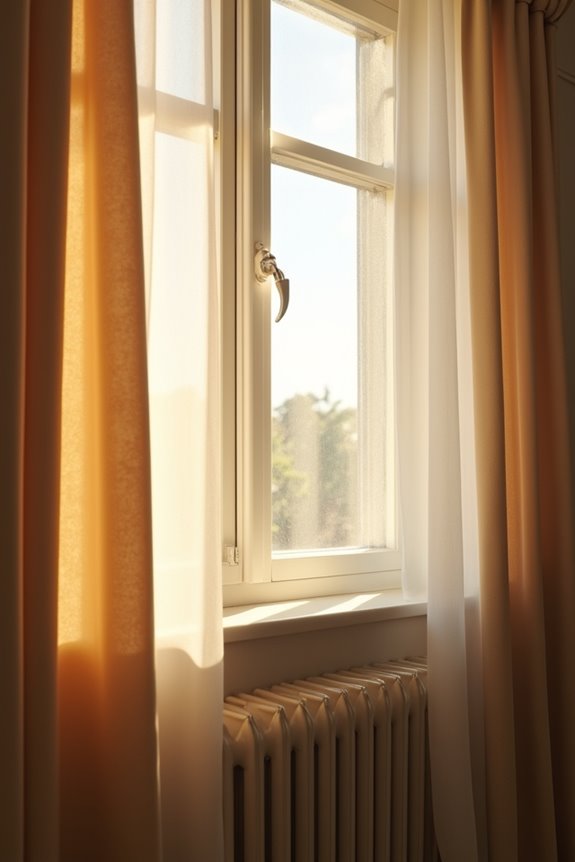
Ever wonder why your room still feels like an oven even with the curtains drawn? Here’s the truth: blackout curtains work by tackling solar gain—that’s the radiant heat pouring through your windows. I’ve discovered that dense, tightly woven fabric blocks sunlight before it can warm your space. What really impressed me was learning about thermal lining, an insulated backing that transforms ordinary curtains into heat-fighting powerhouses. It traps still air between the curtain and window, creating an insulation barrier that slows heat transfer markedly. But here’s what matters most: proper installation makes all the difference. I ensure my curtains fully cover windows with extra side overlap, preventing hot air from sneaking around edges. Studies show this approach reduces heat gain by 30–45%.
Why Blackout Curtain Backing Matters More Than You Think

I’ve discovered that the backing color on your blackout curtains is honestly just as important as the fabric itself, and here’s why: a white or reflective backing bounces solar radiation right back through the window before it can heat up your room, while a dark backing does the exact opposite by absorbing that energy and creating a hot pocket between the curtain and glass. Think of it this way—light-colored backs are like tiny mirrors working 24/7 to push heat away, whereas dark backs are like little sponges soaking up warmth and making your cooling job harder. Get this detail right during installation by extending the curtains beyond your window frame and sealing those edges, and you’ll actually feel the difference in your electric bill.
The Reflective Backing Advantage
Why does the back of your blackout curtain matter as much as the front? Because that’s where the real magic happens for heat control.
I’ve discovered that reflective backing transforms how your thermal curtains perform. Here’s what makes the difference:
- White or off-white backing bounces solar rays straight back through your window, preventing heat transfer into your room
- Dark backings absorb energy instead, creating hot pockets between fabric and glass that warm your indoor air
- A reflective surface plus thick, multi-layer construction stops window heat gain far better than fabric alone
- Sealed gaps paired with white backing maximize solar reflection and minimize energy waste
The backing you choose directly impacts thermal performance. I’ve learned that ready-made curtains with dark backings often underperform because absorbed energy transfers indoors. Your best bet? Prioritize white or reflective backing facing the window for optimal results.
Dark Backing Heat Penalty
the backing color of your blackout curtains matters way more than most people realize, and it’s costing you real money in wasted cooling energy.
I discovered that black backing actually absorbs solar energy, creating a hot pocket between the curtain and your window. This reduces thermal performance significantly. Dark backing converts sunlight into heat that transfers directly into your room—the opposite of what you want.
The culprit? Poor heat transfer management. When your curtain’s backing faces the glass in black, radiant heat builds up instead of bouncing back outside. A reflective coating or white backing reflects the sun’s rays before they convert to heat, dramatically improving your thermal performance. Next time you’re shopping, flip those ready-made curtains over. Check that backing. Your energy bill will thank you.
The Thermal Lining Rule: Why Fabric Alone Isn’t Enough
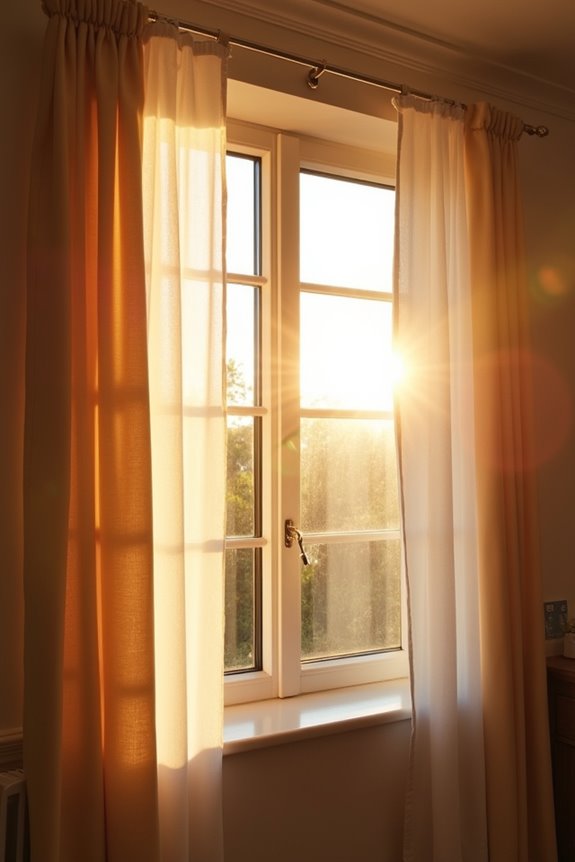
I’ve tested this myself, and here’s what I discovered: plain fabric alone heats up to a scorching 120°F in direct sun, which means you really do need a thermal lining to stop that heat from sneaking inside. The magic happens in the lining’s construction—it traps air pockets and reflects solar radiation before it even reaches your room, vastly outperforming fabric without backing. When I checked fabric opacity under bright light, I found that true blackout means zero pinpricks of light visible, and that same seal that blocks light also blocks heat transfer.
Lining Construction Stops Heat
It seals up those microscopic spaces in the weave and stops airflow from sneaking behind the curtain, which is where a lot of heat transfer happens. That’s where thermal lining becomes your secret weapon.
Here’s what makes it work:
- Foam or polyester layers create air pockets that trap heat instead of letting it through
- Conduction slows dramatically when you’ve got insulation sitting between your window and room
- Radiant heat bounces back instead of warming your space
- You’re finally part of the solution when you upgrade from blackout fabric alone
Without lining, even 100% blackout fabric leaves gaps. Tests show thermal linings reduce heat gain by 30–45%. That’s real protection. The construction matters as much as the darkness does.
Fabric Weave Opacity Testing
How do you actually know if your curtains can block heat, or are they just *looking* the part? I’ve discovered the game-changer: fabric weave opacity testing. Here’s what I do—hold your curtains to a flashlight in a dark room. If pinprick light sneaks through the weave, your fabric’s too open to stop radiant heat transfer effectively. That’s the moment I realized dense fabric alone wasn’t enough. True heat blocking needs an opaque blackout material paired with a thermal liner or insulation backing. Without that dedicated thermal liner, even thick, dark fabric heats up to 120°F in direct sun, defeating the purpose entirely. You’re not just buying curtains; you’re investing in actual thermal performance through proper construction.
Installation Mistakes That Let Heat Sneak Back In
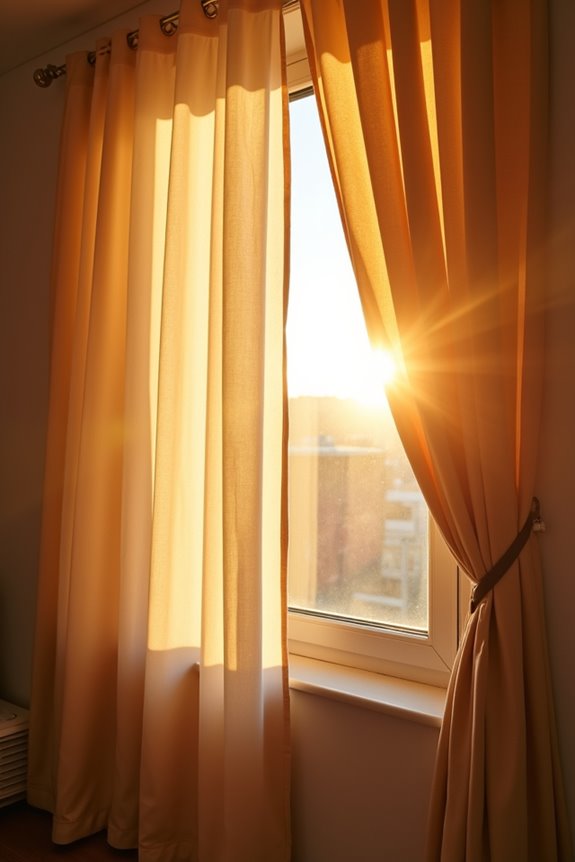
Even the heaviest blackout curtains won’t save you if you’ve installed them wrong—and that’s the frustrating truth that keeps so many homes sweltering despite expensive fabric hanging on their windows.
Even the heaviest blackout curtains fail if installed wrong—the frustrating truth keeping homes sweltering despite expensive fabric.
Here’s what actually happens when you skip proper installation sealing:
- Convection currents form behind your panels, pulling cooler air up and letting hot air escape through top gaps
- Edge bypass defeats everything—small gaps around curtain edges let outdoor heat sneak right past your blackout material
- Curtain rods create vertical spaces where warm air circulates freely behind the fabric
- Center overlaps fail without extending at least 4 inches to the floor, leaving pathways for air leakage
Outside-mounted curtains work better than inside mounts, but gaps still undermine thermal performance. We’re talking about sealing those curtain gaps completely. That’s what separates rooms that actually stay cool from ones that frustrate you endlessly.
Three Quick Blackout Curtain Fixes (No Replacement Needed)
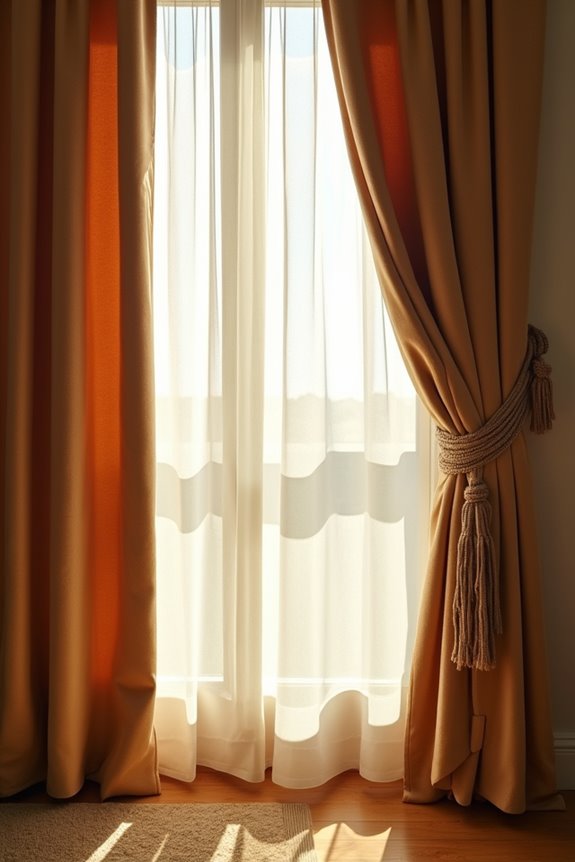
Before you rip down those curtains and start over, know this: you’ve probably got a solid foundation already—you just need to seal the gaps that’re letting all your cooling effort escape.
First, extend your blackout curtains 4–6 inches beyond the window frame on each side. This simple move cuts edge leaks where heat sneaks around the fabric. Next, add a removable thermal liner between your curtain and window—it tackles heat transfer without replacing anything. Finally, seal air leaks with weatherstripping around the frame and consider exterior mounting for maximum coverage.
These three fixes transform your setup from good to genuinely effective. You’re already thinking smart about window leaks; now you’re closing them strategically. That’s the approach that actually works.
Combining Blackout Curtains With Other Heat-Control Treatments
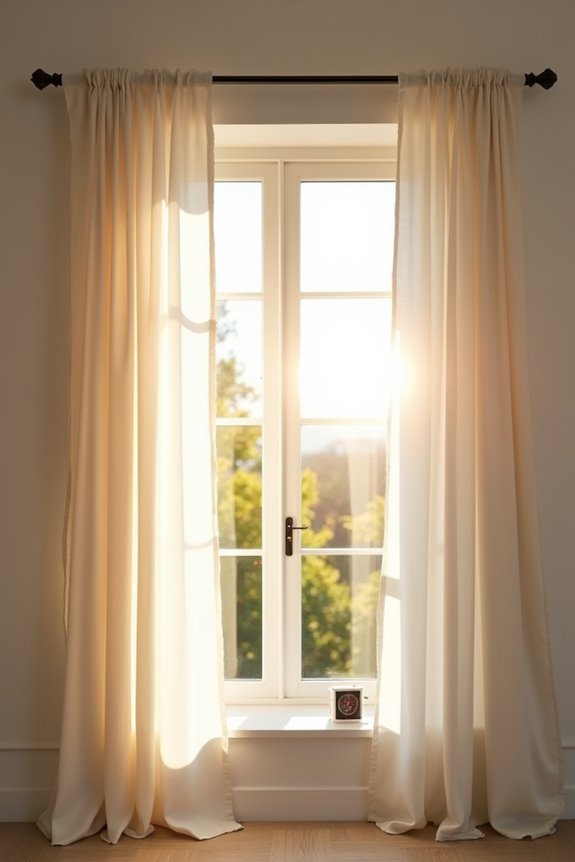
Why settle for one defense when you can stack them? I’ve discovered that layering treatments transforms your windows into a heat-blocking powerhouse. When you pair blackout curtains with cellular shades or reflective window films, you’re addressing solar gain from multiple angles—literally.
Here’s what works:
- Outside-mount blackout curtains with wide coverage that extends beyond your frame
- Thermal linings underneath your blackout fabric for 30–45% heat reduction
- Cellular shades layered behind curtains to trap air pockets
- Window films on glass combined with sealed window gaps
This multivore approach stops hot air from sneaking through edges and gaps. The combination addresses airflow, insulation, and reflection simultaneously. I’ve felt the difference—my room stays noticeably cooler without cranking the AC. You’re not just blocking light; you’re engineering serious climate control that actually works.