
For a simple flat panel, I’d space rings every 4–6 inches across your curtain’s width. Here’s my quick formula: divide your panel width by 5, then add one ring at each end for security. So a 50-inch panel needs roughly 10–11 rings total. Heavier fabrics? Go tighter at 4 inches apart. Lighter ones forgive spacing up to 8 inches. Match your ring finish to your rod for that polished look. Test everything before permanently installing—trust me, it makes all the difference. Stick around for the complete breakdown.
Calculate Curtain Ring Count: The 4–6 Inch Rule
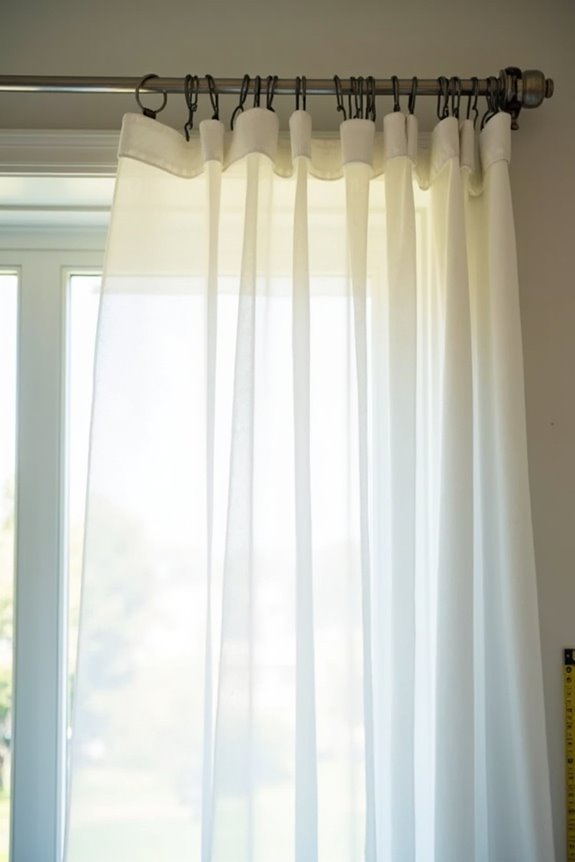
How do you figure out exactly how many rings your curtains actually need? I’ll share the game-changing 4–6 inch rule that transforms guesswork into confidence. This spacing guideline means you’re placing one curtain ring every 4 to 6 inches across your panel width. It’s beautifully simple once you measure your curtain’s width and do quick math.
For a 50-inch panel, you’ll typically need about 9–10 rings, depending on your fabric’s weight and fullness. Here’s where it gets exciting: heavier or lined curtains deserve rings at the tighter 4–inch spacing to maintain that polished structure we’re all after.
This hanging guide ensures your panels drape evenly and professionally. Don’t skip end rings either—they’re essential for preventing corner curl and keeping everything looking intentional and sharp throughout your space.
Apply the Formula to Your Panel Width
Now that you understand the 4–6 inch spacing rule, let’s get practical and calculate the exact number of rings your specific panels need. Grab your measuring tape and measure your panel width from end to end. Here’s where the magic happens: divide that measurement by 4 or 5 to determine your rings per panel spacing. Don’t forget to add one end ring on each corner—they’re essential for holding everything securely and preventing that annoying curling.
Let me show you how this works in real life. A 40-inch panel needs about 8–9 rings total. A 50-inch panel requires roughly 9–10 rings. A 72-inch panel demands approximately 11–12 rings. If you’re hanging heavier or lined curtains, lean toward the higher end of that 4–6 inch rule. This keeps your fabric looking structured and polished, not droopy.
Adjust Spacing Based on Fabric Weight
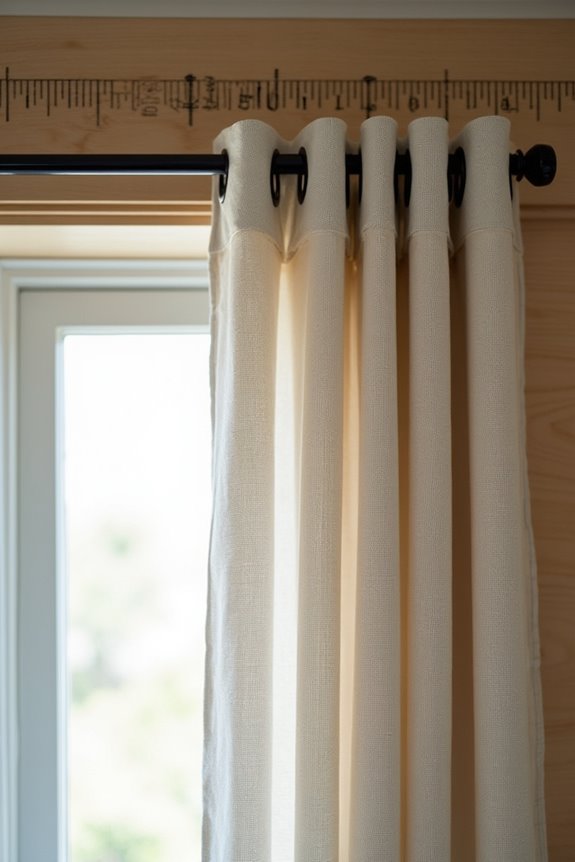
Your fabric’s weight makes all the difference when it comes to ring placement, and I’m genuinely excited to show you why this matters so much. Heavier fabrics need closer spacing—about every 4 inches—to prevent sagging and maintain drapery fullness. Lightweight curtains? They’re forgiving. You can space rings up to 8 inches apart, which means fewer rings overall. Here’s the sweet spot: aim for 4 to 6 inches between curtain rings spacing for most situations. When you’re calculating ring count per panel, heavier fabrics push you toward that higher total. Lighter materials work beautifully with fewer rings. Your fabric weight directly determines how much support those rings provide. Get this right, and your curtains’ll hang like a dream. That’s the magic of matching spacing to your material.
Ring Placement for Flat Panel Draperies
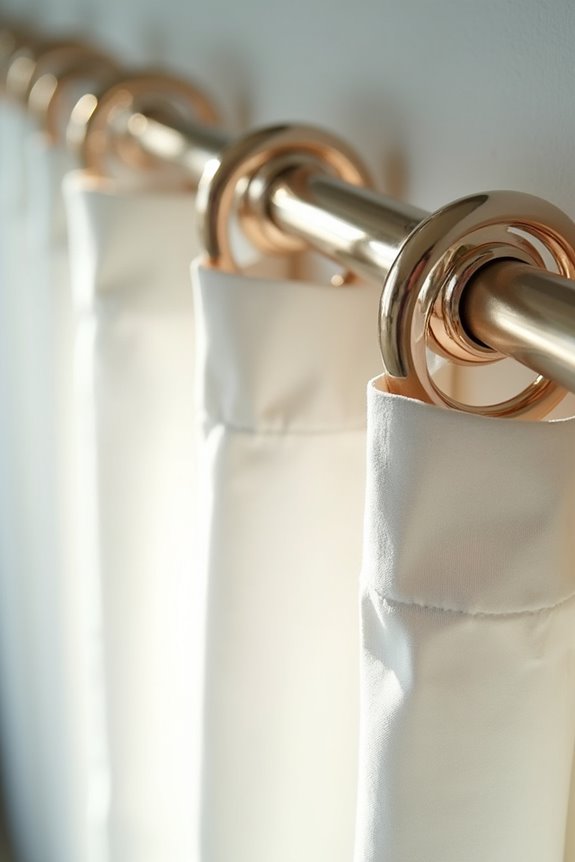
Once you’ve nailed your spacing based on fabric weight, flat panel draperies deserve their own focused approach because they hang differently than other curtain styles. I’ve found that placing a ring every 57 inches of panel width creates beautifully even coverage. Here’s what I do: I position rings at each back tab—those fabric loops sewn into the panel—plus one ring on each end. This edge-to-edge strategy prevents sagging and keeps everything aligned perfectly. Think of it like anchoring your curtains at crucial points. For panels without back tabs, I follow the standard 5–7 inch spacing rule. The beauty of this method is watching your panels glide smoothly along the rod with that satisfying, professional drape you’ve earned.
Ring Placement for Pleated Draperies and Pinch Pleats
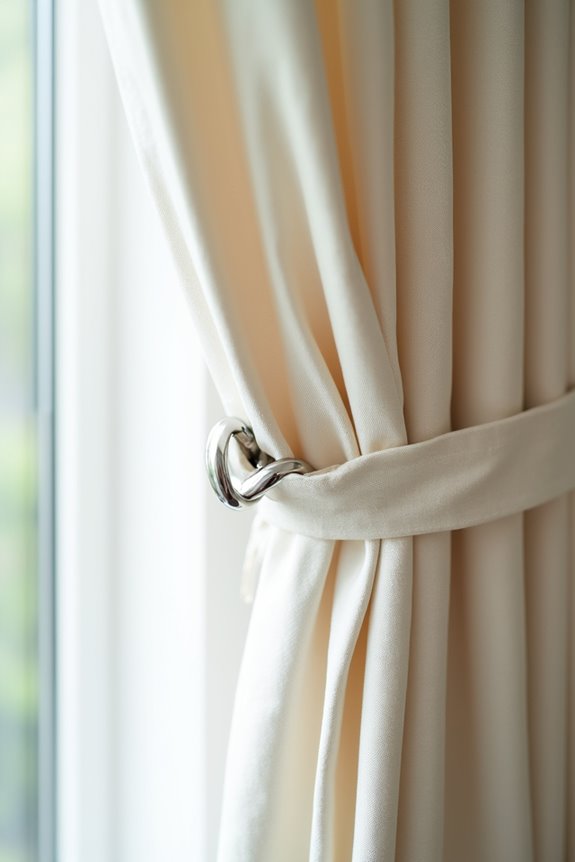
Pinch pleat curtains—those fancy draperies with folded fabric bunches sewn into the top—demand a totally different ring strategy than flat panels, and I’m genuinely excited to walk you through it. Here’s the magic: you’ll place one drapery ring at the top of each pleat, plus rings at both outside edges. This setup keeps everything symmetrical and structured beautifully.
I’ve discovered that counting your pleats gives you the base rings per panel. If you’re adding decorative trim, grab an extra ring—it makes all the difference. For blind spacing between rings, align them with your pleat placement to ensure even distribution across the panel width.
When you’re hanging two panels together, doubling your total ring count maintains that gorgeous visual balance. Trust me, this pleat placement strategy transforms your whole window.
Coordinate Ring Finishes With Your Rod and Brackets

When I’m hanging my curtain panels, I’ve learned that matching my ring finishes to my rod and brackets is what transforms the whole setup from looking thrown together to absolutely polished. If I’m using sleek brushed nickel rings, I’ll pair them with a brushed nickel rod and matching L-shaped brackets so everything sings in harmony rather than competing for attention. It’s that unified hardware look that makes people notice how thoughtful your window treatment is, and honestly, it’s easier than you’d think when you shop for coordinated sets.
Matching Hardware Materials Across Installations
How’s your curtain hardware looking right now—does everything feel like it belongs together?
I’ve learned that matching hardware materials across installations creates that satisfying cohesive look we all crave. When your rings, curtain rod, and brackets speak the same design language, your entire window transforms.
Here’s what I prioritize:
- Material consistency – All components in brushed nickel, antique brass, or matte black work beautifully together
- Finish balance – Glossy rings pair with glossy rods; matte finishes coordinate similarly for visual harmony
- Panel spacing – Evenly distributed rings maintain that polished appearance throughout your installation
- Testing first – I always sample one window under my actual lighting before committing to multiple panels
This unified approach eliminates visual jarring and makes your curtain hardware feel intentional, not accidental. Trust me, that cohesive feeling is worth the extra attention.
Creating Cohesive Interior Design Aesthetics
Now that you’ve got your ring spacing dialed in, let’s make sure every single piece of hardware sings together in perfect harmony. I’ve learned that matching your curtain hardware finishes creates that polished look we all crave. Your rings per panel should coordinate perfectly with your rod and brackets—think of them as a design team working toward one cohesive aesthetic.
| Hardware Element | Best Match | Why It Works |
|---|---|---|
| Brass rings | Brass rod & brackets | Creates unified warmth |
| Chrome rings | Chrome rod & brackets | Delivers modern sleekness |
| Bronze rings | Bronze rod & brackets | Builds timeless elegance |
| Matte black rings | Matte black rod & brackets | Ensures contemporary edge |
When your window treatment hardware matches in material and tone, spacing becomes visually balanced. That unified appearance transforms your entire room’s style instantly.
Test Your Ring Spacing Before Hanging Permanently
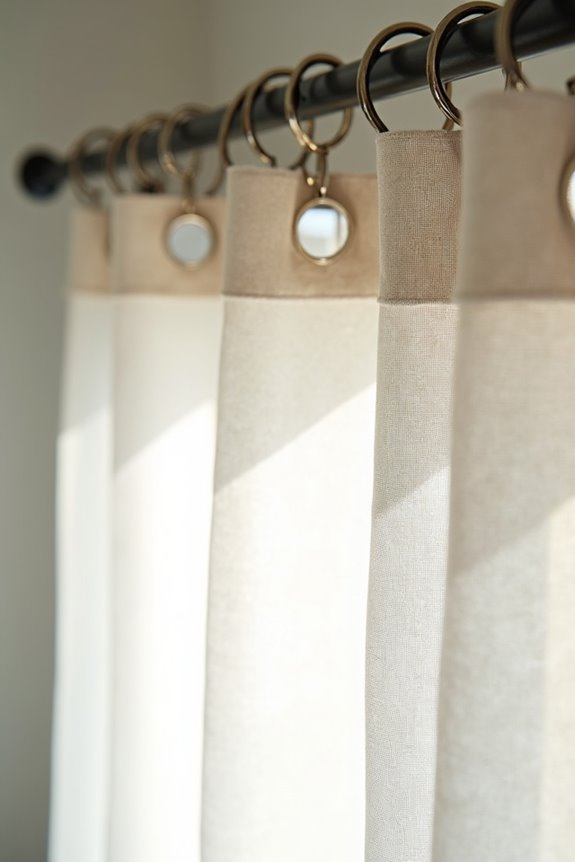
Why rush into permanent installation when you’re so close to getting this right? I’ve learned that testing your ring spacing before hanging permanently saves frustration and ensures beautiful results.
Why rush into permanent installation? Testing your ring spacing first saves frustration and ensures beautiful results.
Here’s what I do:
- Glide a pane across the rod to check smooth movement with your chosen ring spacing
- Compare measurements to the recommended 4–6 inches (5–7 inches for flat panels) for even hang
- Align ring heights across multiple panels, confirming a straight, uniform appearance
- For heavier drapes, space rings closer—about 4 inches—to verify adequate support
I adjust spacing based on curtain fullness plans too. Standard 1.5–2x width needs different ring placement than full 2.5–3x fullness. After adjustments, I always re-test pane movement. This simple testing process guarantees your evenly spaced rings perform perfectly when installation day arrives.
Adjust Ring Count for Returns and Multi-Panel Setups
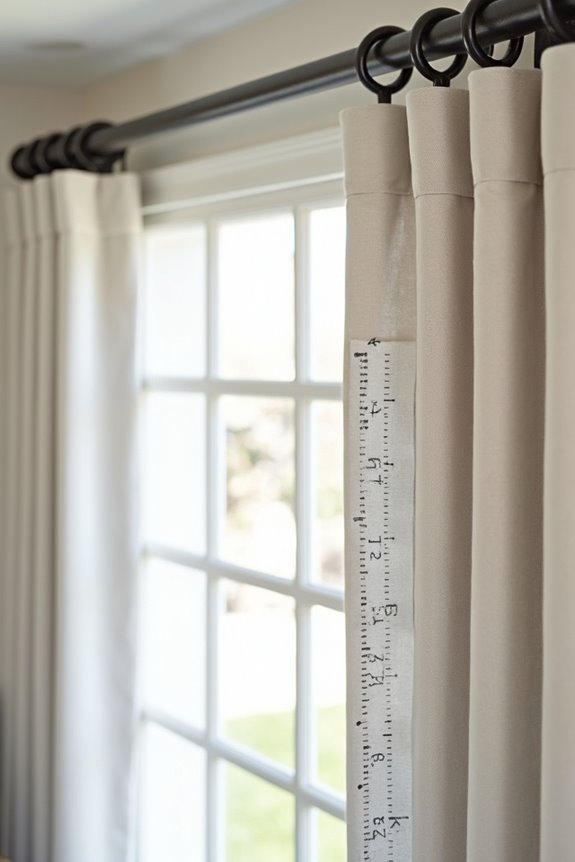
When your curtain rod has returns—those angled brackets that bring fabric closer to the wall—I’ve found you’ll need one extra ring per panel to handle that extra fabric smoothly. If you’re hanging two panels across your window, I double the total ring count so both sides move together perfectly and look balanced. Aligning your ring heights across all panels is essential because mismatched spacing creates that sloppy, uneven appearance that immediately tells everyone you didn’t plan this carefully.
Returns And Ring Adjustments
Once you’ve got your basic ring count down, here’s where things get really exciting—adjusting for returns and multiple panels transforms your curtain setup from nice to genuinely polished.
Returns (those wrapped fabric edges at your rod ends) need special attention. Here’s your adjustment strategy:
- Add one extra ring per panel when a return’s present
- Use eight rings total for a seven-pleat panel with return
- Align ring heights across all panels for uniform movement
- Place rings at each back tab and both ends for edge-to-edge alignment
This fullness adjustment maintains that professional look we’re all after. Your rings per panel calculation stays flexible—think 3 to 4 rings per foot, then modify based on your specific setup. Multi-panel configurations demand this precision, ensuring every panel hangs identically and moves together beautifully.
Multi-Panel Alignment Strategies
Getting your returns and single panels dialed in is awesome, but here’s where the real magic happens—multiple panels demand you think like a choreographer, not just a decorator. You’ll want to keep ring heights perfectly aligned across each window so everything moves together smoothly. When dividing your rod, calculate rings per panel based on panel width and fullness—aim for 1.5 to 2 times your window width total. Space rings consistently at 4 to 6 inches apart, tightening spacing on heavier fabrics for better structure. Don’t forget: each return needs one extra ring, and pleats require additional rings for proper fullness. This synchronized approach ensures your curtains hang symmetrically, creating that polished look you’re after.
Get Professional Help for Complex Drapes or Custom Layouts
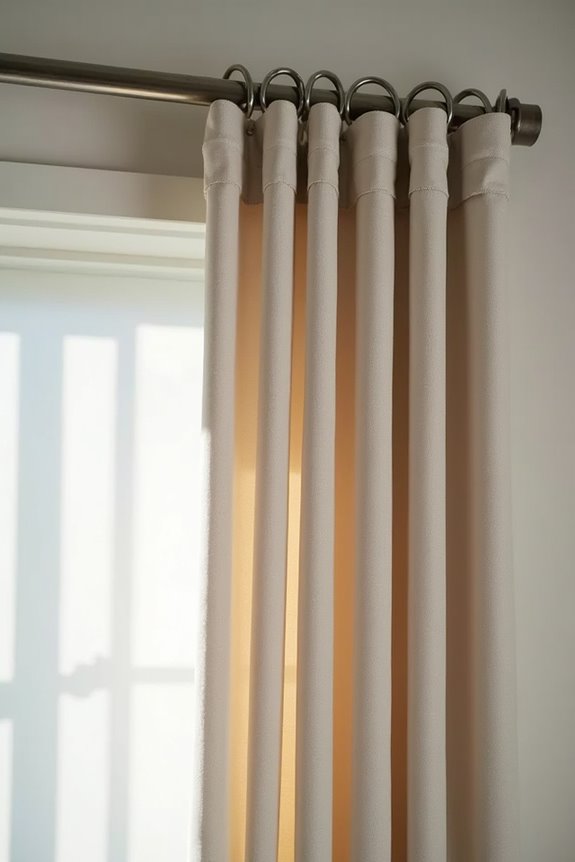
Why do some curtain installations look absolutely stunning while others seem just… off?
When you’re dealing with complex drapes or custom layouts, professional help becomes your secret weapon. I’ve learned that getting ring spacing and measurement accuracy right isn’t something you wing—it’s something you trust to experts who understand your specific situation.
Here’s why calling in a specialist like CV Floor & Blinds makes sense:
- They assess your pleat type, number of pleats, and returns to calculate exact ring counts per panel
- They coordinate ring spacing with your rod length and track width for motorized systems
- They provide precise measurements for unusual window shapes to prevent sagging
- They determine if you need additional rings at back tabs or decorative trims for professional polish
You’ll get stunning results that belong in design magazines, not frustrating DIY mishaps.