
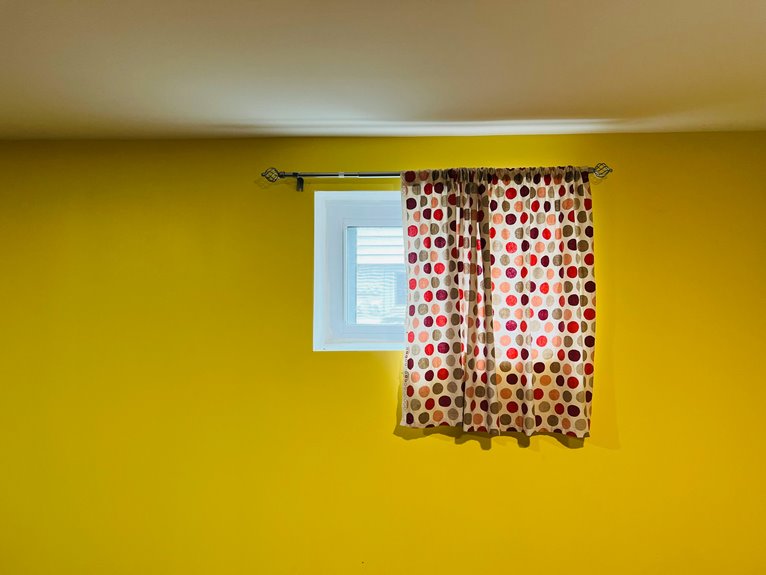
I’ll gather my metal tape, level, and a friend to tackle this right. First, I decide inside or outside mount—inside needs three inches of recess depth. Then I measure my rod placement, extending it six to fifteen inches beyond the frame for that expansive look. Next comes the math: I multiply rod width by fullness (usually 1.5x or 2x) for total curtain width. I account for stack-back—roughly twenty percent of panel width when curtains open. Then I pick my length style: sill, apron, or floor. I mark my rod height about six inches above the frame using a level. Finally, I measure length at three points—left, center, right—using the shortest measurement. I verify everything twice before ordering. Getting these steps right completely transforms how your windows look and function.
Gather Your Tools Before You Start Measuring
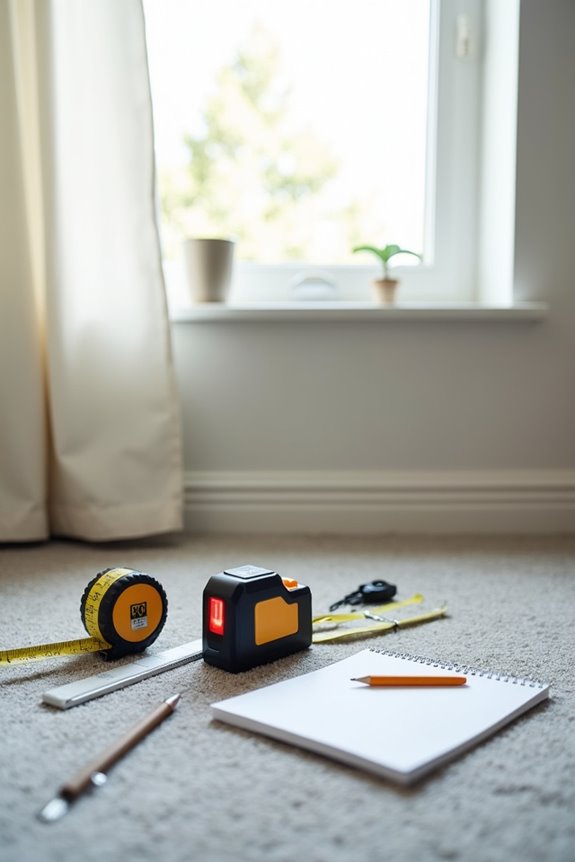
Why rush into measuring without the right equipment? I’ve learned that gathering proper measuring tools makes all the difference between curtains that fit beautifully and ones that disappoint. Here’s what I grab before starting: a metal measuring tape (much more reliable than fabric ones), a sturdy stepstool or ladder for reaching high windows safely, and a pencil with paper for jotting down numbers. I also bring my phone to snap photos and record measurements for multiple windows—this prevents confusion later. A level ensures my measurements stay straight, not tilted. For larger windows, I invite a friend to help hold the rod and confirm alignment. Having everything ready beforehand prevents frustrating measurement errors that could ruin your curtain fit. Trust me, preparation saves time and money.
Decide Between Inside and Outside Mounting
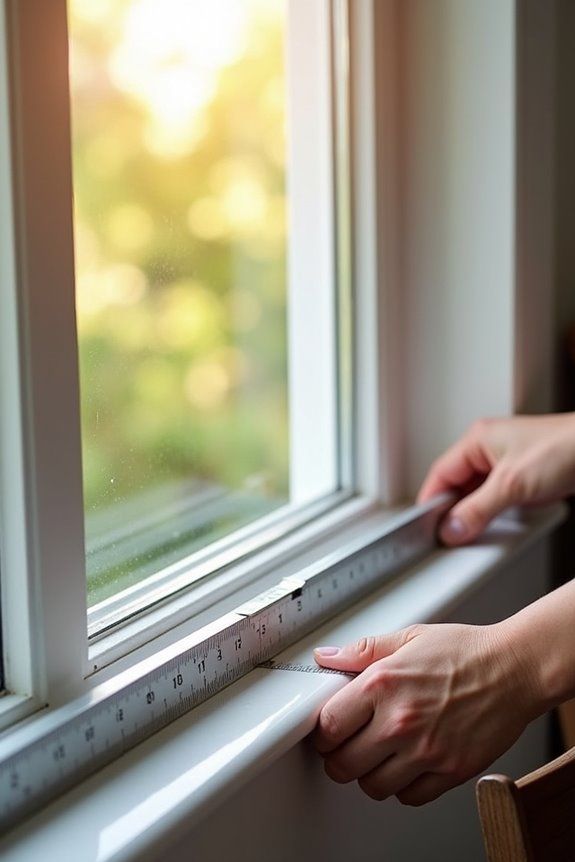
Before you measure a single inch, I need you to make a essential choice: inside mount or outside mount—because this decision literally shapes everything that comes next. Inside mounting tucks your rod snugly into the window frame’s recess (you’ll need at least 3 inches of depth), while outside mounting places it on the wall above or beside the frame, and honestly, that’s what most homes use because it makes windows look bigger and gives you way better light control. I’m genuinely excited to walk you through both options so you can pick what works best for your space.
Inside Mount Basics
As you’re measuring your windows, you’ll need to decide whether your curtain rod goes inside the window frame or outside it—and honestly, this choice matters more than you’d think!
Inside mount measurements require precision since you’re working within tight spaces. Here’s what makes inside mounting special:
- Your recess depth must be at least 3 inches for the rod and curtains to fit comfortably
- Measure the interior width including any casing or molding already there
- Check your sash-to-sill length to ensure proper coverage and aesthetic appeal
I’d recommend measuring each window individually—never assume they’re identical! Accuracy to the nearest 1/8 inch beats rounding, giving you that polished look you’re after. Inside mounts create clean, tailored lines that feel intentional and sophisticated in any room.
Outside Mount Advantages
If you’ve got wall space to work with, outside mounting transforms how your windows look and function—and I genuinely think you’ll love the results. I’ve discovered that extending your curtain rods 6 to 15 inches beyond the window frame on each side creates this beautifully expansive effect. Your windows suddenly appear larger, and when you open those curtains, natural light floods in gloriously.
| Window Width | Rod Extension | Total Rod Length | Light Gain |
|---|---|---|---|
| 36 inches | 6-8 inches per side | 48-52 inches | Minimal |
| 36 inches | 10-12 inches per side | 56-60 inches | Excellent |
| 36 inches | 15 inches per side | 66 inches | Maximum |
The trick? Measure from your exterior trim edge, then add that extra space. Trust me, this approach feels like upgrading your entire room.
Measure and Plan Your Rod Placement
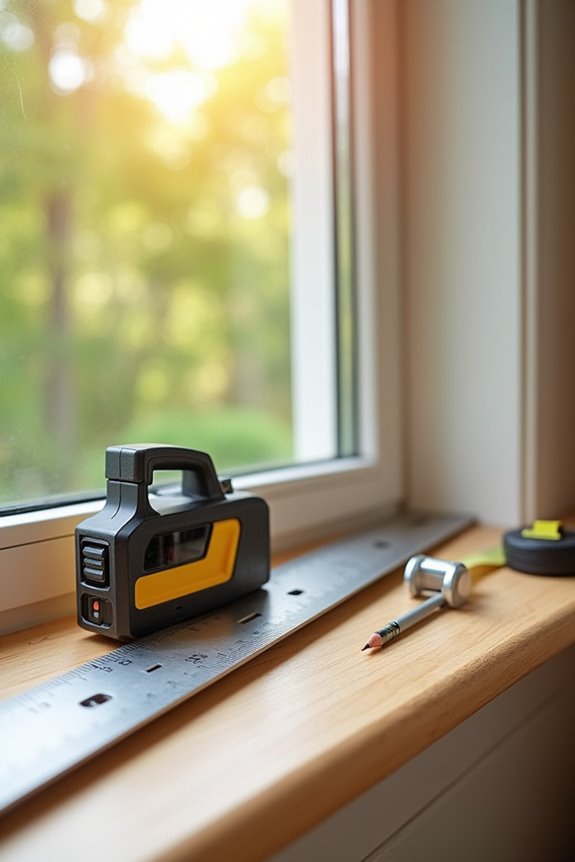
Ready to nail down your curtain rod placement? I’m thrilled to help you get this right—it’s genuinely the game-changer moment!
Here’s what I always do:
- Mount 6 inches above your window frame to create that gorgeous, elongated look that makes rooms feel larger
- Extend 6 to 15 inches beyond each side, depending on your stack-back needs (that’s where panels bunch when you open them)
- Use a level and pencil to mark bracket positions, ensuring everything’s perfectly aligned
If you’ve got an existing rod, measure it end-to-end including finials. No rod yet? Base your measurements on your window frame width instead.
I plan my stack-back carefully—typically about 20% of panel width per side. This prevents light from sneaking through and keeps everything looking intentional and polished. You’ve got this!
Calculate Total Curtain Width Using Fullness
Now here’s where the magic happens—I’m going to show you how to transform your rod measurement into the gorgeous, voluminous curtains you’ve been picturing. You’ll multiply your rod width by a fullness ratio (like 1.5x for soft, gentle folds or 2x for that luxe, formal appearance), which tells you exactly how much fabric you need to create those beautiful drapes. Some curtain styles come pre-pleated with built-in fullness already, so you’ll match the width to your rod rather than multiplying—it’s a game-changer that saves you from buying too much fabric!
Fullness Ratio Multipliers
Why does fabric fullness matter so much when you’re buying curtains? Because it transforms flat fabric into gorgeous, flowing drapes that make your windows—and entire room—look absolutely stunning.
I use the fullness ratio multiplier to calculate exactly how much fabric I need. Here’s what I’ve learned:
- 1.5x multiplier creates gentle, subtle folds perfect for lightweight fabrics
- 2x multiplier produces luxurious, dramatic waves ideal for heavier materials
- Pre-pleated styles come with built-in fullness, so I match total curtain width directly to rod width
Simply multiply your rod width by your chosen ratio. If my rod measures 60 inches and I want 2x fullness, I need 120 inches of total curtain width. Ready-made curtains rarely match exactly, so I aim slightly wider. This approach ensures my windows get that professional, intentional look I’m genuinely excited about.
Style-Specific Width Requirements
Once you’ve nailed down your fullness ratio, the next step’s where your curtain style really takes shape—because different looks demand different widths, and I’ve found that matching the right ratio to the right style makes all the difference. Pre-pleated curtains? They’re already built with fullness, so you’ll match your width directly to the rod instead of multiplying. Ready-made panels work differently—aim slightly wider than your space for proper coverage. For two-panel setups, I divide the total width by two, giving each panel equal responsibility. Heavier fabrics like velvet need careful consideration; they drape beautifully with less fullness than lightweight linens. The magic happens when style, fabric, and width align perfectly. That’s when your windows transform into something you’re genuinely proud of.
Account for Stack-Back When Opening Curtains
Have you ever noticed how curtains bunch up on the sides when you pull them open? That bunched fabric is called stack-back, and I’m thrilled to share how accounting for it transforms your window treatment!
Stack-back is the portion of curtain width that stays on the wall behind open panels. Here’s what you need to know:
- Standard windows: Plan for about 20% of panel width as stack-back
- Light-sensitive spaces: Position stack-back entirely on the wall to maximize light control and avoid blocking glass
- Sliding doors: Budget roughly 30% of panel width to maintain a full drawn area
With two 50-inch panels, you’ll get approximately 10 inches of stack-back per side. Factoring this into your calculations ensures your curtains won’t feel undersized when opened—and that’s genuinely satisfying!
Determine How Many Panels and Their Width
Now comes the exciting part—figuring out exactly how much fabric you’ll need! Most windows work beautifully with two panels that split down the middle. I simply divide my total rod width by two to find each curtain panel width. For wider windows or doors, I might use heavier single panels or two smaller ones to handle the weight comfortably.
Here’s where fullness enters—that gorgeous draping you’re imagining. I multiply my rod width by 1.5x for gentle, soft folds, or 2x for that luxurious, dramatic look. Your fabric type matters here; heavier materials need less multiplication. This calculation determines your actual curtain panel width. Once you nail this, you’re ready for the next step, and honestly, you’re already most of the way there!
Choose Your Curtain Length Style
How many times have you stood in front of a window and wondered exactly where your curtains should end? I’ve been there, and choosing your curtain length styles is genuinely exciting because it transforms your entire space!
Here are the main curtain length styles I recommend:
- Sill-length: Ends about 1/2 inch above the windowsill—clean and classic
- Floor-length: Hangs 1/2 to 1 inch above the floor—the most popular choice that feels sophisticated
- Apron-length: Extends 4 to 6 inches below the sill for dramatic flair
I always measure from my rod installation point down to my desired endpoint, checking left, middle, and right spots for consistency. Floor-length curtains create that polished, intentional look we’re all chasing. Your choice here determines whether you’ll nail that cozy, designed aesthetic or miss the mark entirely.
Mark Your Rod Height and Measure Length at Multiple Points
Now I’ll mark where that rod’s actually going to sit—about 6 inches above the window frame—and honestly, this step makes all the difference in how polished your curtains look! I measure from that marked spot down to the floor at three spots (left side, middle, and right side) because windows aren’t always perfectly level, and I use the shortest measurement so my curtains won’t drag unevenly across the floor. This multiple-point verification takes just a few extra minutes but saves you from those frustrating moments when curtains bunch up on one side or look sloppy because they’re too long in certain spots.
Rod Height Marking Placement
Where should your curtain rod actually go? I mark mine about 6 inches above the window frame—this creates that polished look we’re all after. Here’s my approach:
- Use a level tool to ensure your marking line runs perfectly straight across the entire window width
- Mark lightly with pencil so you can adjust if needed before drilling
- Measure twice, mark once to avoid costly mistakes
The curtain rod height dramatically affects how your window looks and functions. I’ve learned that this measurement influences both the visual length of your curtains and how much light they’ll actually block. Getting it right takes patience, but you’ll feel genuinely proud seeing those perfectly positioned rods.
Multiple Point Length Verification
Why measure in just one spot when your floors might be sloping without you realizing it? I check the rod height at three critical points: left, center, and right. This curtain length verification reveals how uneven surfaces affect your final look.
| Measurement Point | Rod Height | Curtain Length |
|---|---|---|
| Left side | 84″ | 95″ |
| Center | 84″ | 96″ |
| Right side | 84″ | 97″ |
See how the right side needs an extra inch? That’s real data showing floor slope. I record everything using the same measuring tape and level throughout. Then I compare results to my chosen style—whether sill, apron, or floor length. This multi-point approach ensures your curtains break beautifully everywhere, not just in the middle. You’re creating a polished room that feels intentional and complete.
Measure Curtain Length From the Right Starting Point
Getting your starting point right makes all the difference—I can’t stress this enough! Different curtain styles require measuring from different spots, and nailing this part means your curtains’ll hang perfectly instead of dragging awkwardly.
Here’s where I start measuring for each style:
- Grommet curtains: Measure from the grommet center, then add 3–4 inches above the rod for the header
- Pinch pleat and goblet styles: Start from the bottom of the rod rings, which sit about 1–1.5 inches below your actual rod
- Back-tab and rod-pocket curtains: Measure from the top of the rod straight down
I always measure at three points—left, middle, and right—using the shortest measurement. This prevents that frustrating floor-dragging situation and keeps everything looking intentional and polished.
Verify Measurements at Multiple Points Before Ordering
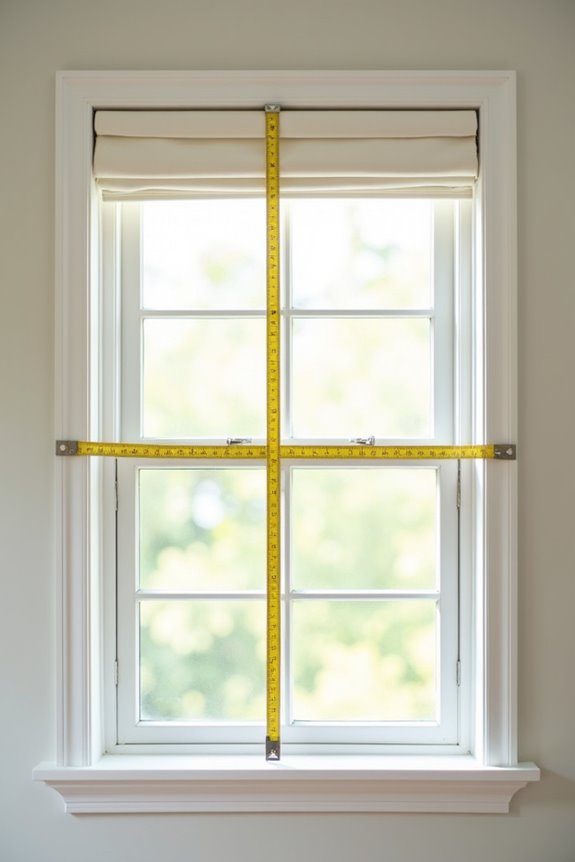
Before you hit that order button, here’s the thing—one measurement won’t cut it, and I learned this the hard way! I discovered that floors slope, walls aren’t always straight, and that makes a huge difference in curtains length. I now measure at three spots: left side, center, and right side of my window. This catches those sneaky variations that’ll throw off my entire project.
| Measurement Point | Width | Length |
|---|---|---|
| Left Side | Inside/Outside | From rod to endpoint |
| Center | Inside/Outside | From rod to endpoint |
| Right Side | Inside/Outside | From rod to endpoint |
When measurements differ, I use the longest curtains length to ensure full coverage. Recording everything to the nearest 1/8 inch matters—seriously. This triple-check approach means I’m confident my curtains’ll hang perfectly, not awkwardly short or pooling unevenly on my floor.