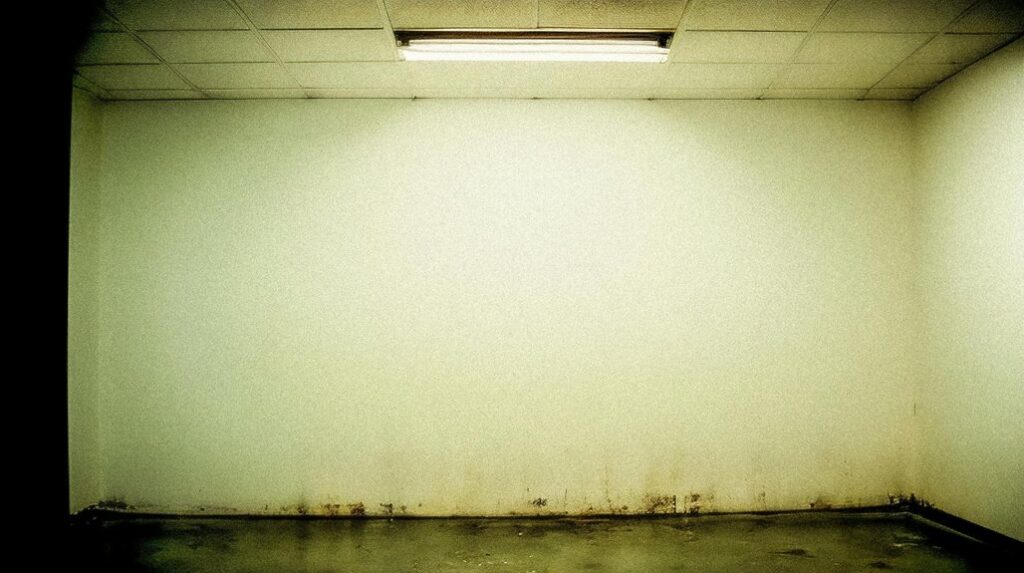
Basement mold’s dangerous because it spreads toxins called mycotoxins through your air while you breathe, triggering respiratory issues like coughing and wheezing. Black mold varieties like Stachybotrys produce the worst effects—even fever and chest tightness with prolonged exposure. But here’s the kicker: hidden mold behind your walls keeps spreading spores upstairs through HVAC systems while silently destroying structural supports you can’t see. The moisture that feeds it typically comes from foundation cracks, poor drainage, or humidity above 50%. Stick around to discover exactly how to stop it.
Why Basements Create the Perfect Environment for Mold Growth
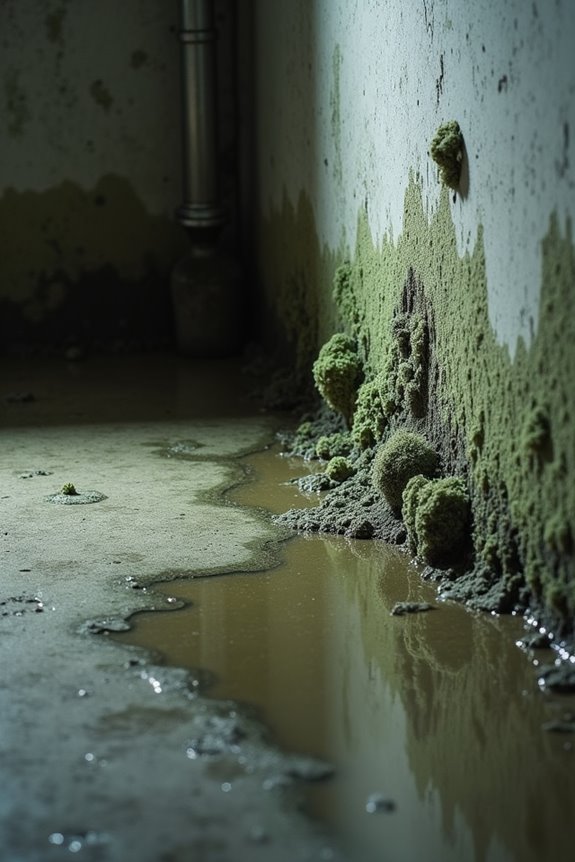
Why does mold seem to absolutely thrive in basements? I’ve discovered it’s because basements are basically mold magnets. High humidity and moisture from leaks, condensation, and poor drainage create ideal conditions for mold growth. Limited basement ventilation traps moisture-laden air, allowing spores to settle on walls and insulation. Temperature fluctuations cause surface condensation on concrete, making hard-to-dry areas perfect mold habitats. Water intrusion from foundation cracks and improper grading provides ongoing moisture that sustains mold. Plus, porous materials like drywall, wood framing, and carpeting absorb and retain moisture, supporting persistent growth. Understanding these conditions helps me protect my space. You’re not alone in facing this challenge—basements naturally invite mold, but knowing why empowers us to fight back effectively.
Common Basement Mold Types and Their Health Threats
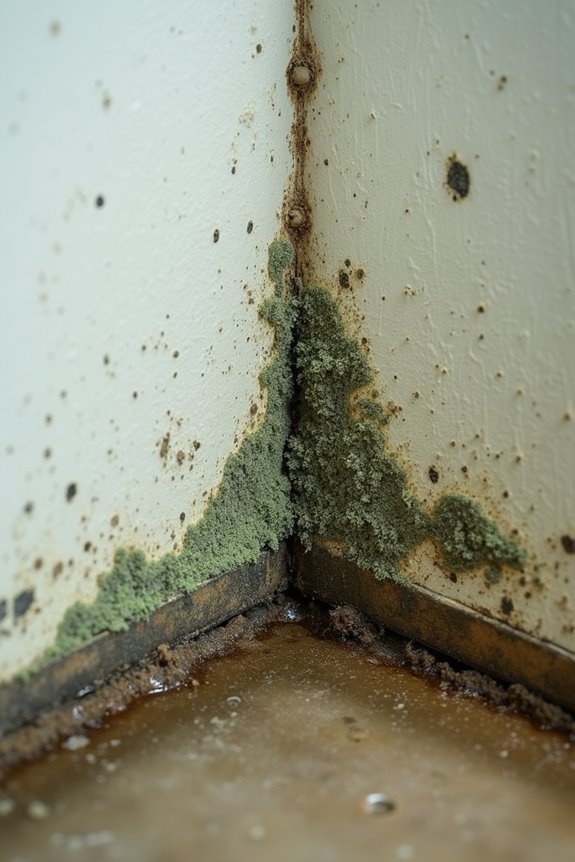
I’ve discovered that not all basement mold poses equal danger, and knowing the difference can genuinely protect your family’s health. You’ll encounter two main categories: toxic black mold species like Stachybotrys chartarum, which demand professional removal and can trigger severe respiratory and neurological symptoms, alongside allergenic varieties such as Aspergillus, Penicillium, and Cladosporium that cause milder but still bothersome allergic reactions and breathing irritation. Understanding which type you’re facing—whether it’s the dark cottony Chaetomium clinging to water-damaged drywall or the green-tinged Penicillium spreading across your foundation—means you’ll know when to call specialists versus when you can tackle smaller problems yourself.
Toxic Black Mold Species
Black mold—specifically *Stachybotrys chartarum*—represents one of the most concerning basement invaders you’ll encounter, and I’m genuinely glad you’re learning about it now before it becomes a serious problem. This toxic black mold produces dangerous mycotoxins that irritate your eyes, skin, and lungs, potentially causing severe respiratory symptoms with prolonged exposure. Here’s what makes it particularly nasty: it thrives on water-damaged materials like drywall, cellulose, and wood in damp basements. You might experience coughing, wheezing, fever, and headaches when exposed. Not all black molds are toxic though, which is why professional remediation matters. Testing determines if the mold you’re seeing actually poses health risks, guiding your next steps. Protecting your indoor air quality means addressing moisture and water damage immediately—it’s genuinely worth the effort.
Allergenic Mold Varieties
While toxic black mold grabs the headlines, there’s another group of basement troublemakers that affects way more people—allergenic molds like Aspergillus, Penicillium, Cladosporium, and Alternaria. These basement mold spores trigger sneezing, runny noses, itchy eyes, and skin irritation in sensitive folks like us. What makes them sneaky? Your airborne spores spread through HVAC systems, reaching every room in your home. If you’ve got kids or respiratory conditions, allergic reactions hit harder. The real challenge? Hidden mold lurks near water leaks and condensation zones. You won’t always see growth, but you’ll feel those prolonged symptoms. That’s why I prioritize moisture control and prompt cleanup. Regular attention to damp basement areas directly reduces allergen load. Smart prevention protects your family’s breathing health.
Spotting the Signs: How to Detect Mold in Your Basement
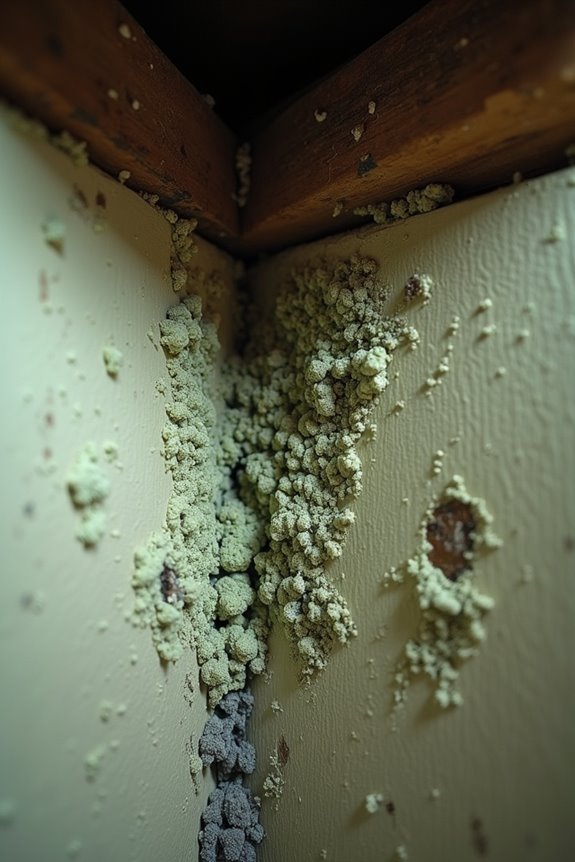
How do you know if mold’s actually lurking in your basement? Start by trusting your nose—that persistent musty odor signals hidden mold behind walls or carpet. You’ll spot visible mold growth as fuzzy patches, black stains, or multicolored specks on surfaces. Look for moisture issues like water stains, warped materials, or efflorescence (that chalky white residue). High humidity and poor ventilation create perfect breeding grounds for rapid spread. Here’s the tricky part: mold hides in unseen areas—behind drywall, under flooring, even inside HVAC systems. Check your basement’s air quality and inspect corners thoroughly. Don’t ignore these warning signs. Detecting mold early protects your home’s integrity and your family’s health.
Hidden Basement Mold: Why Early Detection Saves Your Health
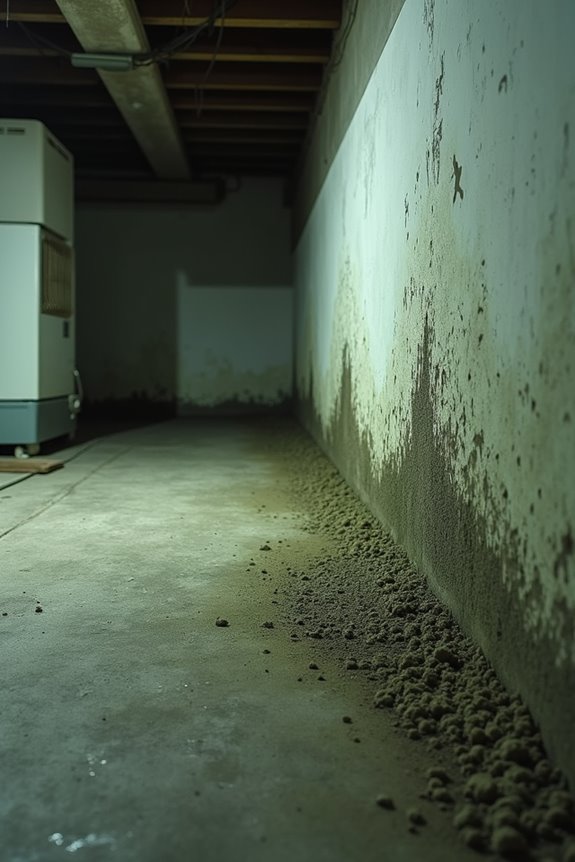
I’ve discovered that hidden mold circulates through your home’s air ducts and HVAC systems, spreading spores across every room in ways you can’t see coming. Here’s what really matters: catching mold early protects your lungs from serious long-term damage like worsening asthma and fungal infections, while also preventing the structural decay that’ll cost you thousands in basement repairs. I’ll show you how moisture problems—leaks, humidity over 50%, and condensation—are your early warning system, so you can detect hidden growth before it becomes a major health threat.
Sneaky Spore Circulation Pathways
Ever wonder why you smell that musty basement odor even though you can’t spot any visible mold?
Mold spores travel invisibly through your home’s air circulation systems. They slip through air ducts, creep behind walls, and settle into upper floors where you breathe them daily. That moisture problem in your basement? It’s feeding hidden mold colonies that release spores constantly.
I’ve learned that these microscopic particles don’t stay put. They migrate through wall cavities and living spaces, creating basement health risks you can’t see coming. Professional testing reveals these sneaky remediation pathways before they spread further.
Here’s what matters: early detection stops this cycle. When you catch hidden mold quickly, you prevent spores from contaminating your entire home. That’s why professional inspection isn’t optional—it’s your defense against invisible threats circulating through every room.
Long-Term Health Consequences
What happens when you breathe mold spores day after day without knowing it? Your body starts paying the price. Prolonged mold exposure quietly wears down your immune system, triggering asthma attacks and allergic reactions that seem to come from nowhere. You’ll notice respiratory symptoms like persistent coughing and wheezing, especially if you’re a kid or have a weakened immune system.
Here’s what really concerns me: certain toxic molds like Stachybotrys chartarum produce mycotoxins. These nasty compounds cause headaches, eye irritation, and serious long-term health effects that sneak up on you. That’s why early detection matters so much. By catching basement mold quickly, you’re protecting your indoor air quality and preventing chronic conditions that could follow you for years.
Structural Damage Detection Methods
Now that you understand how mold damages your health, let’s talk about something equally serious: what it’s doing to your house’s bones. I’ve learned that hidden mold causes sneaky structural damage behind walls and under flooring. You can’t see it happening, which makes detection methods absolutely crucial.
Professional inspectors use infrared thermography—special cameras showing temperature patterns—and moisture meters to catch moisture intrusion early. These tools reveal elevated moisture levels indicating hidden mold colonies before they weaken your drywall and wood framing. Dampness detection through these advanced methods prevents catastrophic insulation deterioration.
Here’s what I found: catching moisture early stops structural damage from spreading. When you notice musty odors or unexplained dampness, calling professionals isn’t overreacting—it’s protecting your home’s foundation. Trust me, early intervention saves thousands in repairs.
DIY vs. Professional Mold Testing: What Actually Works
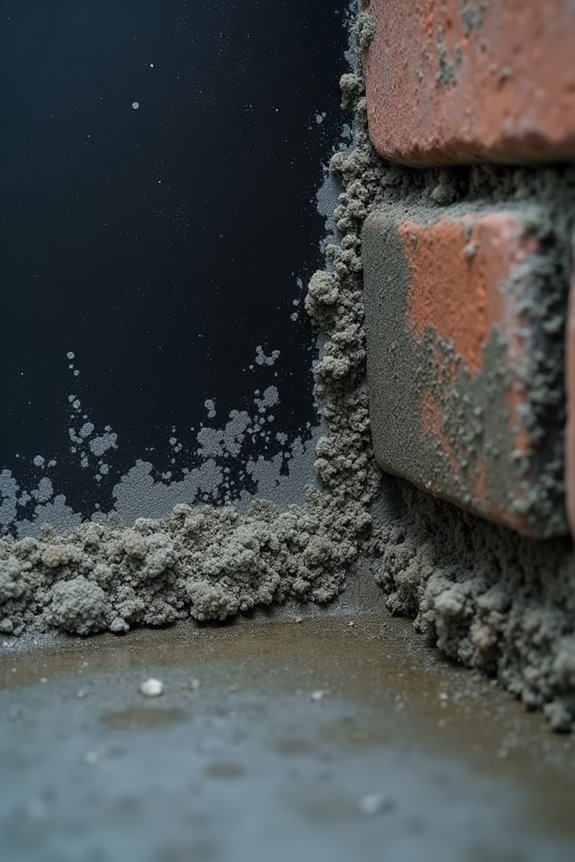
When you’re staring at a suspicious dark patch on your basement wall, the temptation to grab a DIY mold testing kit from the hardware store is real—but here’s what you need to know before you do.
Here’s the truth: DIY testing often misses hidden mold and can’t determine actual health risks. Professional testing uses air sampling and surface sampling with lab analysis to identify mold species and contamination levels, giving you real remediation guidance.
| Testing Type | Speed | Accuracy | Cost |
|---|---|---|---|
| DIY Kits | Fast | Unreliable | $15-30 |
| Professional | 1-2 weeks | Certified | $300-800 |
| Hidden Mold Detection | Misses it | Finds it | Worth it |
For visible spots under 10 square feet, you can DIY carefully. But larger areas or suspected hidden mold? Call professionals. Persistent musty odors demand expert assessment to protect your family’s health.
How Basement Mold Damages Your Respiratory System
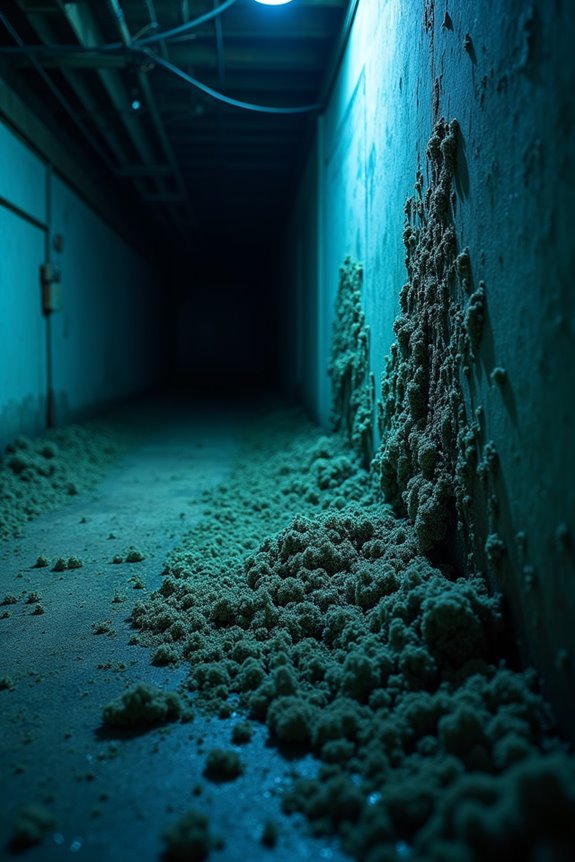
When mold spores float through your basement air, they’re basically tiny invaders that trigger your body’s alarm system—causing sneezing, runny noses, itchy eyes, and worsening asthma symptoms that can really throw off your day. Some molds produce nasty compounds called mycotoxins that irritate your airways, and with consistent exposure, you’ll notice coughing, shortness of breath, and chest tightness that’ll make you want to avoid your basement altogether. If you’ve got a weakened immune system or already battle chronic lung diseases, basement mold exposure becomes seriously risky, potentially causing fungal infections and way more severe respiratory complications than the average person would experience.
Respiratory Symptoms And Irritation
How does mold actually damage your lungs and breathing? When you inhale basement mold exposure, those microscopic mold spores trigger real problems in your airways. You’ll notice airway irritation first—maybe a scratchy throat or nasal congestion that won’t quit. If you’ve got allergies or asthma, your immune system impact gets serious fast: wheezing, shortness of breath, even chest tightness.
Here’s what makes it worse: moisture and humidity in basements create perfect breeding grounds. Toxic molds like Stachybotrys produce mycotoxins that cause headaches and persistent coughing. Poor indoor air quality means those spores circulate upstairs through your whole home.
The kicker? Respiratory symptoms that stick around signal ongoing contamination. That’s your body telling you moisture problems need fixing now, not later.
Mold Spores Triggering Asthma
Why does basement mold hit people with asthma so much harder than everyone else? I’ll tell you—it’s because mold spores are potent asthma triggers that your lungs simply can’t ignore.
Here’s what happens when basement mold affects your respiratory system:
- Mold spores infiltrate your airways, causing immediate wheezing and coughing
- Mycotoxins released by species like Aspergillus irritate and inflame air passages
- HVAC spread carries spores throughout your home, worsening indoor air quality
- Prolonged exposure decreases lung function in sensitive individuals
I’ve learned that even small amounts of basement mold can trigger serious asthma attacks. The problem worsens when humidity feeds mold growth—that’s why controlling moisture matters enormously. You’re not overreacting when you prioritize mold remediation. Your lungs deserve clean air, and addressing basement mold protects your family’s respiratory health completely.
Chronic Lung Disease Complications
If you’ve already got a chronic lung disease like COPD or bronchiectasis, basement dampness isn’t just an annoyance—it’s a serious threat that can turn a manageable condition into a medical emergency. Mold spores floating through your home trigger severe respiratory symptoms that go beyond typical allergies. You’re dealing with fungal infections that settle in weakened lungs, causing persistent coughing and chest discomfort that won’t quit. Mold exposure ignites asthma triggers, sparking attacks that demand immediate attention. Here’s what keeps me up at night: long-term exposure creates airway inflammation, structurally damaging your lungs over time. The real danger? Hypoxia episodes during flares, when your oxygen levels plummet dangerously low, landing you in the hospital. That basement mold isn’t negotiable—it’s your health’s worst enemy.
The Invisible Toxins Your Basement Mold Releases
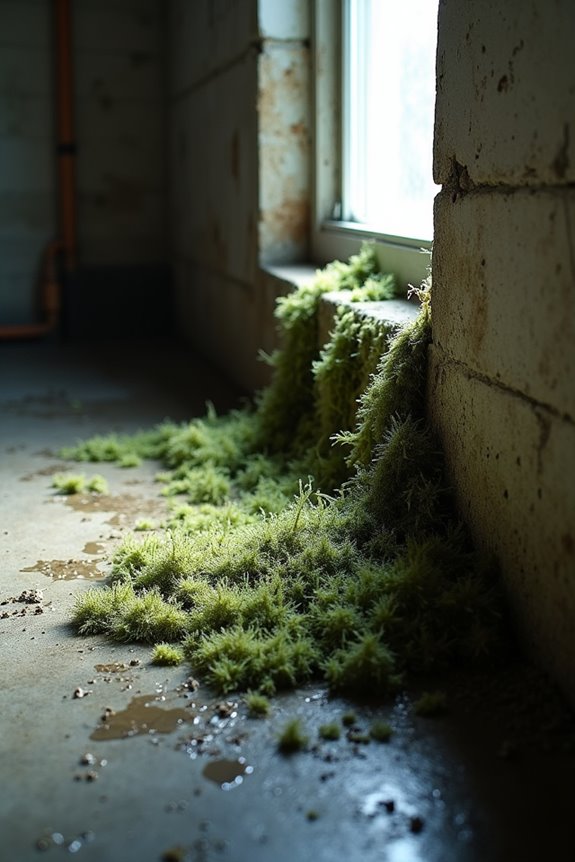
While you’re focused on spotting visible mold growth in your basement, dangerous toxins called mycotoxins are silently spreading through your home’s air. I learned that species like stachybotrys chartarum release invisible poisons that contaminate your indoor environment even when mold patches seem small.
Here’s what happens:
- Airborne spores carry mycotoxins throughout your basement and beyond
- Indoor air contamination persists long after visible mold appears
- Dust persistence means toxins linger on surfaces for months
- Toxigenic species require professional removal from contaminated materials
The scary part? You can’t see these toxins floating around. They settle into dust, attach to furniture, and get breathed in repeatedly. That’s why removing contaminated materials completely matters so much—half-measures leave mold’s toxins behind, putting your family’s health at ongoing risk.
Who’s Most Vulnerable to Basement Mold Illness
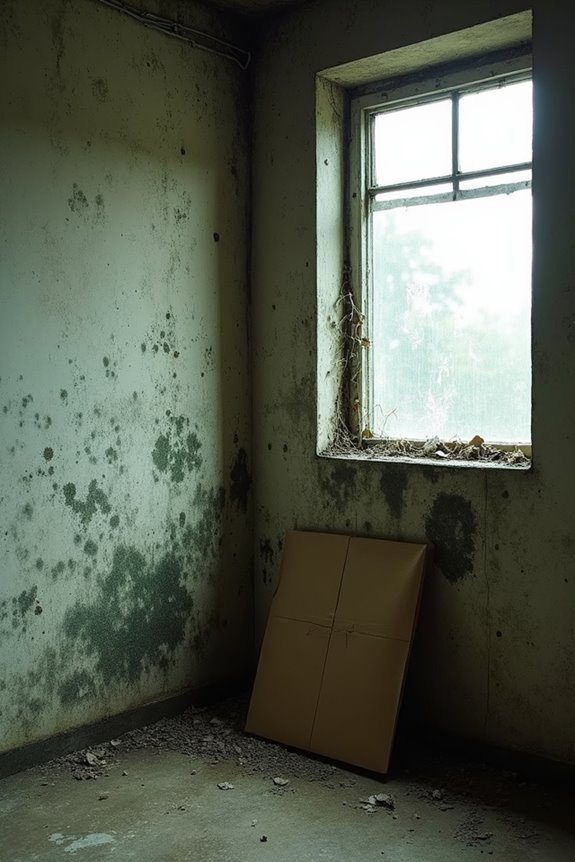
Not everyone reacts to basement mold the same way—and that’s the essential detail that changes everything about how you protect your home.
Your vulnerable populations face real danger from basement mold exposure. Infants and elderly individuals experience pronounced respiratory symptoms like coughing and wheezing. If you have asthma, basement mold exposure triggers aggravation that makes breathing harder. Those with chronic lung disease or weakened immune systems risk serious infections. Allergy risk skyrockets if you’re already sensitive to environmental triggers.
Here’s what matters: people with preexisting conditions can’t bounce back as easily. Your immune system strength determines how your body handles mold spores. Kids under five and adults over sixty need extra protection. If anyone in your household fits these categories, professional remediation isn’t optional—it’s essential for your family’s wellbeing.
When Mold Spreads Upstairs: Why Your Upper Floors Are at Risk
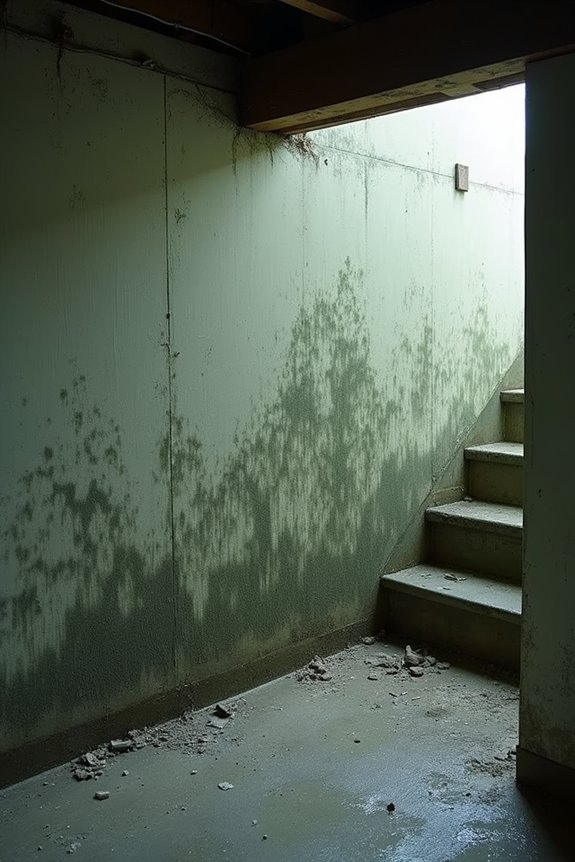
Your basement mold problem doesn’t stay put—it travels. I’ve learned that mold spores don’t respect boundaries between floors. Here’s how upper-floor contamination happens:
- Air circulation pathways – Mold travels through HVAC systems and wall cavities
- The stack effect – Warm air naturally pulls basement spores upward into living spaces
- Moisture intrusion – Basement dampness creates humidity that promotes mold settling on upper surfaces
- Hidden growth – Behind-the-wall mold releases odors and spores without visible signs upstairs
Your indoor air quality suffers even when you can’t see mold above. Prolonged basement moisture issues mean condensation on upstairs windows, warped materials, and allergic reactions for your family. Hidden mold becomes your silent problem—degrading air you’re breathing daily without obvious evidence. I’d address basement moisture immediately before upper-floor contamination spreads further throughout your home.
Structural Damage You Can’t See: Mold’s Long-Term Impact
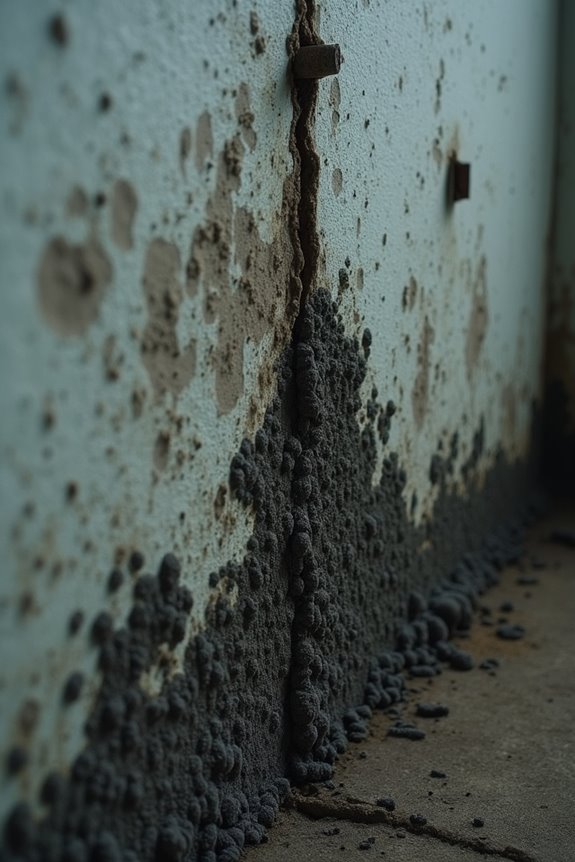
Most homeowners don’t realize that basement mold isn’t just a surface problem—it’s silently eating away at the very bones of their house. Hidden mold pathways creep through your walls, targeting load-bearing elements like wooden beams and steel supports that literally hold everything up. You won’t see the damage happening. That’s what makes it dangerous.
Mold growth behind walls creates moisture damage that weakens structural components over time. Your drywall crumbles. Wood framing warps. Concrete deteriorates. These materials lose their strength gradually, compromising foundation integrity without obvious warning signs.
Repeated leaks amplify this destruction. Each flooding event pushes mold deeper into cavities, causing long-term deterioration that demands expensive unseen repairs. You’re protecting your family’s safety and your investment by addressing basement moisture immediately.
Remove Mold and Stop It From Coming Back
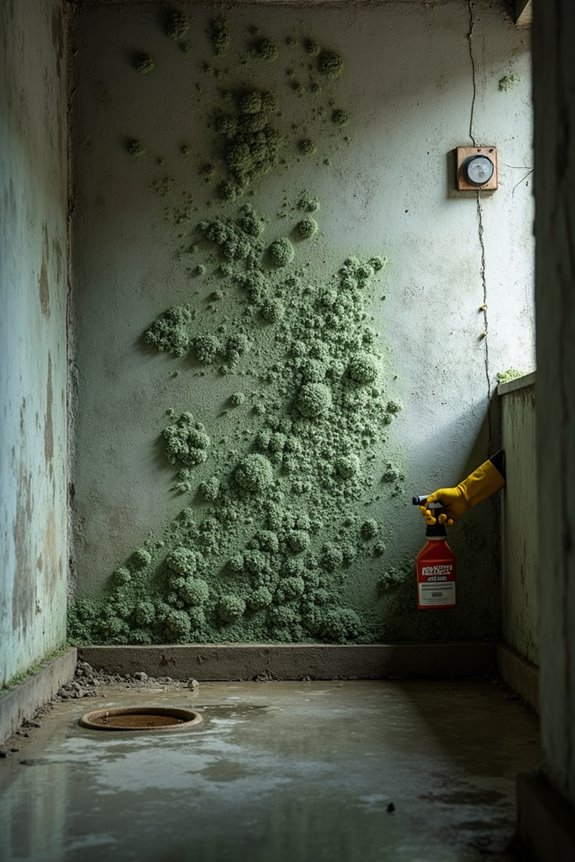
How do we actually get rid of basement mold for good? I’ve found that tackling this problem requires both immediate action and long-term strategy. Here’s what works:
- Hire professionals for mold remediation to safely remove hidden mold behind walls and under flooring
- Install a dehumidifier to keep moisture levels below 50%—moisture control stops regrowth
- Get professional testing to confirm all contamination’s gone and air quality’s restored
- Seal cracks and improve drainage around your foundation
The key? You can’t just clean visible spots. Hidden mold in insulation will keep spreading those airborne spores through your HVAC system, creating health risks for anyone with asthma or allergies. Prevention means addressing moisture at its source. I’m genuinely proud when homeowners take this seriously—it protects everyone’s lungs.